
Email Marketing Articles
Browse our email marketing articles for strategies, checklists, and practical guidance you can apply right away.
Find an article
Search by title, category, or topic.
Quick links
Browse by topic
Jump into the parts of email verification and deliverability you need right now.
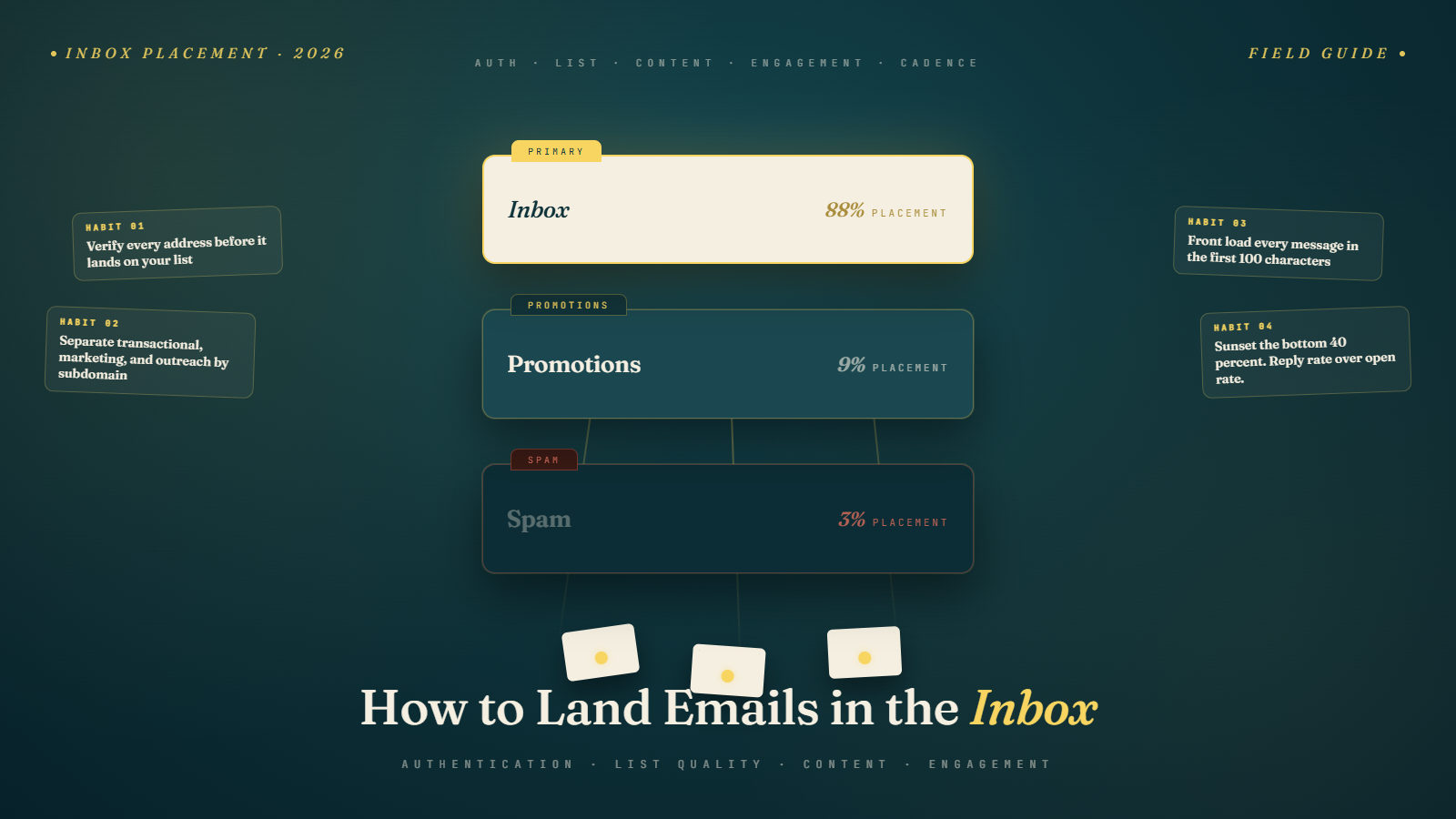
How to Land Emails in the Inbox
Inbox placement is not a single trick. It is a small set of habits done in the right order. This is the working playbook we run for ourselves and for clients, written in plain language.
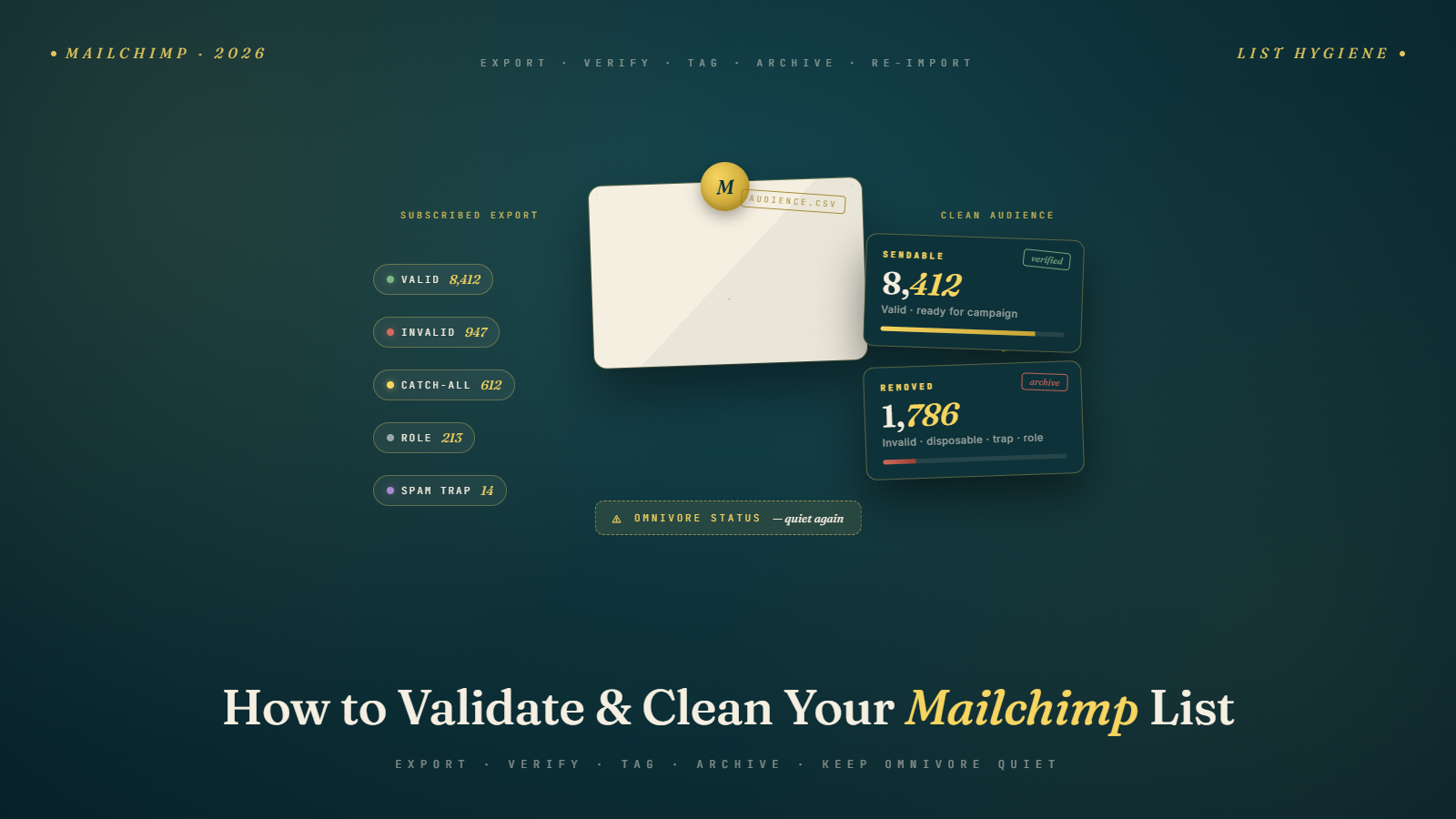
How to Validate and Clean Your Mailchimp List Without Tripping Omnivore
How to actually clean a Mailchimp list without setting Omnivore off, getting your account paused, or wasting a Saturday on it. The full process, with the parts most guides skip.
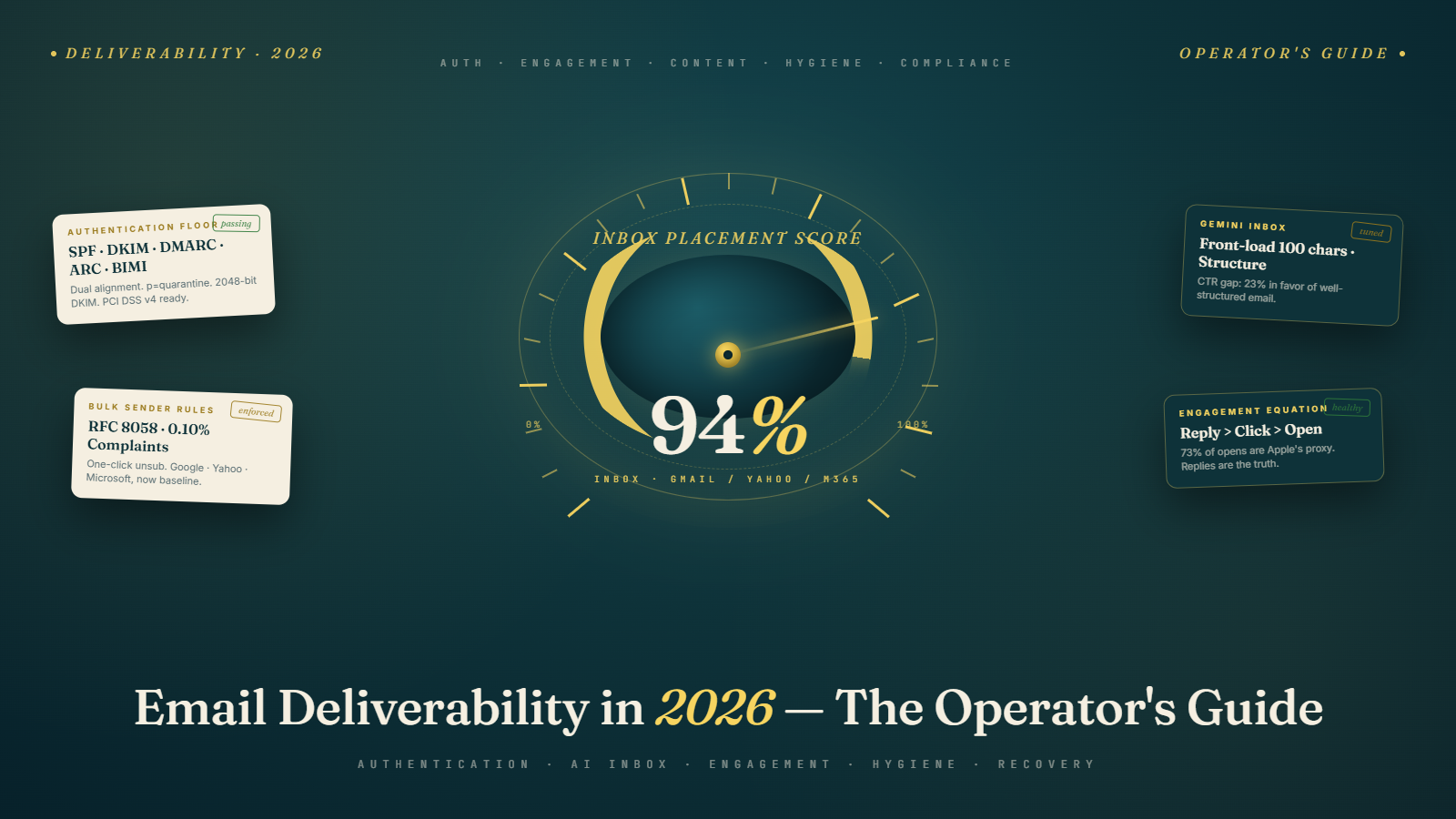
Email Deliverability in 2026: The Complete Operator's Guide (You Will Not Need Another Article)
The complete operator's guide to email deliverability in 2026: authentication, the Google and Yahoo and Microsoft rules, Gmail's Gemini era, the engagement equation, list hygiene, the 48-hour recovery plan, and the monitoring stack you actually need.
More reading
Latest articles from the library
10 Ecommerce Email Templates for 2026: Design for Gemini, Authenticity, and Conversions
Ecommerce email templates in 2026 must work within Gemini's summary generation, email-first design constraints, and subscriber expectations for authentic voice. Here are 10 template patterns that work in the post-AI-backlash era, with the design and copy principles behind each one.
18 Digital Marketing & Email Deliverability Influencers Worth Following in 2026
Digital marketing in 2026 is dominated by AI, email deliverability changes, and Gemini-era inbox shifts. Here are 18 thought leaders worth following — practitioners who are documenting what's actually working in real time, with specific focus on email marketing and modern inbox challenges.
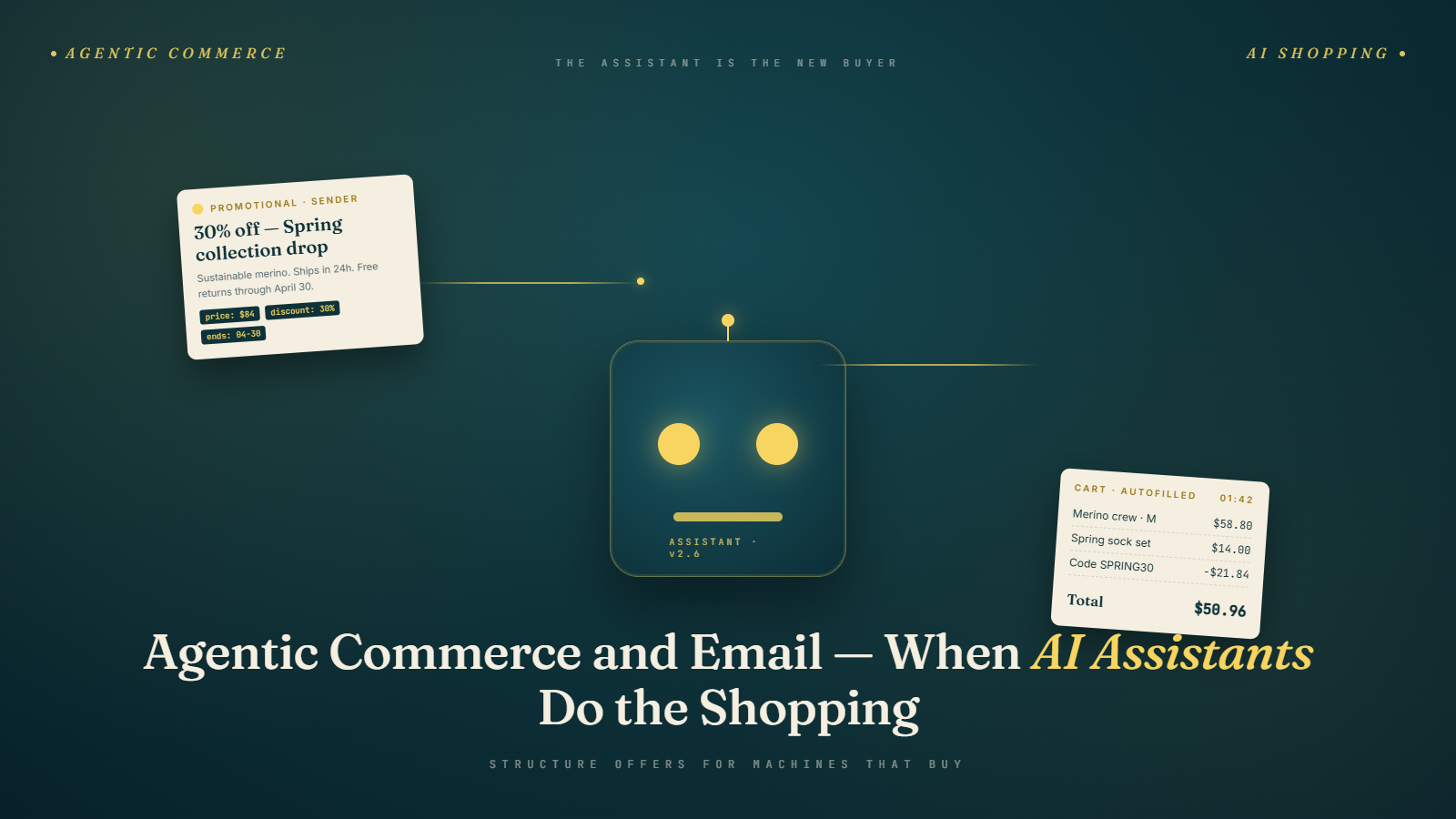
Agentic Commerce and Email: When AI Assistants Do the Shopping
AI shopping assistants now read your promotional emails to make purchase decisions. Here is how to structure offers so agentic commerce tools find and act on them.
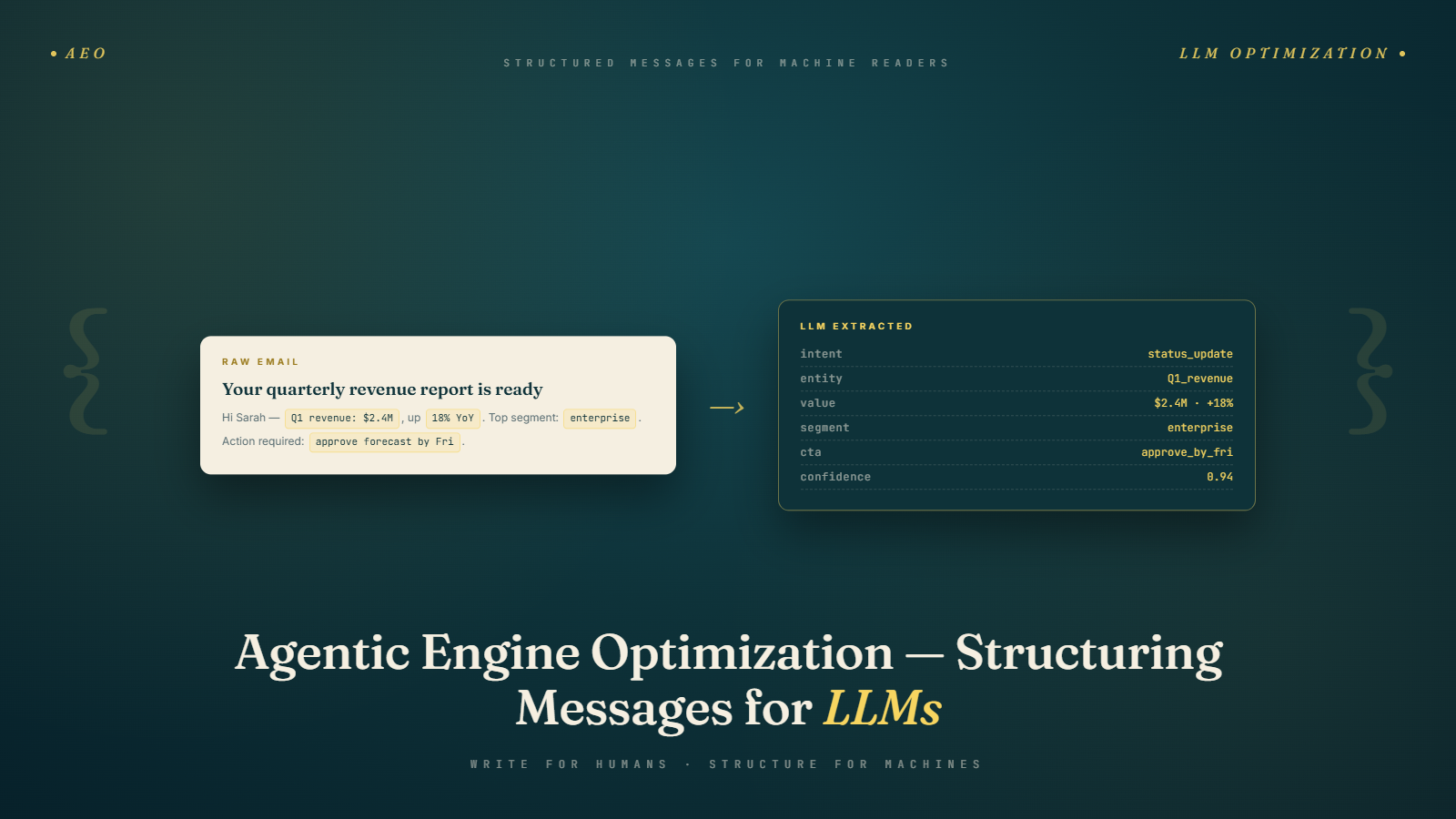
Agentic Engine Optimization (AEO) for Email: Structuring Messages for LLMs
Agentic Engine Optimization for email means structuring messages so LLMs can extract, summarize, and act on them. Here is how to do it without losing your brand voice.
Best Email Verification Tools in 2026: NeverBounce Alternatives Compared
NeverBounce is one option, but the email verification landscape in 2026 offers better alternatives for specific use cases — better pricing for high volume, better accuracy on Microsoft domains, white-label options for agencies, and integration with modern deliverability workflows.
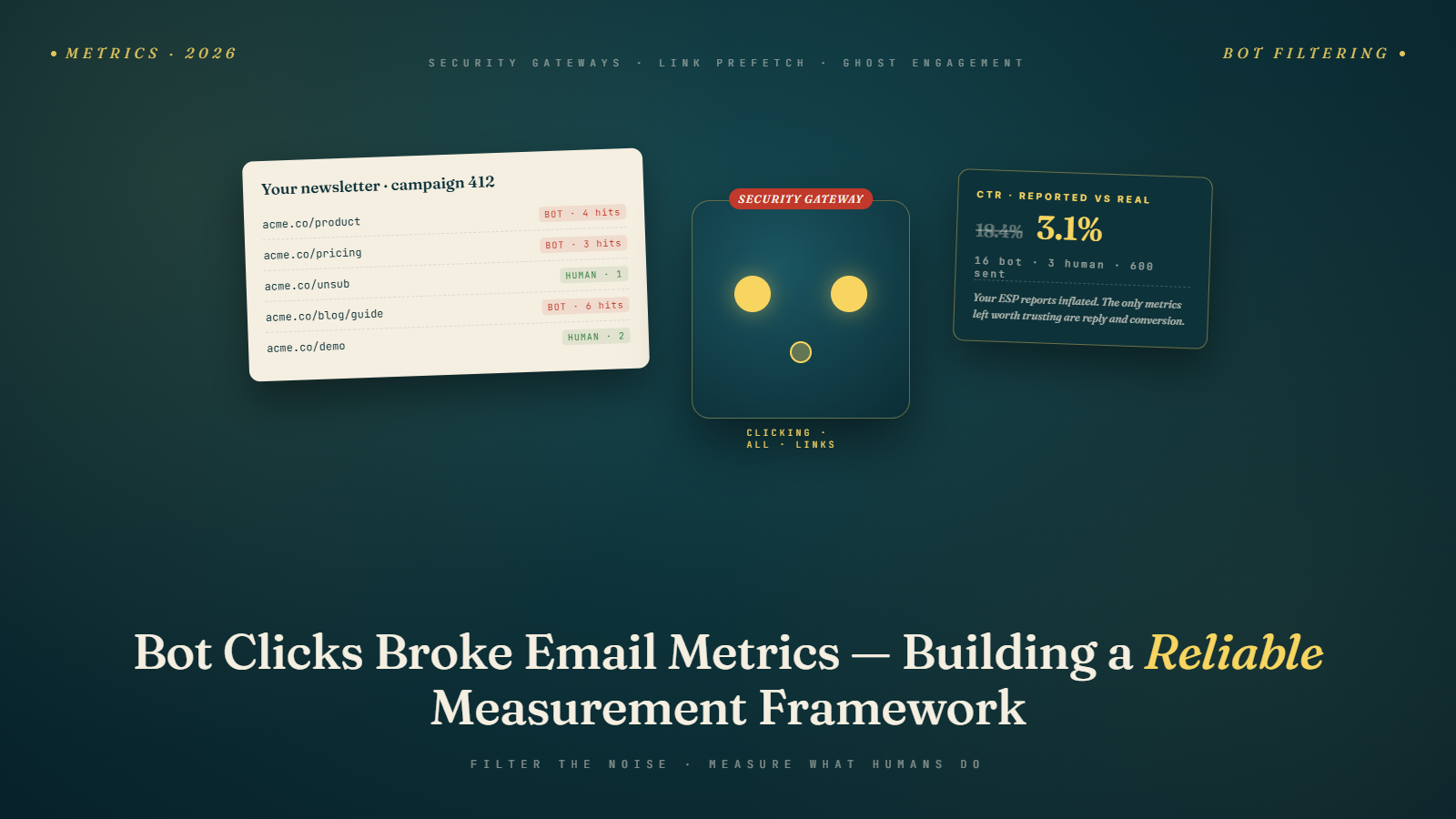
Bot Clicks Broke Email Metrics: Building a Reliable Measurement Framework
Security gateways click every link in every email. Here's how to detect bot clicks, what your ESP actually filters, and the metrics you can still trust.
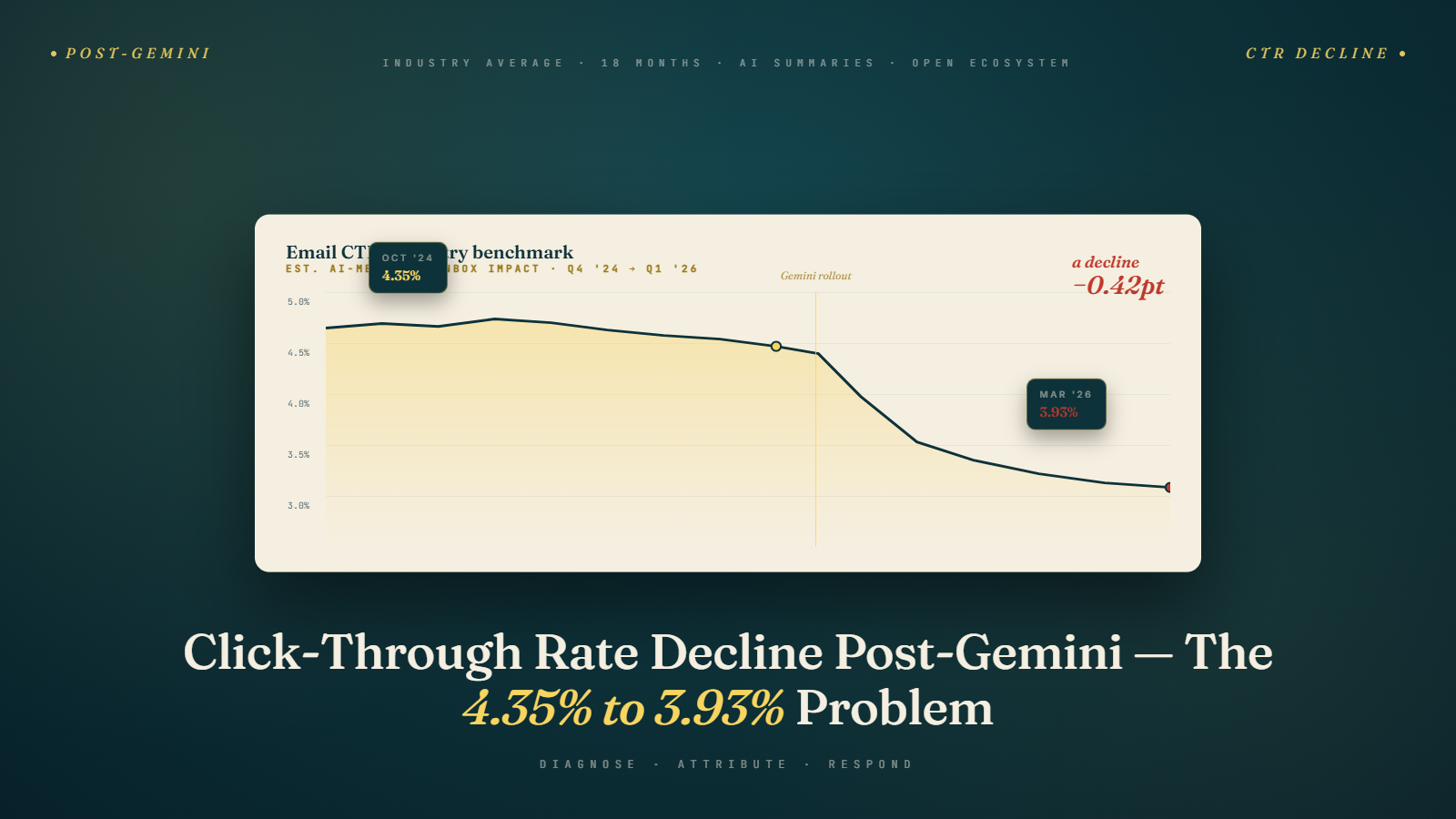
Click-Through Rate Decline Post-Gemini: The 4.35% to 3.93% Problem
Industry CTR fell from 4.35% to 3.93% after Gemini rollout. Diagnose whether your drop is AI summaries, list quality, or offer weakness, and what to do.
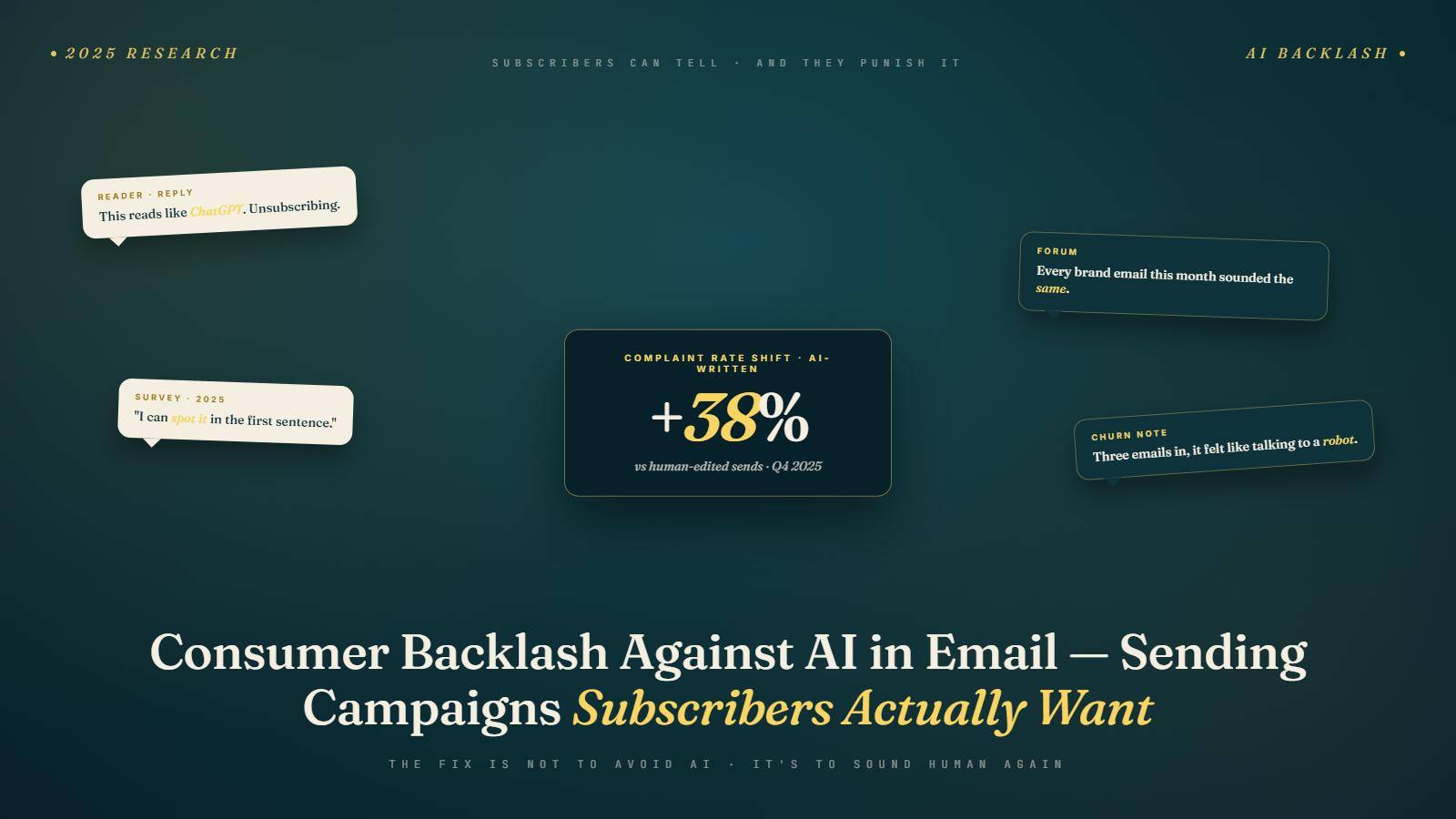
Consumer Backlash Against AI in Email: Sending Campaigns Subscribers Actually Want
Subscribers can tell when your email was written by a model with no human touching it. The 2025 data on AI backlash is clearer than most marketers realize, and the fix is not to avoid AI.
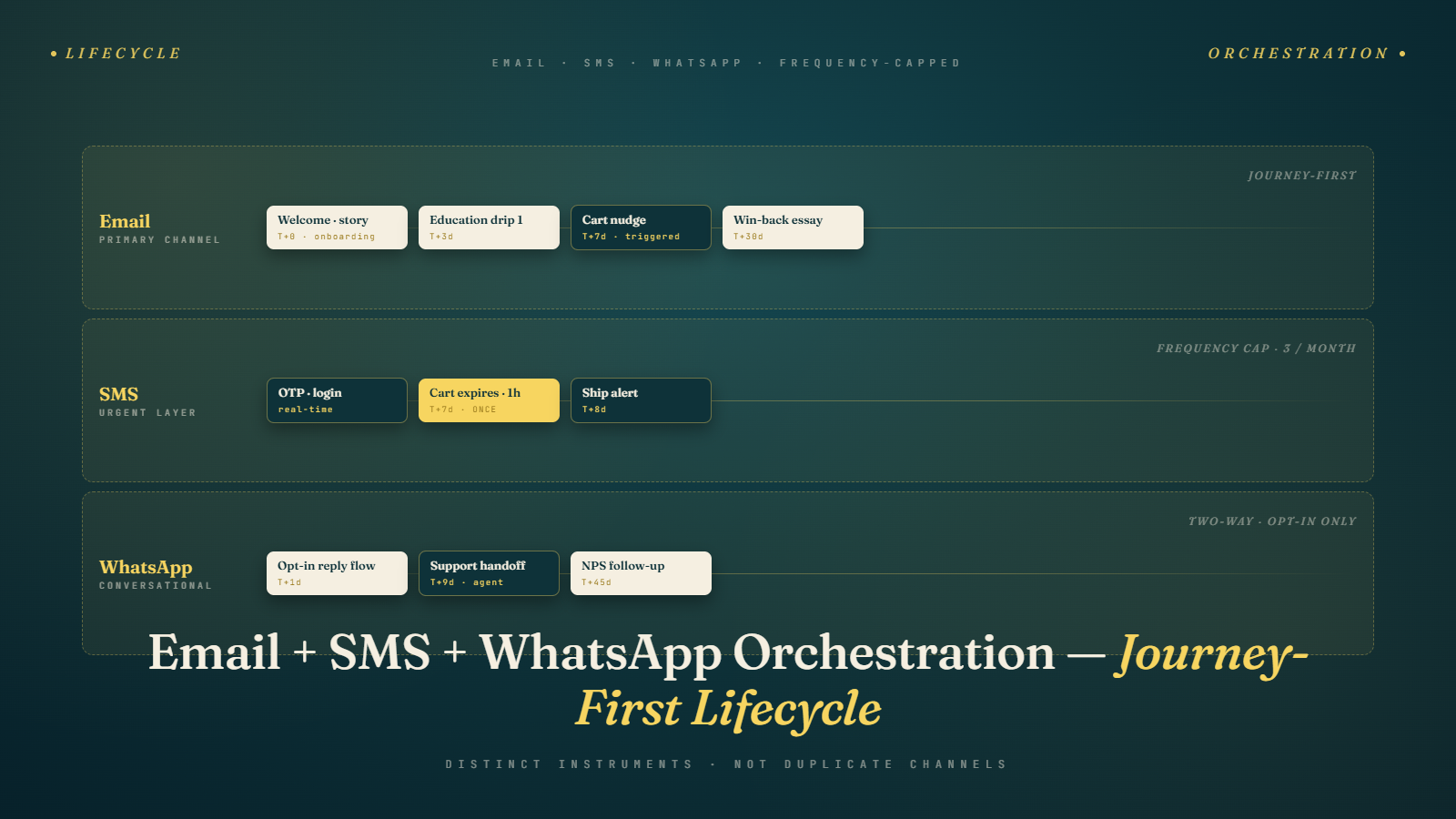
Email Plus SMS Plus WhatsApp Orchestration: Building Journey-First Lifecycle Flows
Build lifecycle flows that use email, SMS, and WhatsApp as distinct instruments, not duplicate channels. Journey-first design, frequency caps, and a cart example.
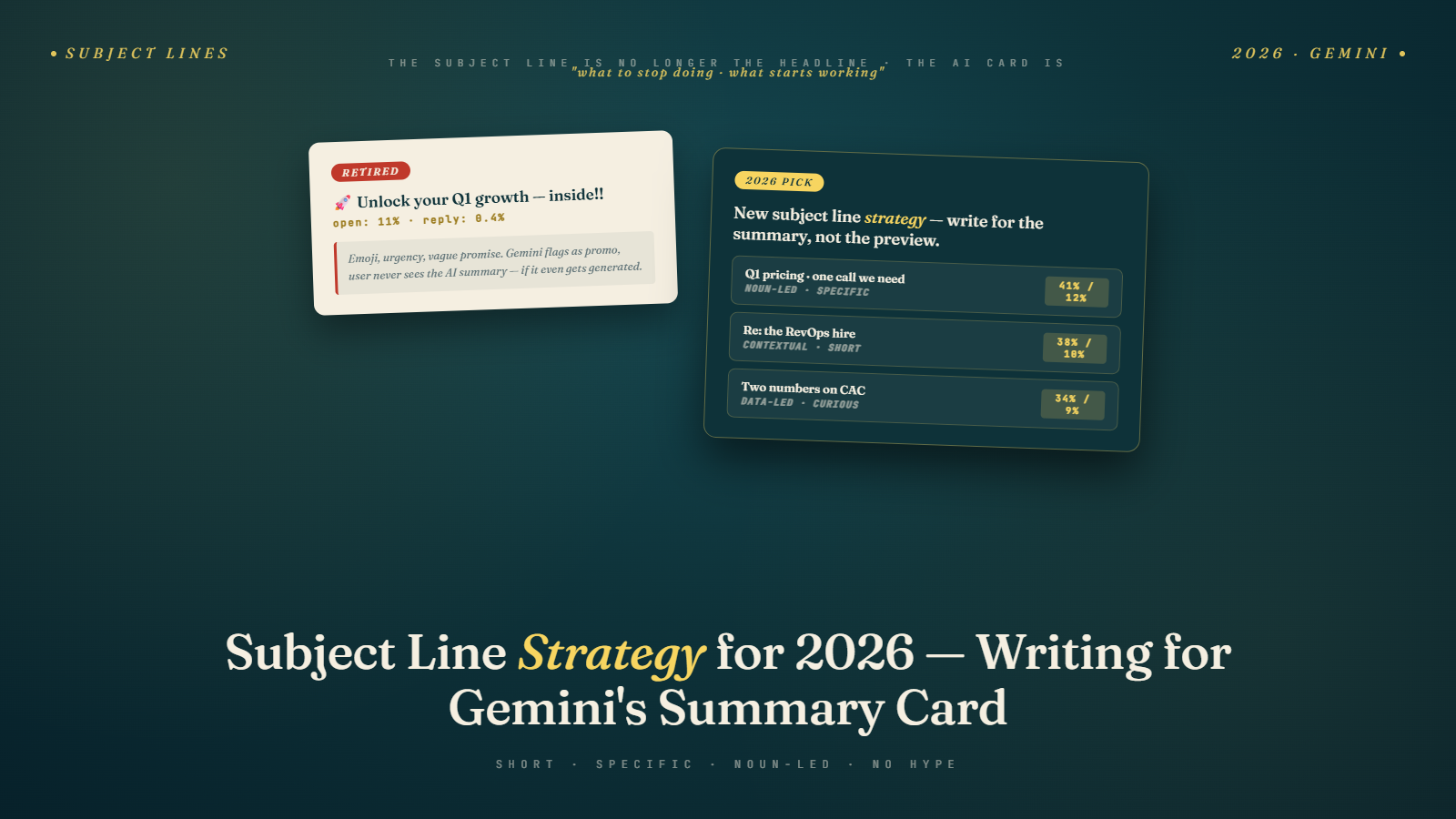
Email Subject Line Strategy in 2026: What Gemini Rewards and What It Ignores
Subject line strategy in 2026 has shifted. Gemini rewards specificity and clarity while ignoring curiosity-gap tricks. Here's what actually works now.

From Deliverability to Desirability: Earning a Spot in Gemini's Shortlist
Getting to the inbox was the old goal. Gemini now surfaces a shortlist. Same signals that made programs good historically win. Old tactics, done right.
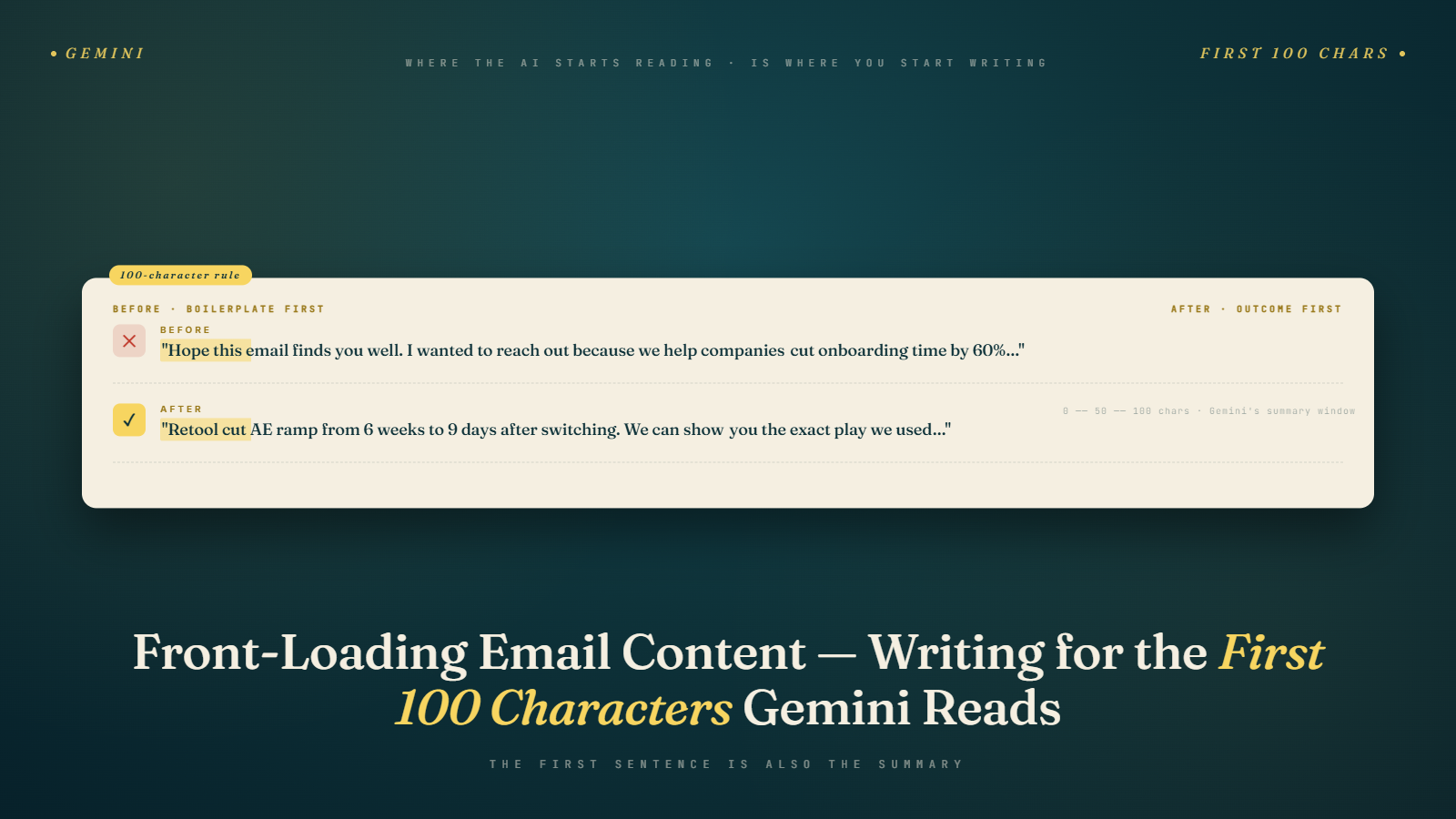
Front-Loading Email Content: Writing for the First 100 Characters Gemini Reads
Gmail's Gemini reads your first 100 characters first. If those are boilerplate, your AI summary is garbage. Here's how to front-load for the Gemini era.
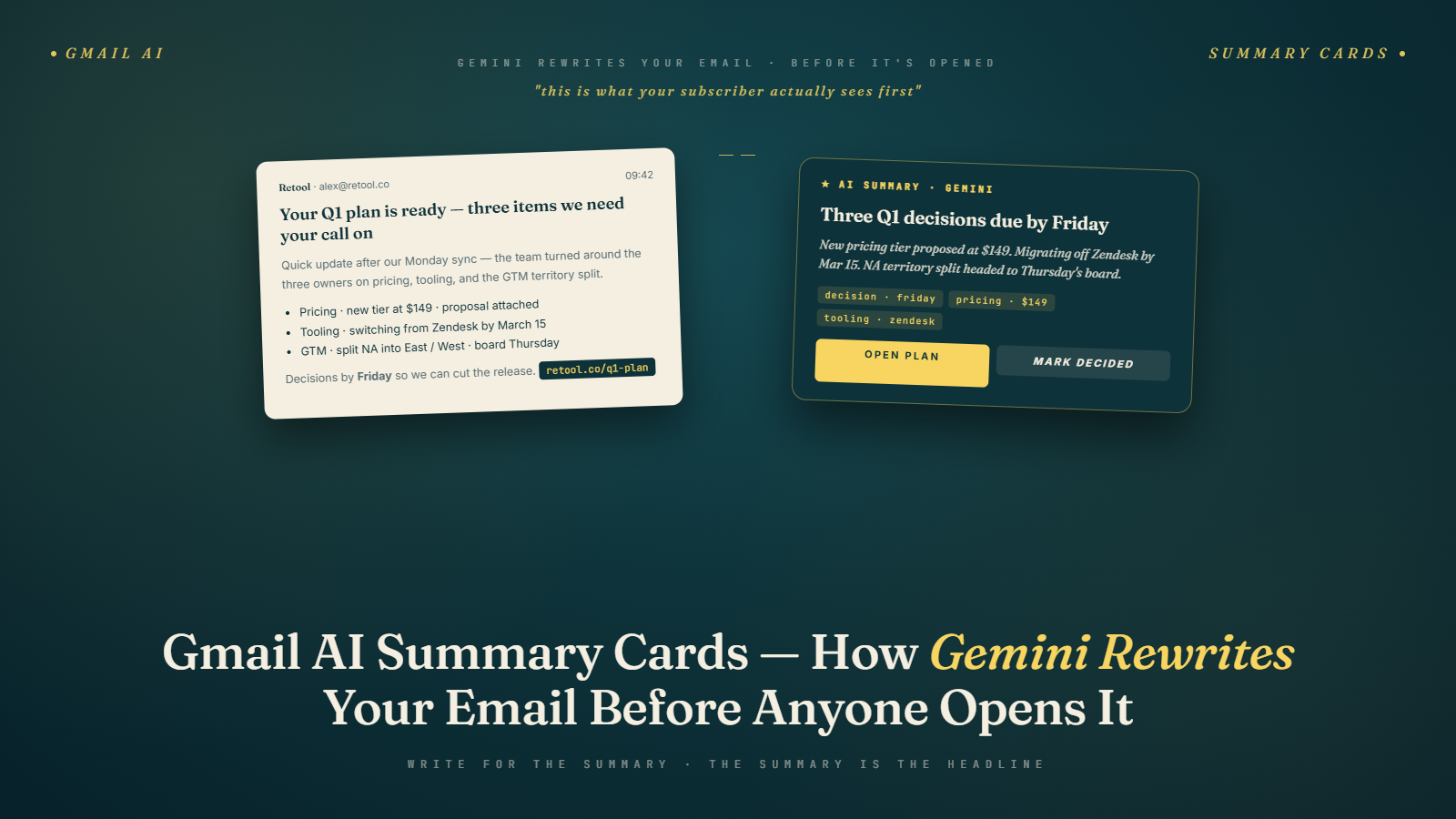
Gmail AI Summary Cards: How Gemini Rewrites Your Email Before Anyone Opens It
Gmail's Gemini AI generates summary cards from your email before subscribers open it. Here's what the AI prioritizes and how to structure content so the summary works for you.
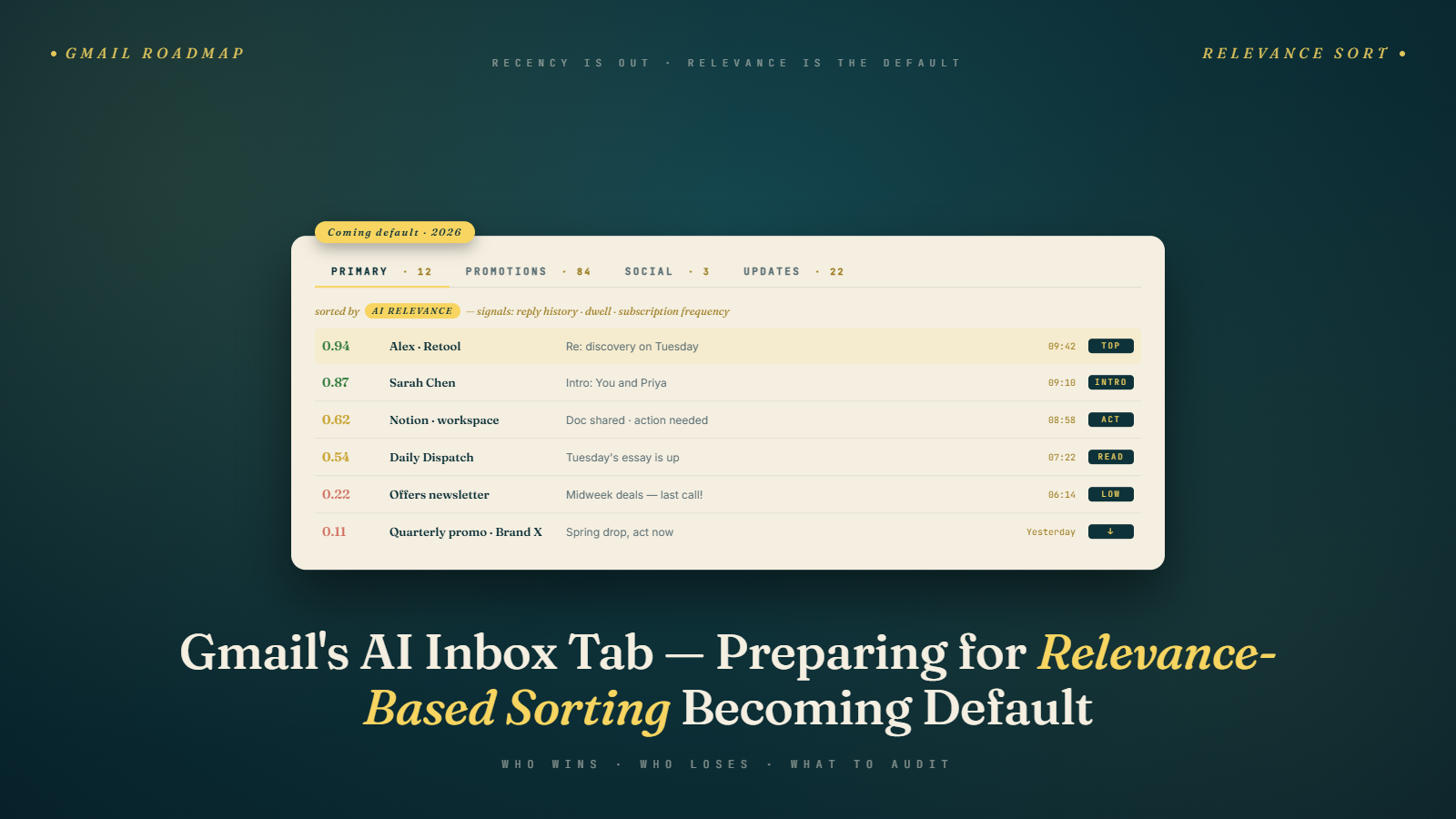
Gmail's AI Inbox Tab: Preparing for Relevance-Based Sorting Becoming Default
Gmail is shifting inbox tabs from recency to AI-determined relevance. What the signals are, who wins, who loses, and how to audit your placement now.
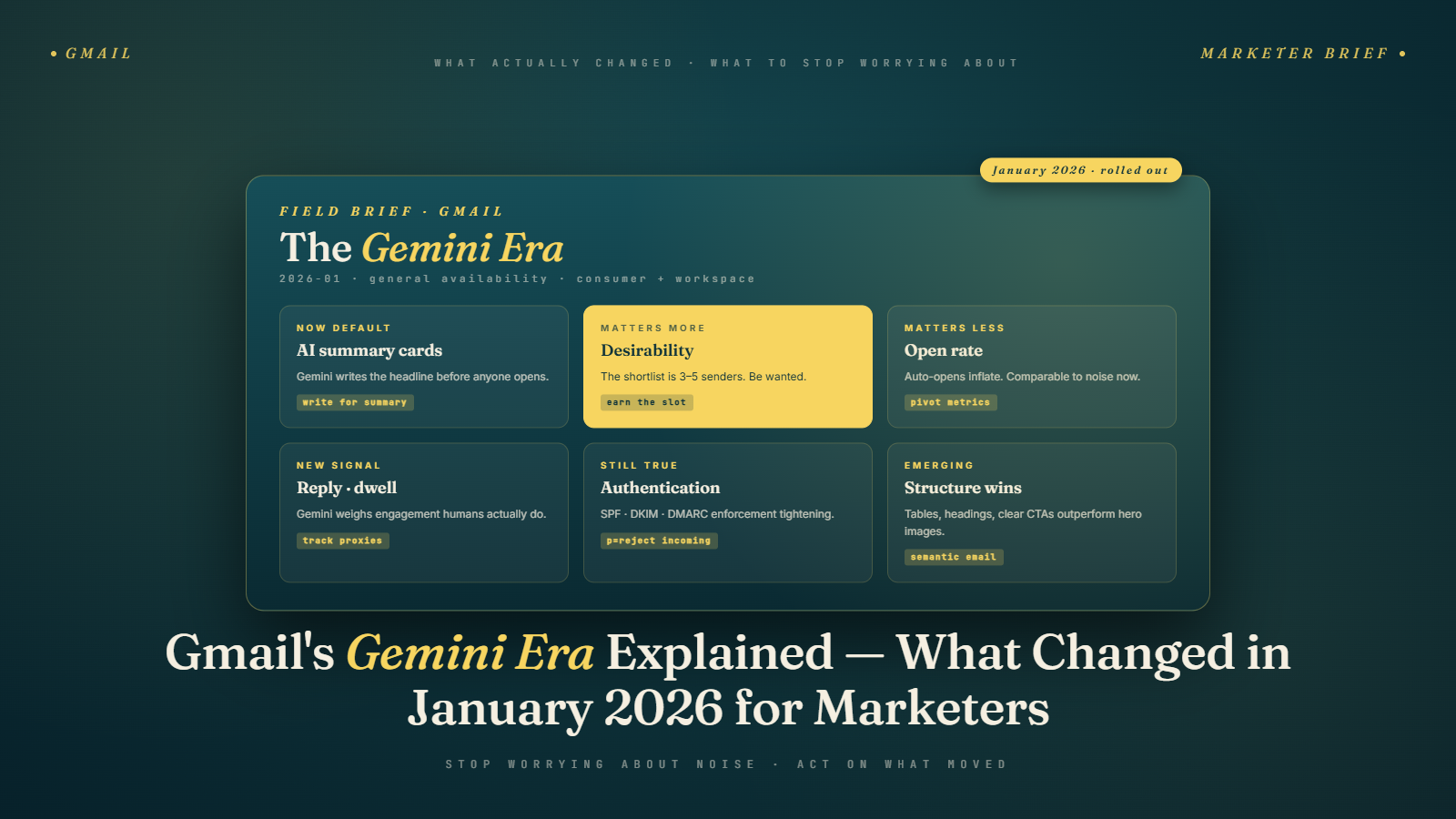
Gmail's Gemini Era Explained: What Changed in January 2026 for Marketers
Gemini rolled into Gmail for most users by January 2026. Here is what actually changed for marketers, what to stop worrying about, and what now matters more than it used to.
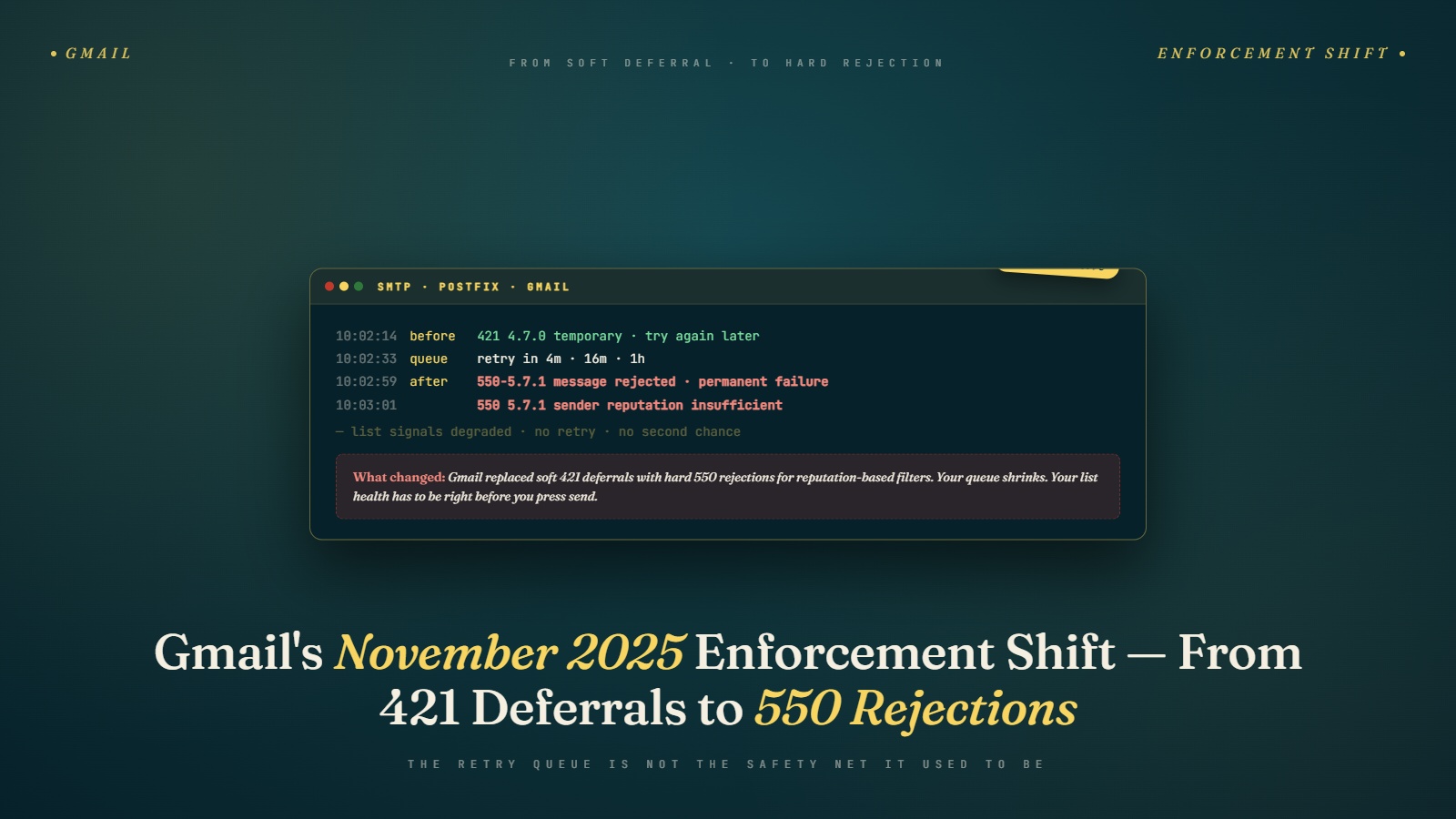
Gmail's November 2025 Enforcement Shift: From Soft 421 Deferrals to Hard 550 Rejections
Gmail swapped soft 421 deferrals for hard 550 rejections in November 2025. Here is what triggered the change, what it means for your list health, and what to do before your next send.
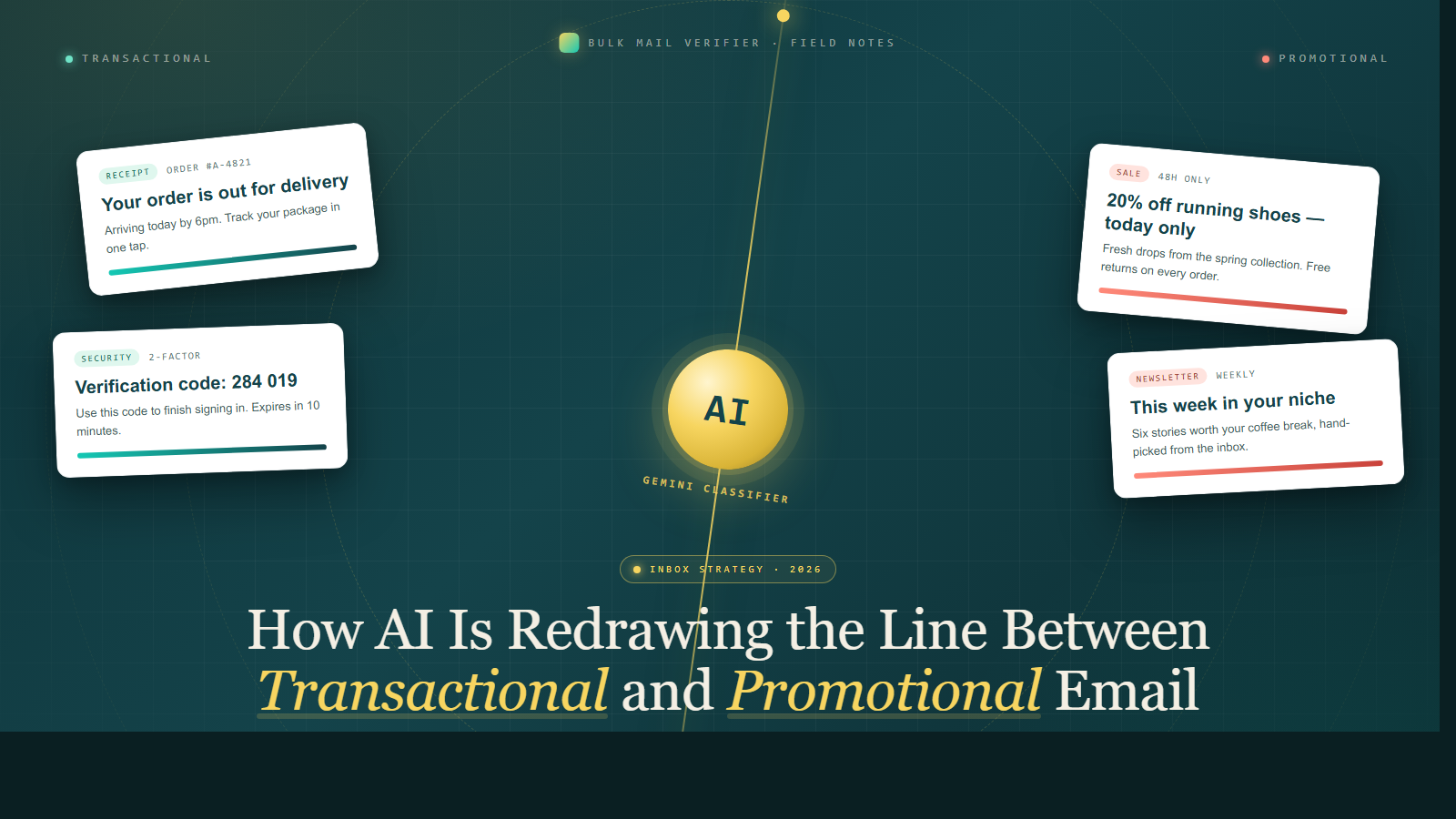
How AI Is Changing Transactional vs Promotional Email Separation
Gmail's AI now enforces the line between transactional and promotional email more strictly than ever. Here's how to keep your sends in the right lane.
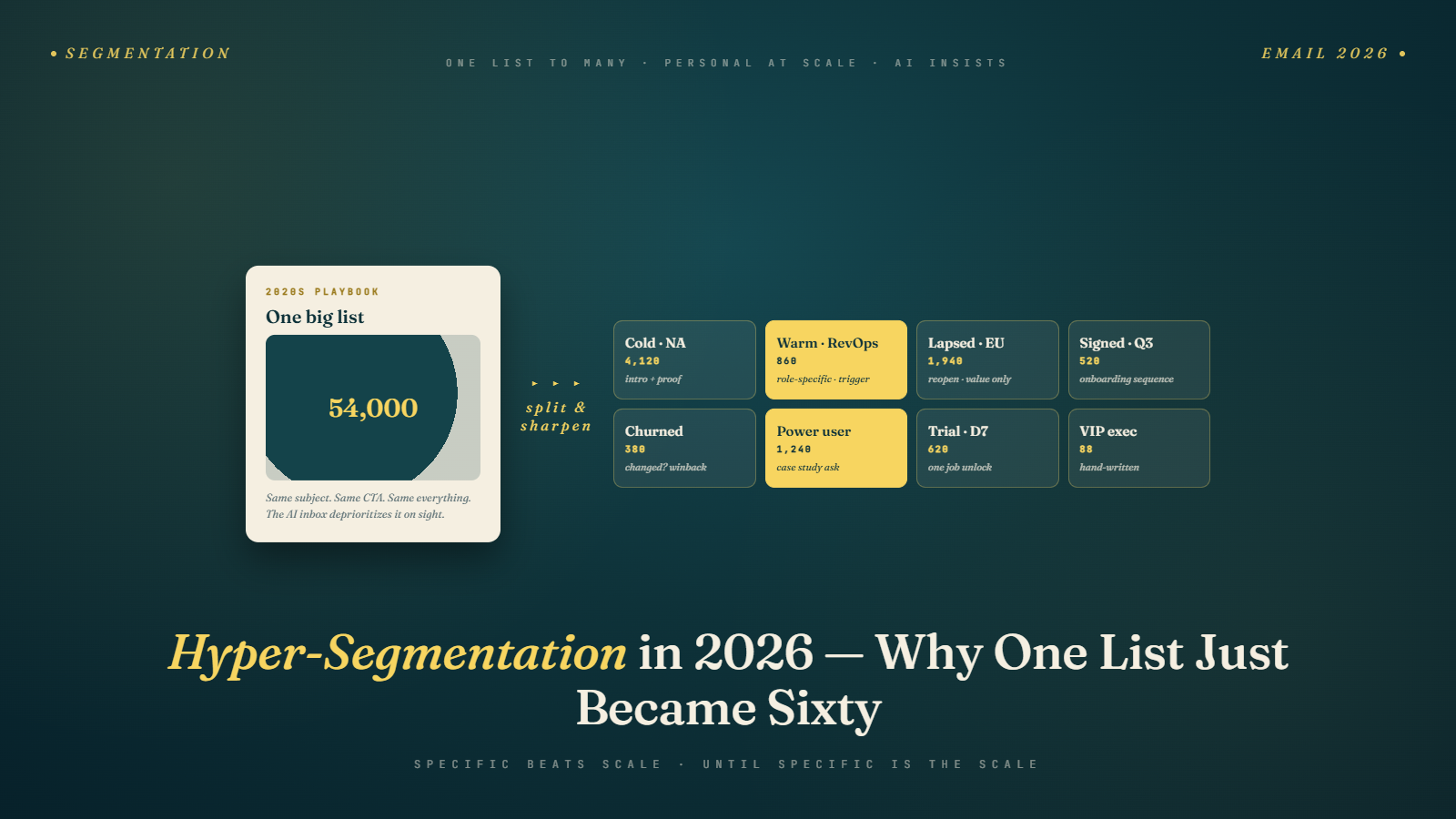
Hyper-Segmentation Is Overrated: What Actually Drives Email Performance in 2026
Hyper-segmentation sounds sophisticated and often produces worse results than four well-chosen segments. The 2026 data on segment count and performance is counterintuitive, and most programs are over-segmenting.
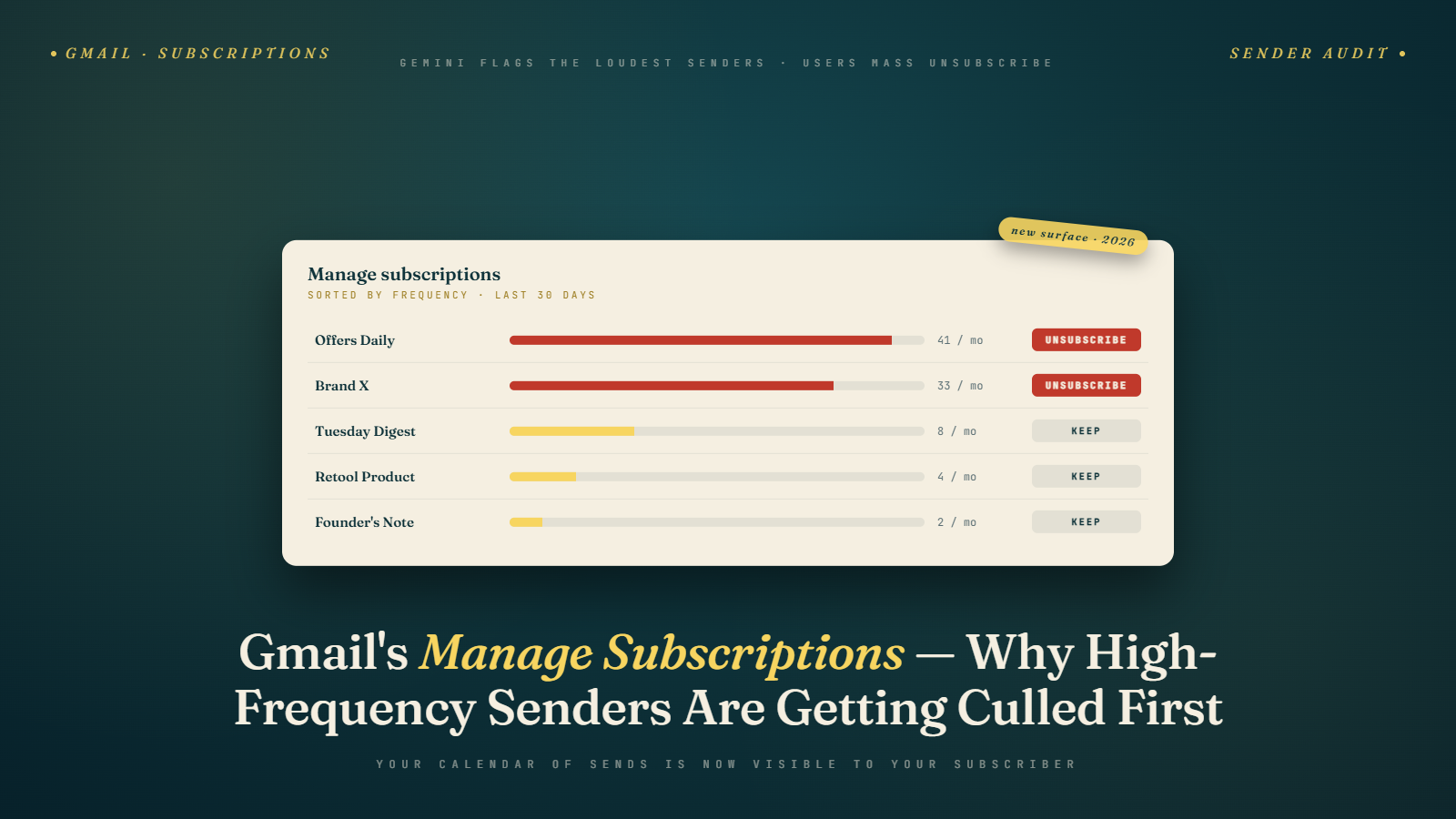
Manage Subscriptions in Gmail: How High-Frequency Senders Get Exposed
Gmail Manage Subscriptions makes bulk unsubscribe trivial and exposes high-frequency senders. What it shows, who gets cut, and how to audit your cadence.
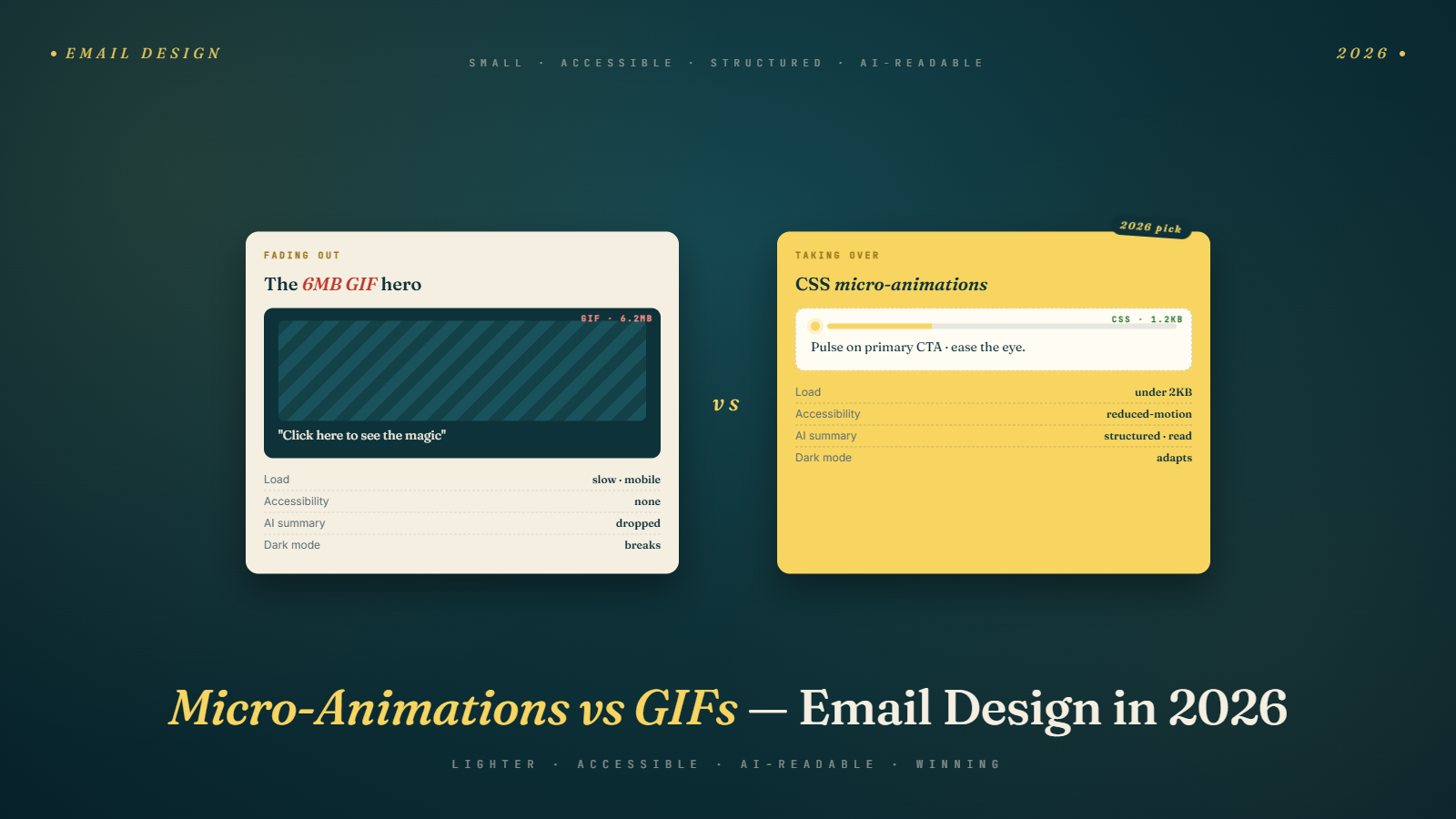
Micro-Animations vs GIFs: Email Design Direction for 2026
GIFs hit mainstream email in 2015 and never left. In 2026, subtle CSS animations and scroll-triggered motion are pushing them out, but only in the places where the upgrade is actually worth it.
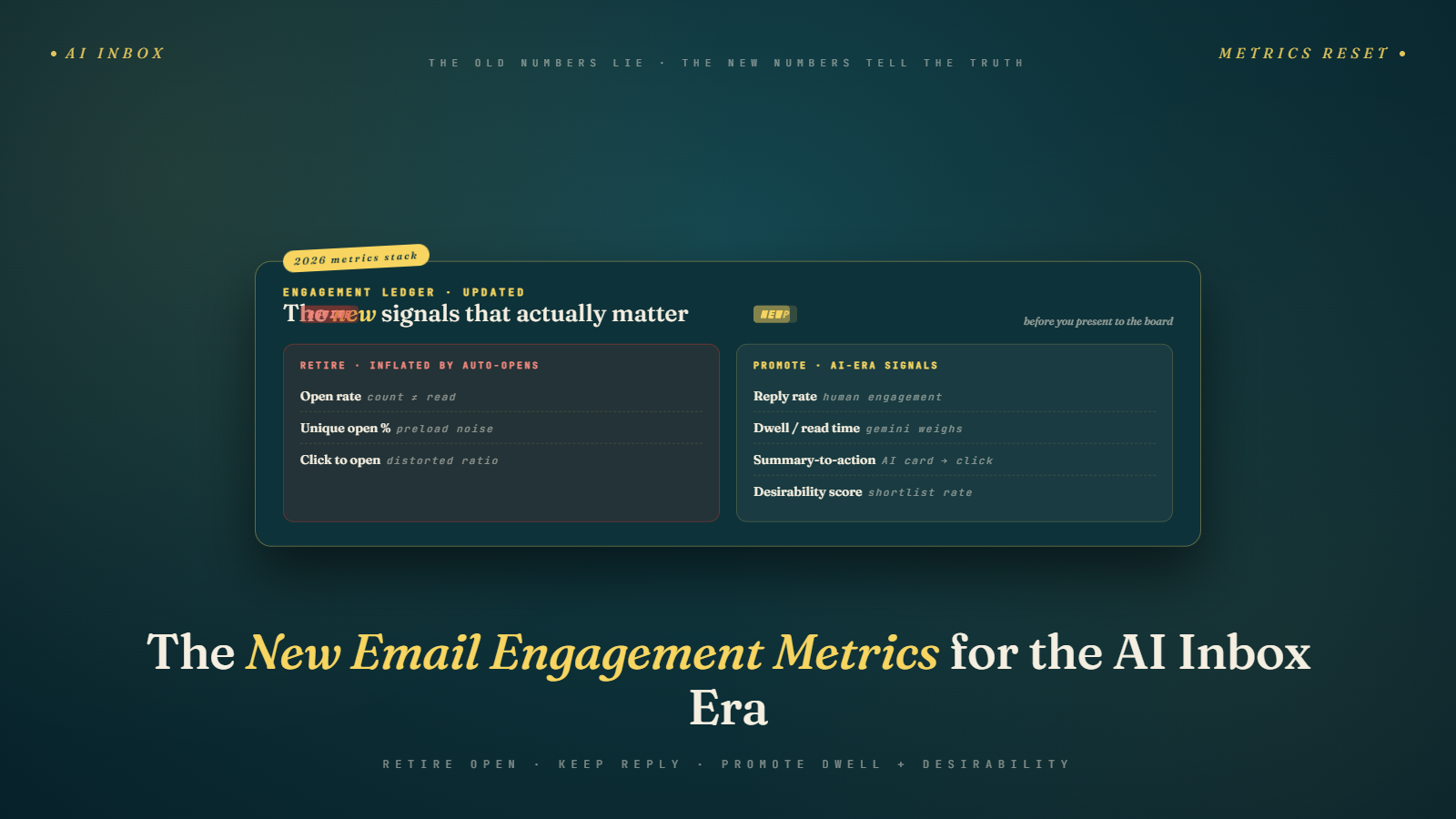
New Engagement Metrics for an AI-Mediated Inbox: Scroll, Dwell, Reply Rate
Opens are compromised. Reply rate, scroll depth, dwell time, and hover are the new signals Gmail AI weighs. Build a proxy measurement framework now.
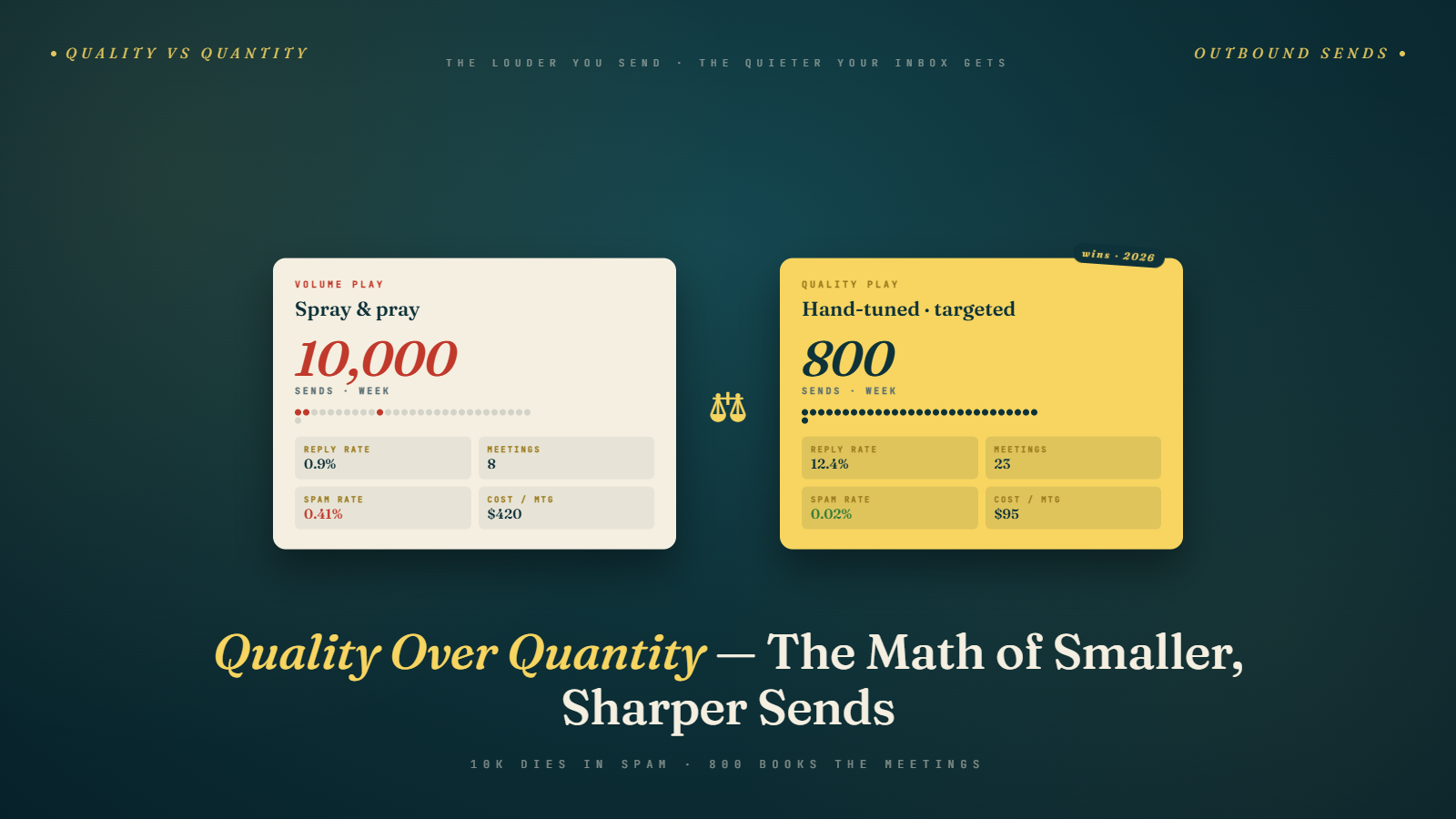
Quality Over Quantity: Why Fewer Sends Now Outperform High-Volume Programs
Fewer, better-targeted emails now outperform high-volume programs. The 2025-2026 data, why it changed, and how to decide if a planned send is worth running.
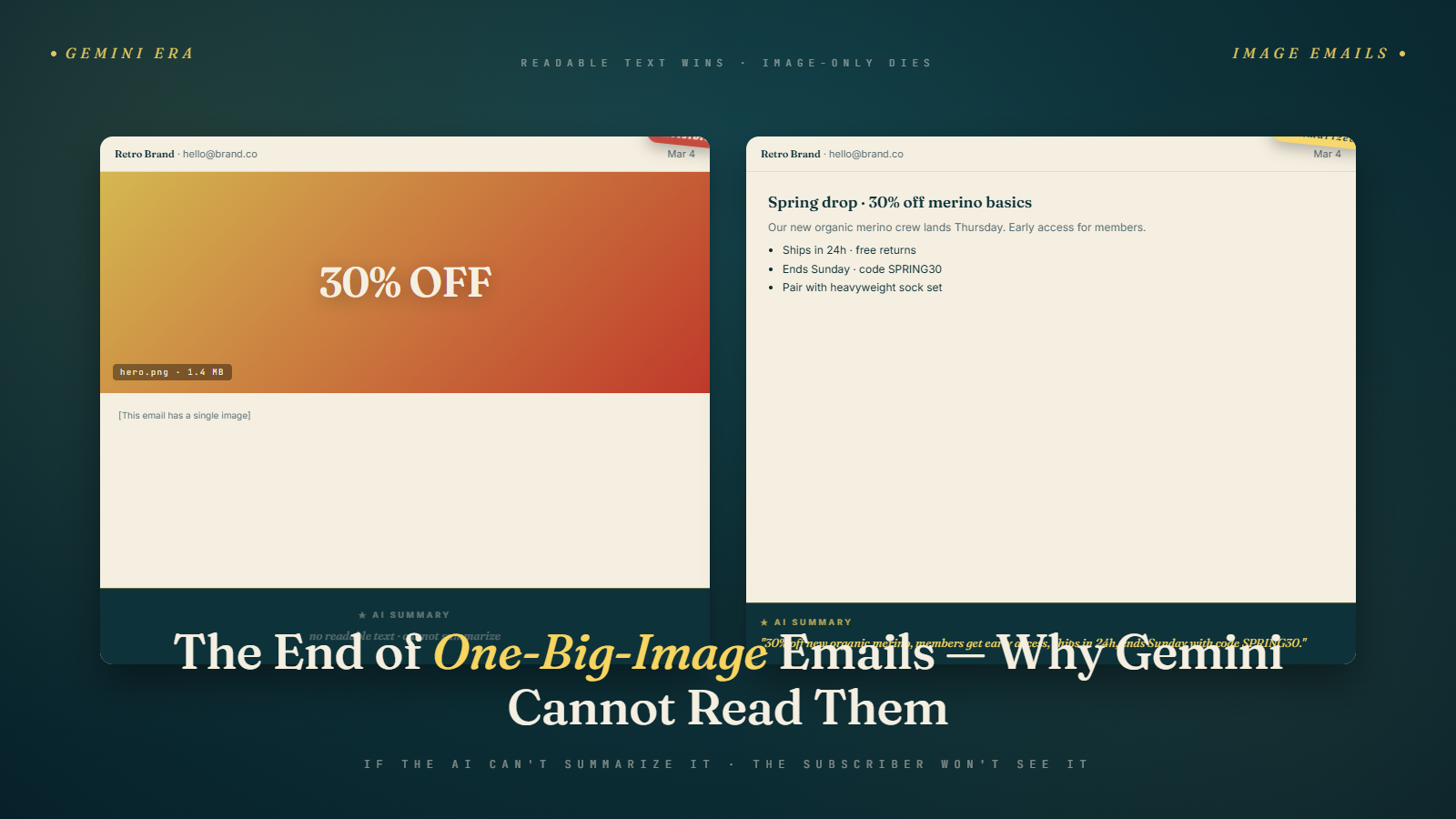
The End of One-Big-Image Emails: Why Gemini Cannot Read Them
Image-only emails produce no Gemini AI summary, invisible to subscribers before they open. The era of one-big-image emails is ending faster than most brands realize.
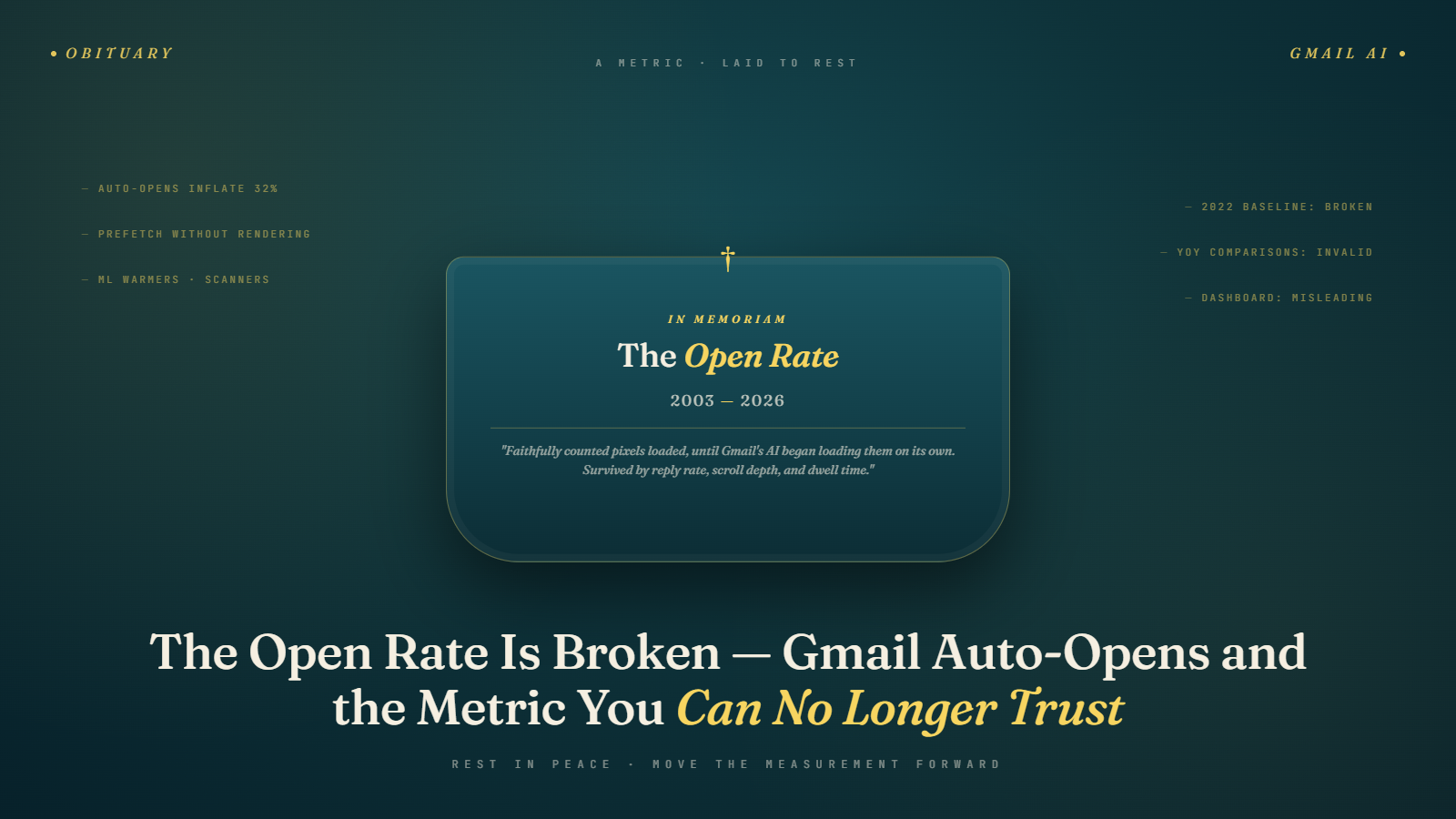
The Open Rate Is Broken: Gmail Auto-Opens and the Metric You Can No Longer Trust
Gmail's AI prefetching inflates open rates with machine-generated events. Your 2026 open rate is not comparable to 2022. Here's what to measure instead.
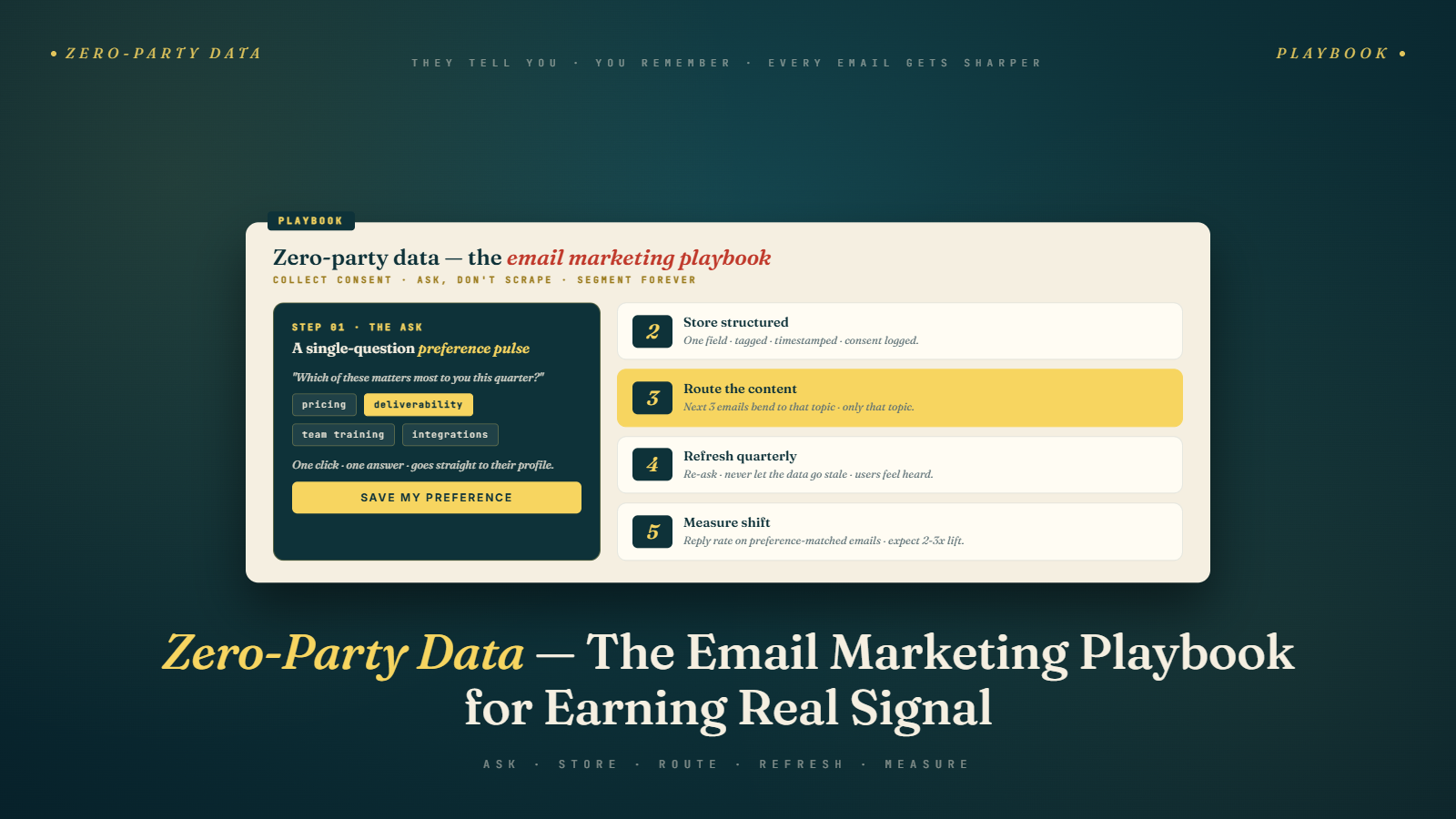
The Zero-Party Data Playbook for Email Marketing in 2026
Third-party cookies are gone, inferred data is noisy, and subscribers are more suspicious of surveillance personalization. Zero-party data is the durable answer, and most programs collect it poorly.
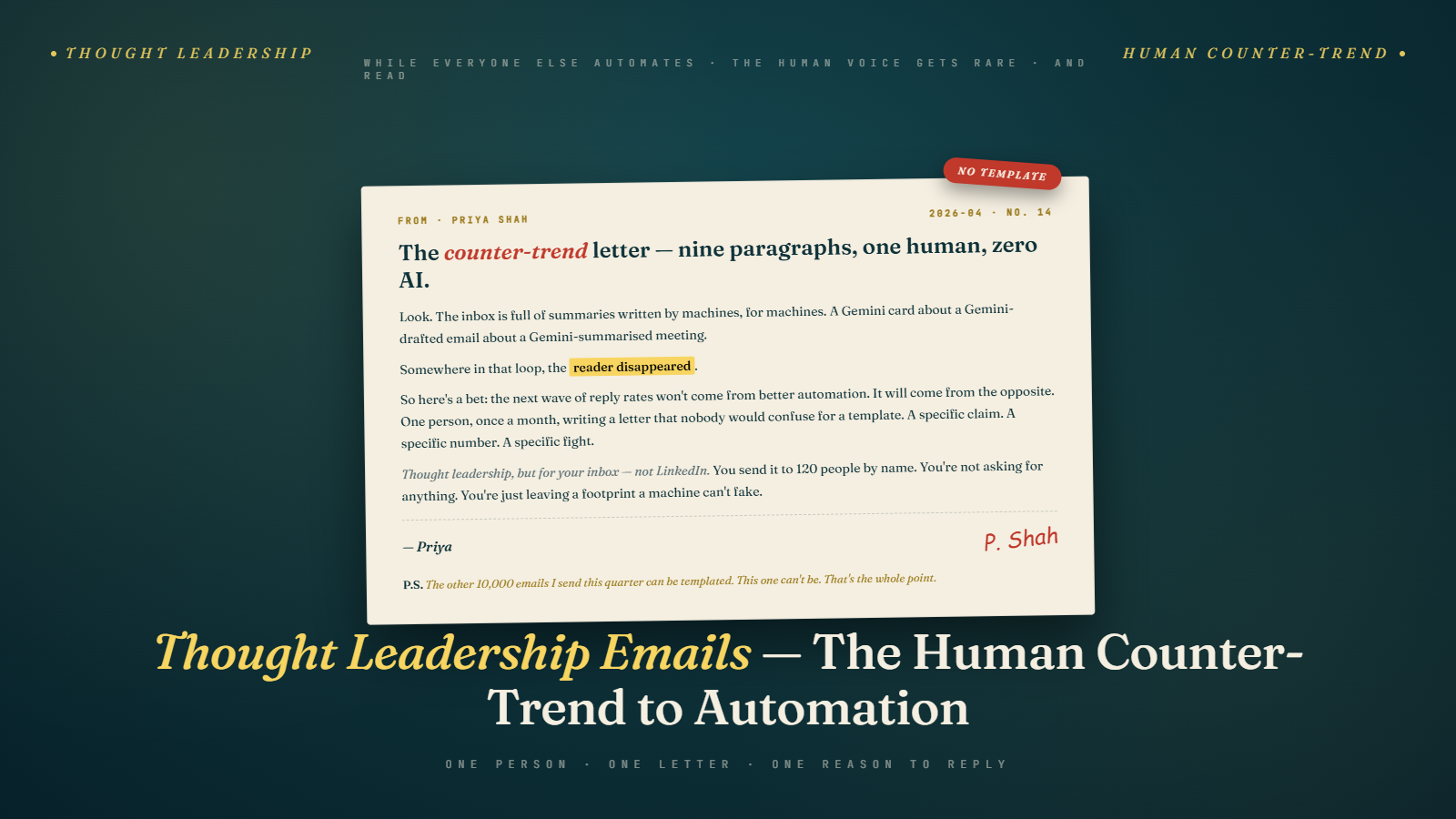
Thought Leadership Emails: The Human Counter-Trend Winning in 2026
As inboxes fill with AI-generated promotional content, human-voiced thought leadership emails are pulling engagement rates that promotional sends cannot match. The counter-trend is real and most brands are missing it.
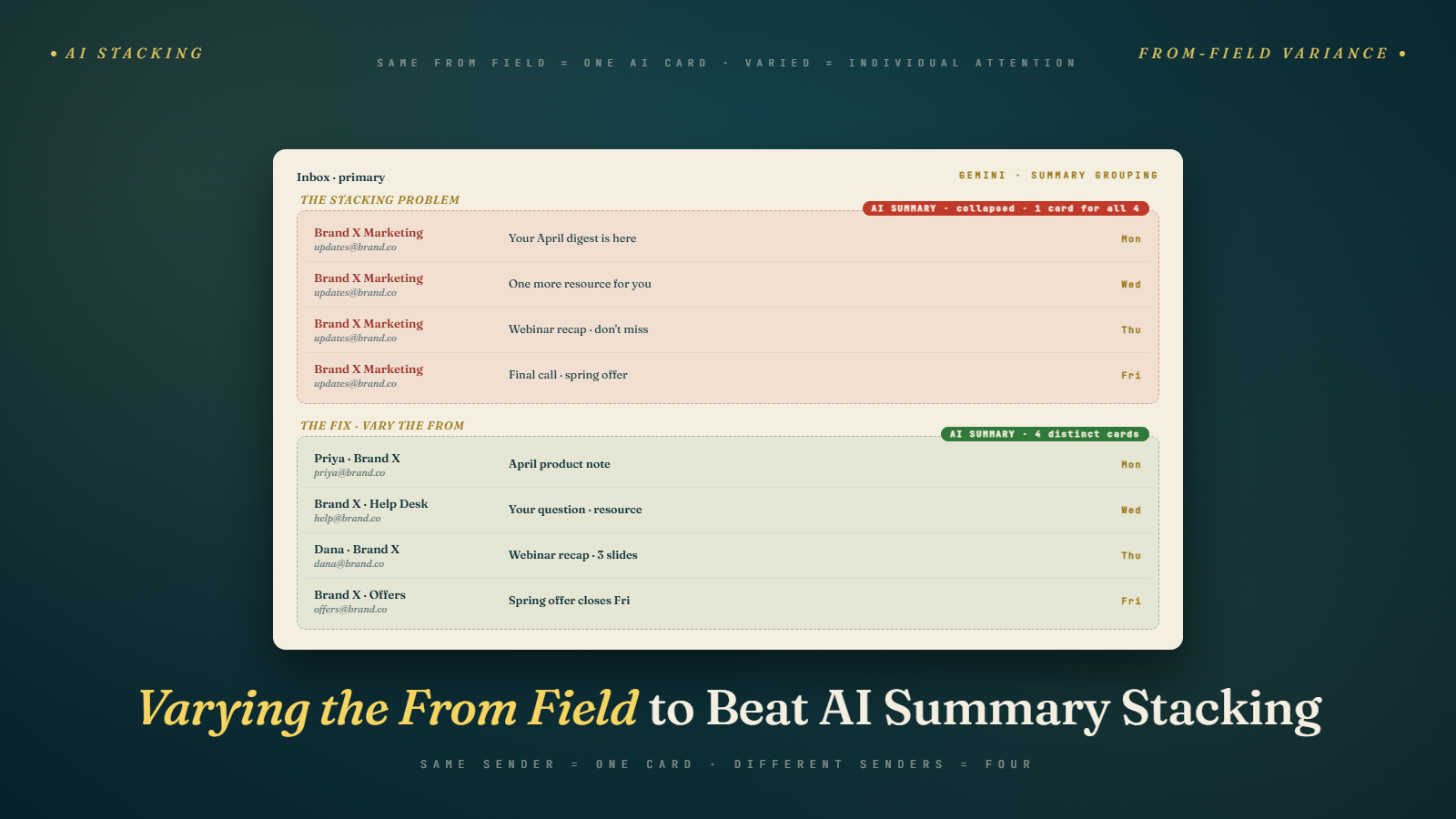
Varying the From Field: A New Tactic Against AI Summary Stacking in Gmail
Sending every email from the same From name used to be best practice. In the Gemini era, it can cause AI summary stacking that compresses your brand into a single line subscribers ignore.
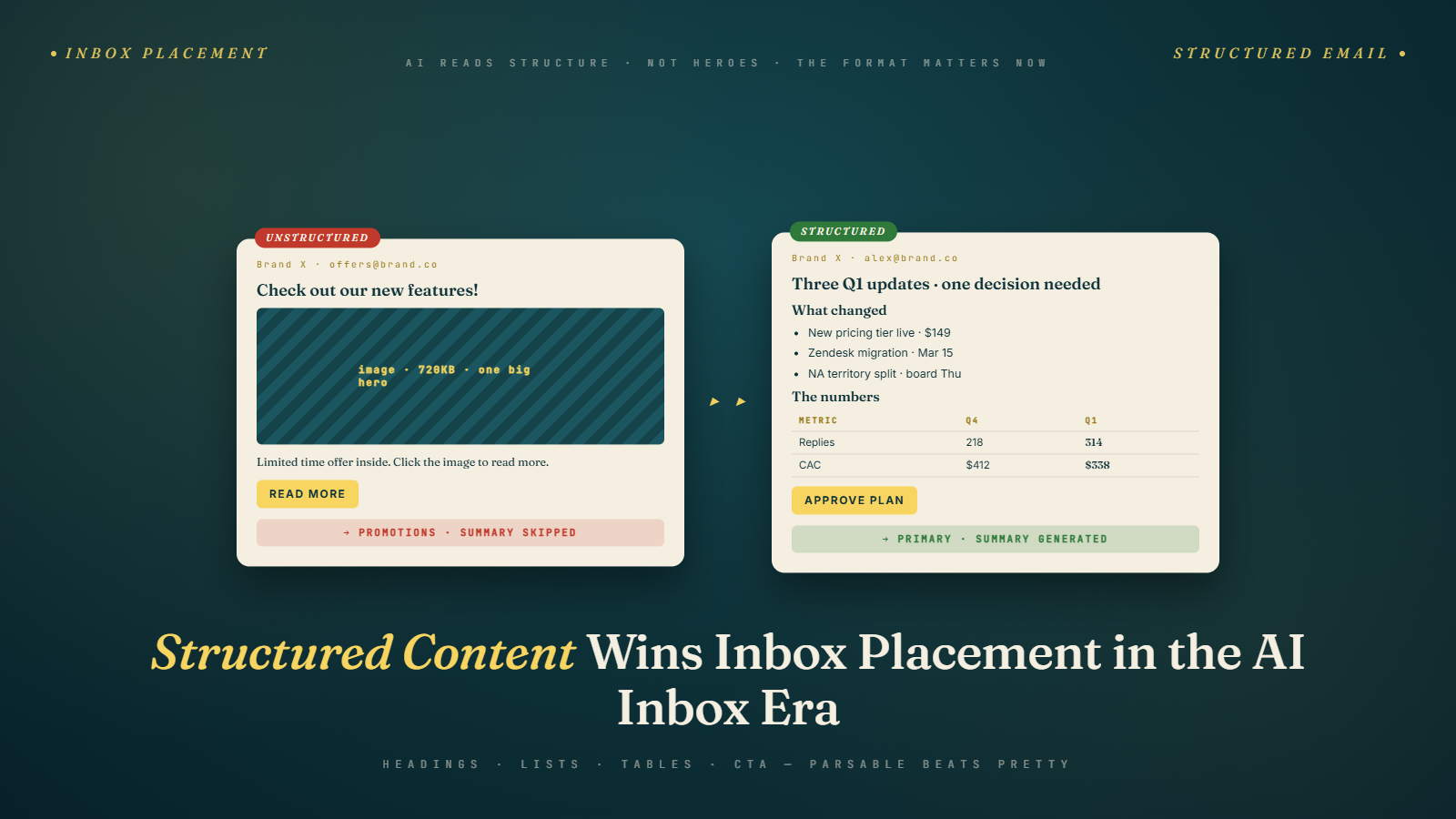
Why Structured Content (Tables, Bullets, Headings) Now Wins Inbox Placement
Structured email content (headings, tables, bullets) now improves both AI summaries and human engagement. The old advice to avoid structure is outdated.
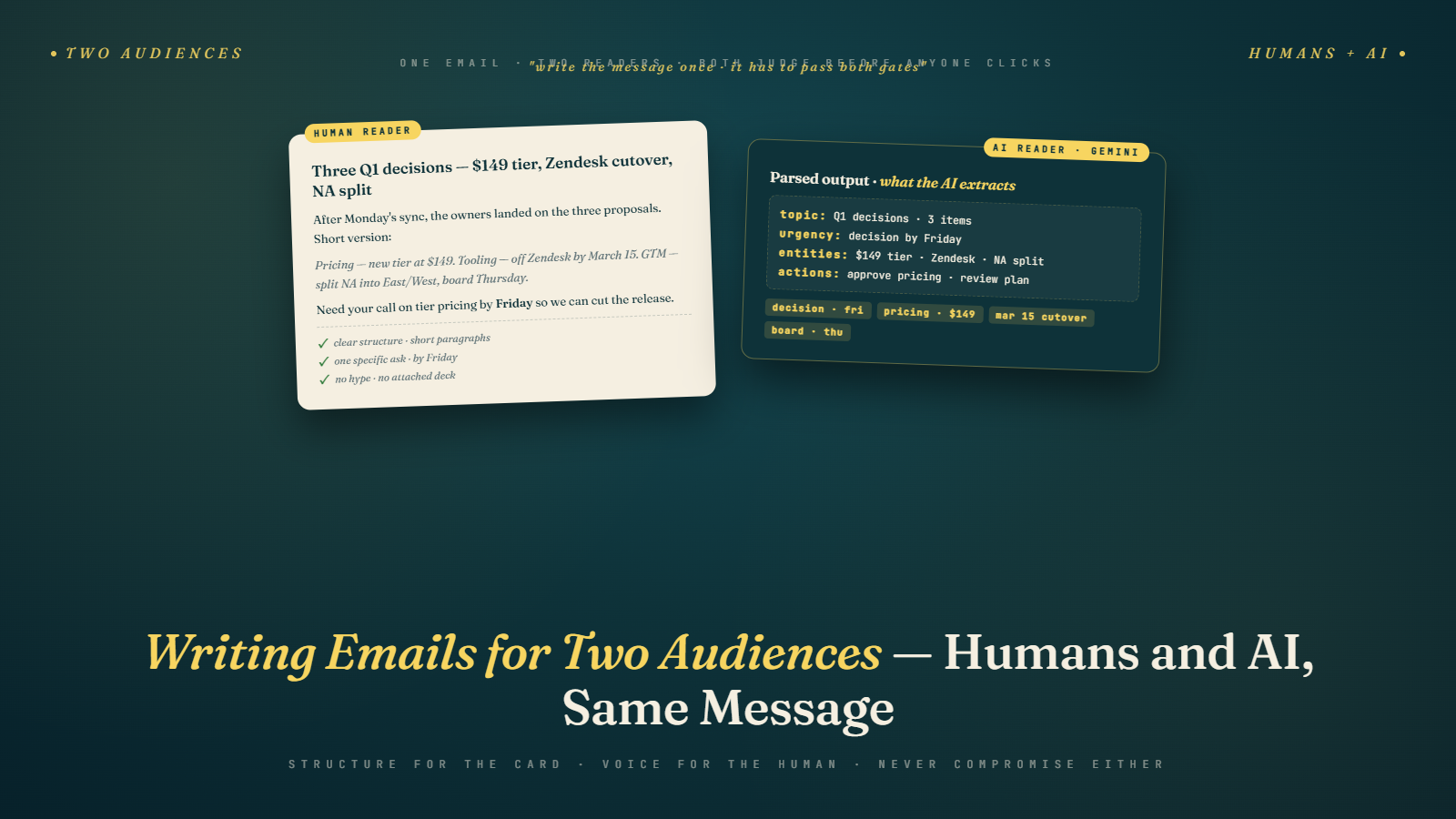
Writing Emails for Two Audiences: Humans and the AI Summarizing Them
Every email you send has two readers now: your subscriber and the AI summarizing it. Here is how to write for both without sacrificing brand voice or conversion.
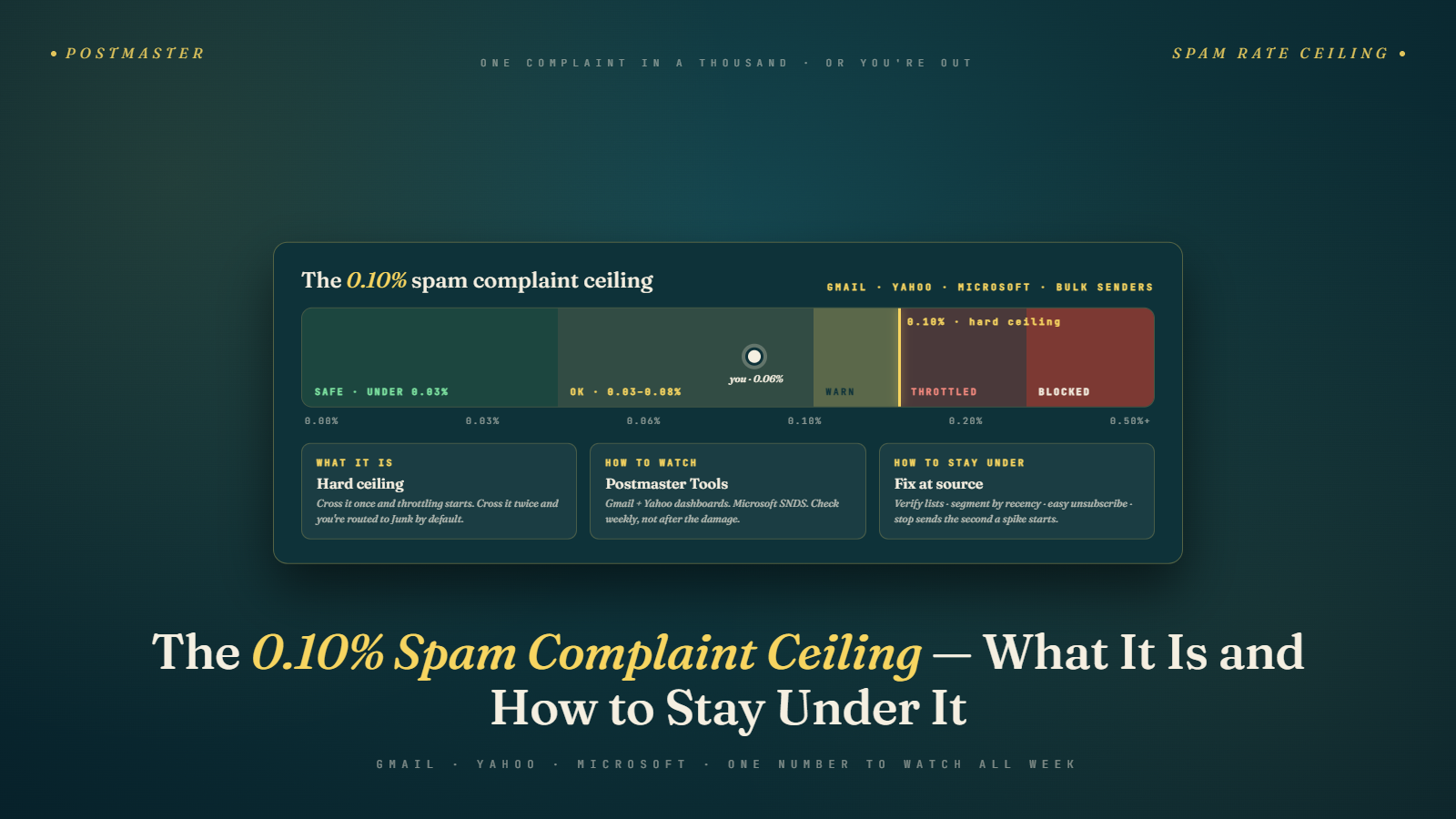
Your Spam Complaint Rate Ceiling Is 0.10%, Not 0.30%
Google's spam complaint ceiling is 0.10%, not 0.30%. Learn how to measure your real rate, what triggers enforcement, and how to recover if you breach it.
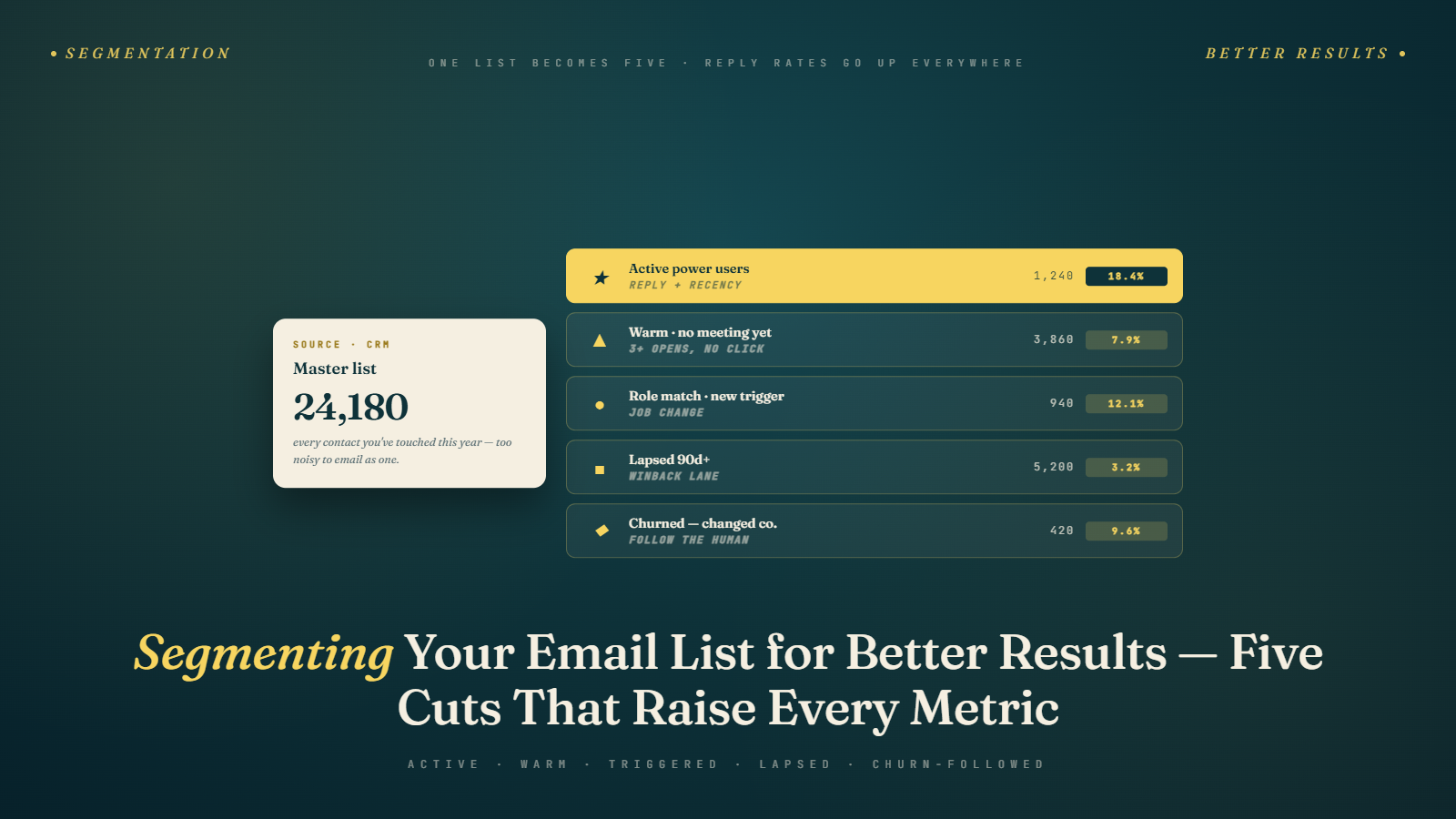
Segmenting Your Email List for Better Cold Email Results
Sending the same email to everyone on your list is a mistake even the best copy can't fix. Learn how to segment your cold email list effectively — by industry, company size, role, and buying stage — to dramatically improve reply rates.
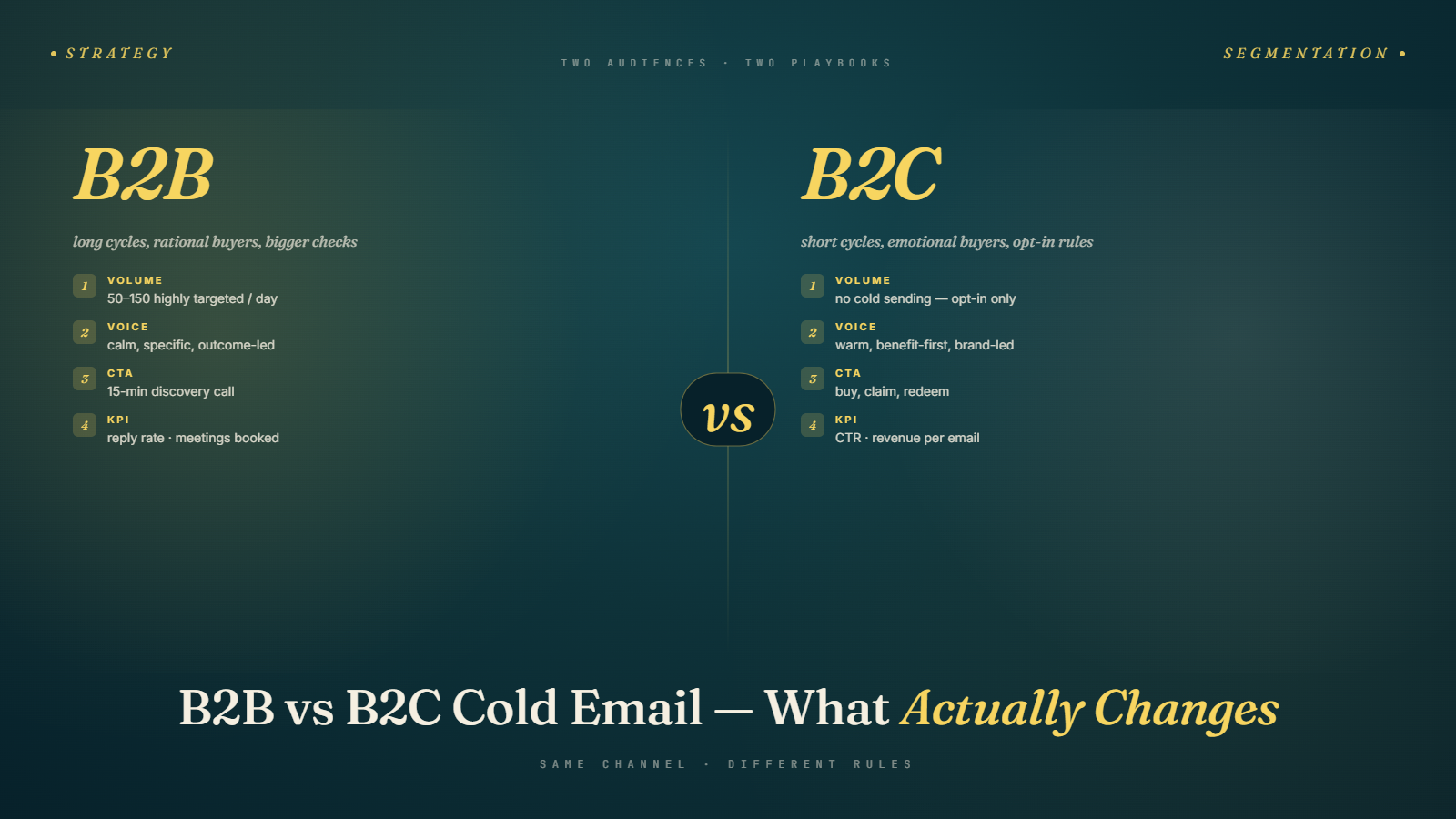
B2B vs B2C Cold Email: What Changes?
B2B and B2C cold email look similar on the surface but operate by completely different rules — here's exactly what changes and why it matters.
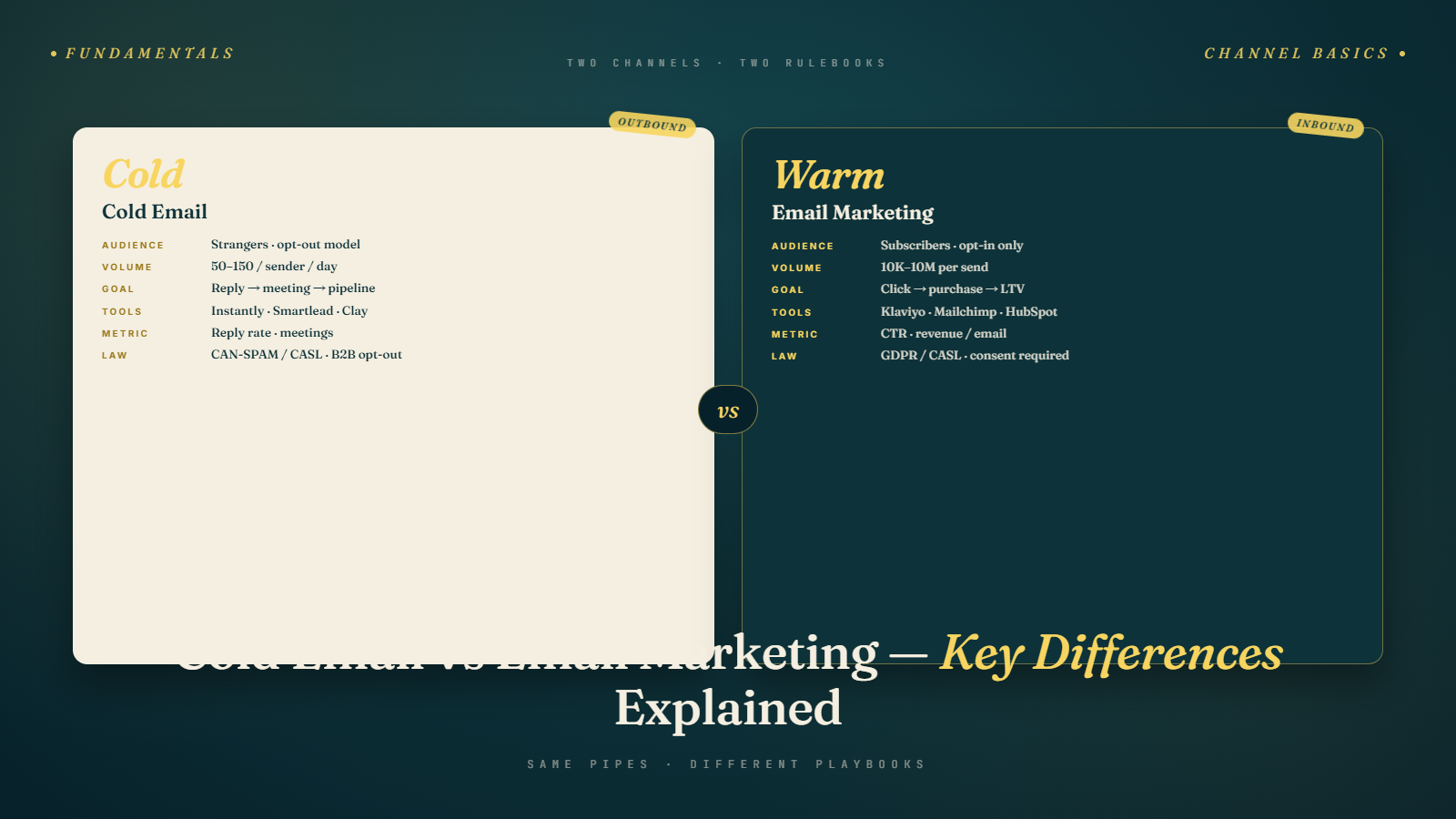
Cold Email vs Email Marketing: Key Differences Explained
Cold email and email marketing are both email-based strategies, but they operate under completely different rules, tools, goals, and metrics — and confusing them is one of the most common and costly mistakes in B2B outreach.
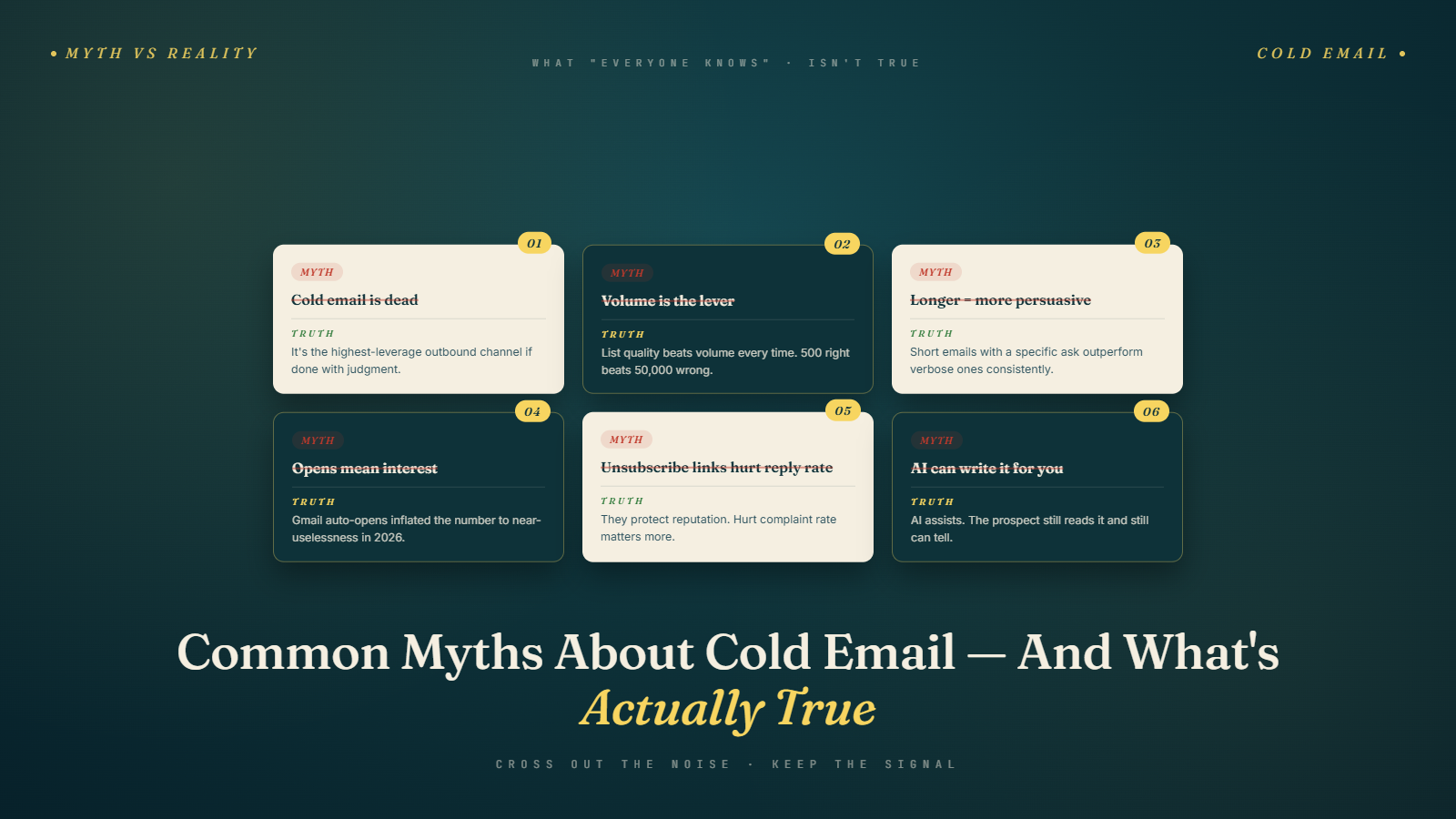
Common Myths About Cold Email Outreach (And What's Actually True)
Ten of the most persistent cold email myths are holding back founders, freelancers, and sales teams from results they could already be getting.
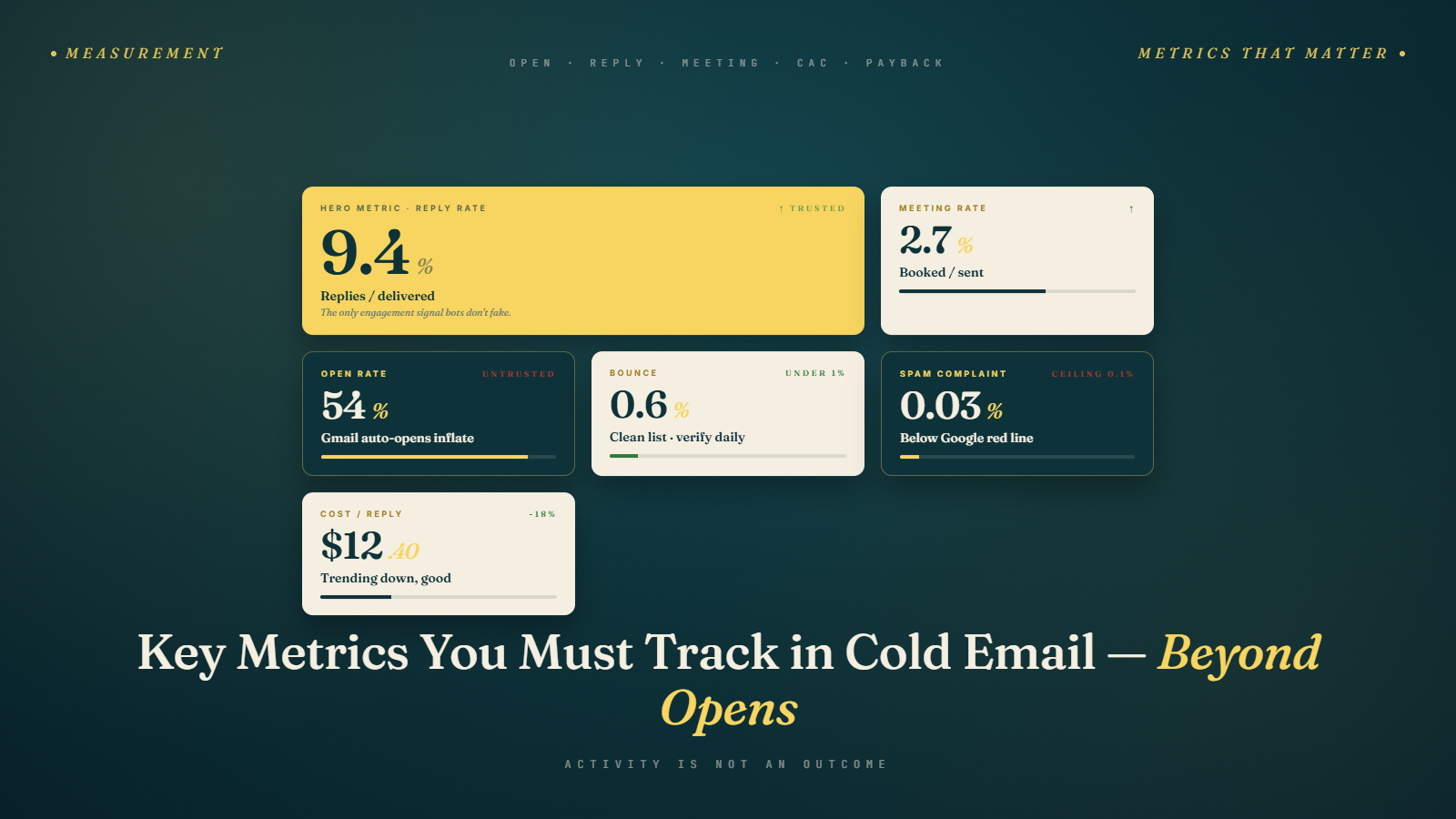
Key Metrics You Must Track in Cold Email (Open, Reply, Conversion)
Tracking the right cold email metrics — not just open rates, but reply rates, bounce rates, meeting rates, and cost per acquisition — is what separates campaigns that compound over time from ones that repeat the same mistakes at scale.
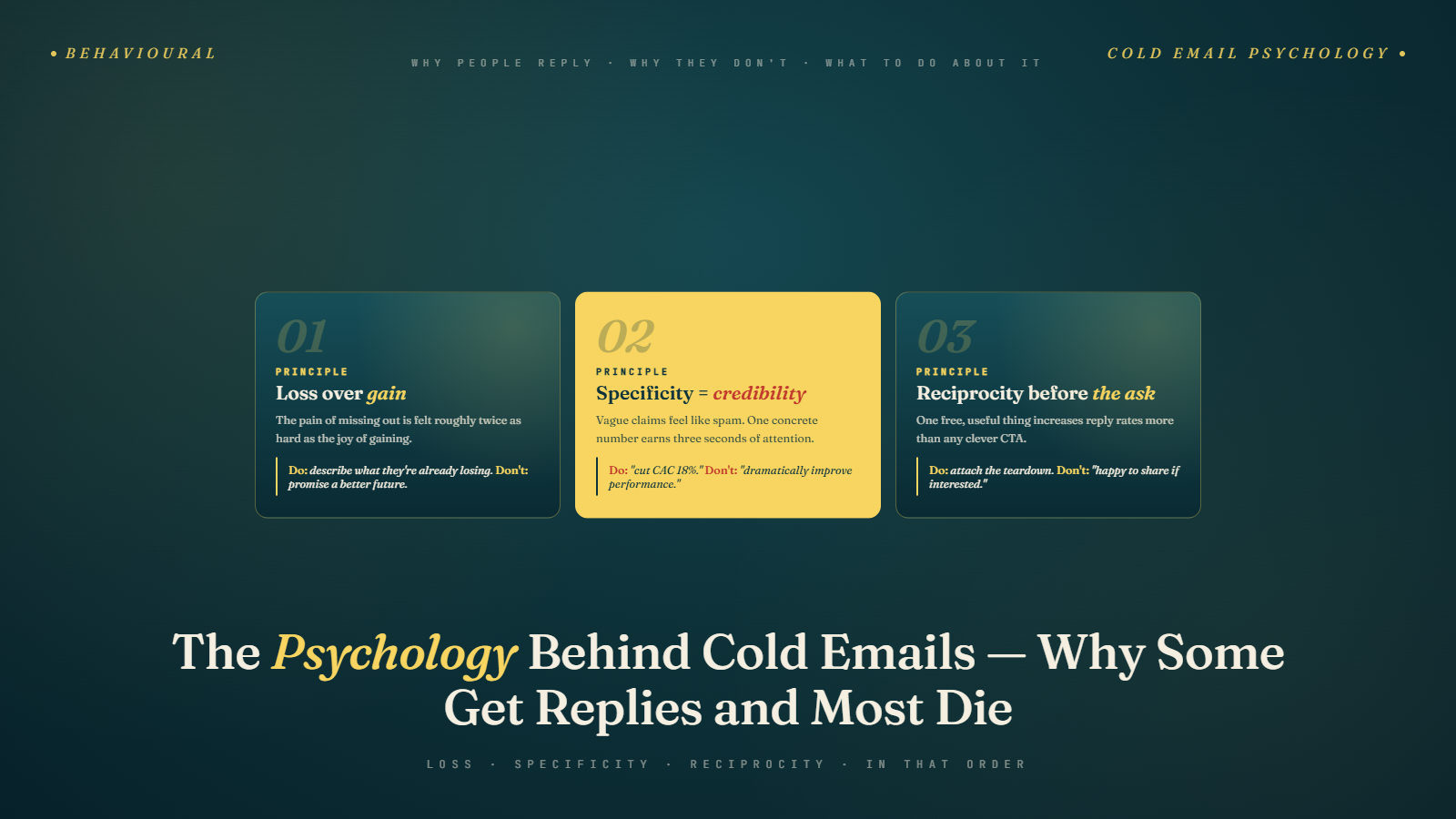
The Psychology Behind Cold Emails That Get Replies
The difference between a cold email that gets a reply and one that gets deleted isn't luck — it's a set of psychological principles that the best senders understand and apply deliberately.
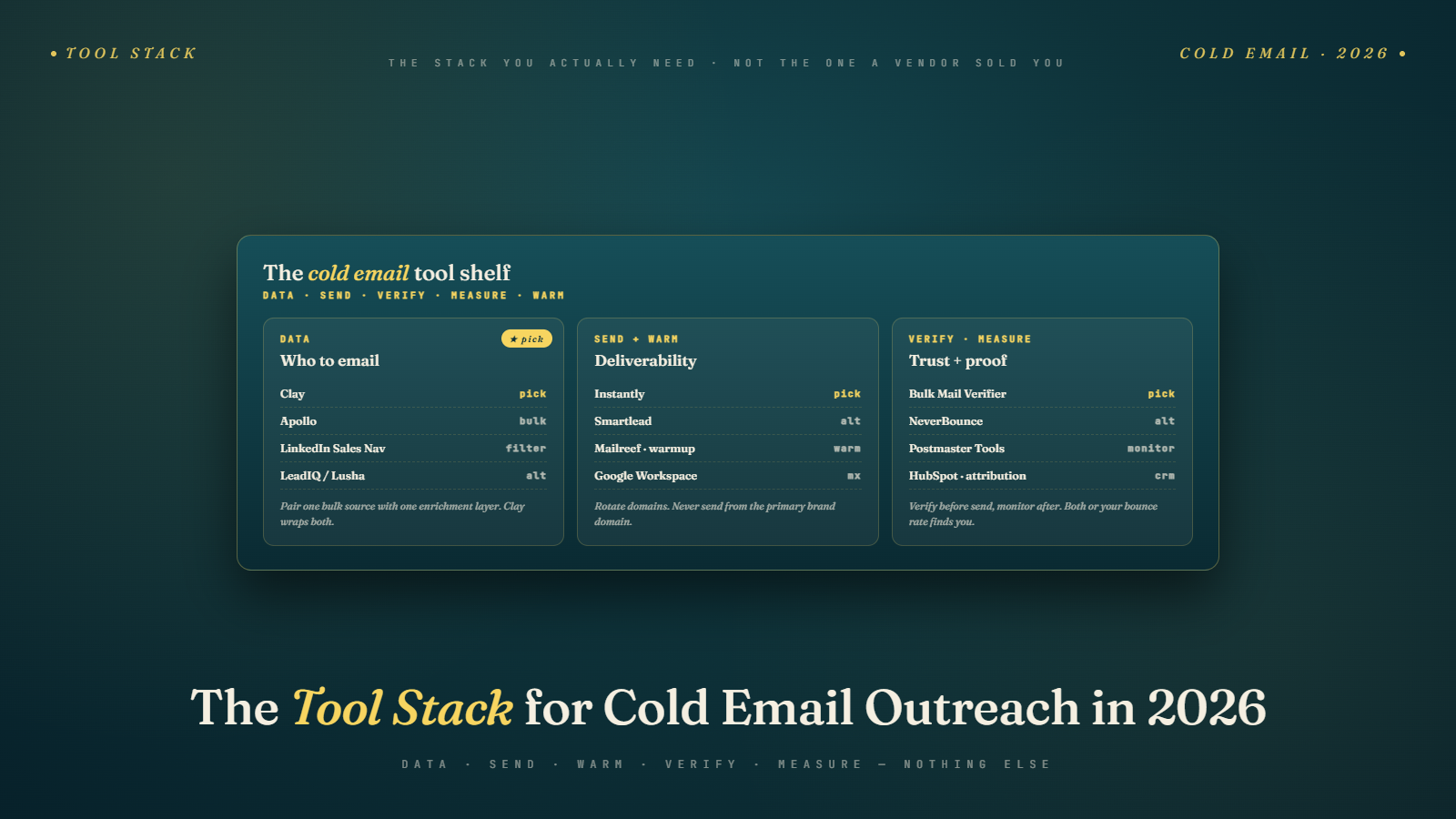
Tools You Need to Start Cold Email Outreach
A complete, opinionated breakdown of every tool category you need to run cold email outreach — from prospecting and verification to sending, warm-up, and deliverability monitoring.
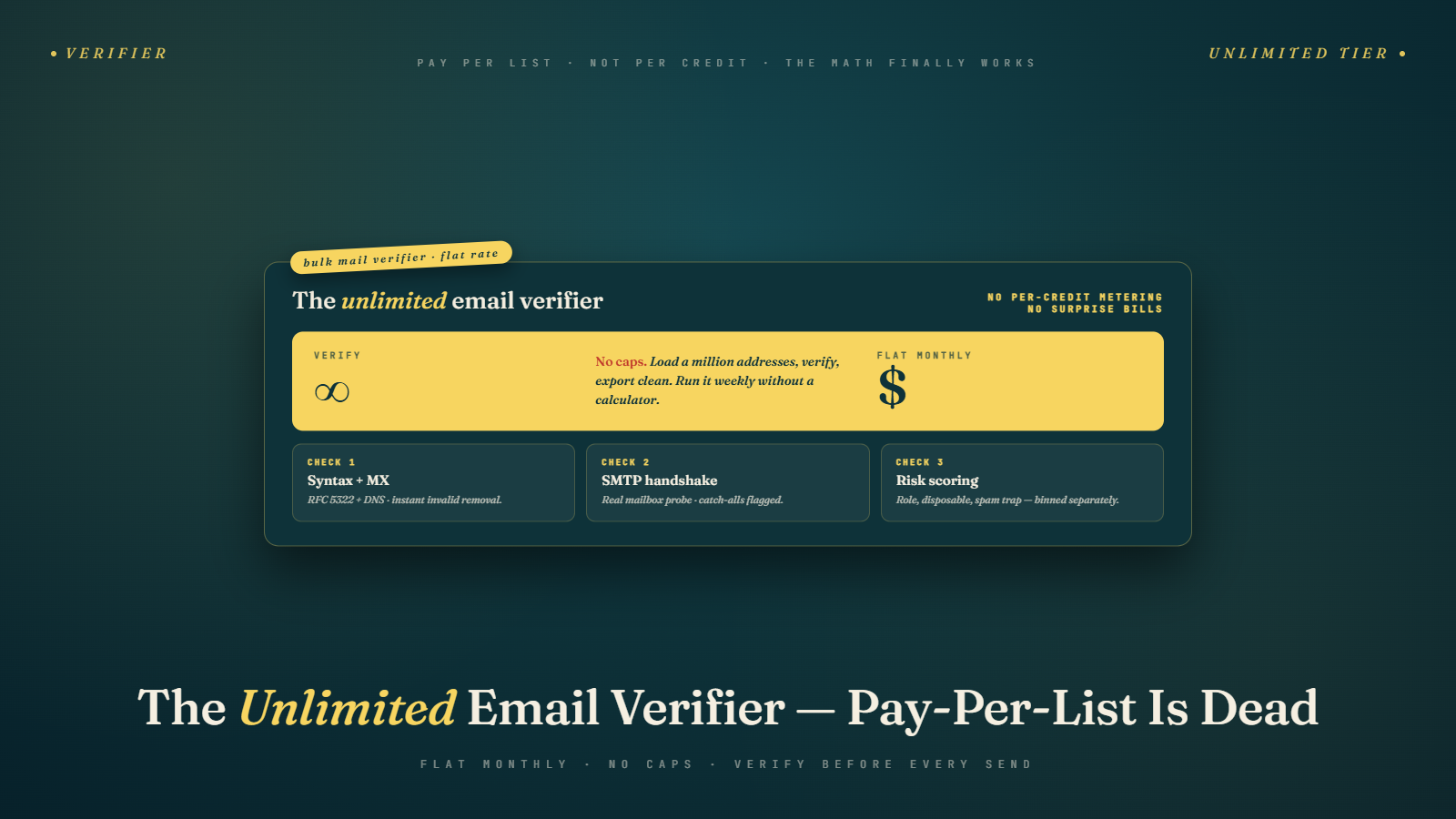
Unlimited Email Verifier — Verify as Many Emails as Your Business Needs
Discover everything you need to know about unlimited email verifiers — how they work, why they matter, and how BulkMailVerifier.com gives you the power to verify as many emails as your business demands without limits.
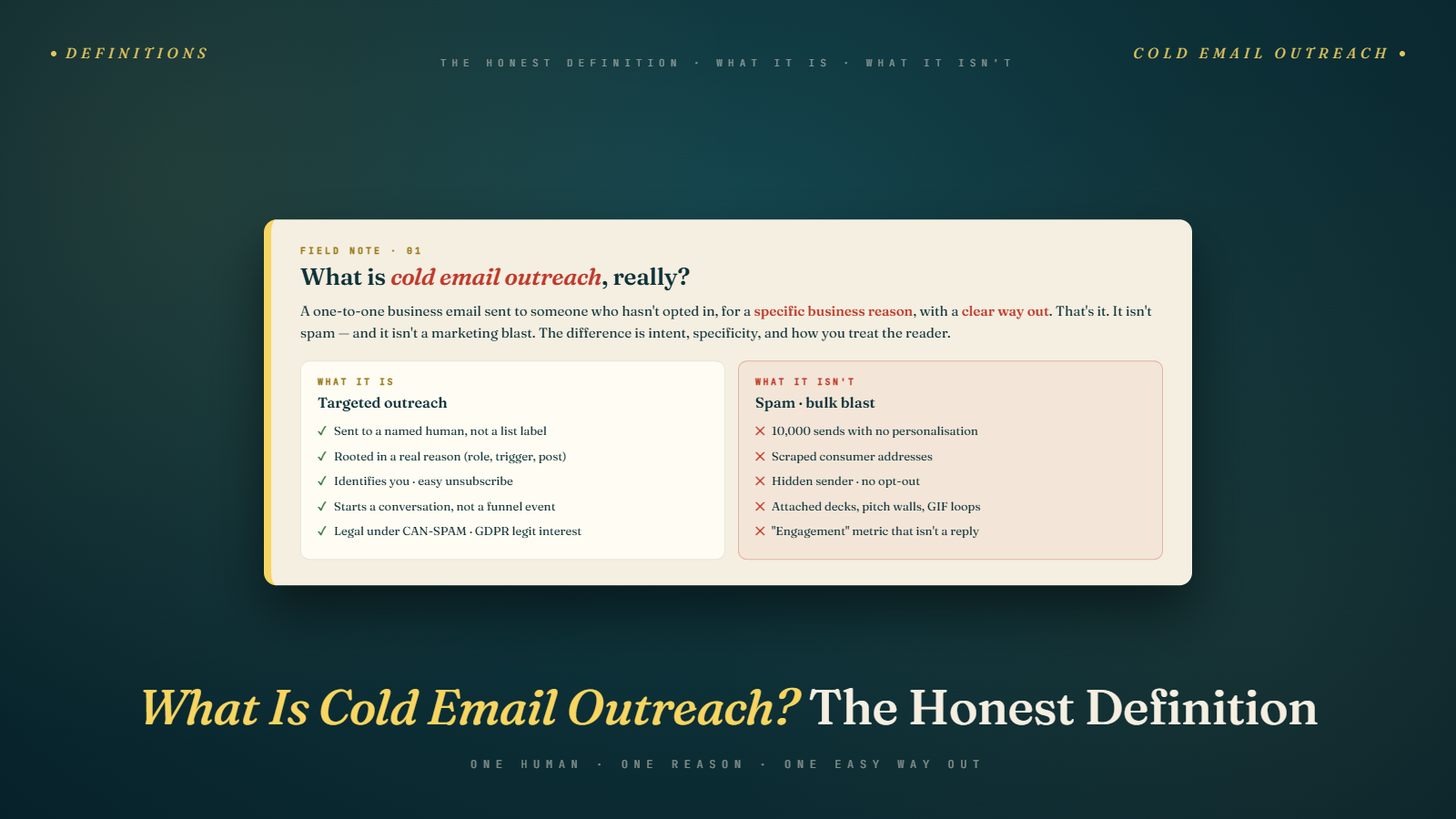
What is Cold Email Outreach? A Complete Beginner's Guide
Cold email outreach is one of the most direct and scalable ways to generate leads — this beginner's guide explains exactly what it is, how it works, and how to do it right from the start.
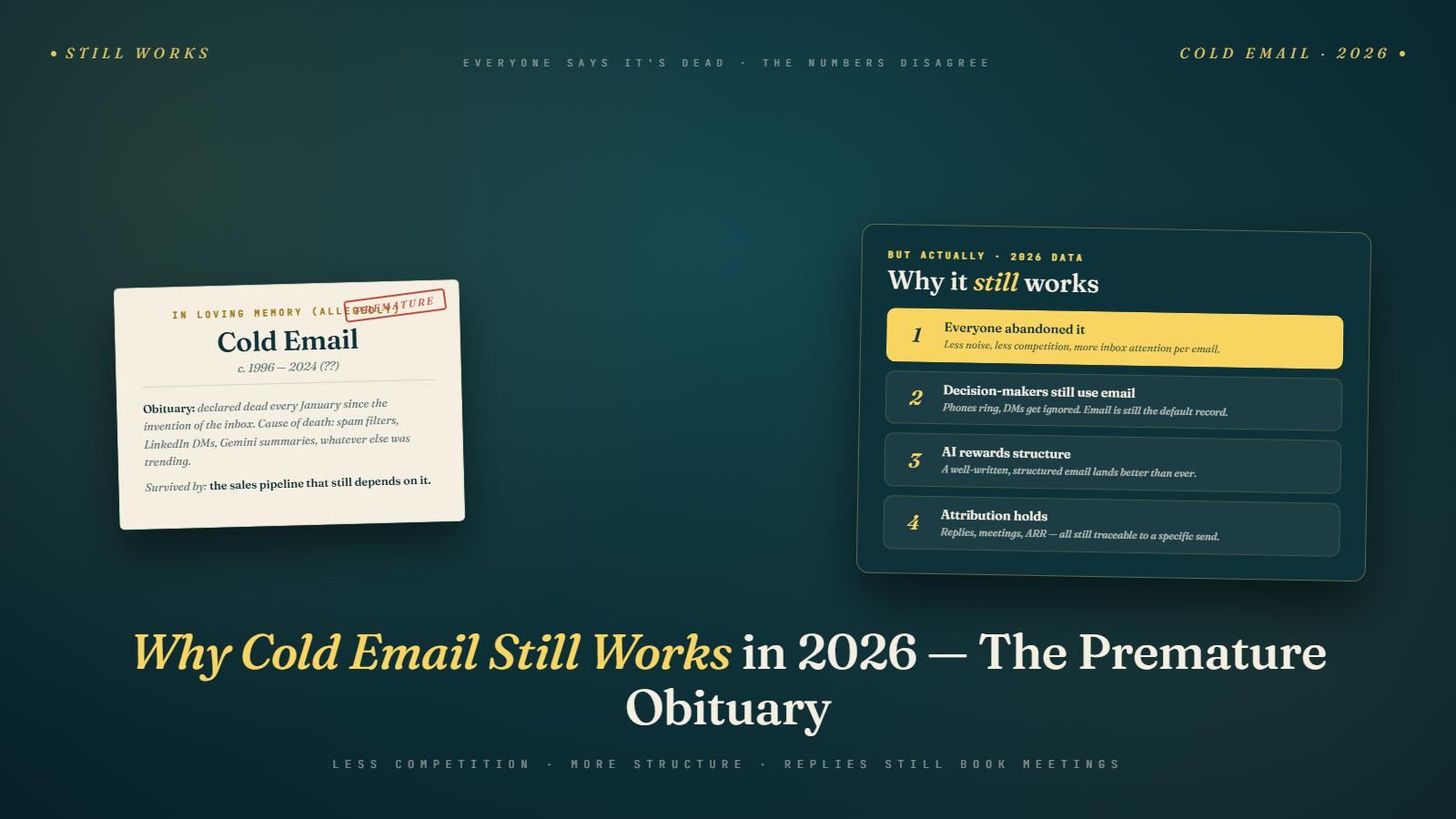
Why Cold Email Still Works in 2026
Cold email isn't dead — it's just that most people doing it badly have convinced themselves it doesn't work, while the people doing it right keep quietly closing deals.
The Essential Role of Bulk Email Verification in Email Marketing Success
Bulk email address verification is the foundation of email marketing success. Learn how it improves deliverability, reduces bounce rates, and protects sender reputation at scale.
Efficient Email Marketing: A Complete Guide to Bulk Email Verification Tools
Bulk email verification tools are a core part of efficient email marketing. Learn how to integrate them into your workflow, interpret results, and maintain a list that consistently delivers results.
Comparing Bulk Email Verifiers: How to Choose the Best One for Your Campaigns
Comparing bulk email verifiers? Learn what features, accuracy levels, and pricing to look for — and how to evaluate services against your actual sending needs.

Email Deliverability and Domain Verification: A Complete Guide
Domain verification and email authentication are essential for email deliverability. Learn how they work, why they matter, and the best practices for setting them up.
7 Common Email Marketing Problems (and How to Fix Each One)
Most email marketing problems trace back to a small number of root causes. Here are the 7 most common email marketing challenges — and the specific fixes that actually work.
Free Email Verification: What It Is, How It Works, and Its Limits
Free email verification lets you check whether email addresses are real and deliverable before sending. Learn what's included, what the limits are, and when to upgrade.

7 Top Data Enrichment Tools: How to Improve Lead Quality and Marketing Precision
Data enrichment tools fill in missing lead details, clean inaccurate records, and help you target more precisely. Here are the top 7 tools, what each does best, and how enrichment connects to email deliverability.

How to Reduce Email Bounce Rates: 8 Proven Strategies
High email bounce rates damage your sender reputation and hurt campaign performance. Here are the most effective strategies to reduce bounces and keep your list clean.
Role-Based Email Addresses: Risks, Credibility, and Best Practices
Role-based email addresses like info@, admin@, and support@ create deliverability risks and compliance concerns. Learn why they're problematic and how to handle them.
Reverse Email Lookup Methods: How to Choose the Best Approach for Your Needs
Reverse email lookup helps you identify the person behind an email address. Here's how to choose the right method — from free manual options to paid services — based on your use case, volume, and accuracy requirements.

Top 5 Free Mailchimp Templates for Email Marketing (Plus 5 More Sources)
Free Mailchimp templates can dramatically speed up email campaign design. Here are the top 5 — plus how to import them, customize them, and 5 more free sources worth bookmarking.
Email Delivery vs. Email Deliverability: Understanding the Difference
Email delivery and email deliverability are different things. Understanding the distinction — and how to improve both — is essential for inbox placement success.
Why Use Bulk Mail Verifier: Features, Benefits, and Tips
Bulk Mail Verifier checks your email list for invalid addresses, spam traps, and deliverability risks. Learn the key features, how they protect your campaigns, and how to get the most out of the tool.

Lead vs. Prospect: Key Differences Explained and How to Manage Both
Understand the critical differences between leads and prospects, where each fits in your sales funnel, how to qualify leads using BANT and ANUM frameworks, and why database quality determines whether your funnel metrics reflect reality.
Top 10 Email Scrubbing Services: Features, Pricing, and How to Choose
Email scrubbing removes the invalid addresses, spam traps, and disposable emails that damage your sender reputation. Here are the top 10 services compared — with pricing, accuracy, and use case guidance.
7 Relationship Marketing Strategies That Build Long-Term Customer Loyalty
Relationship marketing builds the long-term loyalty that transactional marketing can't. Here are 7 practical strategies for using email to cultivate genuine customer relationships — with consistency as the foundation.
The Five-Step Consumer Decision-Making Model: How to Apply It to Email Marketing
The five-step consumer decision-making model maps the journey from problem recognition to post-purchase evaluation. Here's how email marketers can align their campaigns to each stage — and why list quality determines whether those campaigns reach the right buyers.
jQuery Email Validation: Techniques, Limits, and What Comes Next
Learn how to validate email addresses using jQuery on web forms, why client-side validation alone isn't enough, and how server-side verification with an API closes the gap.
How to Use Bulk Mail Verifier: A Step-by-Step Guide
A step-by-step guide to using Bulk Mail Verifier — from account setup through uploading your list, interpreting results, and applying them to improve your campaigns.
Mailchimp Omnivore: What It Is, What Triggers It, and How to Fix It
Mailchimp Omnivore warnings mean your email list has quality issues that could block sends. Learn what triggers them, how to resolve them, and how to prevent them from recurring.
How to Trace an Email Sender's Location in Gmail: Step-by-Step Guide
Tracing an email sender's location in Gmail starts with reading email headers. Here's a complete step-by-step guide — what you can find, what Gmail hides, and what to do when the location matters for security.
Email Verifier: What It Is, How It Works, and Why You Need One
Learn what an email verifier is, how it works, and why it's essential for protecting your sender reputation and improving email deliverability.
How to Trace an Email Address to Its Owner: 4 Effective Methods
Need to identify who's behind an email address? Here are four effective methods — from header analysis and Google search to people search services — with step-by-step guidance and legal considerations.

Valid Email Address Format: Rules, Examples, and How to Validate
What makes an email address valid? Learn the exact format rules, common error patterns, and how to validate email addresses in your forms and lists.
Mastering Email Deliverability: Overcoming the 6 Most Common Obstacles
Mastering email deliverability means overcoming six common obstacles that reduce open rates, subscriber retention, and ROI. Here's the actionable playbook.
8 Email Strategies to Convert Free Trial Users Into Paying Customers
Converting free trial users to paying customers requires the right emails at the right moments. These 8 strategies — with email sequence examples — close the gap between signup and paid subscription.
10 Email Marketing Lessons Every Marketer Needs to Apply
Email marketing continues to evolve — and the marketers who adapt win. Here are 10 lessons that define effective email strategy today, from list verification and privacy to personalization and interactivity.

How to Run a Successful Campaign with Personalized Videos in Email (2026 Guide)
How to run personalized video campaigns in email—covering tools like Loom, Vidyard, and Bonjoro, thumbnail optimization, deliverability prerequisites, A/B testing frameworks, and the metrics that actually matter for video email performance.
10 Email Marketing Strategies to Boost Brand Awareness and Recognition
Email marketing is one of the most effective channels for building brand awareness — when done consistently and strategically. These 10 proven strategies turn your subscriber list into a recognition-building engine.
5 Drip Email Campaign Ideas That Automate Growth (With Sequence Templates)
Drip email campaigns automate your follow-up, nurture leads, and recover lost revenue on autopilot. Here are 5 high-impact campaign types with sequence structures you can implement today.
7 Best Lemlist Alternatives for Cold Email in 2025: Features, Pricing, and How to Choose
Lemlist is popular, but it is not the right fit for every team. This guide compares 7 leading alternatives — Hunter, Woodpecker, Mailshake, Reply.io, Instantly.ai, QuickMail, and Saleshandy — with a full comparison table, selection framework, and the one step every cold email team must take before using any of these tools.
Top 12 Email Deliverability Tools for Outreach Success
Discover the top 12 email deliverability tools that can transform your outreach results. From list verification to inbox placement testing, spam analysis, and sender reputation monitoring — this guide covers the complete deliverability stack.
10 B2B Lead Generation Strategies That Actually Work in 2025
B2B lead generation requires a multi-channel approach. Here are 10 proven strategies — from account-based marketing and content to AI and referral programs — with implementation guidance for each.
11 Email Newsletter Design Tips That Drive Opens, Clicks, and Conversions
Good email newsletter design does more than look professional — it drives opens, clicks, and conversions. Here are 11 essential design principles with practical implementation guidance for each.
9 Signs of Customer Disengagement in Email Marketing (And How to Fix Each One)
Nine specific email marketing signs your subscribers are disengaging—how to diagnose each one in your metrics, what to do about it, and how list hygiene prevents the decay that makes re-engagement nearly impossible.
12 Email Outreach Templates for Inbound and Outbound Success
The right email outreach template paired with a verified list dramatically improves reply rates. Here are 12 proven templates for both inbound and outbound success — plus the principles that make each one work.

The Ultimate B2B Lead Generation Tools List: Build the Complete Stack
The right B2B lead generation stack automates prospecting, improves lead quality, and accelerates revenue. Here are the essential tools across every category — from outreach and forms to enrichment and verification.
What Is Emailondeck? Disposable Emails Explained (And Why Marketers Need to Detect Them)
Emailondeck provides disposable email addresses for privacy, testing, and spam prevention. Here's how it works, when to use it — and why email marketers need to detect and block these addresses from their lists.
8 Causes of Low Email Deliverability and How to Fix Them
Low email deliverability means your campaigns aren't reaching inboxes. Learn the 8 most common causes and exactly how to fix each one.
Email Deliverability for Small Businesses: What You Need to Know
Small businesses have less margin for email deliverability errors. Learn the specific challenges small senders face and the strategies that make the biggest difference.
How to Build a High-Quality B2B Email List: A Step-by-Step Guide
A high-quality B2B email list drives targeted campaigns, higher conversions, and lower bounce rates. Here are the key steps to build a list that delivers — from choosing your tools to verifying every address.
The Business Case for Email Verification: ROI, Cost Savings, and Deliverability
Email verification reduces bounce rates, lowers platform costs, and improves ROI. Here's how to quantify the business case for verifying your email list.
Mastering Email Marketing: 10 Essential Skills for 2026
Master the 10 essential skills every email marketer needs in 2026 — from persuasive copywriting and advanced segmentation to deliverability knowledge and HTML basics — with tool recommendations and a practical development path for each skill.
5 Email Marketing Strategies That Boost Sales: A Complete Implementation Guide
Email delivers $44 for every $1 spent — but only when your strategy is built on the right foundations. This guide expands five proven tactics (segmentation, drip campaigns, welcome sequences, personalization, and interactive content) with implementation steps, sequence tables, and metrics so you can execute, not just read.
Optimizing Lead Generation: A 5-Step Strategy for Success in 2026
A deeply practical 5-step lead generation strategy covering audience analysis, goal setting, content development, sales alignment, and performance measurement—with implementation detail on qualification frameworks, lead scoring, and email list quality.
5 Email Marketing Strategies That Actually Boost Sales
Email marketing generates $36–44 for every $1 spent — but only when the strategy is right. These 5 proven strategies produce measurable sales lift across ecommerce, SaaS, and B2B.
Soft Bounce vs. Hard Bounce: Key Differences and How to Reduce Both
Soft bounces are temporary delivery failures. Hard bounces are permanent. Learn the key differences, what causes each, and how to reduce both.
8 Email Security Best Practices That Actually Protect Your Organization
Email is the primary vector for 91% of cyberattacks. These 8 security practices protect your accounts, your data, and your sender reputation from the most common threats.
BulkMailVerifier vs. ZeroBounce: Which Email Verification Service Should You Use?
BulkMailVerifier and ZeroBounce are both capable email verification services — but they differ significantly on pricing, accuracy, API capability, and value. Here's a detailed comparison to help you choose.
Email Address Validation: The Complete Guide
Email address validation confirms whether an address is real, correctly formatted, and safe to send to. This guide covers how it works, why it matters, and best practices.
Professional Email Account Setup: A Complete Beginner's Guide
Setting up a professional email account with your own domain builds credibility and improves deliverability. This guide covers the full setup process for Google Workspace and other major providers — plus what to do after setup to ensure your emails land in inboxes.
Millionverifier vs ZeroBounce: A Comprehensive Comparison for Email Verification (2026)
Millionverifier vs ZeroBounce: a detailed side-by-side comparison of features, accuracy, pricing, and integrations—plus a third option that delivers enterprise-grade verification at a fraction of the cost.
3 Proven Ways to Grow Your Brand with Email Marketing
Email marketing is one of the most effective ways to grow a brand — but only when the fundamentals are right. Here are the 3 core strategies, with implementation depth on segmentation, design, testing, and list hygiene.
9 Email Types That Drive Engagement and Revenue (With Examples)
The most effective email marketing programs use different email types for different customer moments. Here are 9 proven email types — with the purpose, best practices, and copy principles behind each one.
How to Grow Your Brand with Email Marketing: Core Strategies That Work
Email marketing builds brands — but only when the fundamentals are right. Here are the core strategies that drive brand growth through email, from personalization and segmentation to automation and list hygiene.
Professional Email Signature Guide: Best Practices and Top 5 Tools
A professional email signature reinforces your brand with every email you send. This guide covers what to include, what to avoid, and the 5 best tools for creating a signature that actually works.
Email Inbox Placement: How to Master Your Sender Reputation
Sender reputation determines whether your emails land in the inbox or the spam folder. Learn what affects it, how to measure it, and how to improve it.