
Email Deliverability Articles
Browse our email deliverability articles for strategies, checklists, and practical guidance you can apply right away.
Find an article
Search by title, category, or topic.
Quick links
Browse by topic
Jump into the parts of email verification and deliverability you need right now.
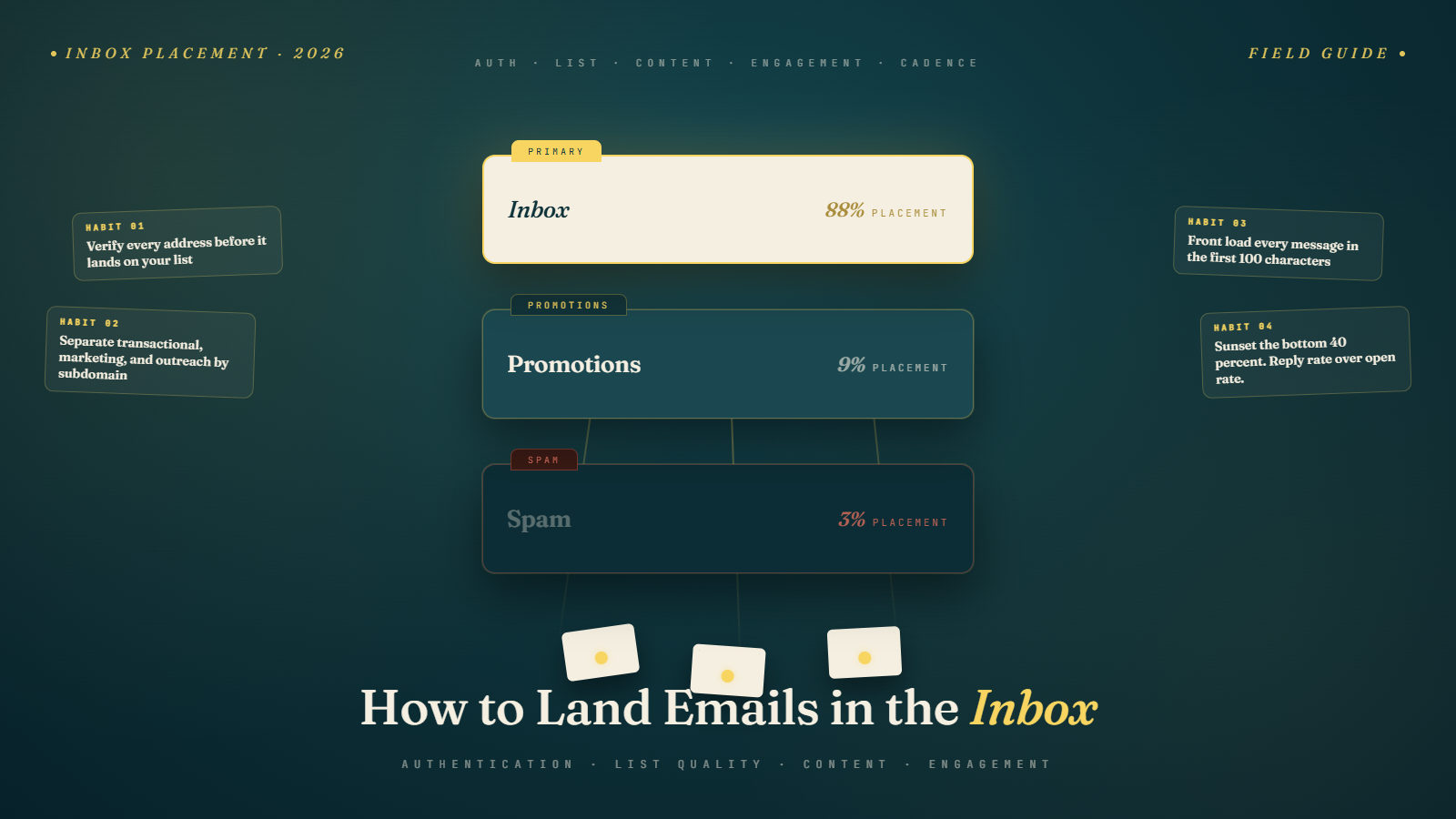
How to Land Emails in the Inbox
Inbox placement is not a single trick. It is a small set of habits done in the right order. This is the working playbook we run for ourselves and for clients, written in plain language.
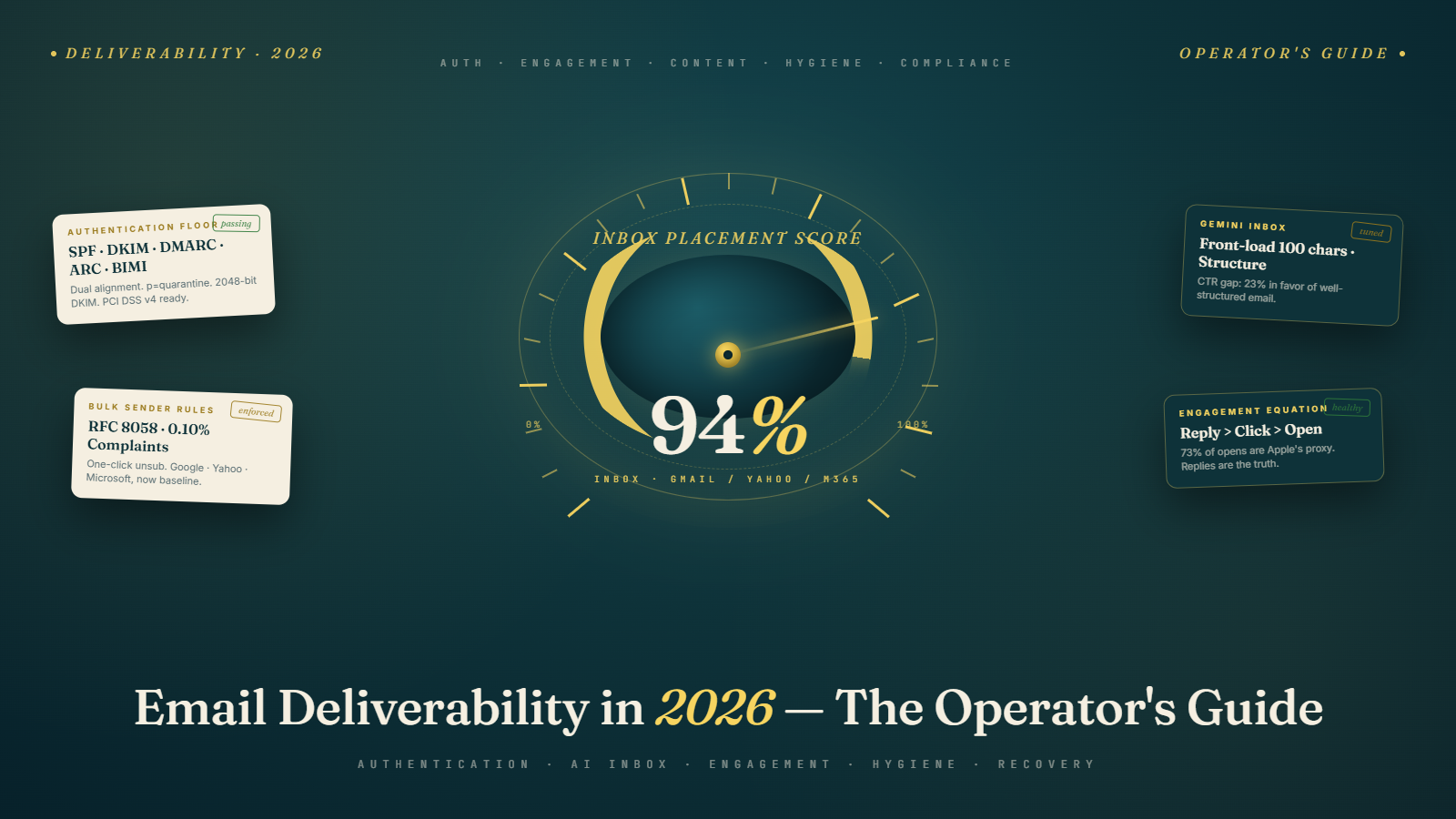
Email Deliverability in 2026: The Complete Operator's Guide (You Will Not Need Another Article)
The complete operator's guide to email deliverability in 2026: authentication, the Google and Yahoo and Microsoft rules, Gmail's Gemini era, the engagement equation, list hygiene, the 48-hour recovery plan, and the monitoring stack you actually need.
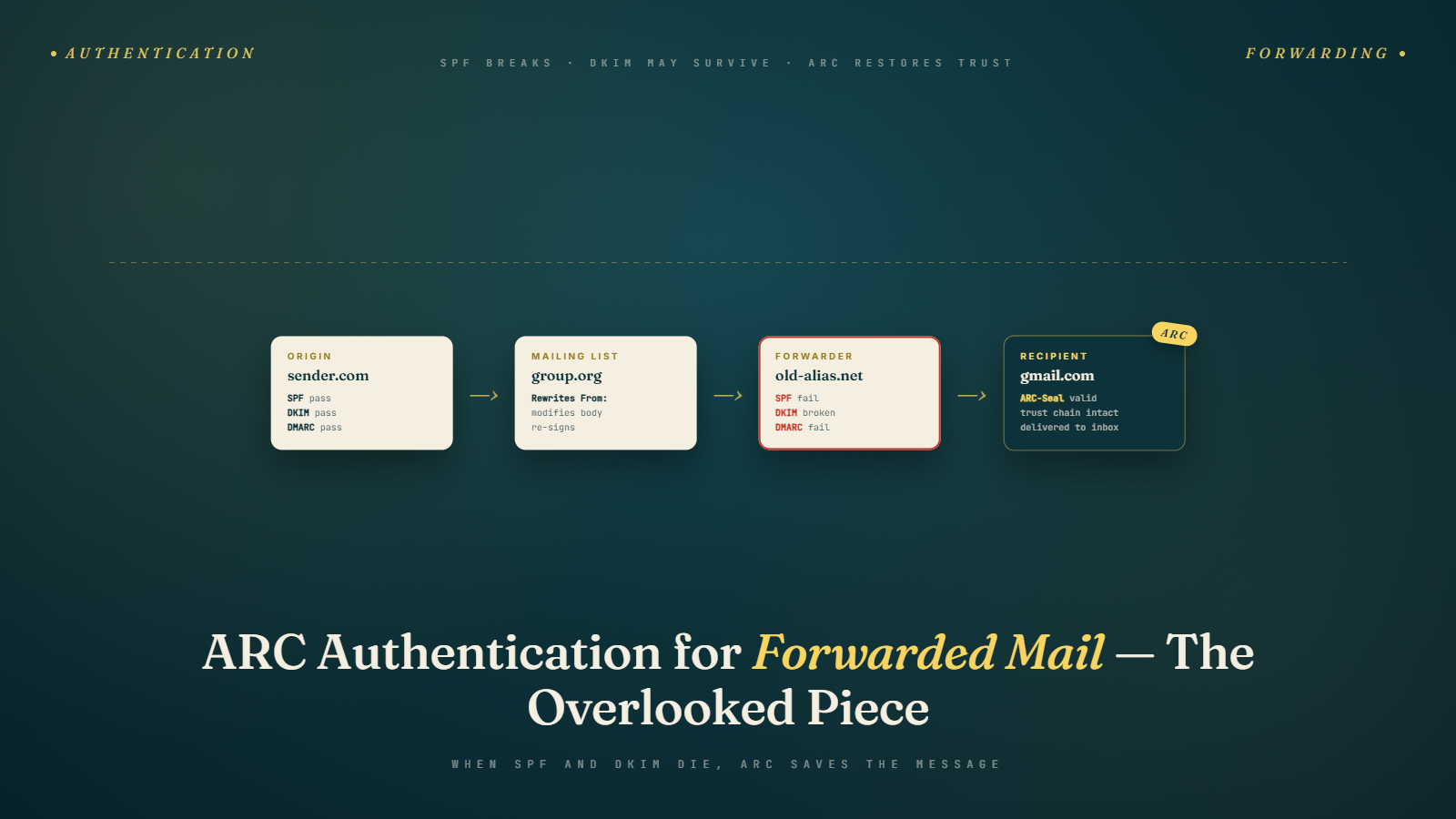
ARC Authentication for Forwarded Mail: The Overlooked Piece of the Puzzle
ARC authentication solves the problem of forwarded mail breaking SPF and DKIM. Here is how it works, who should care, and what senders can actually control.
More reading
Latest articles from the library
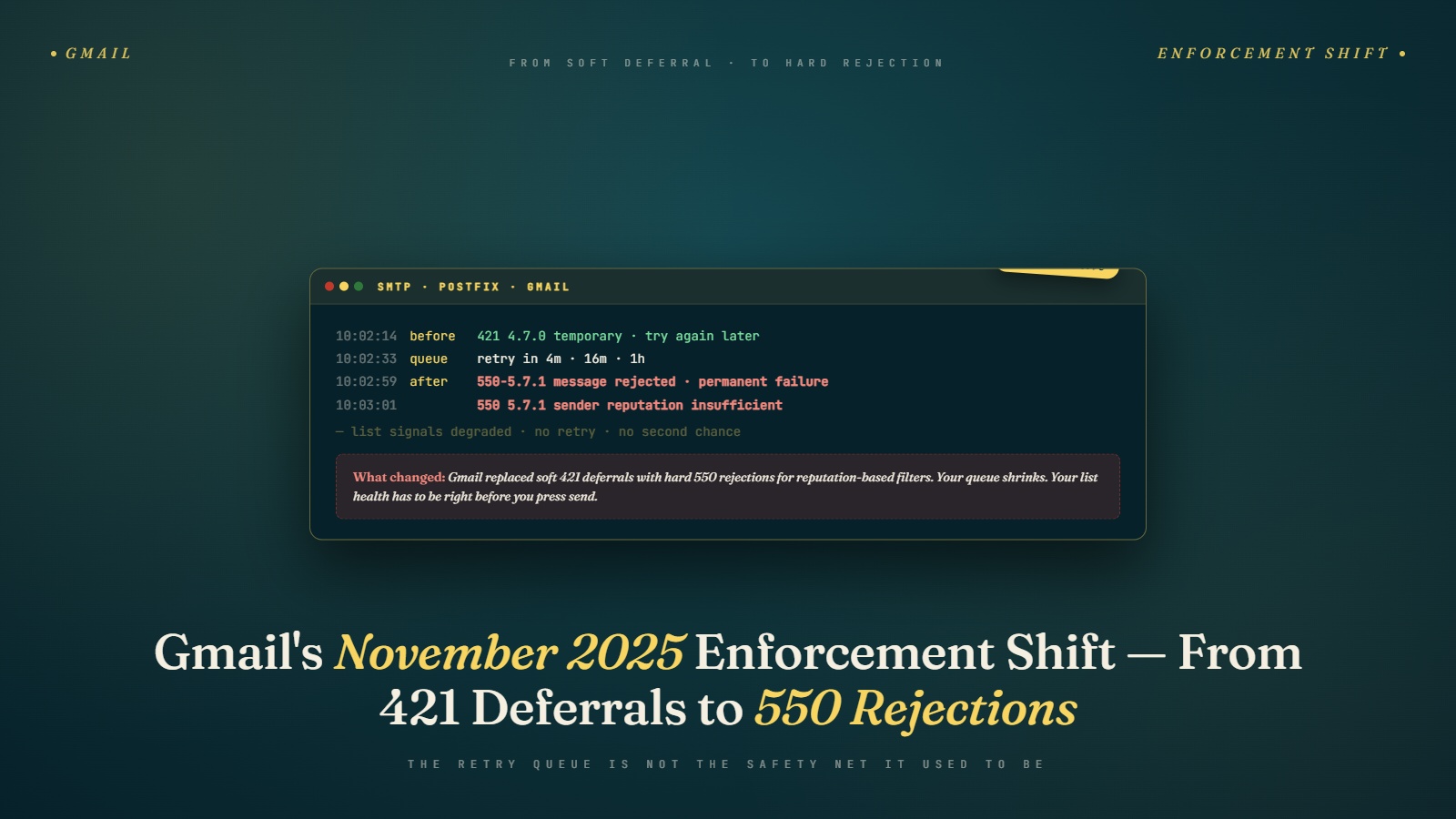
Gmail's November 2025 Enforcement Shift: From Soft 421 Deferrals to Hard 550 Rejections
Gmail swapped soft 421 deferrals for hard 550 rejections in November 2025. Here is what triggered the change, what it means for your list health, and what to do before your next send.
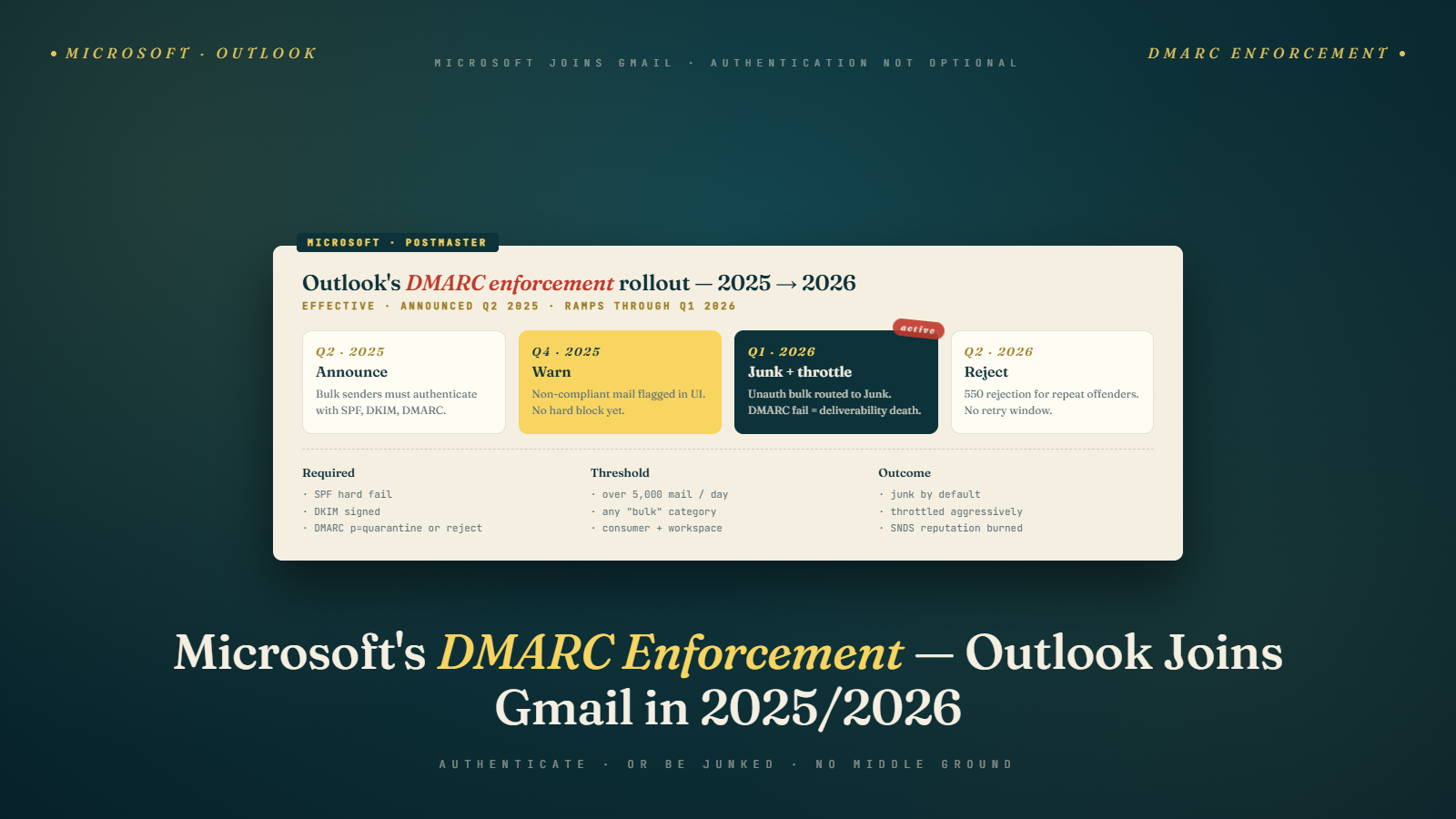
Microsoft DMARC Enforcement for Outlook: One Year In, What Senders Actually See
Microsoft DMARC enforcement for Outlook, Hotmail, and Live is active. Learn what changed, how it differs from Gmail, and what to check with SNDS and JMRP.
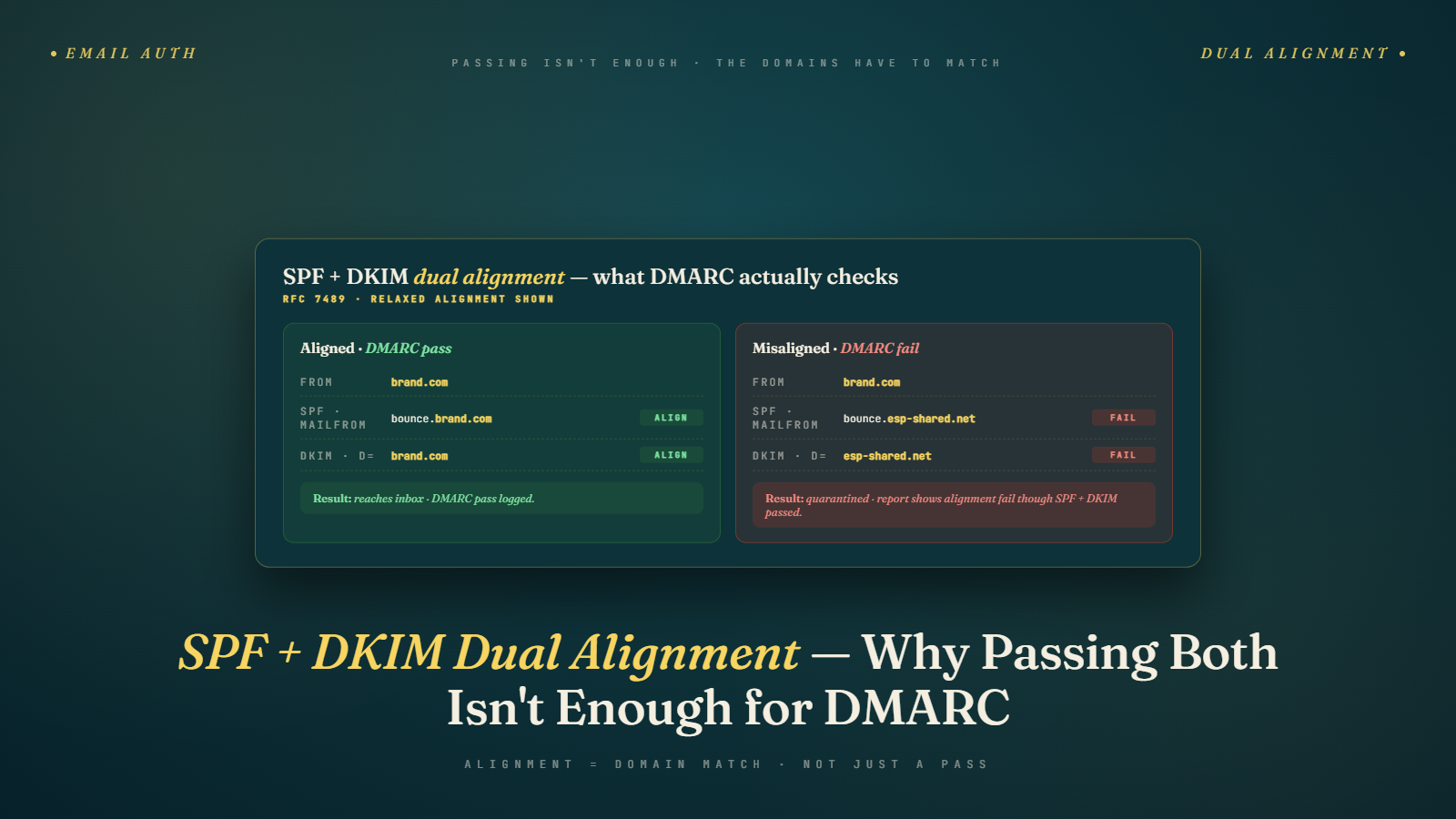
SPF and DKIM Dual Alignment: The Next DMARC Requirement Nobody Is Ready For
DMARC currently passes if SPF or DKIM aligns. The industry is quietly moving toward requiring both. Here is what to audit in your authentication setup now.
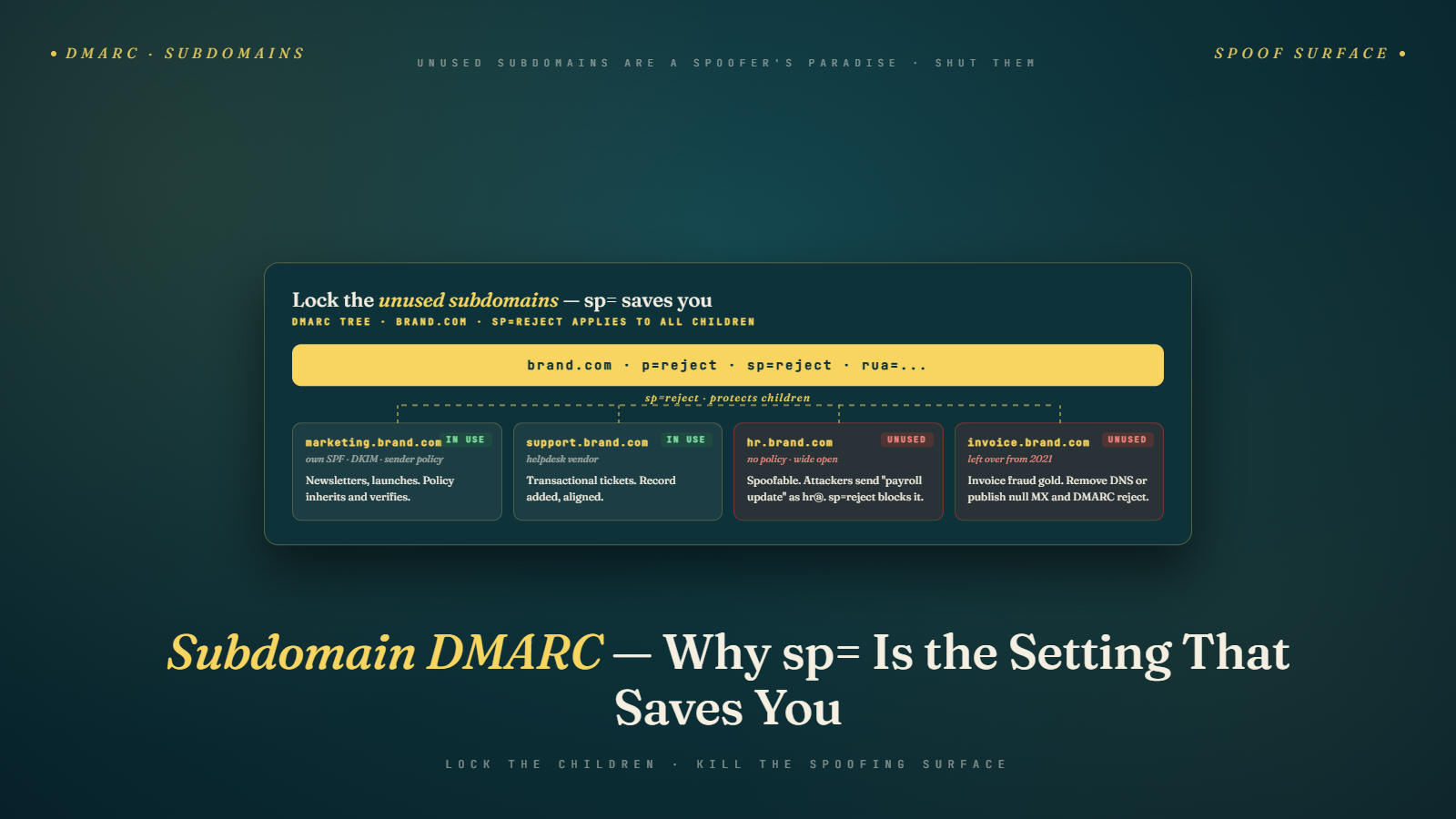
Subdomain DMARC: Why Your Unused Subdomains Are Killing Deliverability
Your DMARC record on the root domain does not protect subdomains the way most senders assume. Unused subdomains are an open door for spoofing that tanks deliverability.
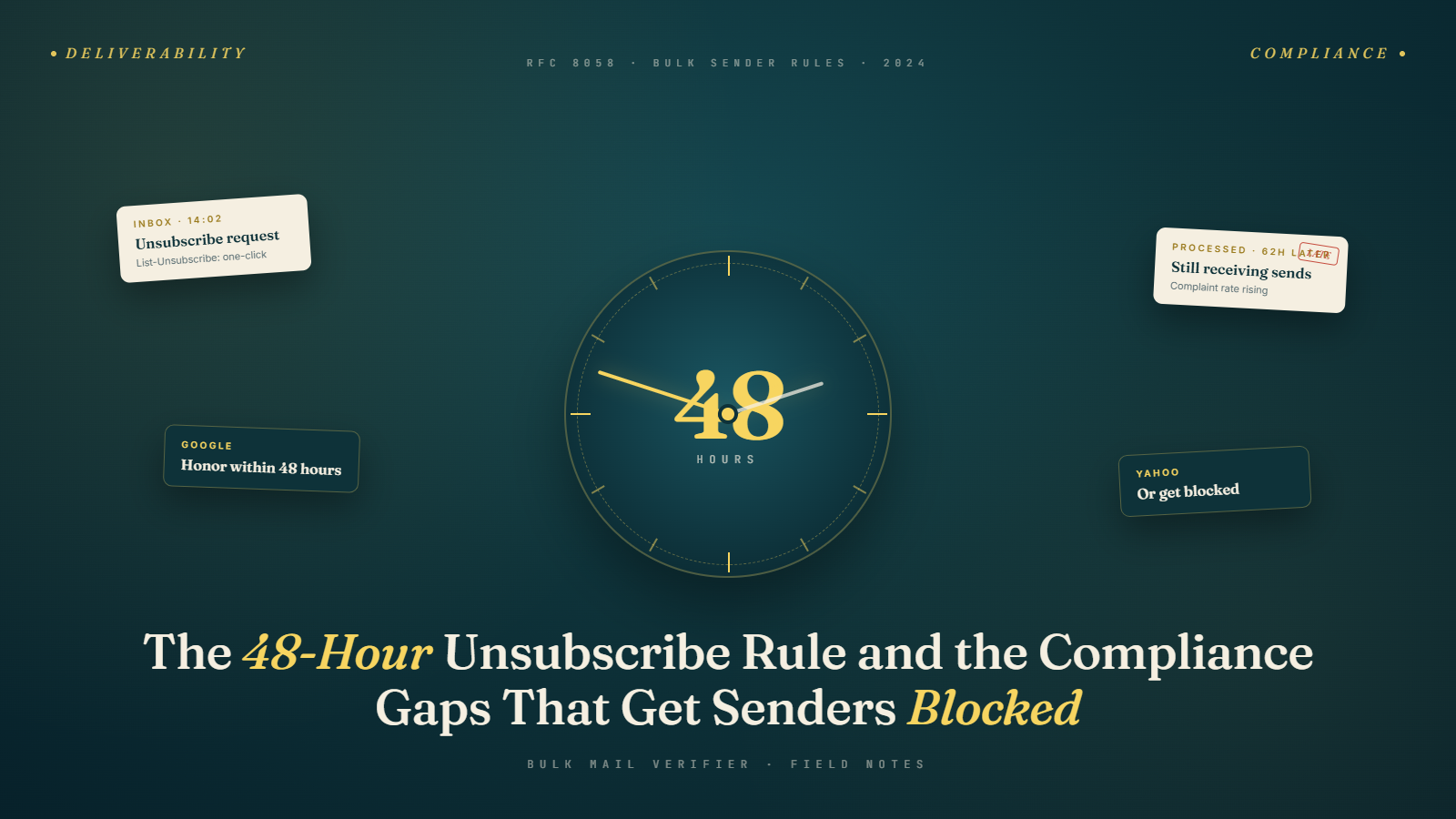
The 48-Hour Unsubscribe Rule: Compliance Gaps That Get Senders Blocked
The 48-hour unsubscribe rule catches most senders off guard. Learn the real processing requirements from Google and Yahoo plus common compliance gaps that get you blocked.
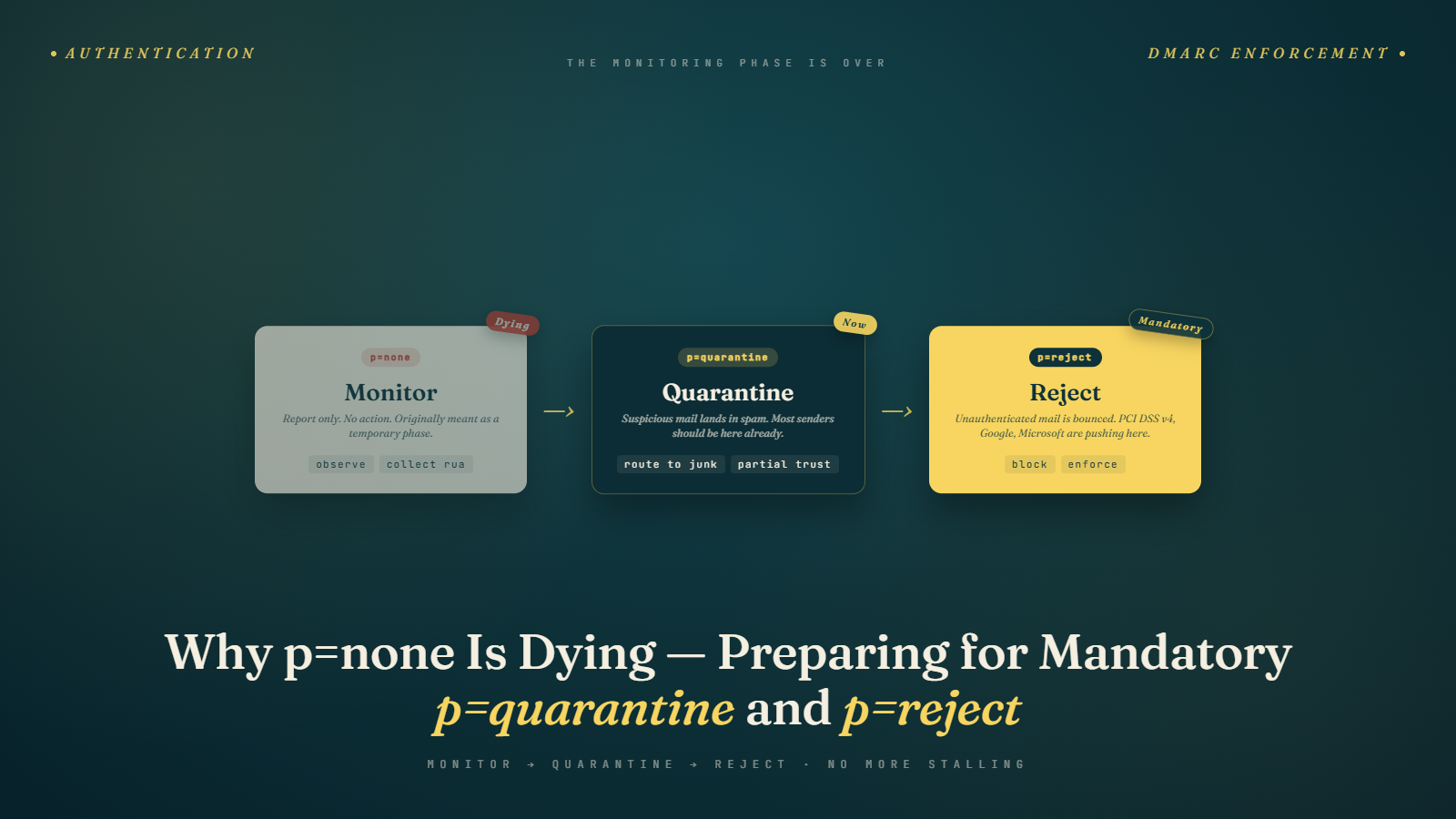
Why p=none Is Dying: Preparing for Mandatory p=quarantine and p=reject
DMARC p=none was always meant as a temporary monitoring phase. Google, Microsoft, and PCI DSS v4.0 are forcing the move to enforcement. Here is how.
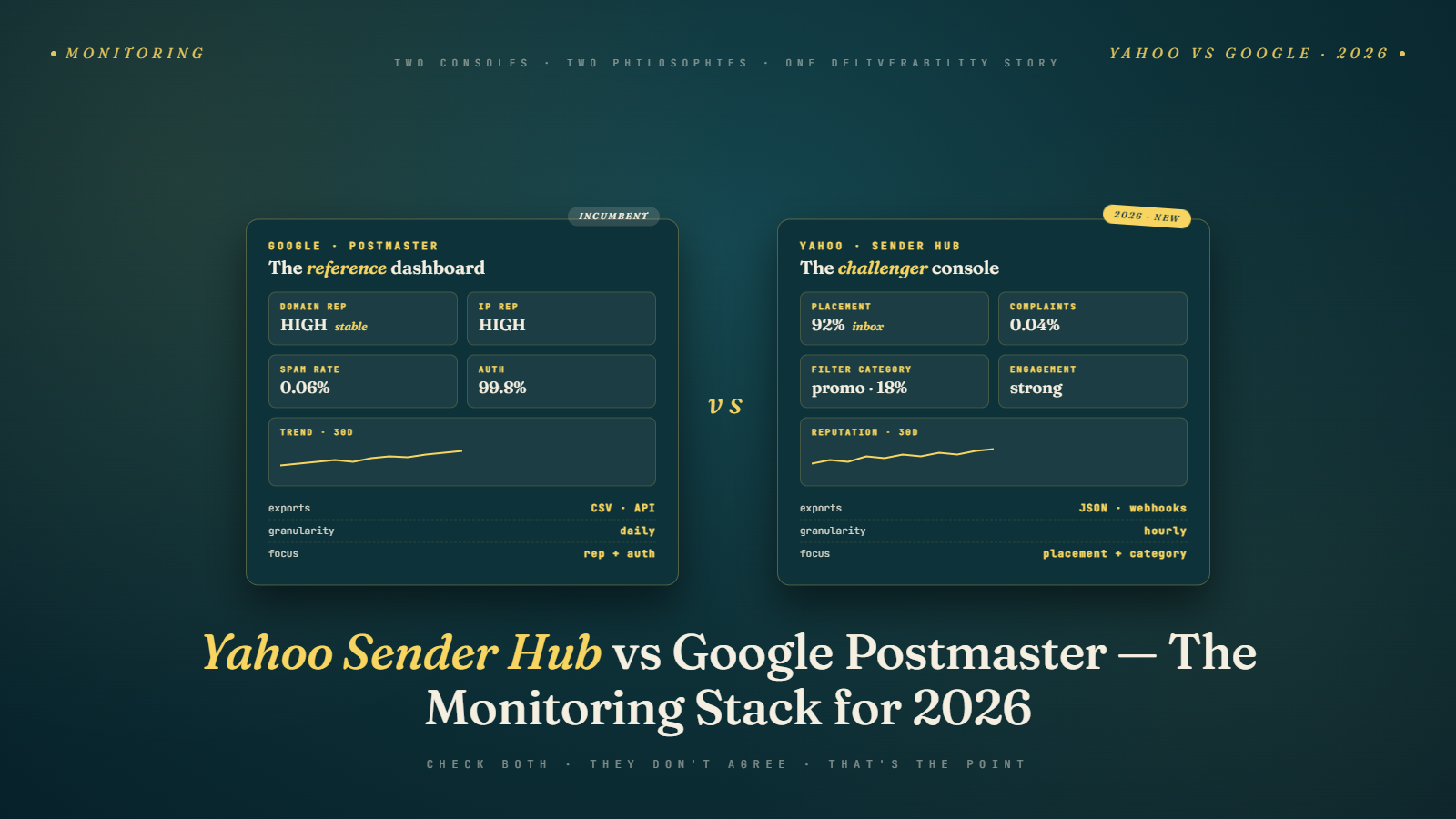
Yahoo Sender Hub vs Google Postmaster Tools: A Side-by-Side for 2026
Yahoo Sender Hub and Google Postmaster Tools measure different things. Here is a practical comparison for 2026 so you know which signals to trust and how to use both.
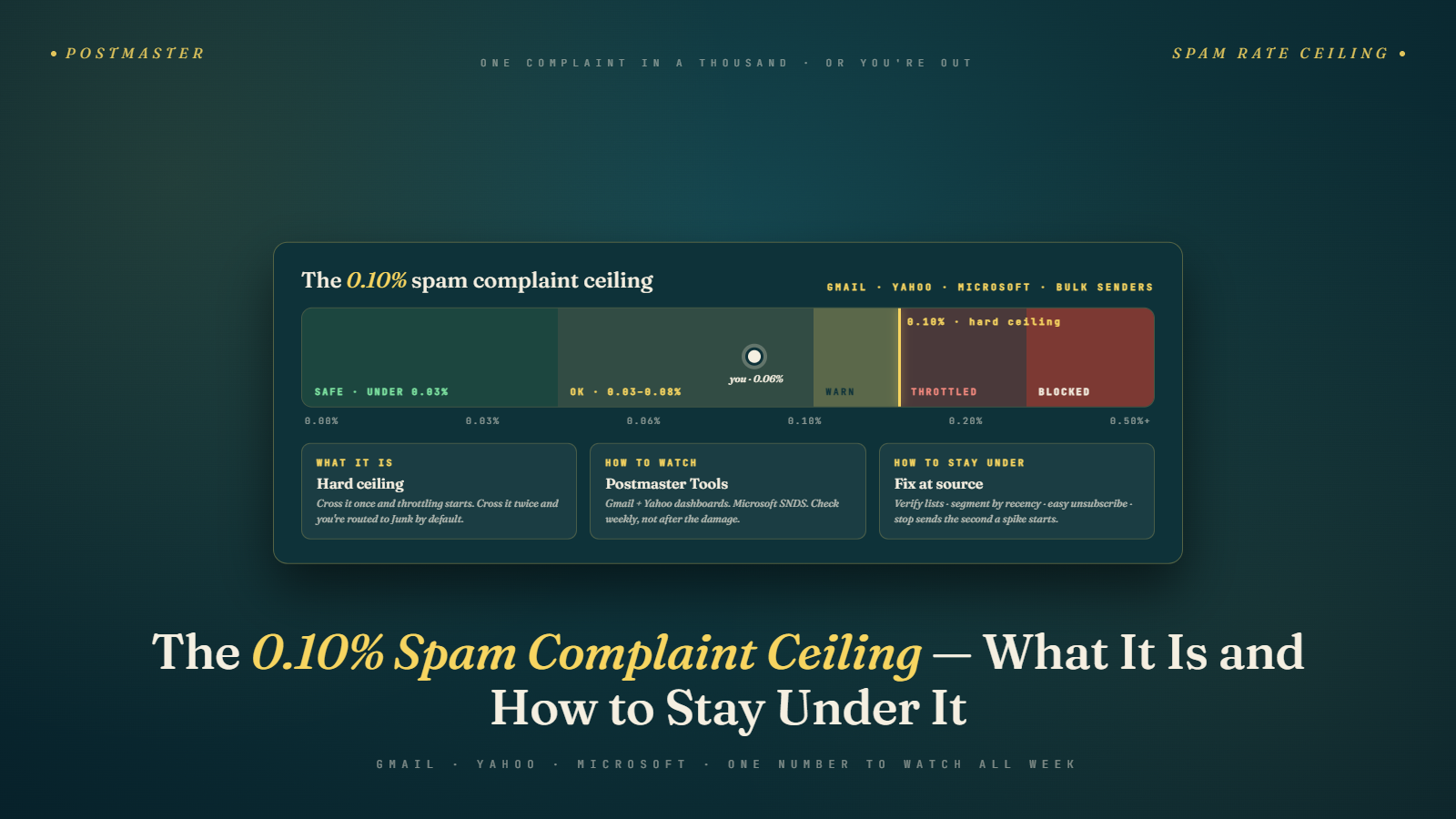
Your Spam Complaint Rate Ceiling Is 0.10%, Not 0.30%
Google's spam complaint ceiling is 0.10%, not 0.30%. Learn how to measure your real rate, what triggers enforcement, and how to recover if you breach it.
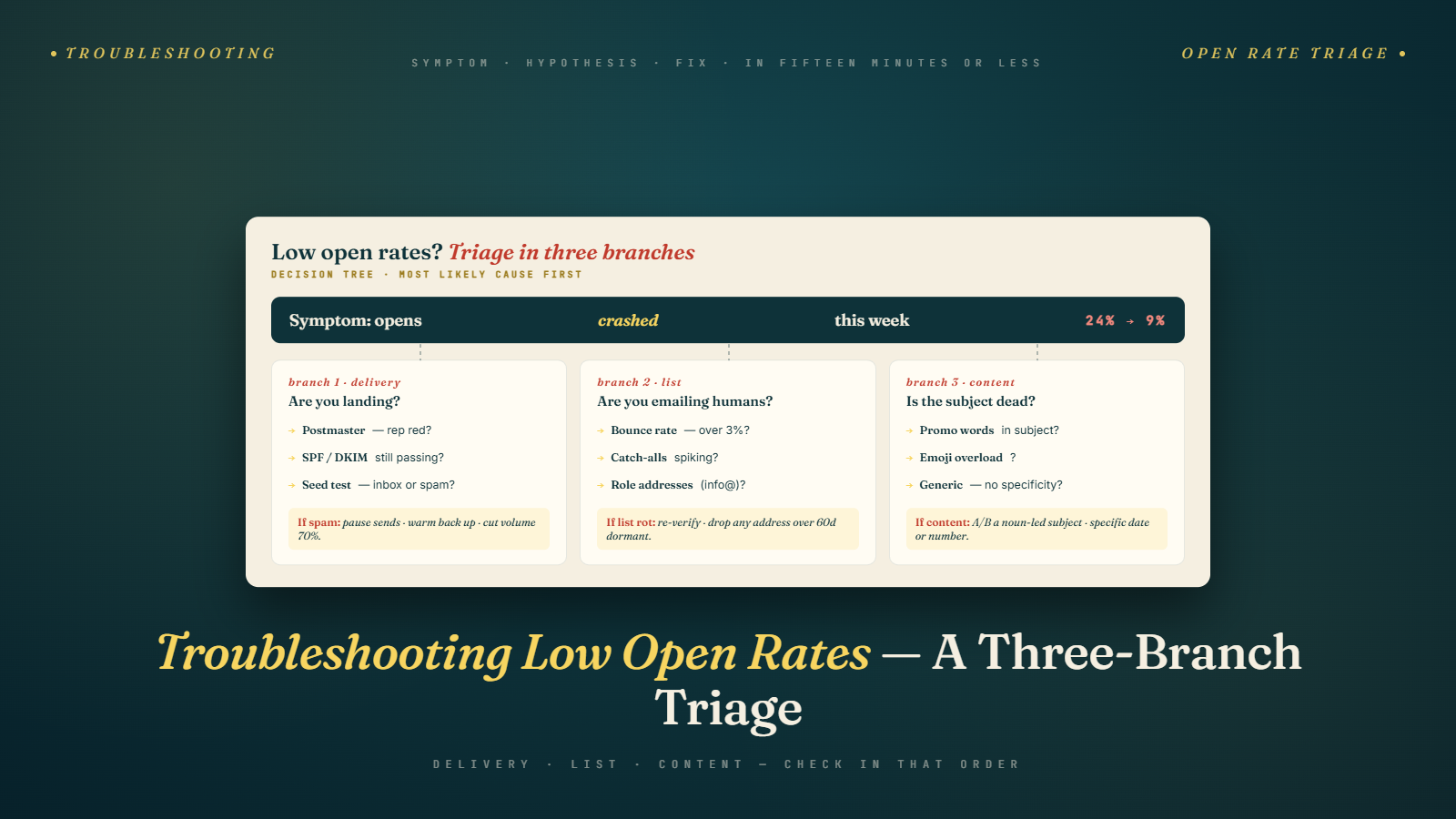
Troubleshooting Low Open Rates in Cold Email
Low open rates could mean a deliverability problem, a targeting problem, or a subject line problem — and each requires a completely different fix. This diagnostic framework helps you find the real cause fast.
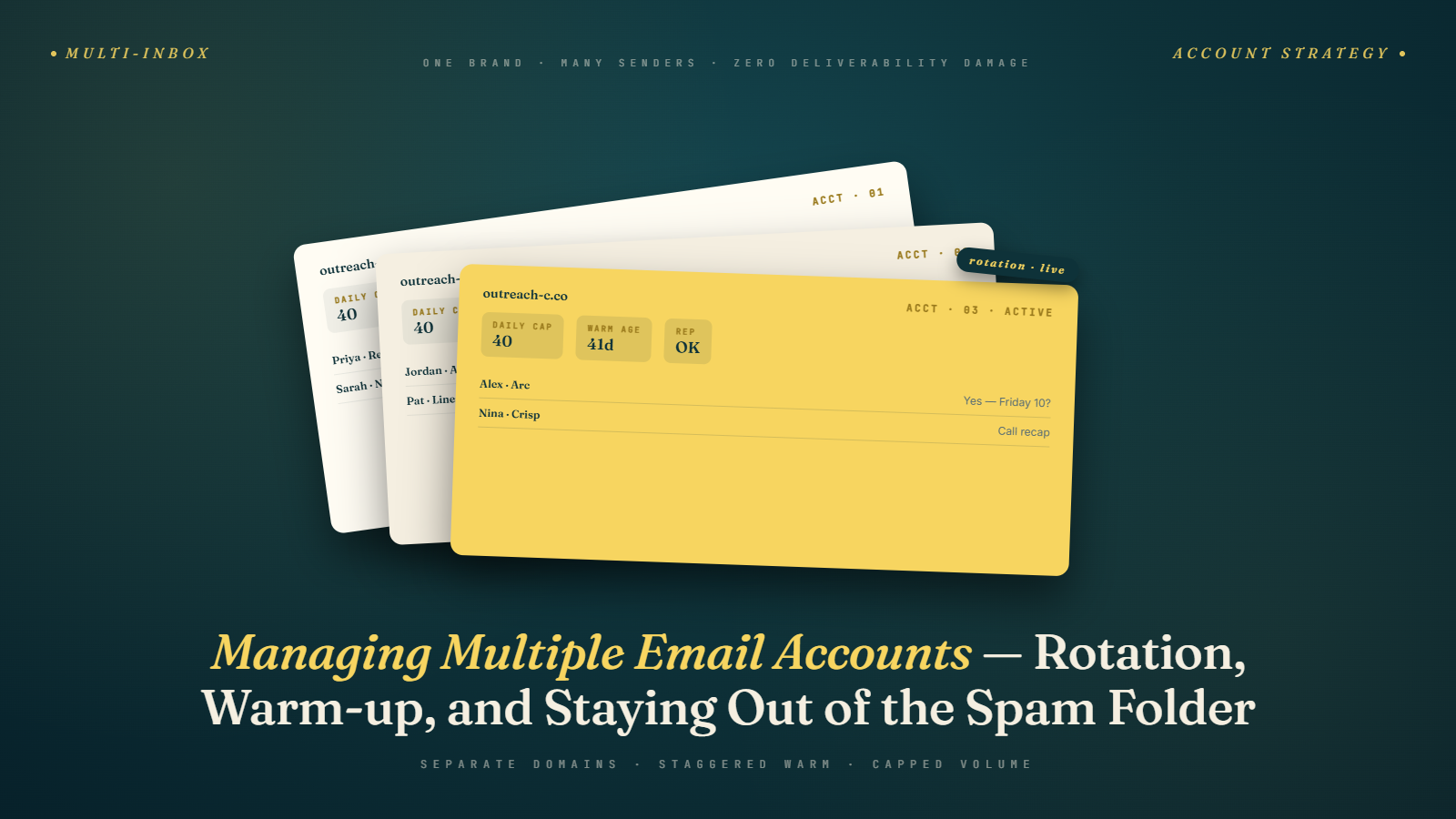
Managing Multiple Email Accounts for Cold Email
Running cold email across multiple domains and inboxes is operationally complex. This guide covers the tools, systems, and workflows that keep everything organized, monitored, and healthy at scale.
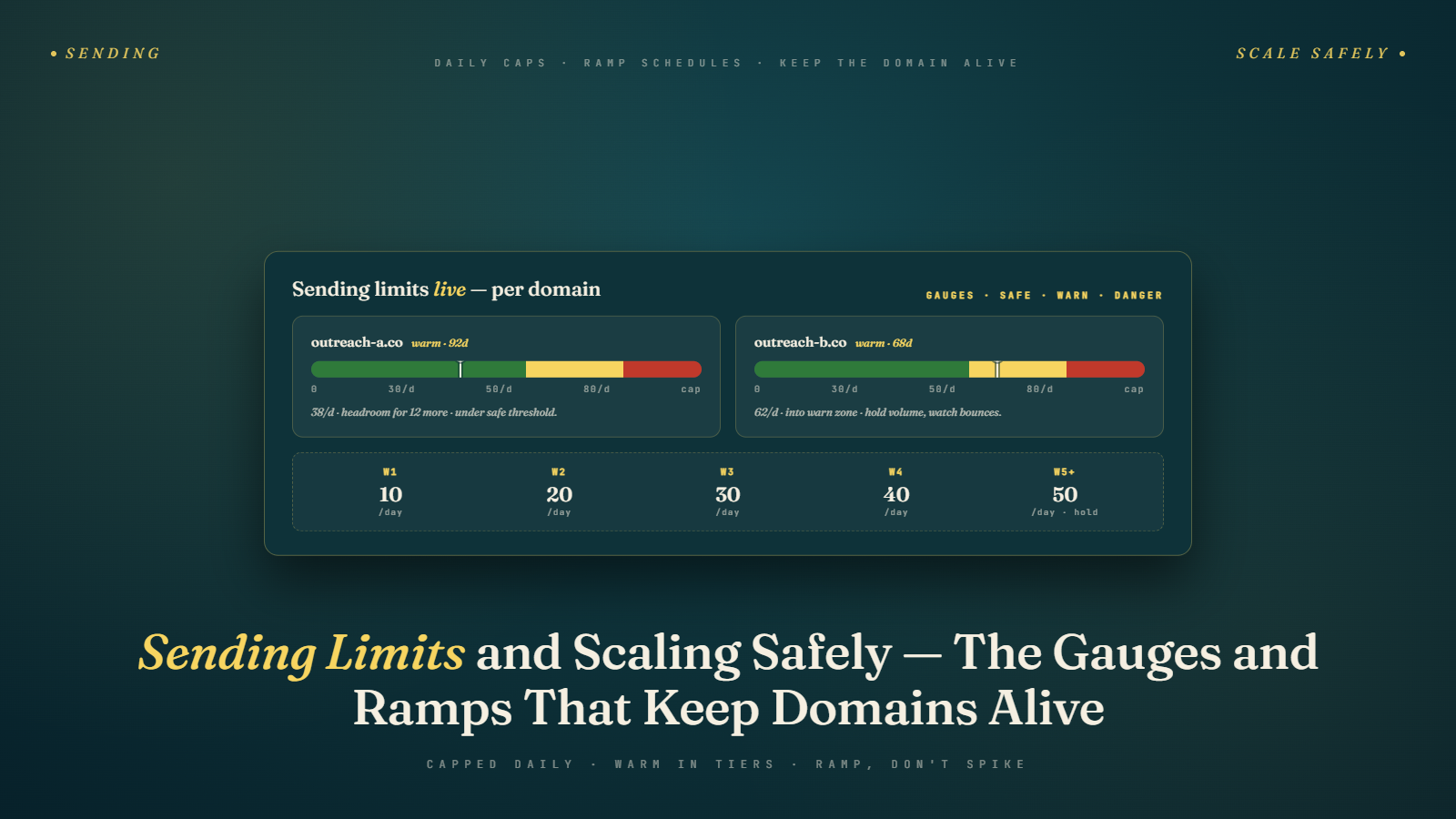
Sending Limits & Scaling Cold Email Safely
Scaling cold email too fast is one of the most common ways to destroy a domain's reputation. Learn the exact numbers for safe daily limits, how to grow volume correctly, and the multi-account architecture that lets you scale without risk.
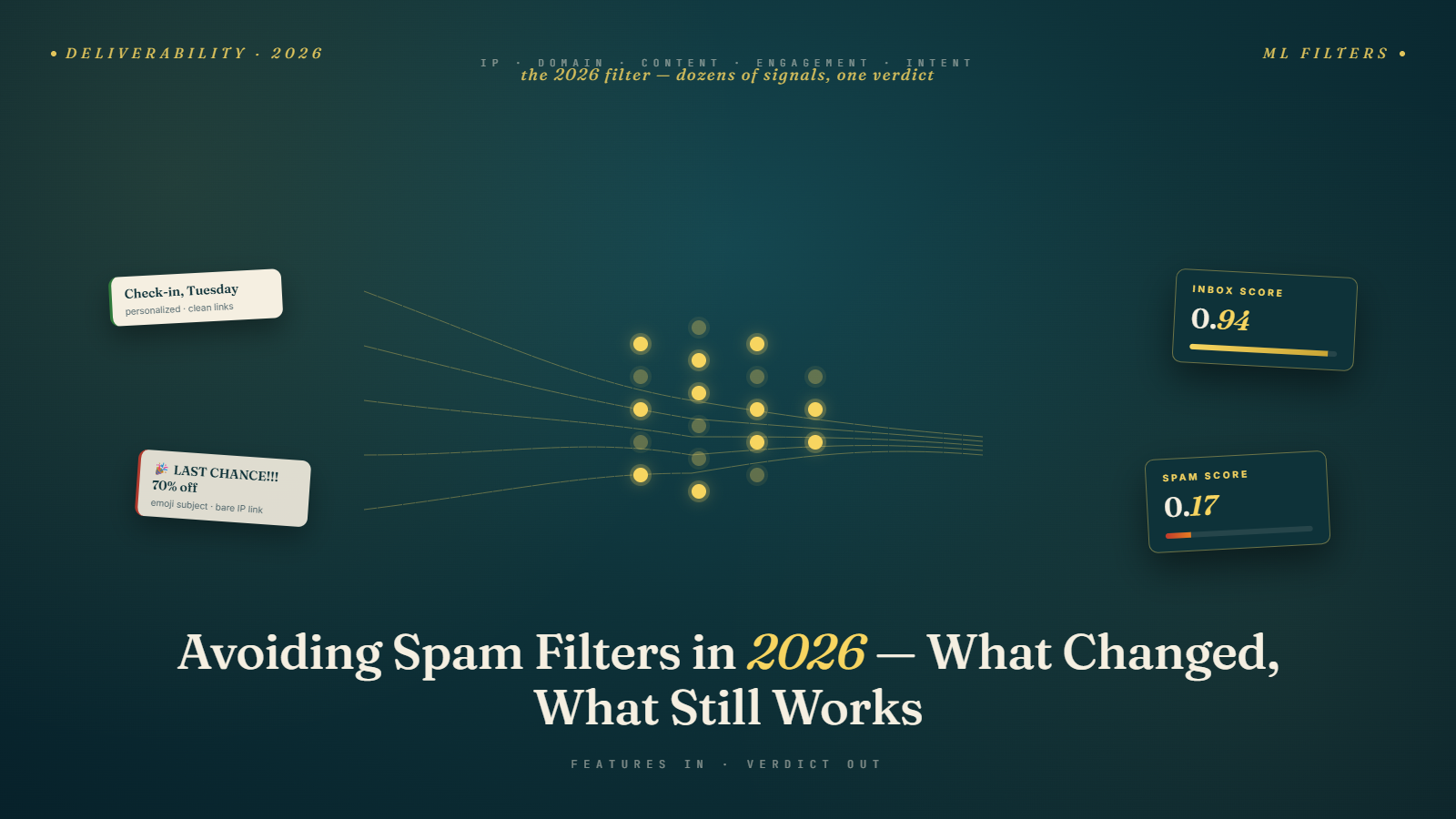
Avoiding Spam Filters in 2026: What Has Changed and What Still Works
Spam filters in 2026 are machine-learning systems that evaluate dozens of signals simultaneously. This guide covers what's changed, what signals matter most today, and the practical steps that keep your cold email in the inbox.
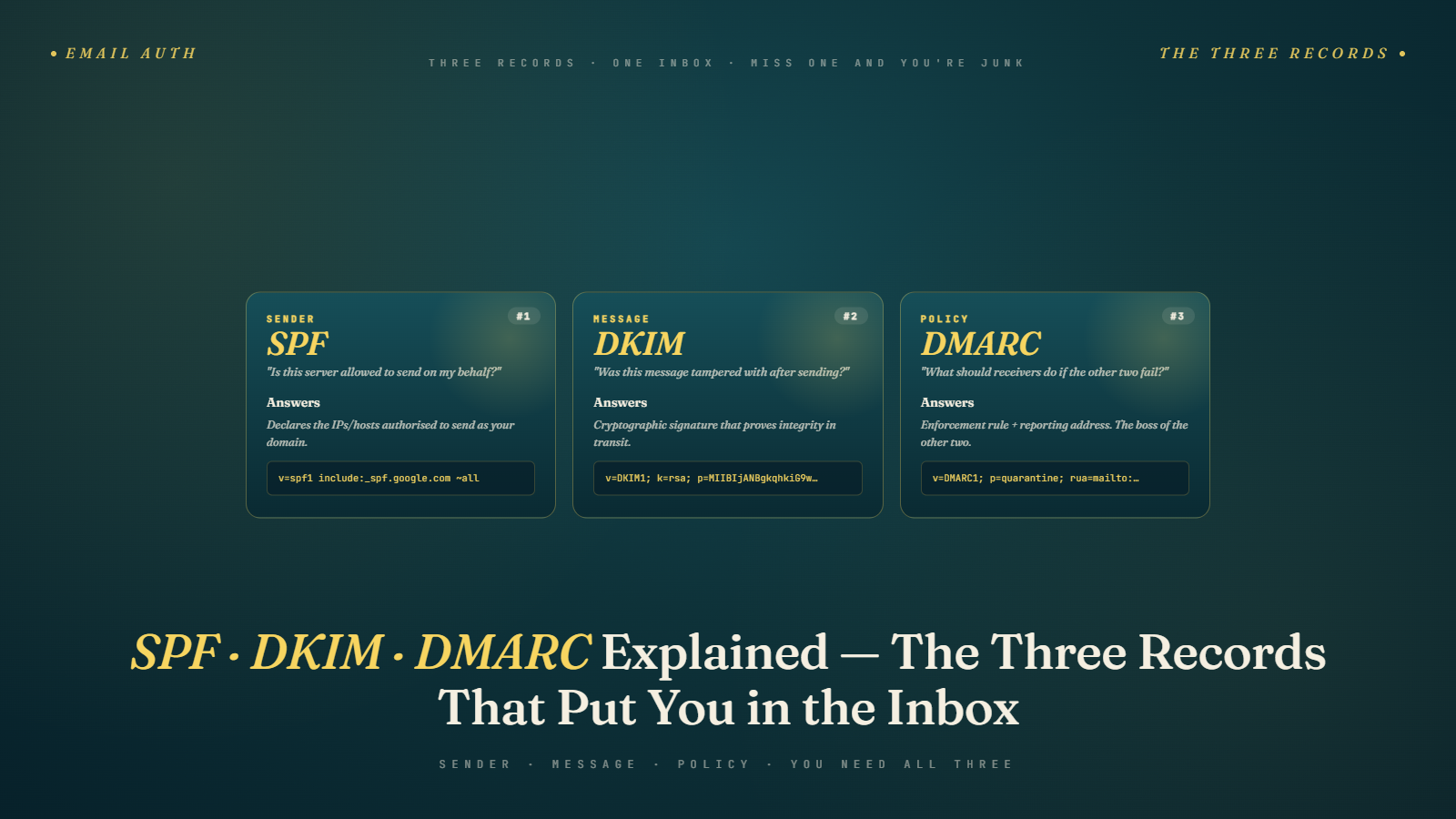
SPF, DKIM, and DMARC Explained Simply (+ Setup Guide)
SPF, DKIM, and DMARC are the three DNS records that prove your emails are legitimate. This guide explains what each one does, how to set them up, and how to verify they're working — without needing a technical background.
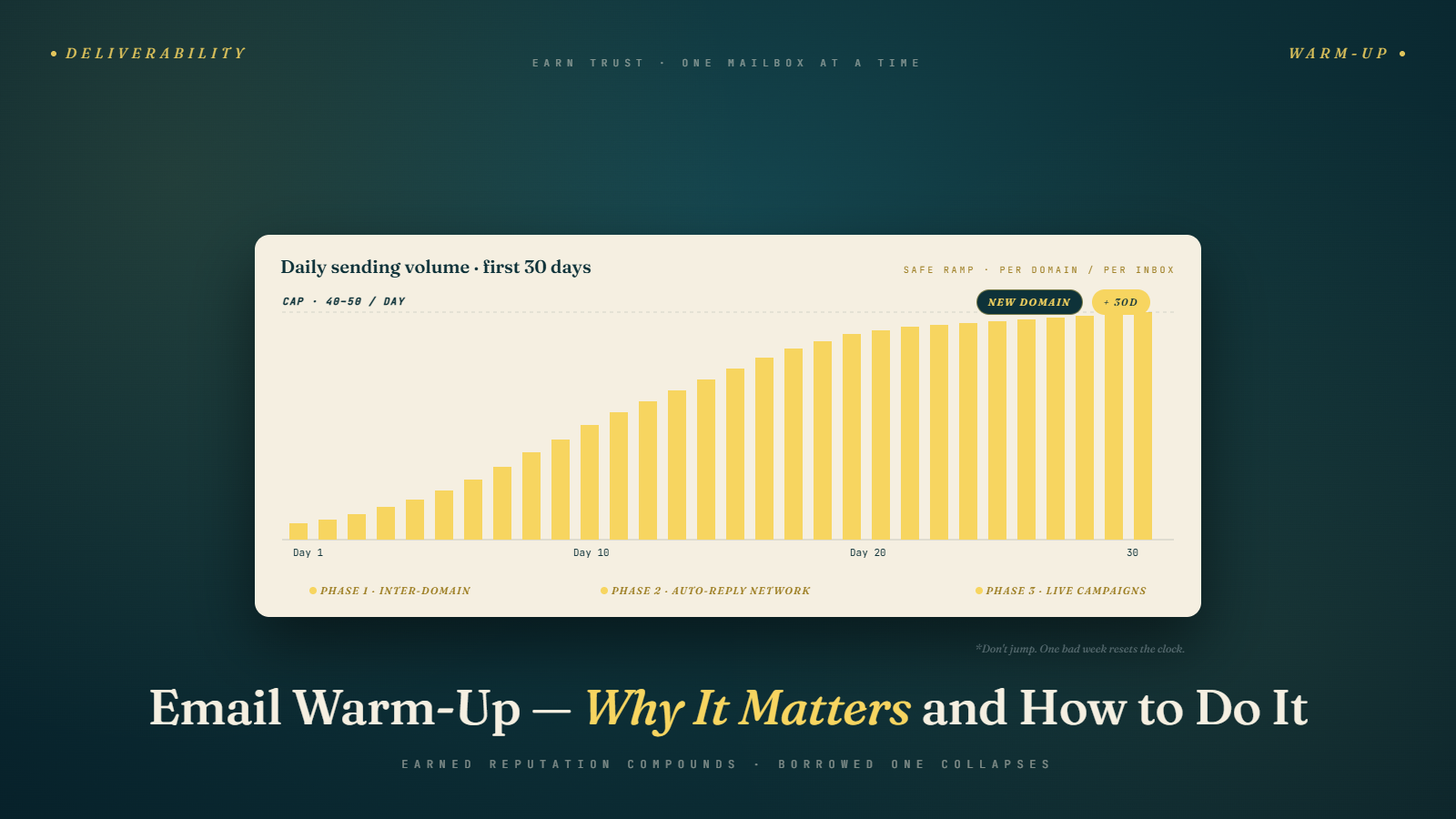
Email Warm-Up: Why It Matters and How to Do It
A brand-new sending domain that jumps straight into cold email will get filtered or blacklisted fast. Learn exactly why email warm-up works, how to do it manually and with tools, and what a proper warm-up schedule looks like.
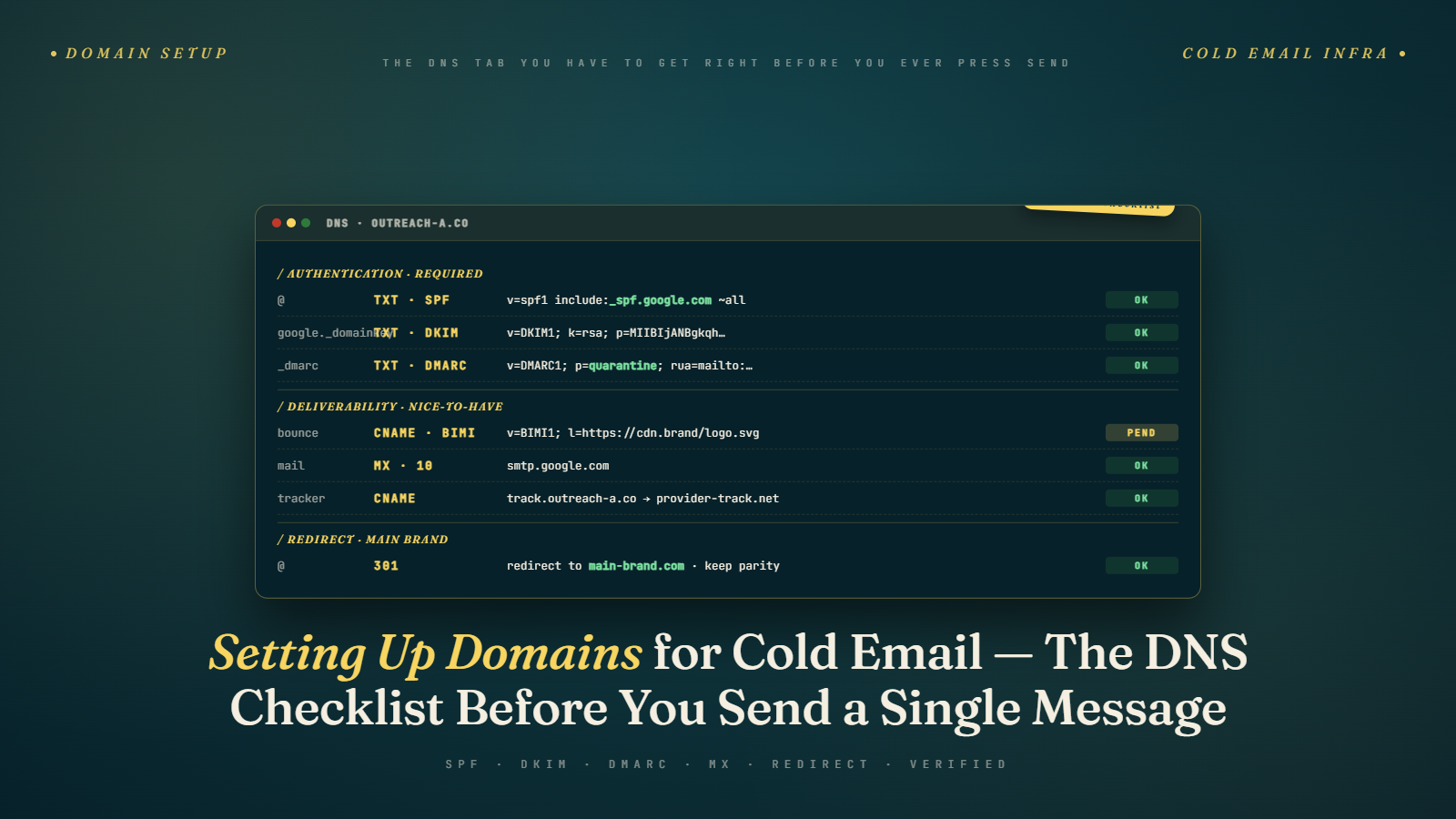
Setting Up Domains for Cold Email: Main vs. Secondary
Using your primary business domain for cold email is one of the riskiest things you can do. Learn how to set up secondary sending domains correctly — naming conventions, DNS configuration, inbox setup, and everything in between.
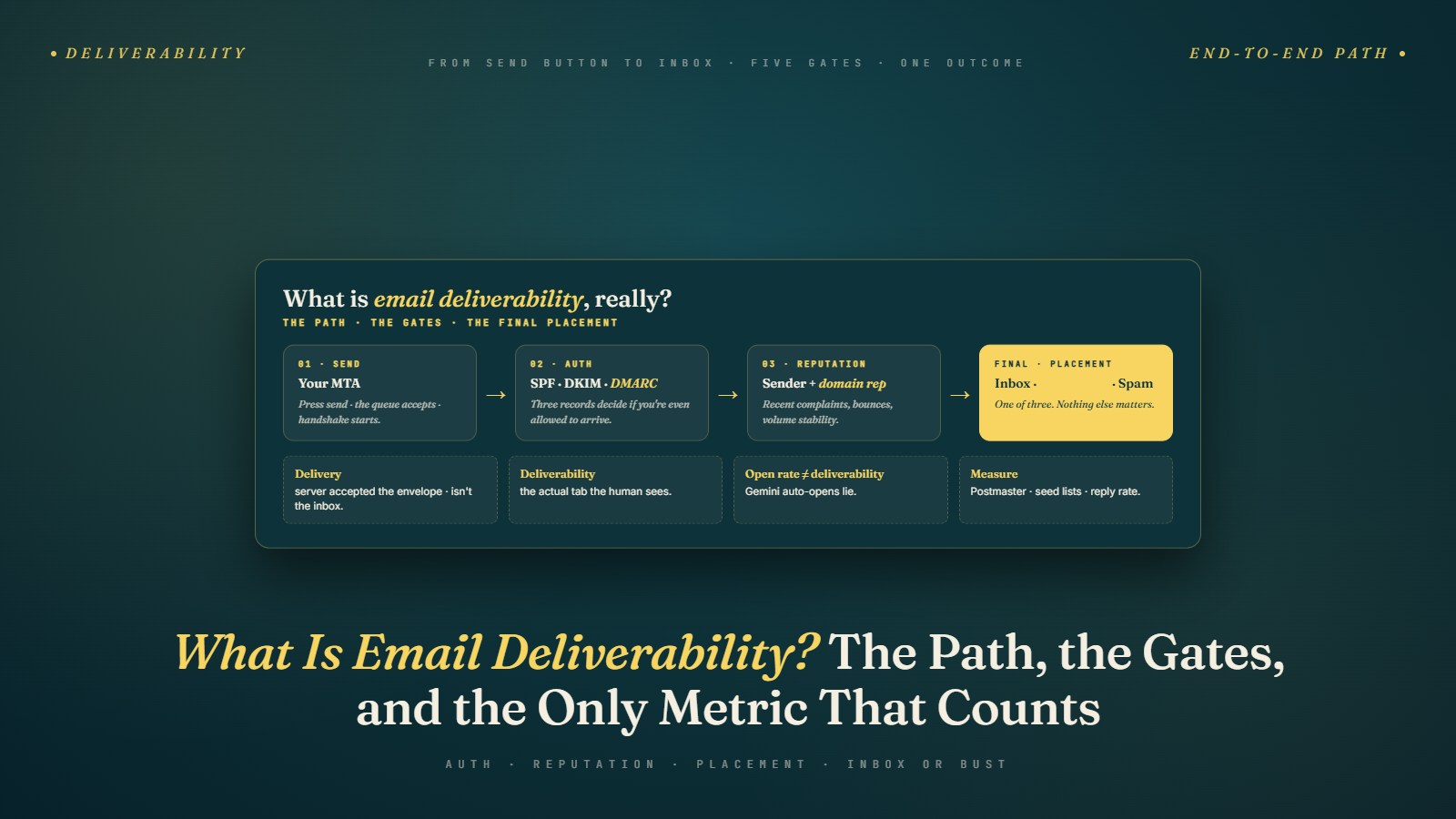
What Is Email Deliverability? The Complete Guide
Email deliverability is the difference between landing in the inbox and landing nowhere. This technical pillar breaks down every layer of the deliverability stack — from authentication to reputation to content — and maps out everything Phase 4 covers.
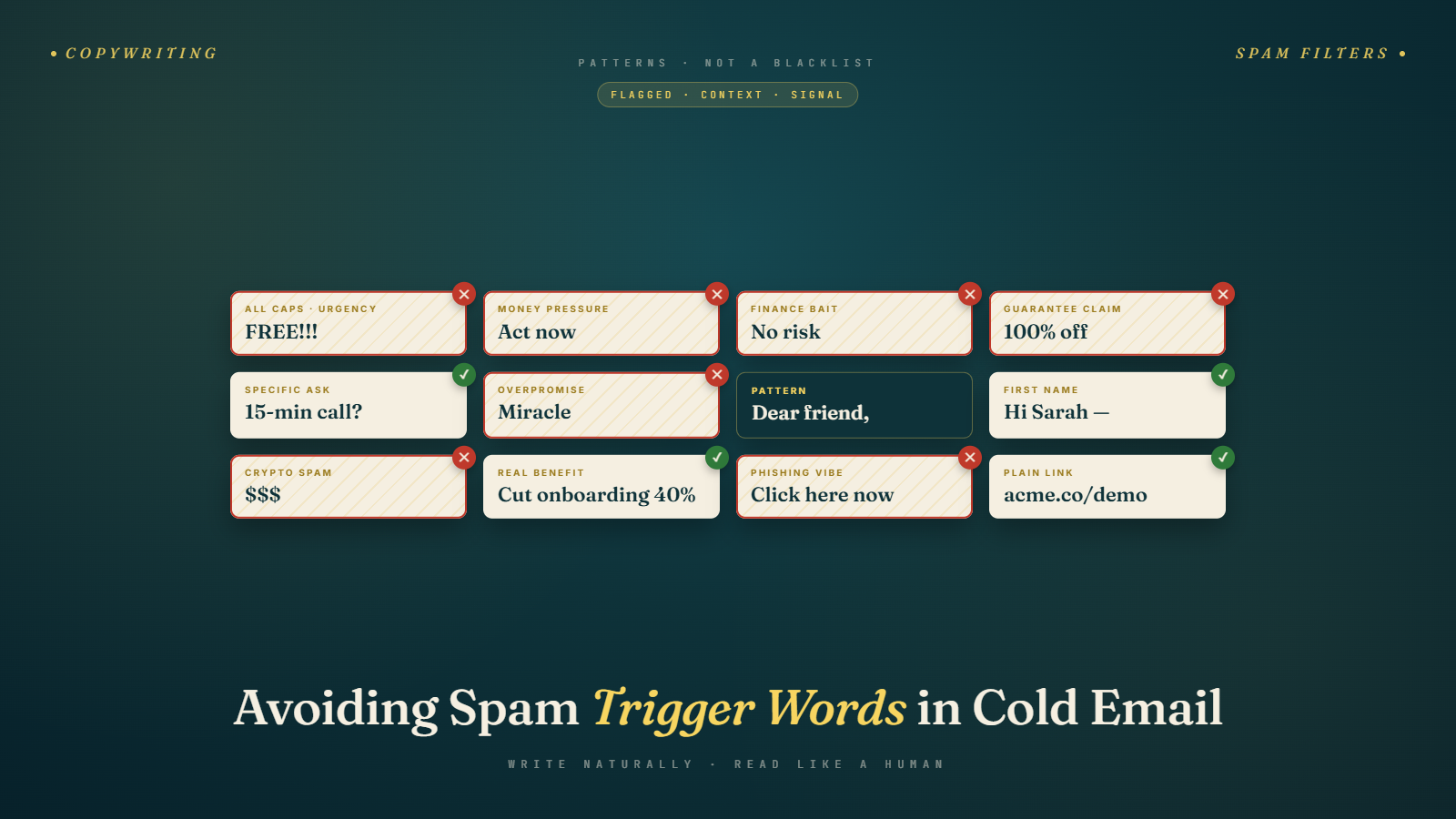
Avoiding Spam Trigger Words in Cold Email
Spam filters are smarter than a word blacklist — but certain language patterns still get you filtered before a human ever reads your email. Learn what to avoid, how spam filters actually work, and how to write naturally without triggering them.
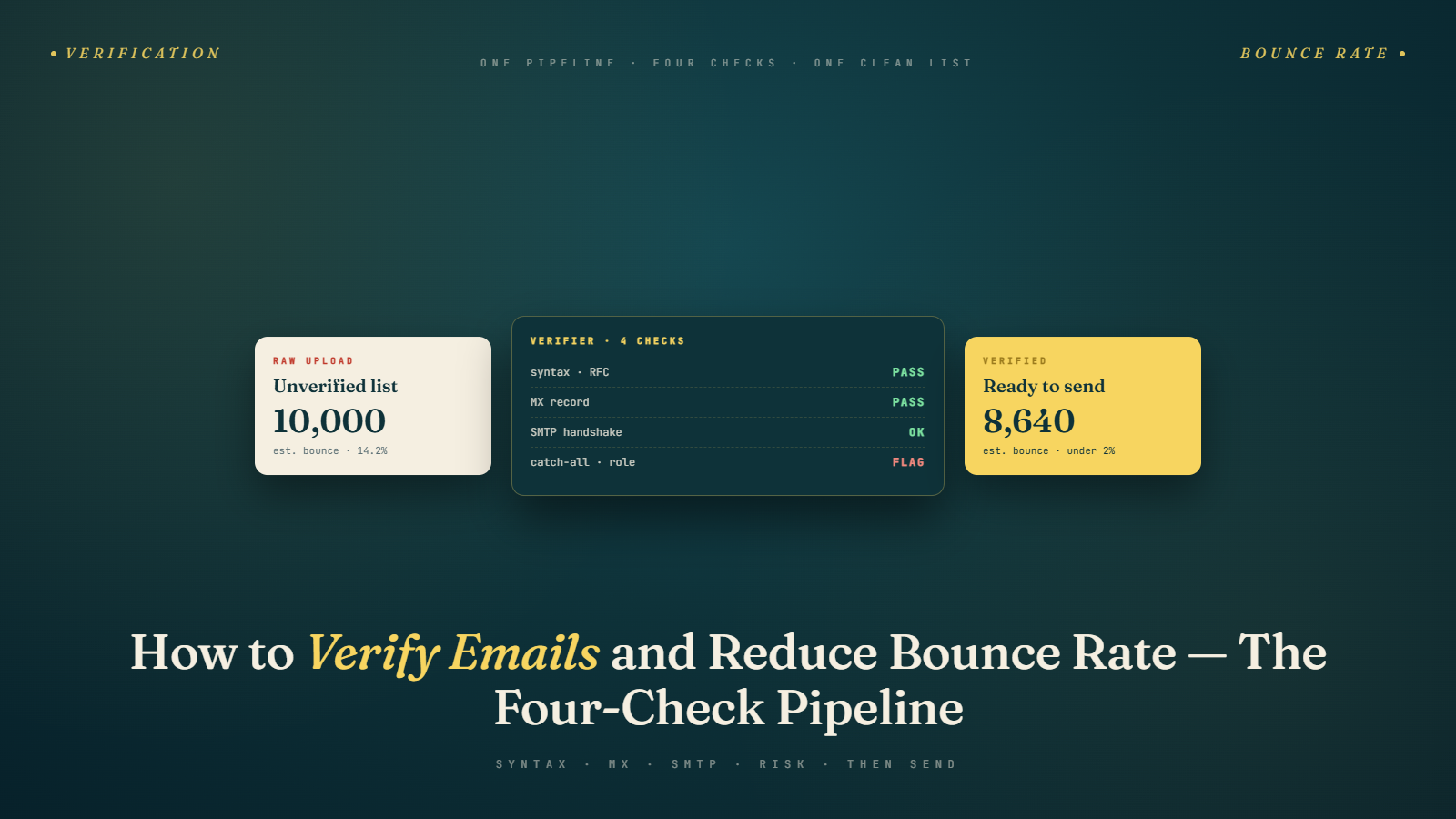
How to Verify Emails and Reduce Bounce Rate for Cold Email
High bounce rates kill cold email campaigns and destroy sender reputation. Learn how email verification works, what bounce types actually mean, and how to protect your domain with the right tools and processes.