
Email Verification Insights
Practical guides, deliverability playbooks, and list-cleaning strategies designed to help teams send with more confidence.
Find an article
Search by title, category, or topic.
Quick links
Browse by topic
Jump into the parts of email verification and deliverability you need right now.
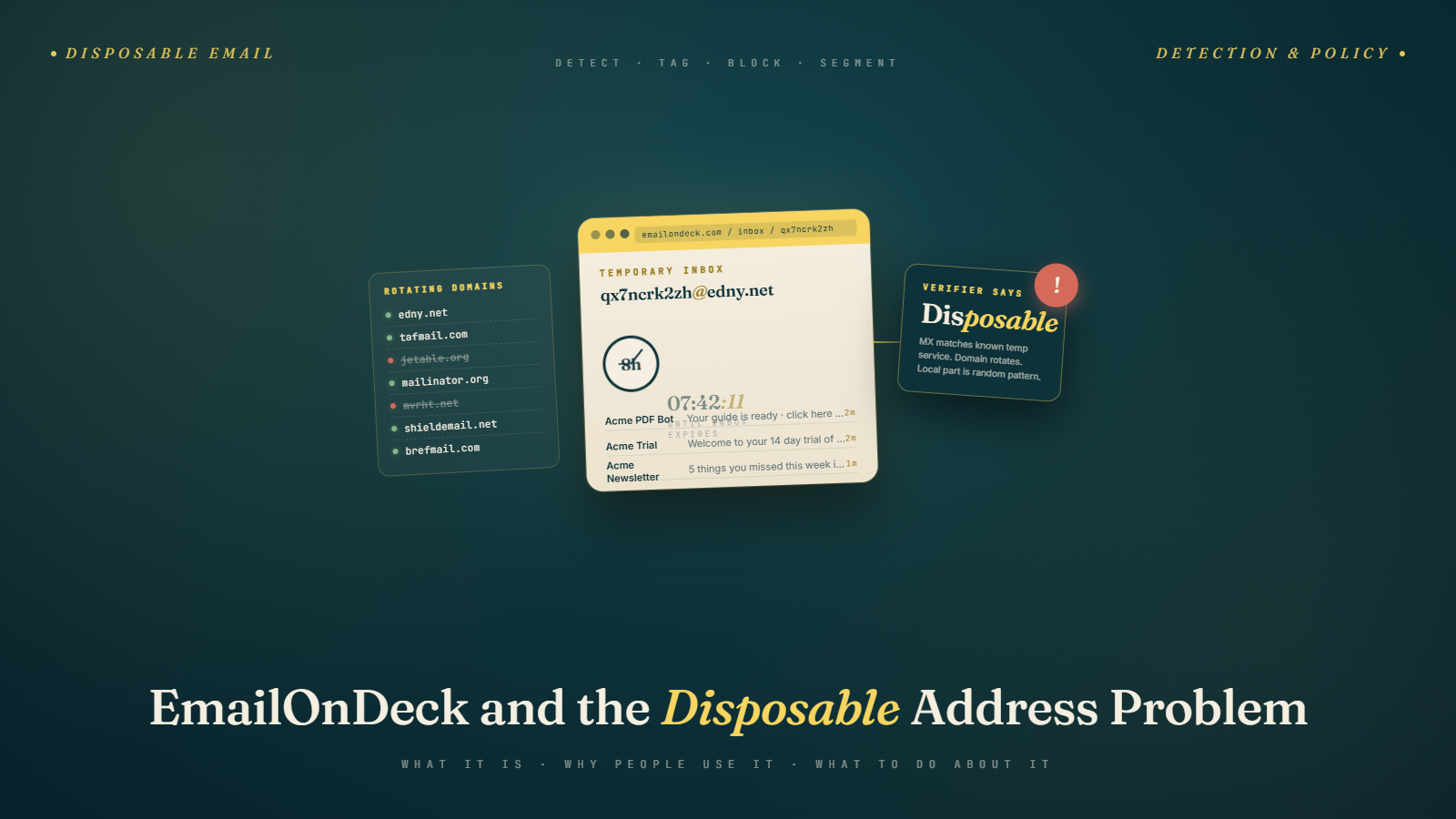
EmailOnDeck: What It Is, Why People Use It, And What Marketers Should Actually Do About It
EmailOnDeck is one of the most popular disposable email services in the world. Here is what it actually is, why people use it, what it does to your list, and how to handle it without overreacting.
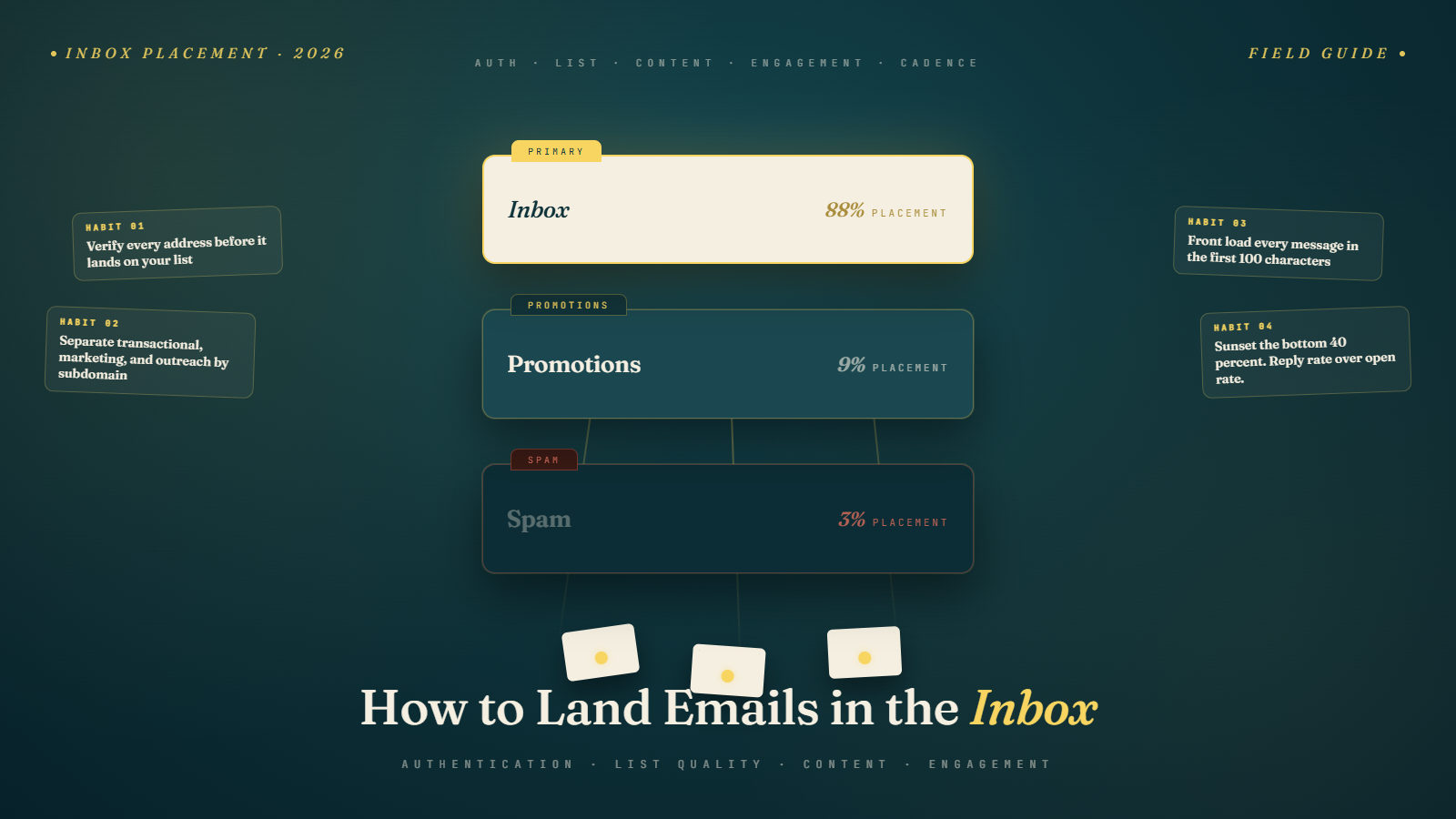
How to Land Emails in the Inbox
Inbox placement is not a single trick. It is a small set of habits done in the right order. This is the working playbook we run for ourselves and for clients, written in plain language.
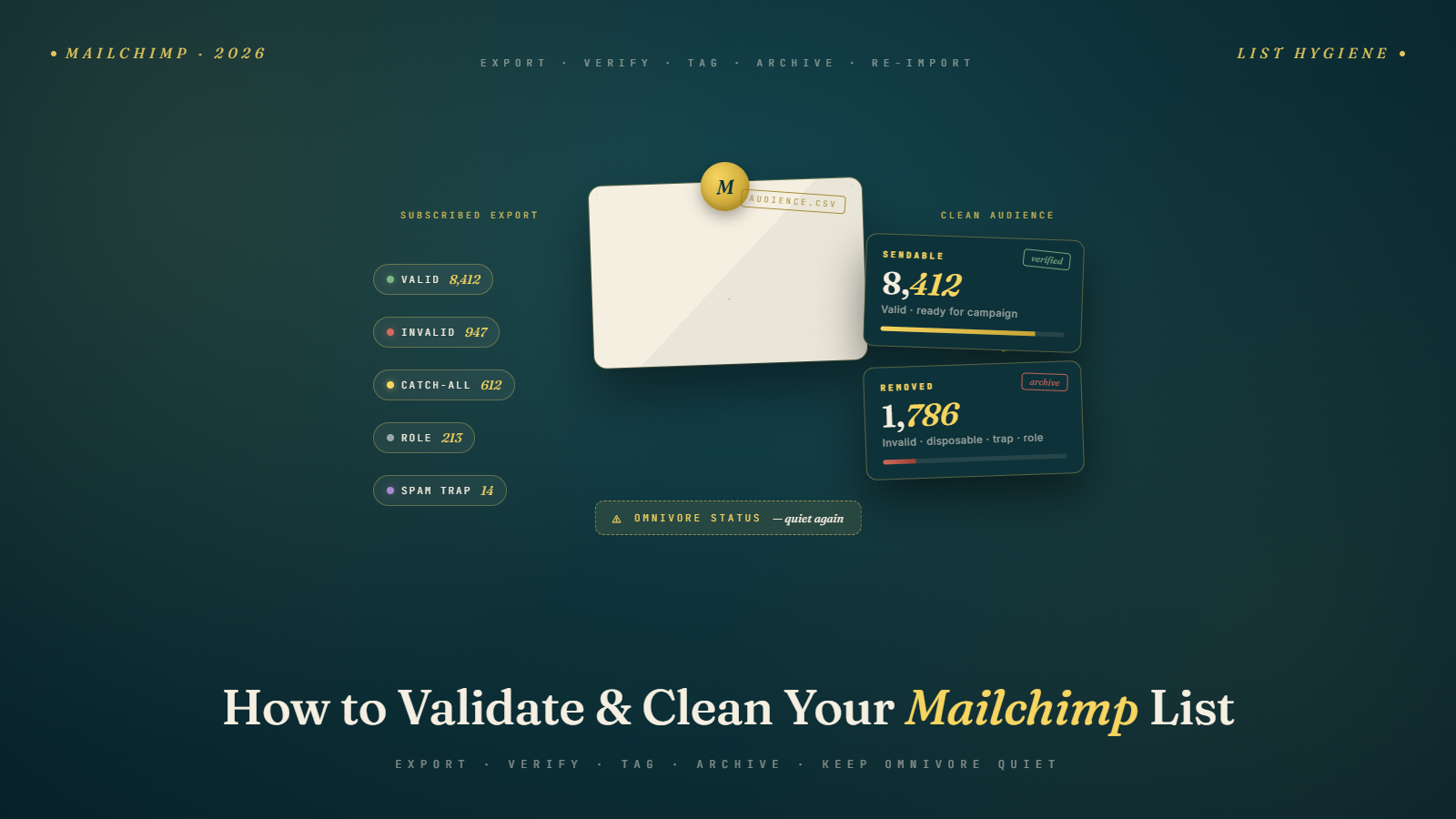
How to Validate and Clean Your Mailchimp List Without Tripping Omnivore
How to actually clean a Mailchimp list without setting Omnivore off, getting your account paused, or wasting a Saturday on it. The full process, with the parts most guides skip.
More reading
Latest articles from the library
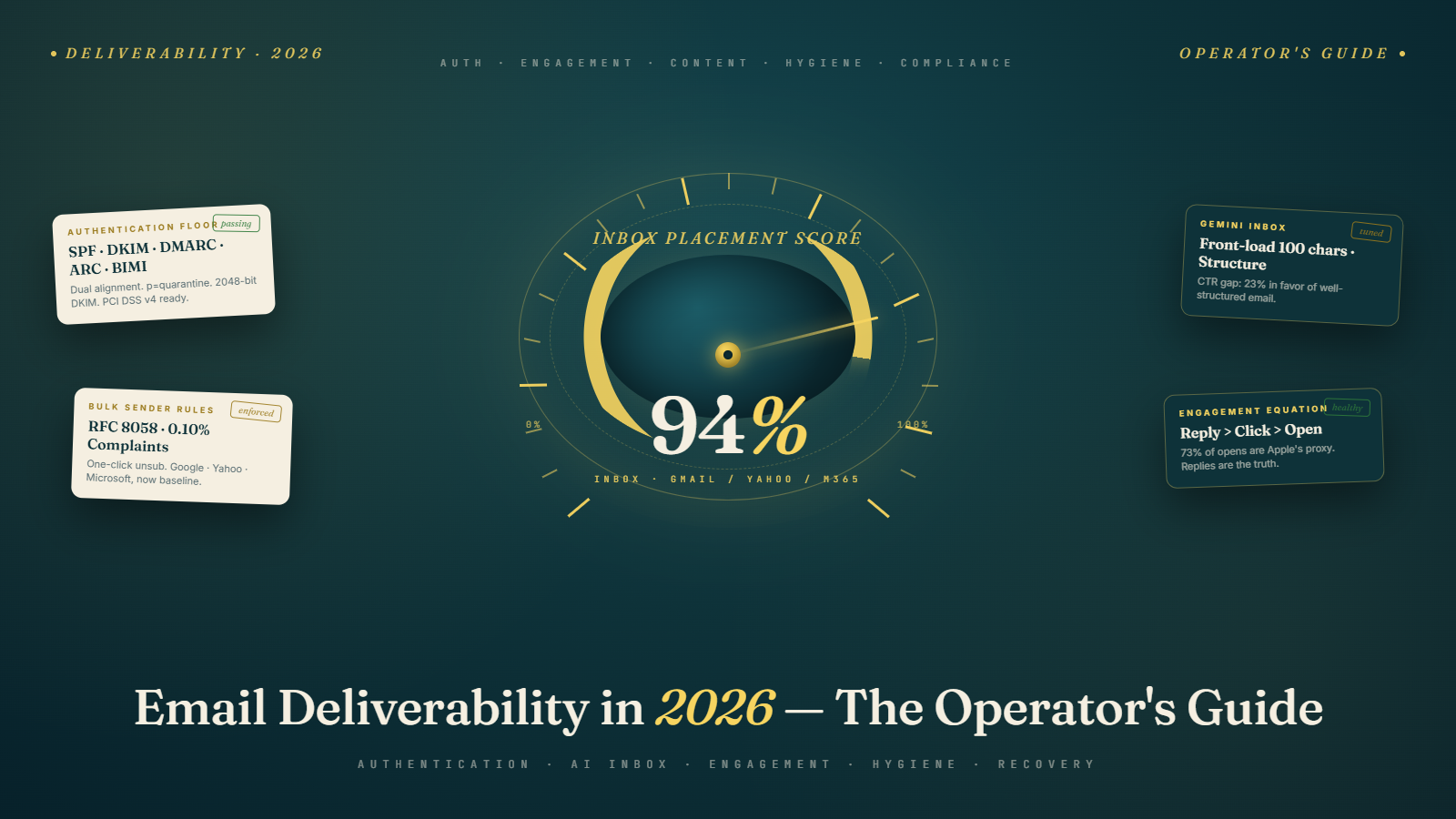
Email Deliverability in 2026: The Complete Operator's Guide (You Will Not Need Another Article)
The complete operator's guide to email deliverability in 2026: authentication, the Google and Yahoo and Microsoft rules, Gmail's Gemini era, the engagement equation, list hygiene, the 48-hour recovery plan, and the monitoring stack you actually need.
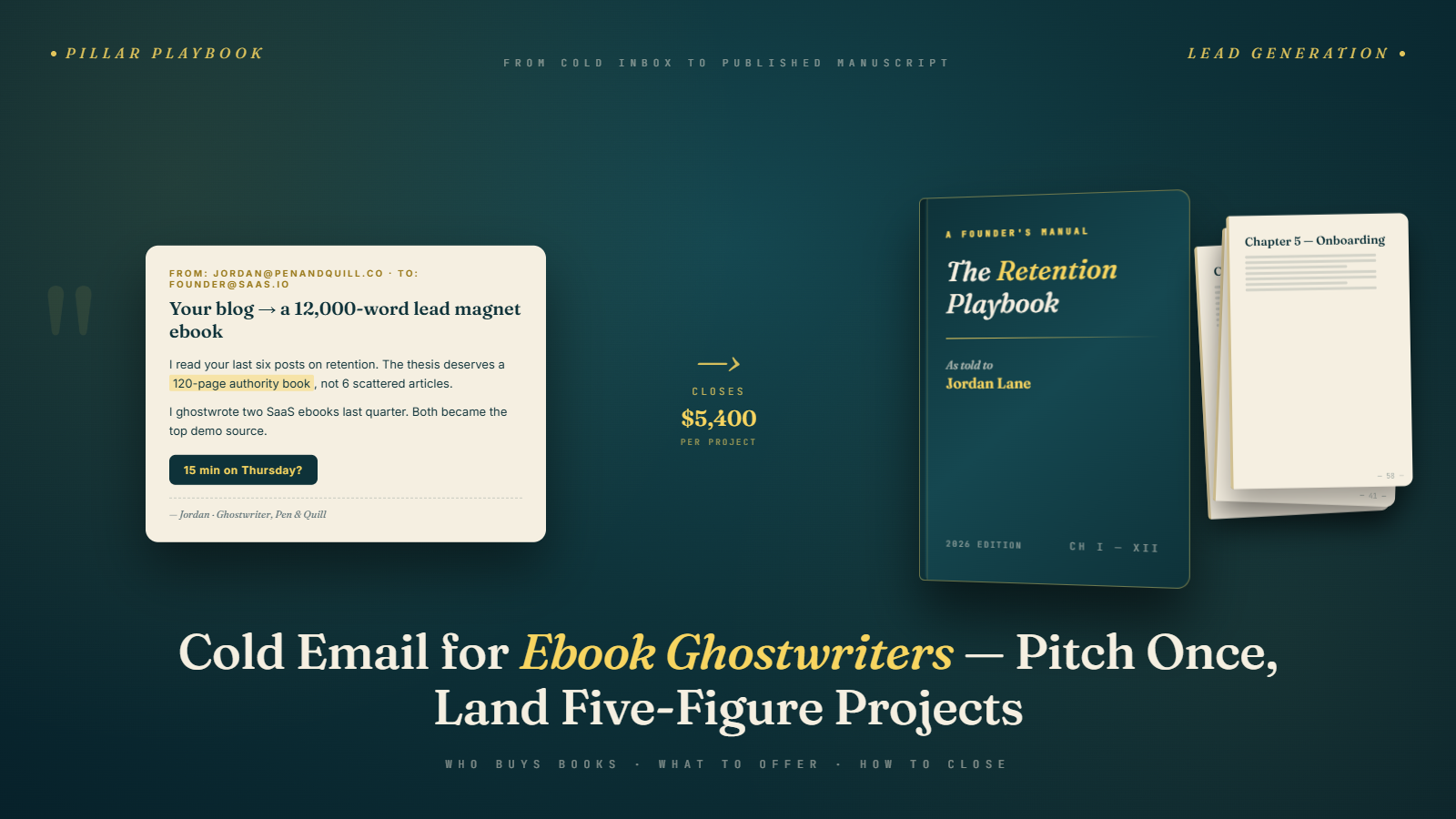
How to Generate Leads for Ebook Writing Services Using Cold Email (Complete Playbook)
A full cold email playbook for ebook ghostwriters: twelve buyer types, where to find each one, what to pitch them, and the exact email I would send today.
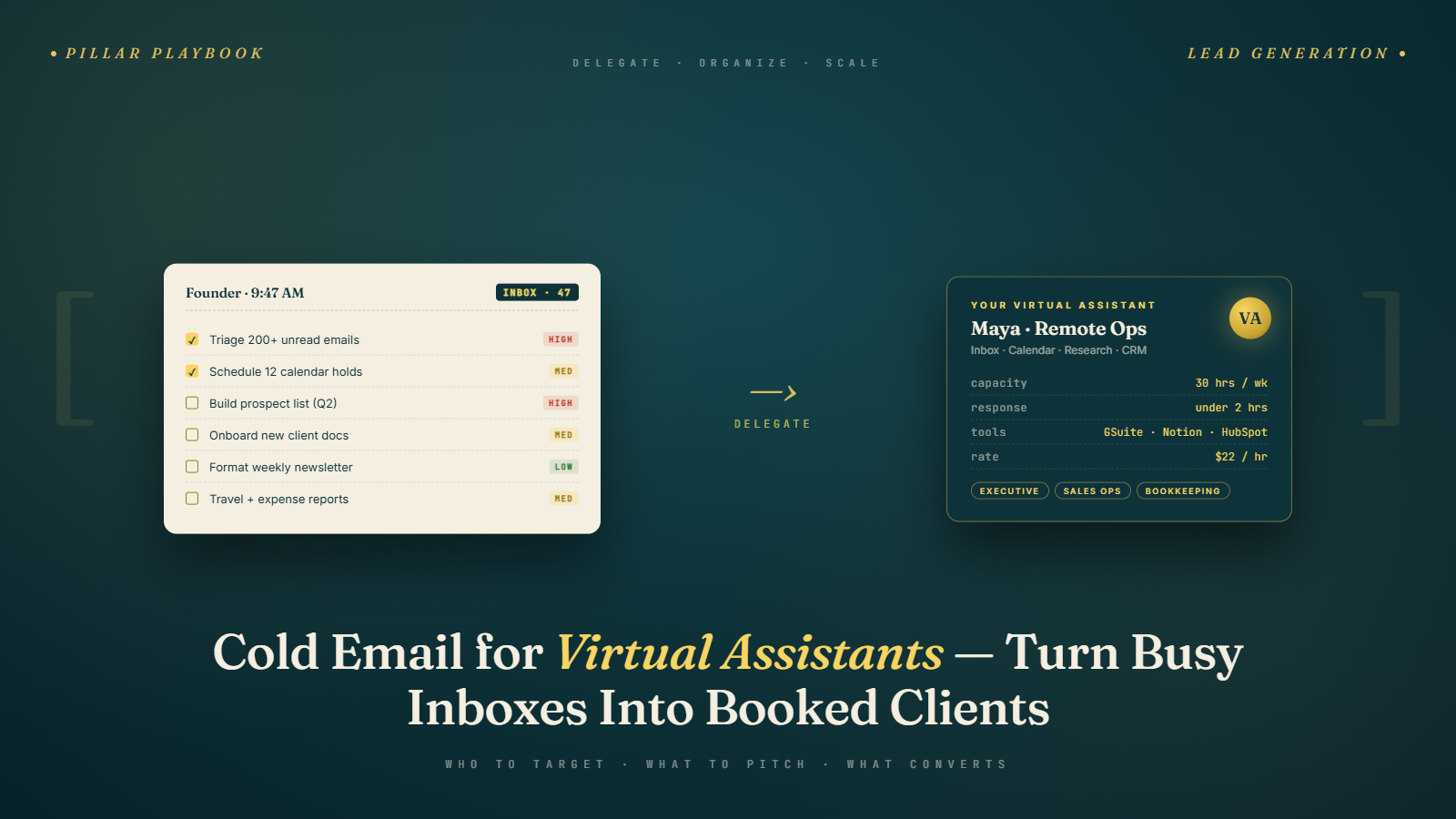
How to Generate Leads for Virtual Assistant Services Using Cold Email (Complete Playbook)
A complete cold email playbook for virtual assistants: twelve specific buyer types, where to find each one, what to pitch, and the exact email I would send today.
10 Ecommerce Email Templates for 2026: Design for Gemini, Authenticity, and Conversions
Ecommerce email templates in 2026 must work within Gemini's summary generation, email-first design constraints, and subscriber expectations for authentic voice. Here are 10 template patterns that work in the post-AI-backlash era, with the design and copy principles behind each one.
18 Digital Marketing & Email Deliverability Influencers Worth Following in 2026
Digital marketing in 2026 is dominated by AI, email deliverability changes, and Gemini-era inbox shifts. Here are 18 thought leaders worth following — practitioners who are documenting what's actually working in real time, with specific focus on email marketing and modern inbox challenges.
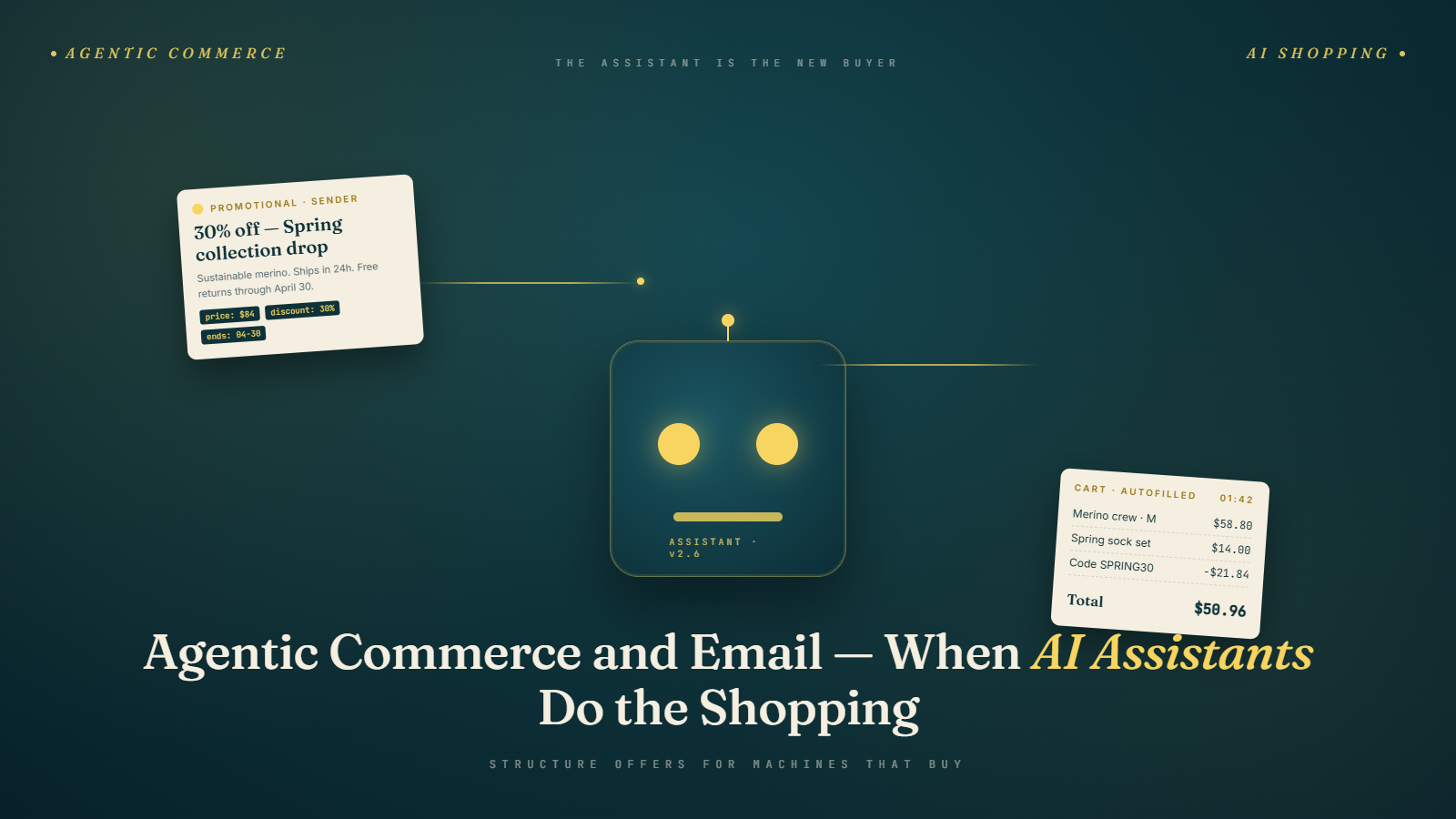
Agentic Commerce and Email: When AI Assistants Do the Shopping
AI shopping assistants now read your promotional emails to make purchase decisions. Here is how to structure offers so agentic commerce tools find and act on them.
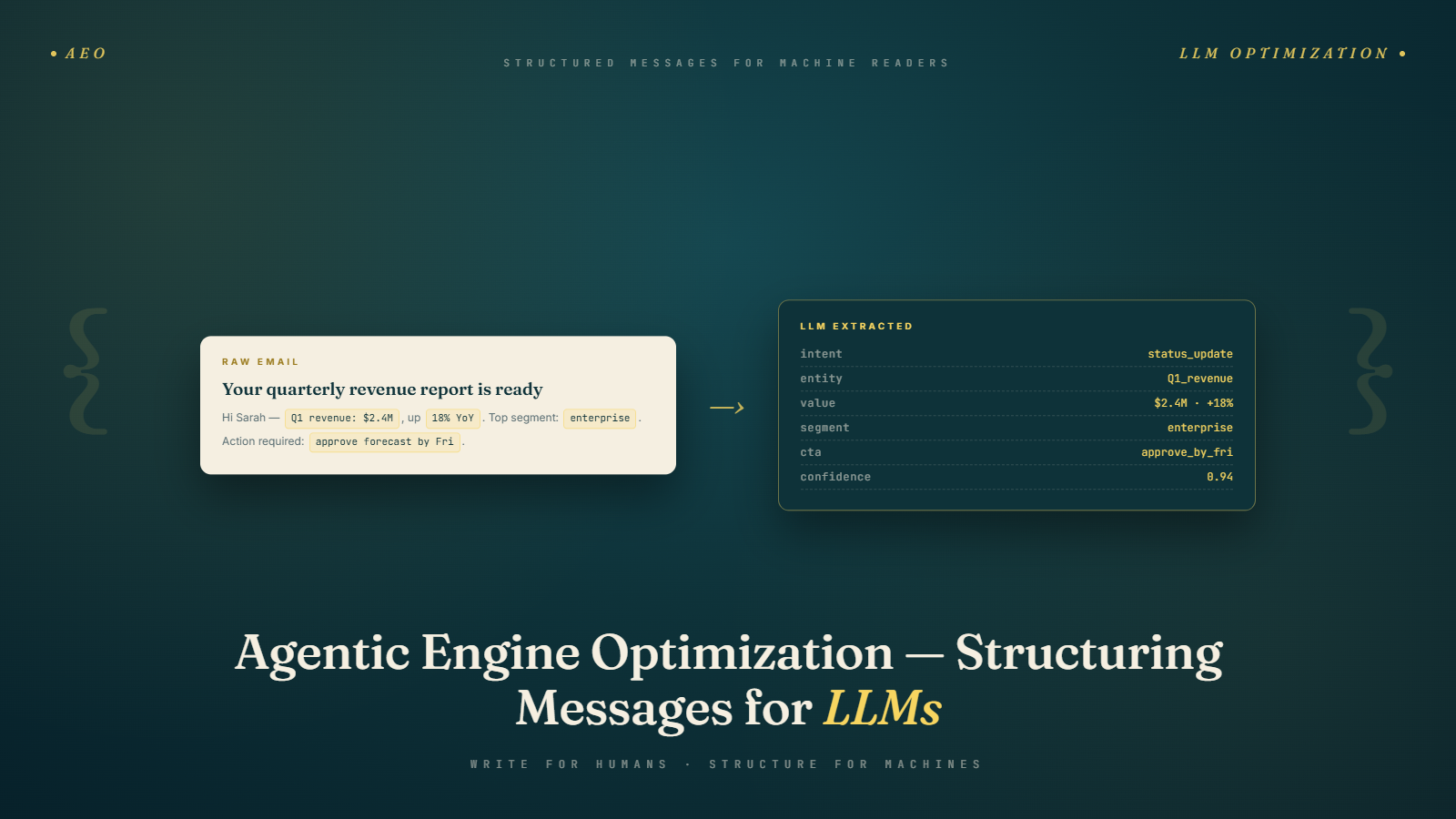
Agentic Engine Optimization (AEO) for Email: Structuring Messages for LLMs
Agentic Engine Optimization for email means structuring messages so LLMs can extract, summarize, and act on them. Here is how to do it without losing your brand voice.
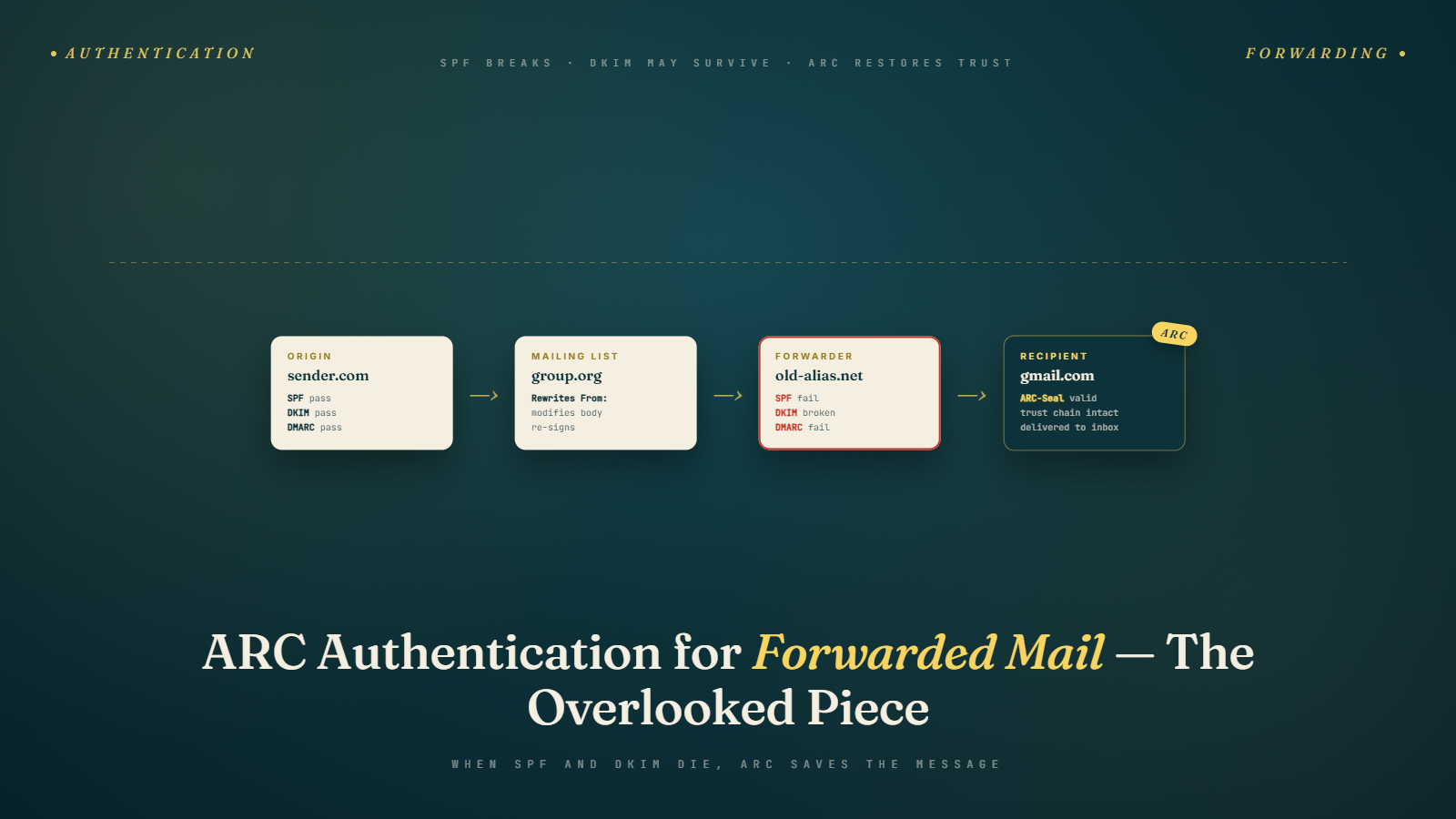
ARC Authentication for Forwarded Mail: The Overlooked Piece of the Puzzle
ARC authentication solves the problem of forwarded mail breaking SPF and DKIM. Here is how it works, who should care, and what senders can actually control.
Best Email Verification Tools in 2026: NeverBounce Alternatives Compared
NeverBounce is one option, but the email verification landscape in 2026 offers better alternatives for specific use cases — better pricing for high volume, better accuracy on Microsoft domains, white-label options for agencies, and integration with modern deliverability workflows.
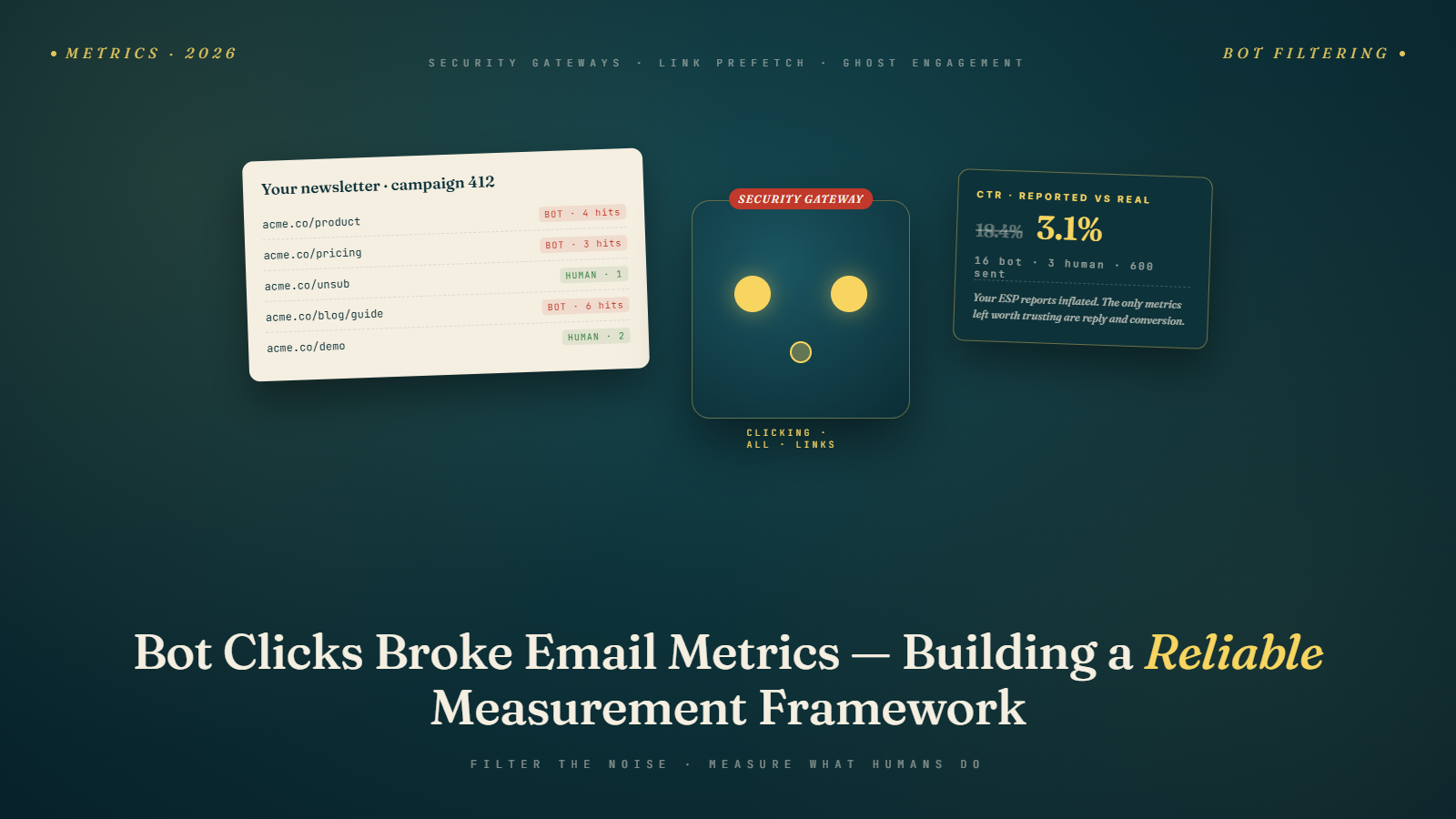
Bot Clicks Broke Email Metrics: Building a Reliable Measurement Framework
Security gateways click every link in every email. Here's how to detect bot clicks, what your ESP actually filters, and the metrics you can still trust.
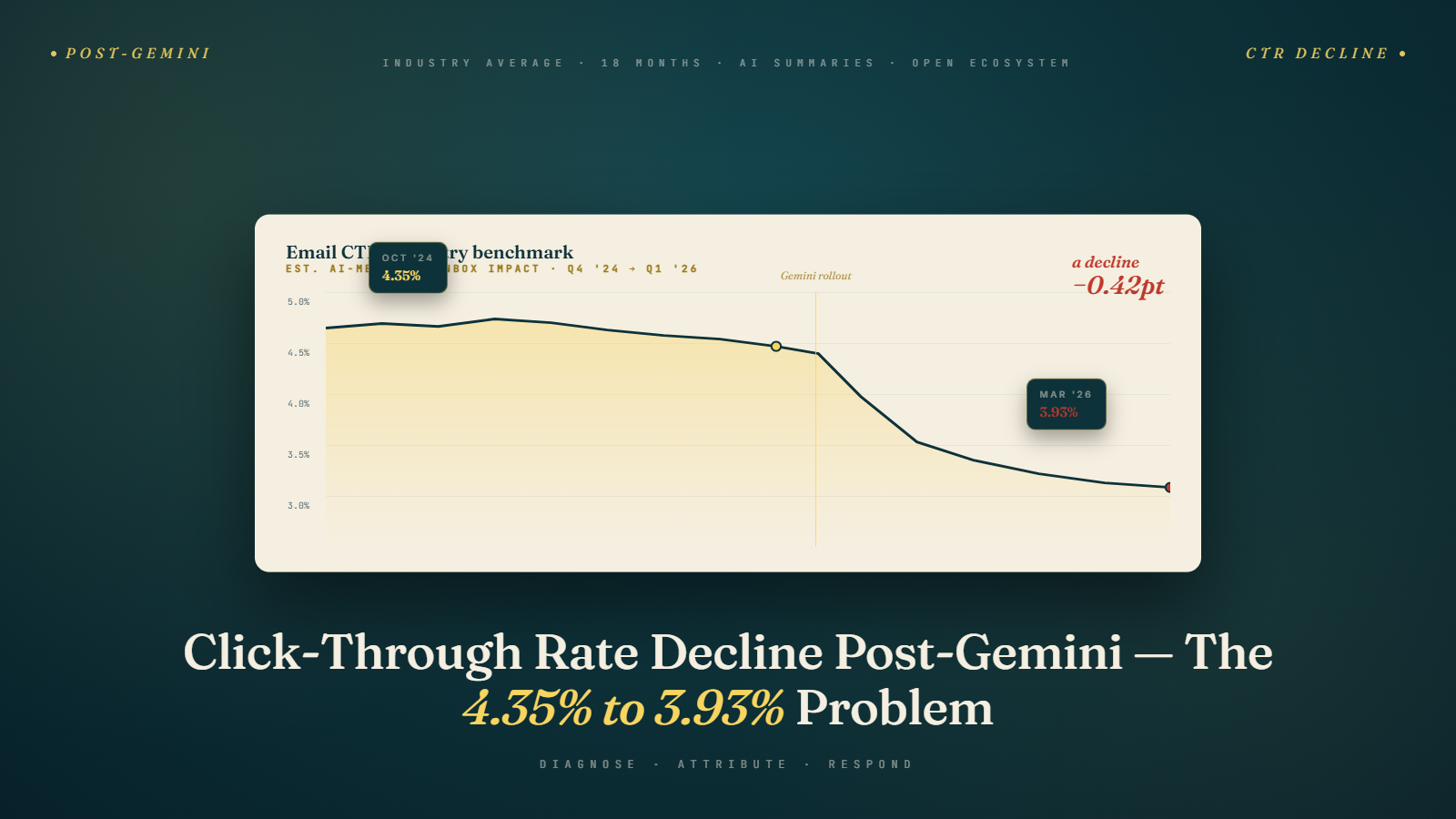
Click-Through Rate Decline Post-Gemini: The 4.35% to 3.93% Problem
Industry CTR fell from 4.35% to 3.93% after Gemini rollout. Diagnose whether your drop is AI summaries, list quality, or offer weakness, and what to do.
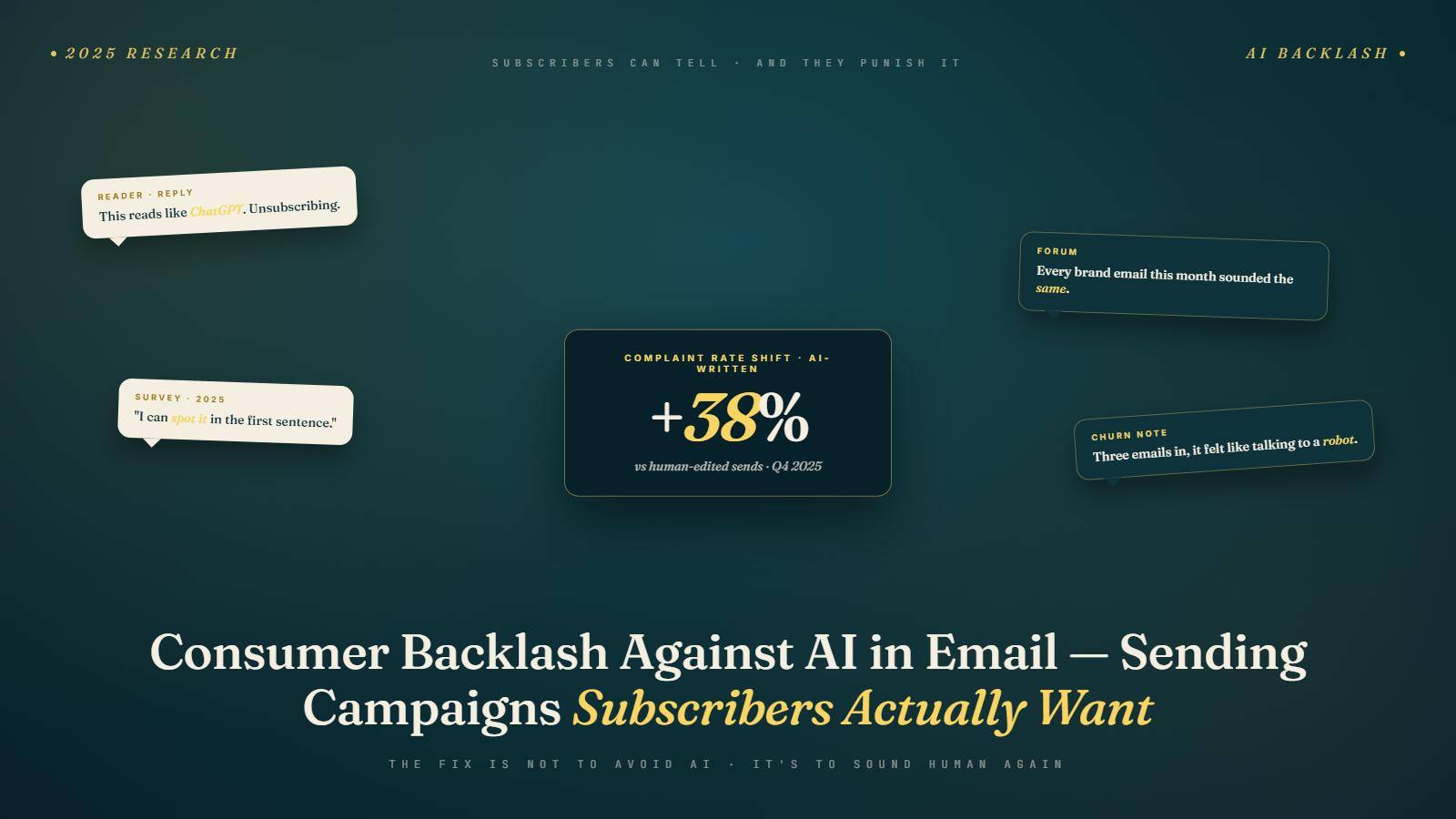
Consumer Backlash Against AI in Email: Sending Campaigns Subscribers Actually Want
Subscribers can tell when your email was written by a model with no human touching it. The 2025 data on AI backlash is clearer than most marketers realize, and the fix is not to avoid AI.
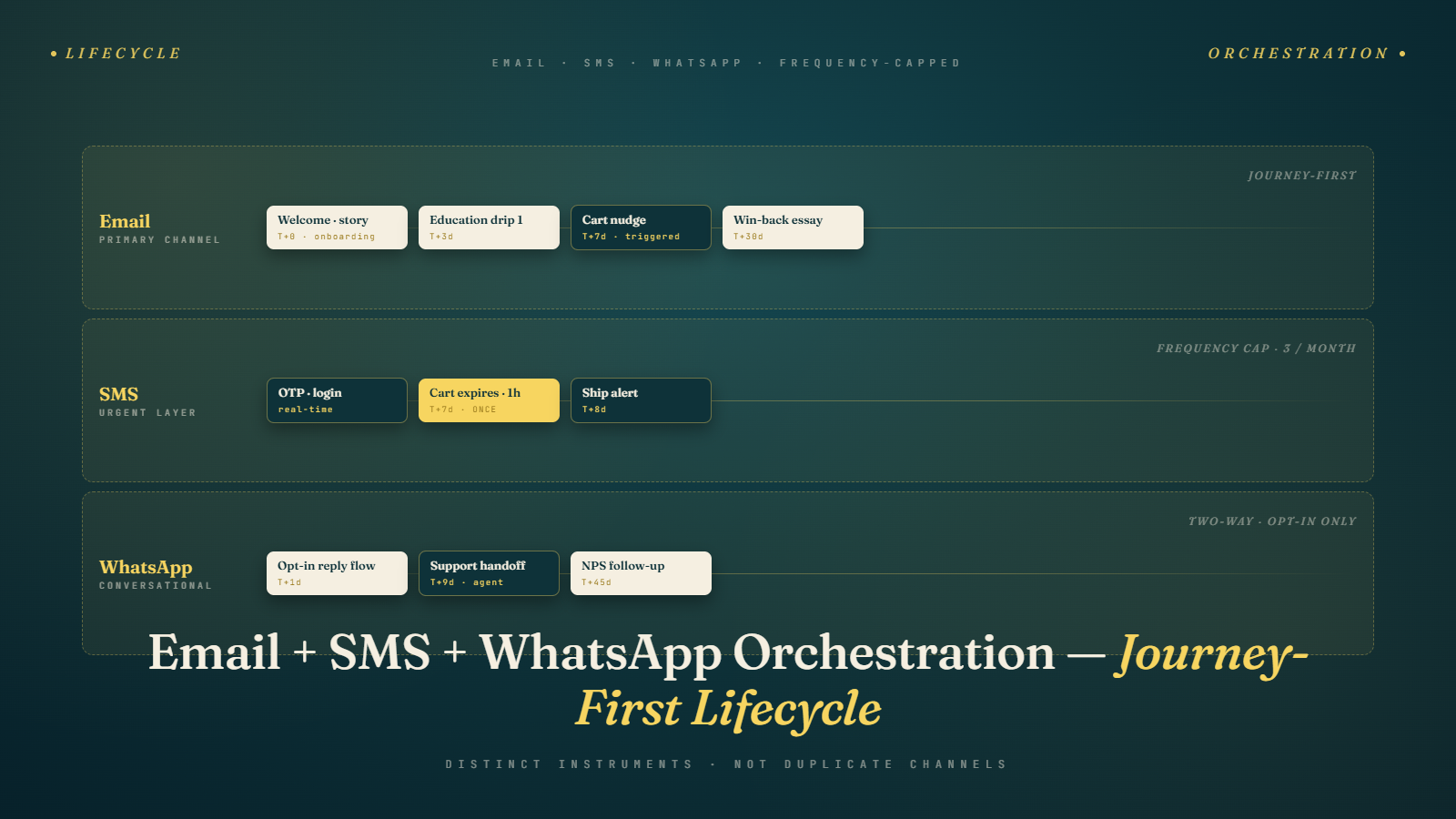
Email Plus SMS Plus WhatsApp Orchestration: Building Journey-First Lifecycle Flows
Build lifecycle flows that use email, SMS, and WhatsApp as distinct instruments, not duplicate channels. Journey-first design, frequency caps, and a cart example.
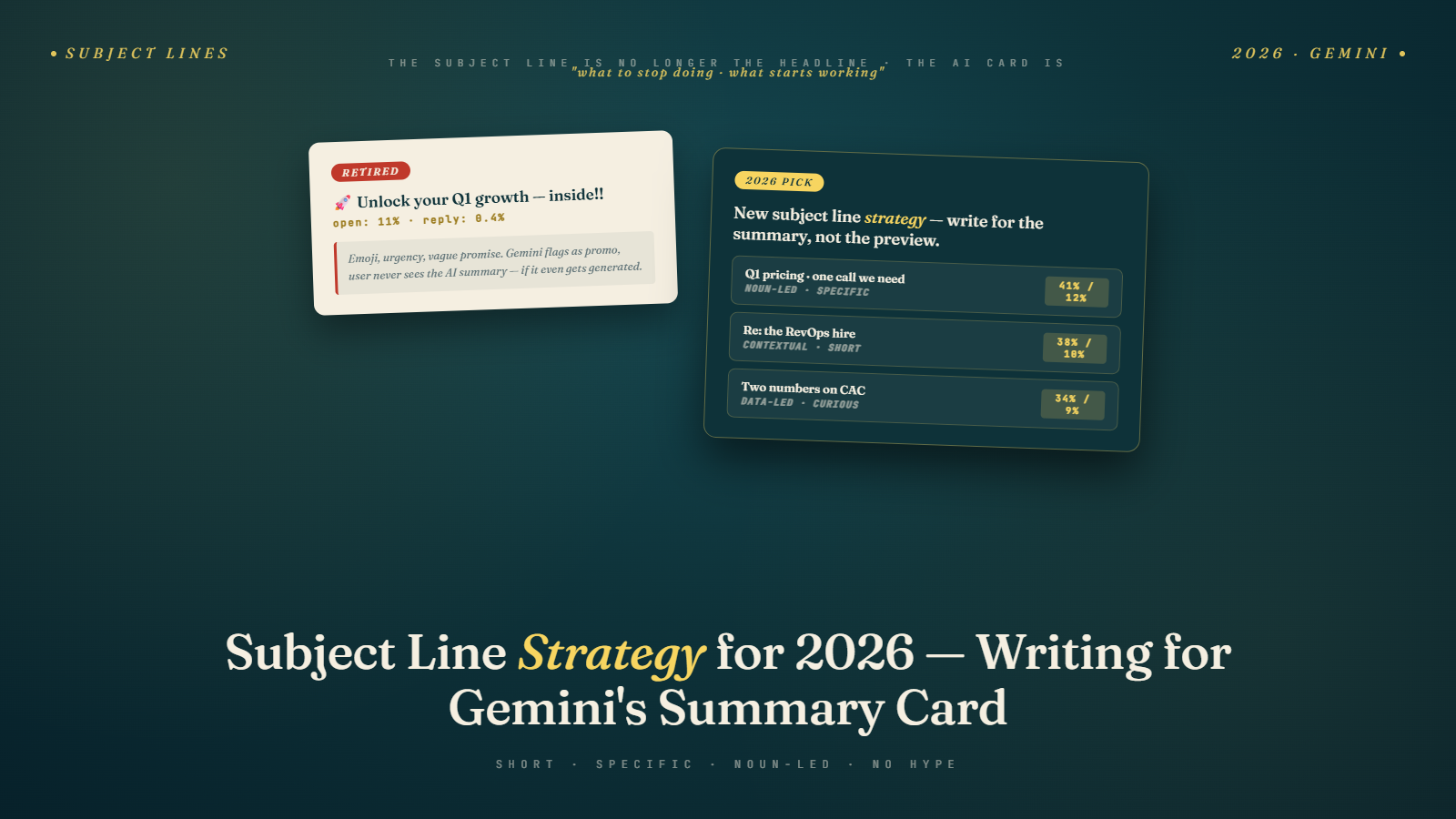
Email Subject Line Strategy in 2026: What Gemini Rewards and What It Ignores
Subject line strategy in 2026 has shifted. Gemini rewards specificity and clarity while ignoring curiosity-gap tricks. Here's what actually works now.
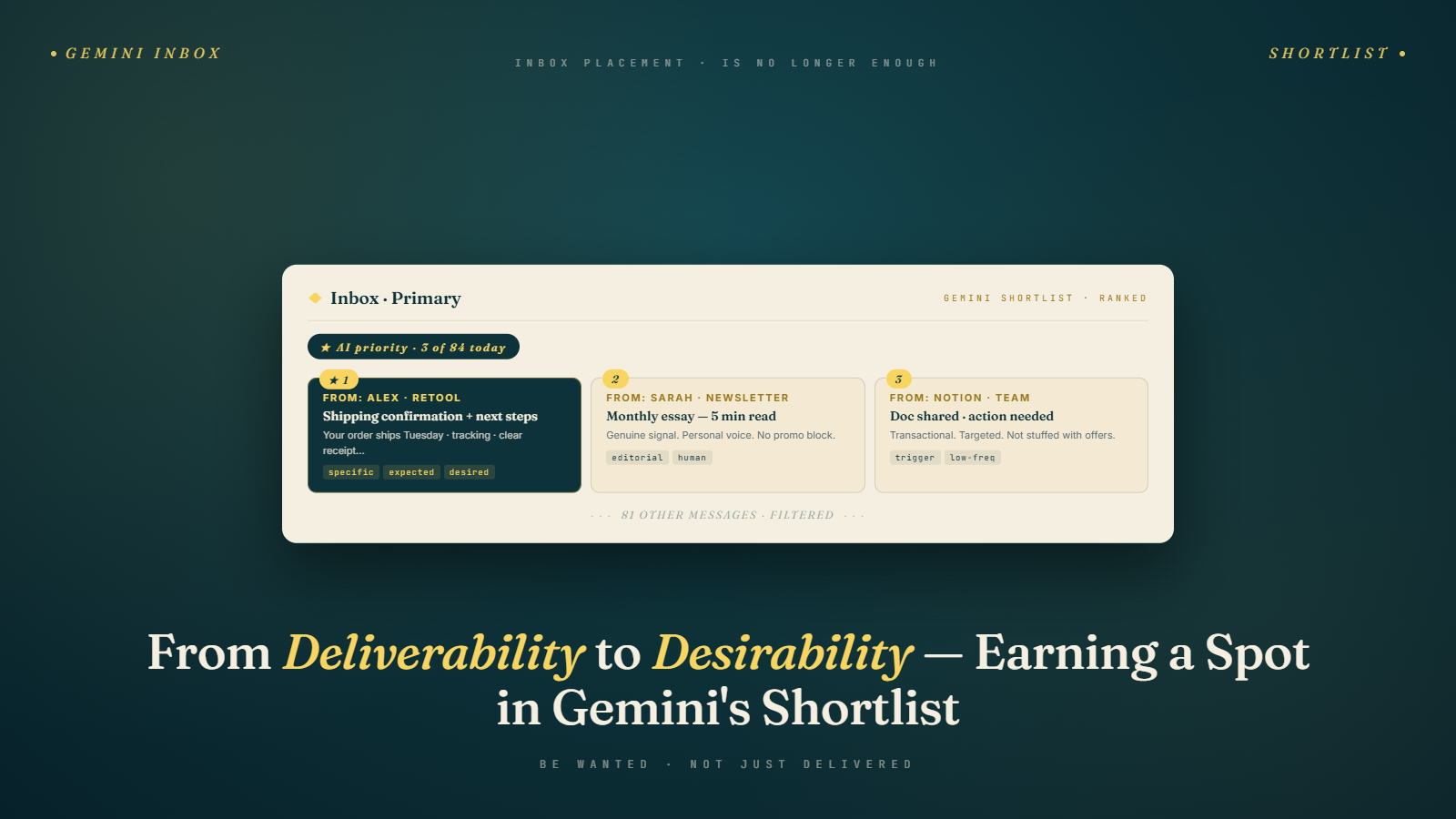
From Deliverability to Desirability: Earning a Spot in Gemini's Shortlist
Getting to the inbox was the old goal. Gemini now surfaces a shortlist. Same signals that made programs good historically win. Old tactics, done right.
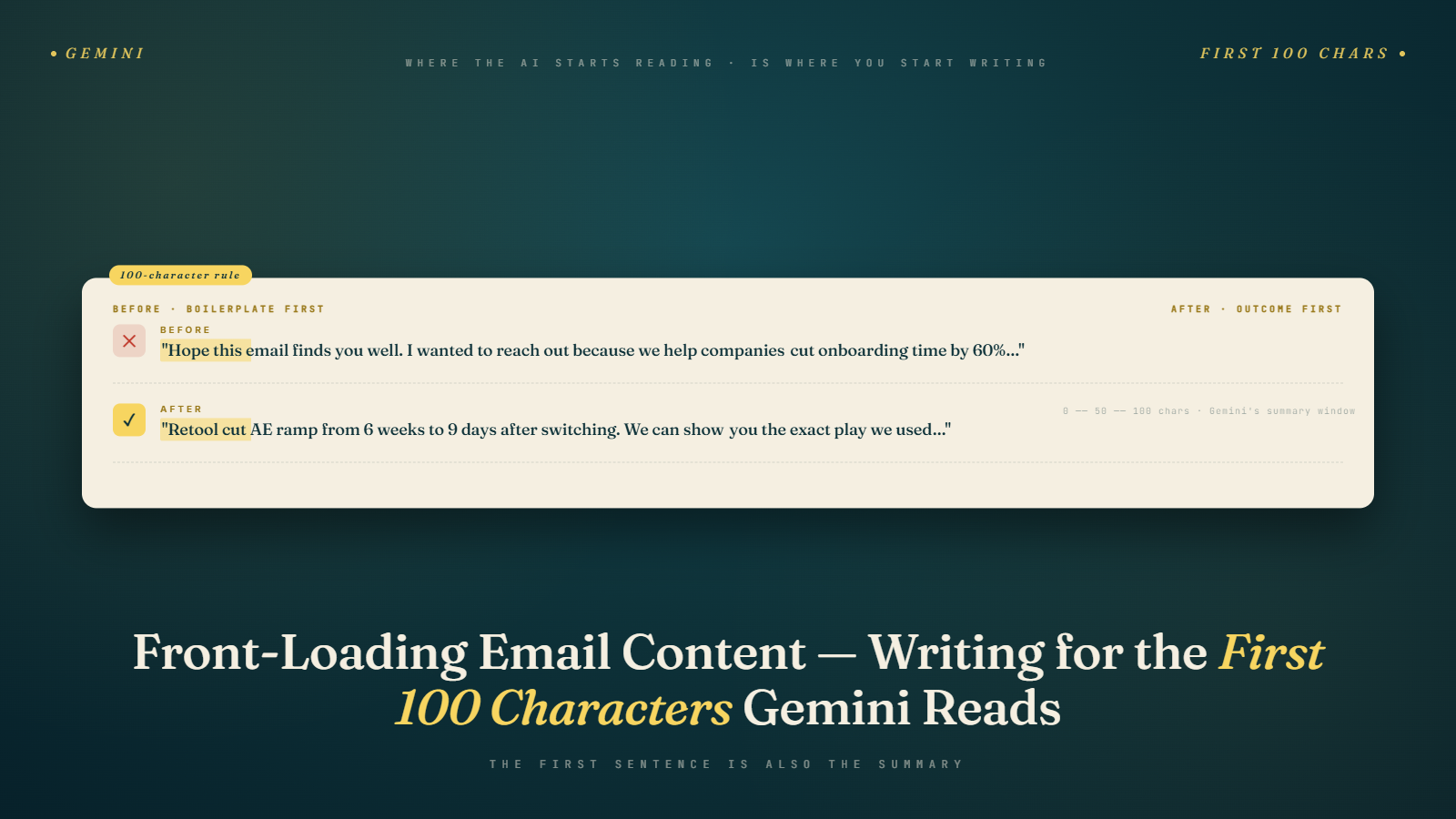
Front-Loading Email Content: Writing for the First 100 Characters Gemini Reads
Gmail's Gemini reads your first 100 characters first. If those are boilerplate, your AI summary is garbage. Here's how to front-load for the Gemini era.
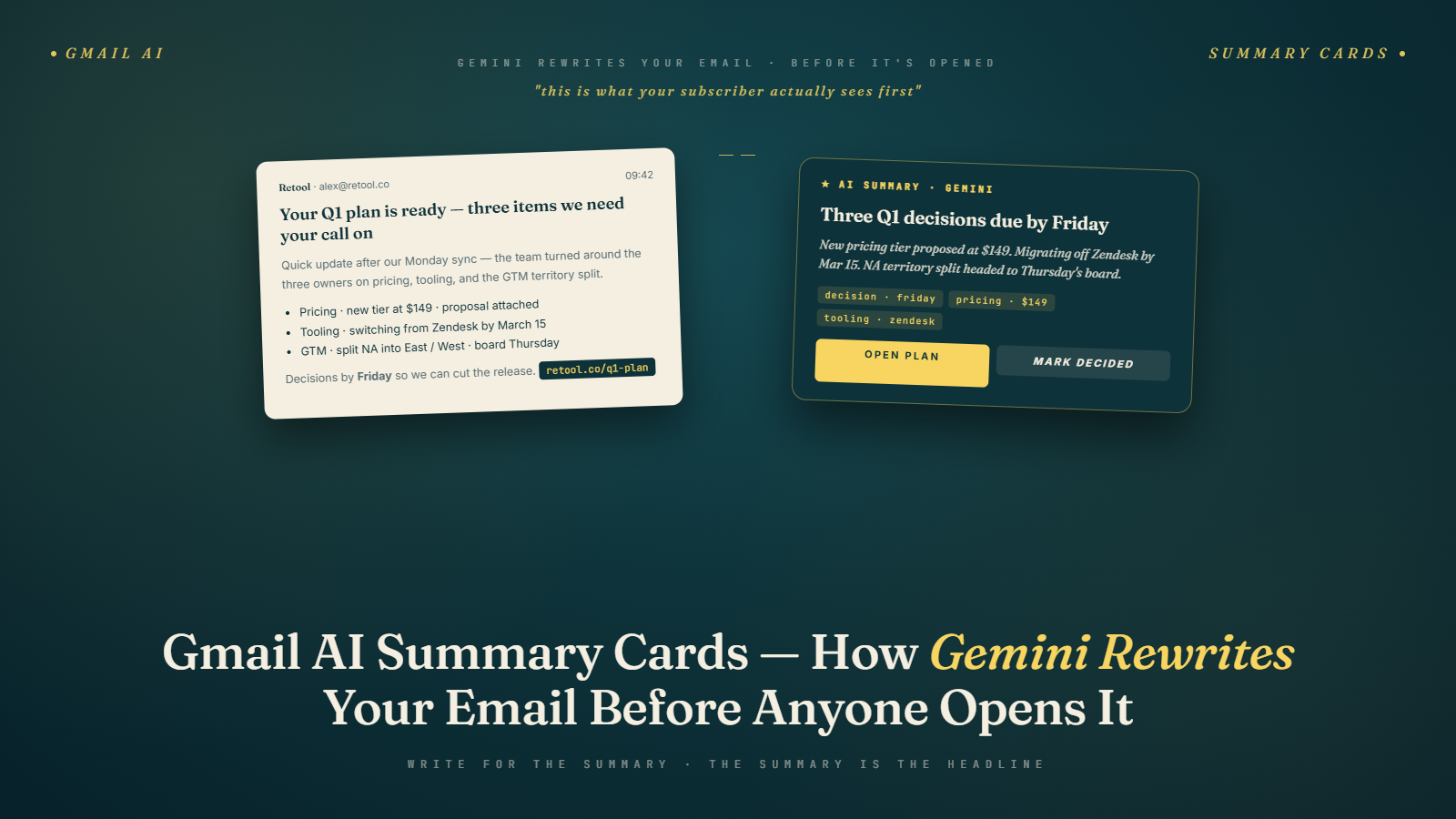
Gmail AI Summary Cards: How Gemini Rewrites Your Email Before Anyone Opens It
Gmail's Gemini AI generates summary cards from your email before subscribers open it. Here's what the AI prioritizes and how to structure content so the summary works for you.
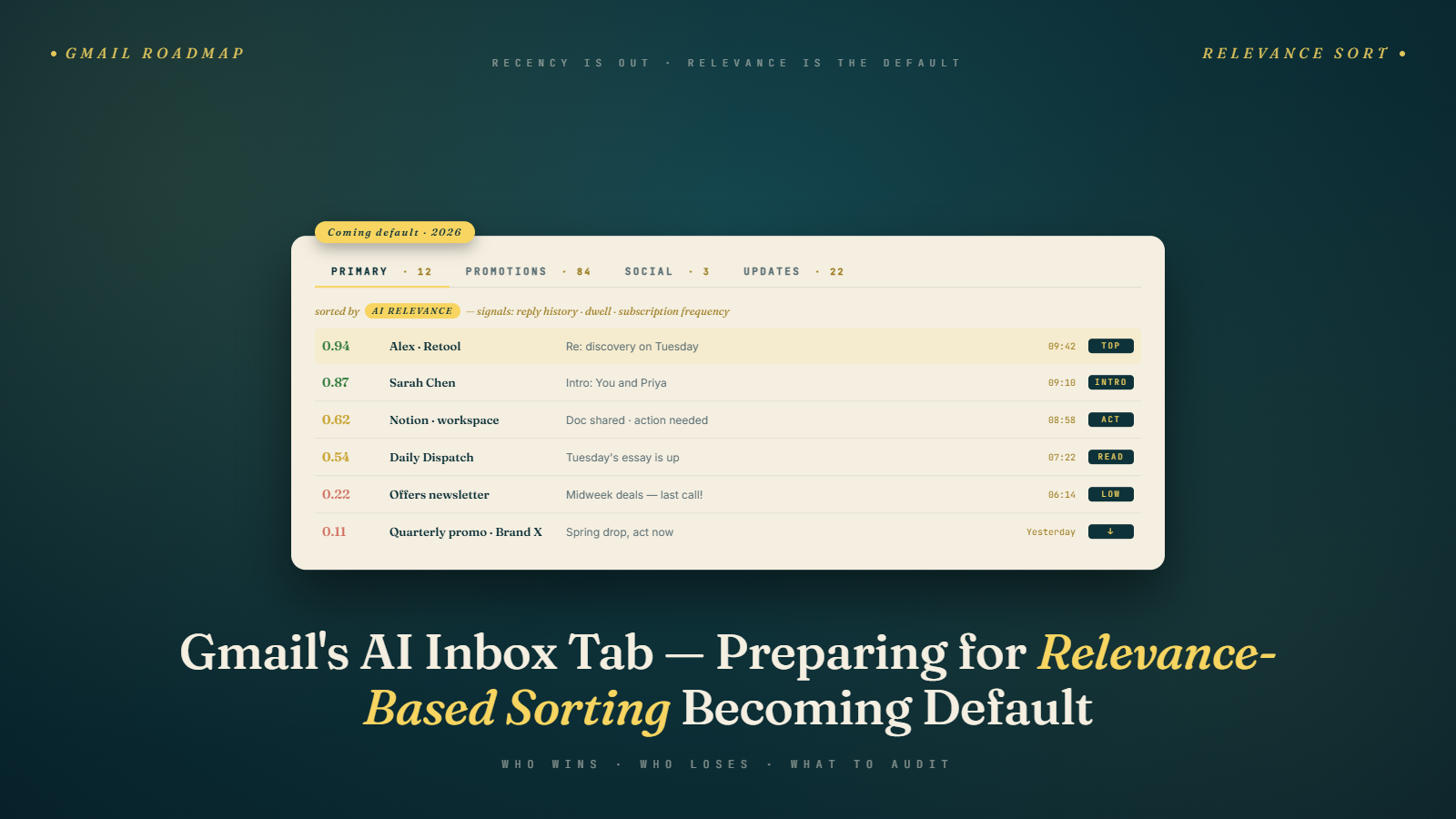
Gmail's AI Inbox Tab: Preparing for Relevance-Based Sorting Becoming Default
Gmail is shifting inbox tabs from recency to AI-determined relevance. What the signals are, who wins, who loses, and how to audit your placement now.
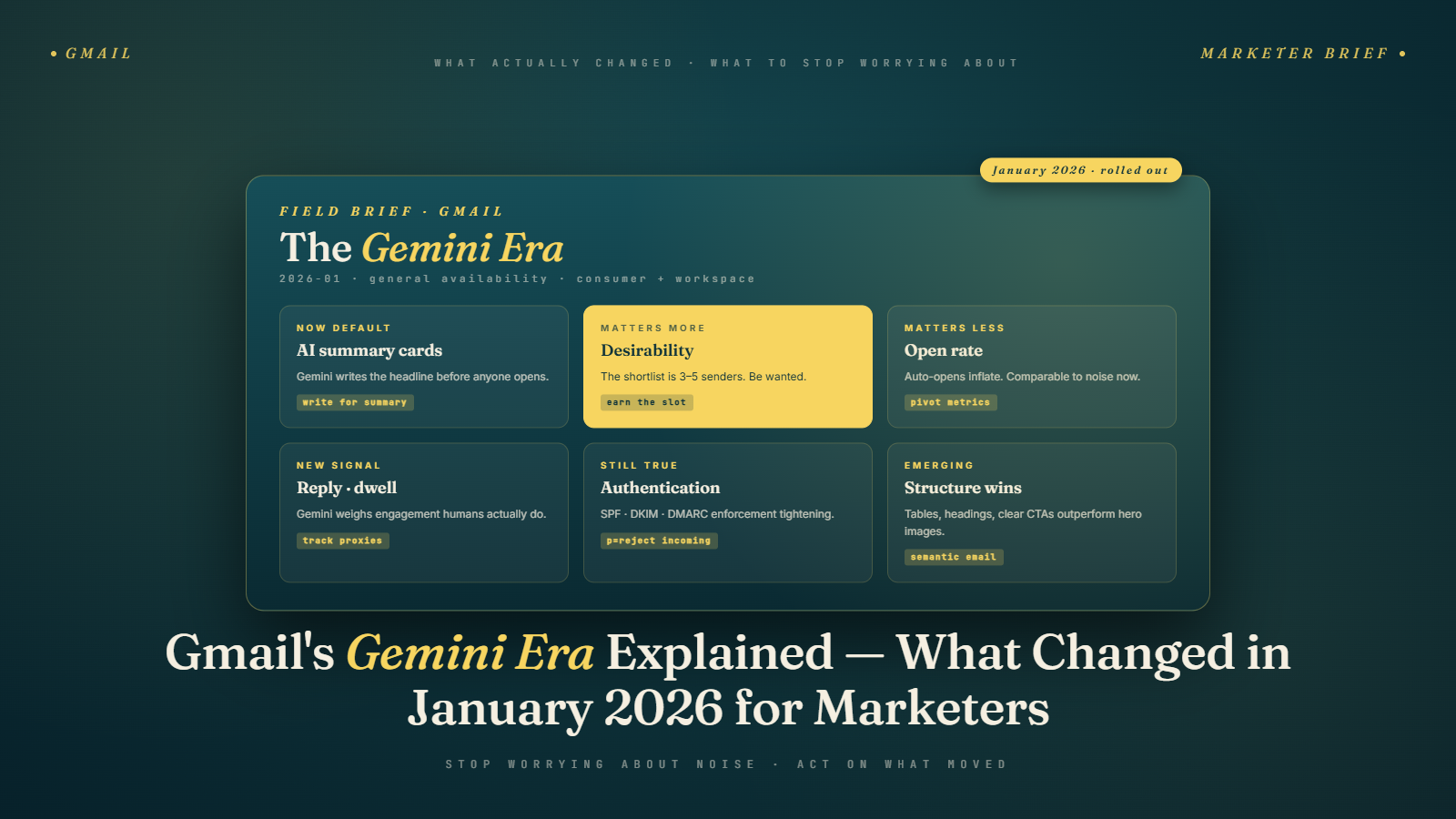
Gmail's Gemini Era Explained: What Changed in January 2026 for Marketers
Gemini rolled into Gmail for most users by January 2026. Here is what actually changed for marketers, what to stop worrying about, and what now matters more than it used to.
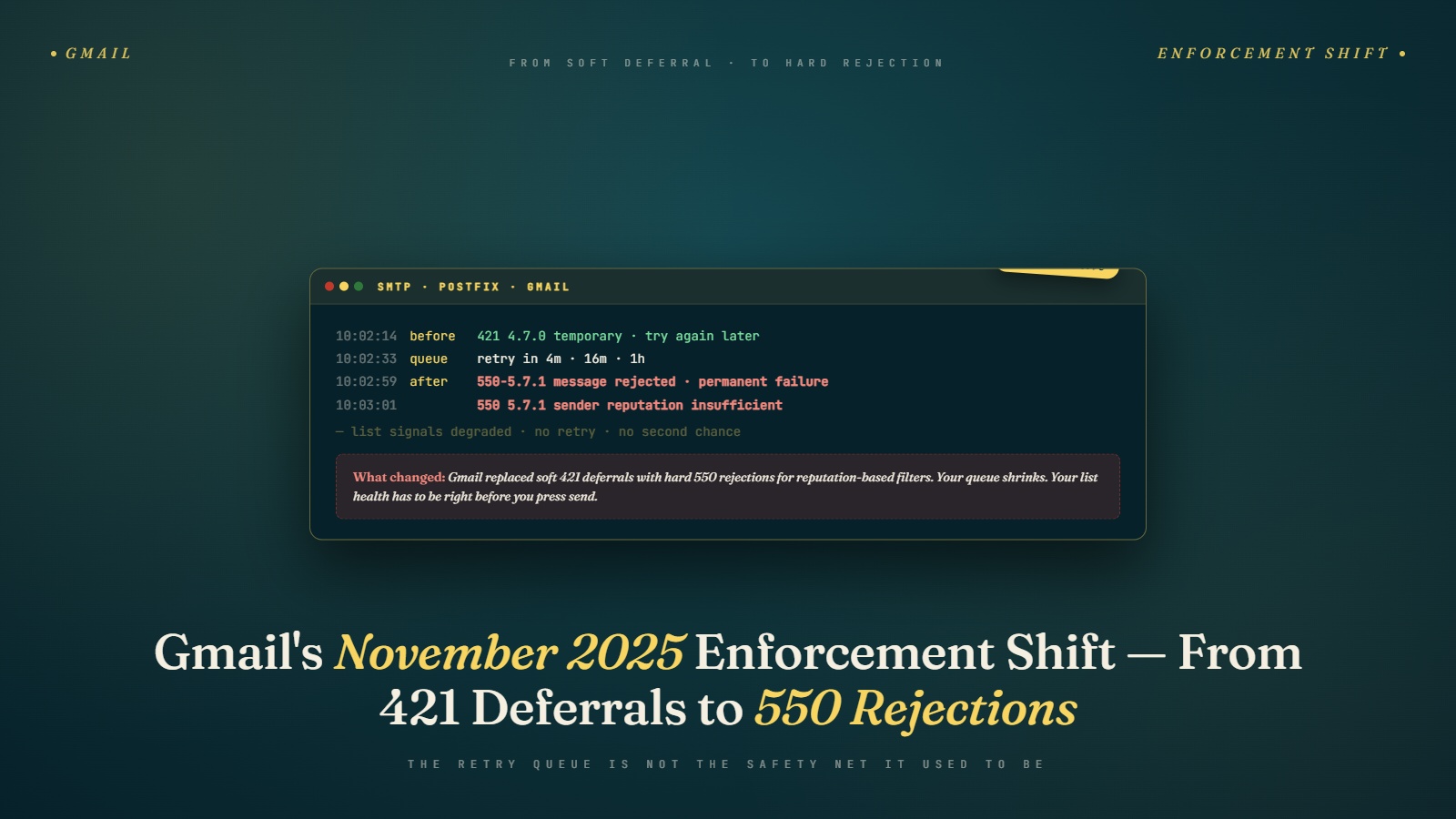
Gmail's November 2025 Enforcement Shift: From Soft 421 Deferrals to Hard 550 Rejections
Gmail swapped soft 421 deferrals for hard 550 rejections in November 2025. Here is what triggered the change, what it means for your list health, and what to do before your next send.
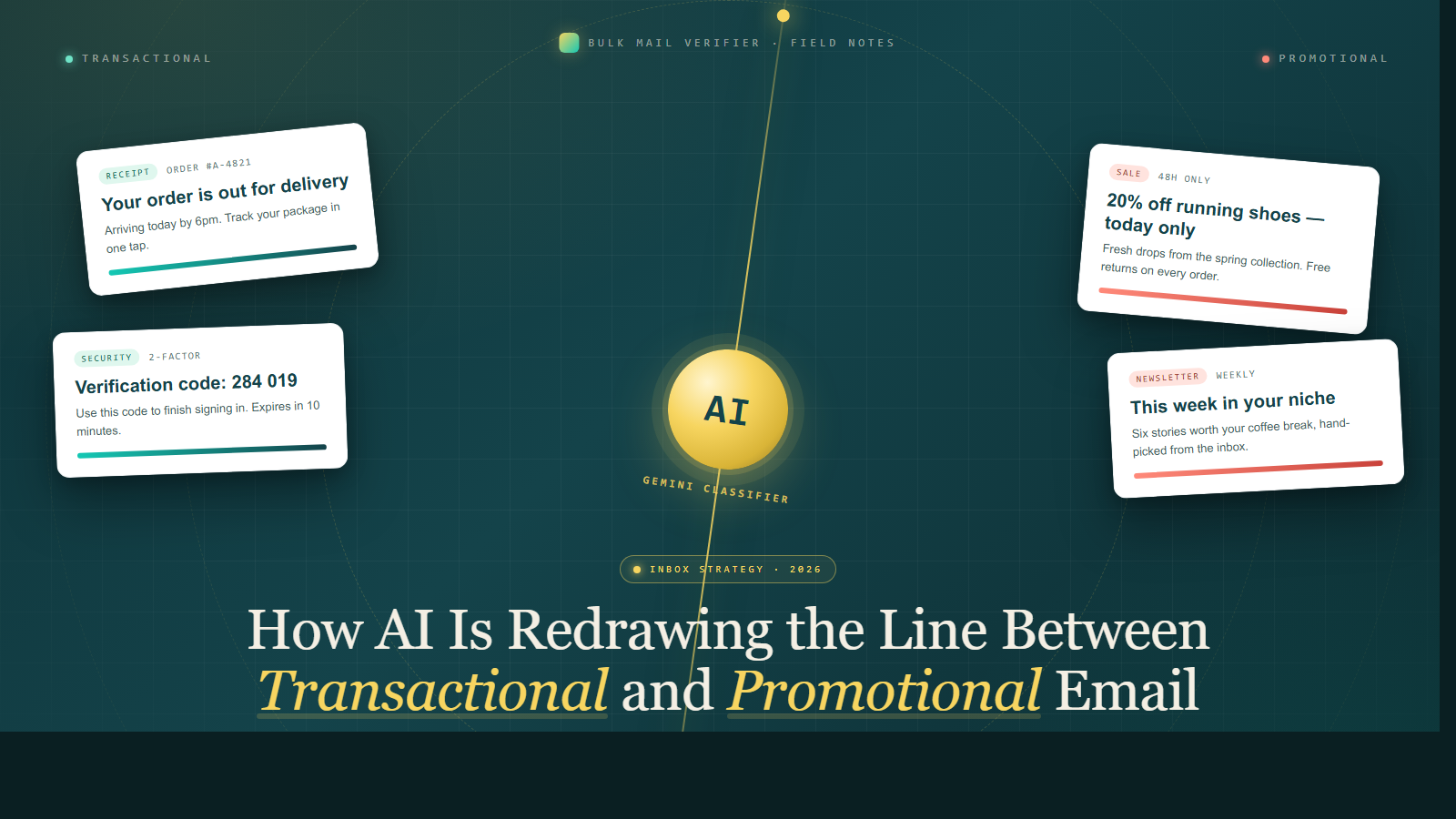
How AI Is Changing Transactional vs Promotional Email Separation
Gmail's AI now enforces the line between transactional and promotional email more strictly than ever. Here's how to keep your sends in the right lane.
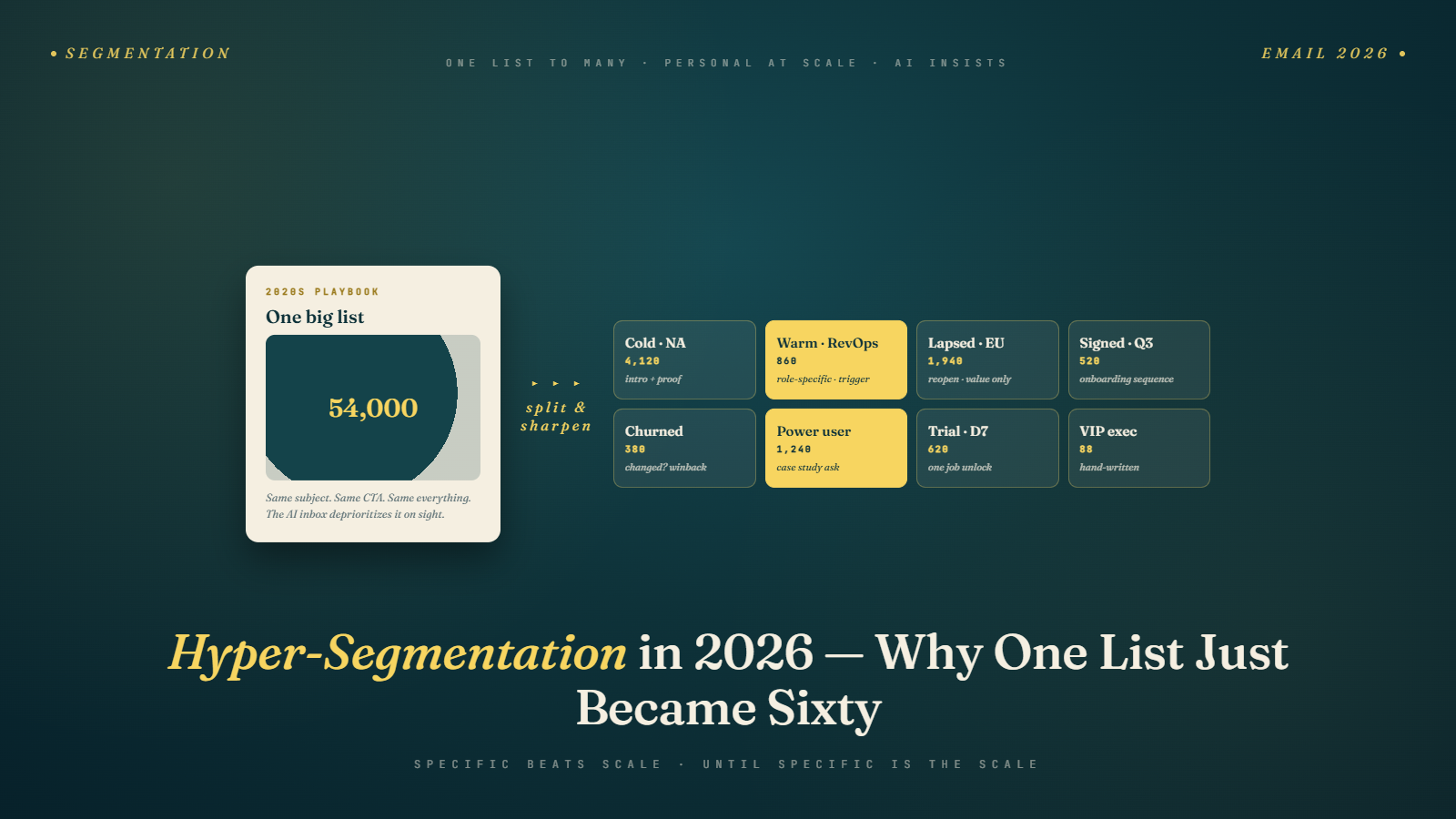
Hyper-Segmentation Is Overrated: What Actually Drives Email Performance in 2026
Hyper-segmentation sounds sophisticated and often produces worse results than four well-chosen segments. The 2026 data on segment count and performance is counterintuitive, and most programs are over-segmenting.
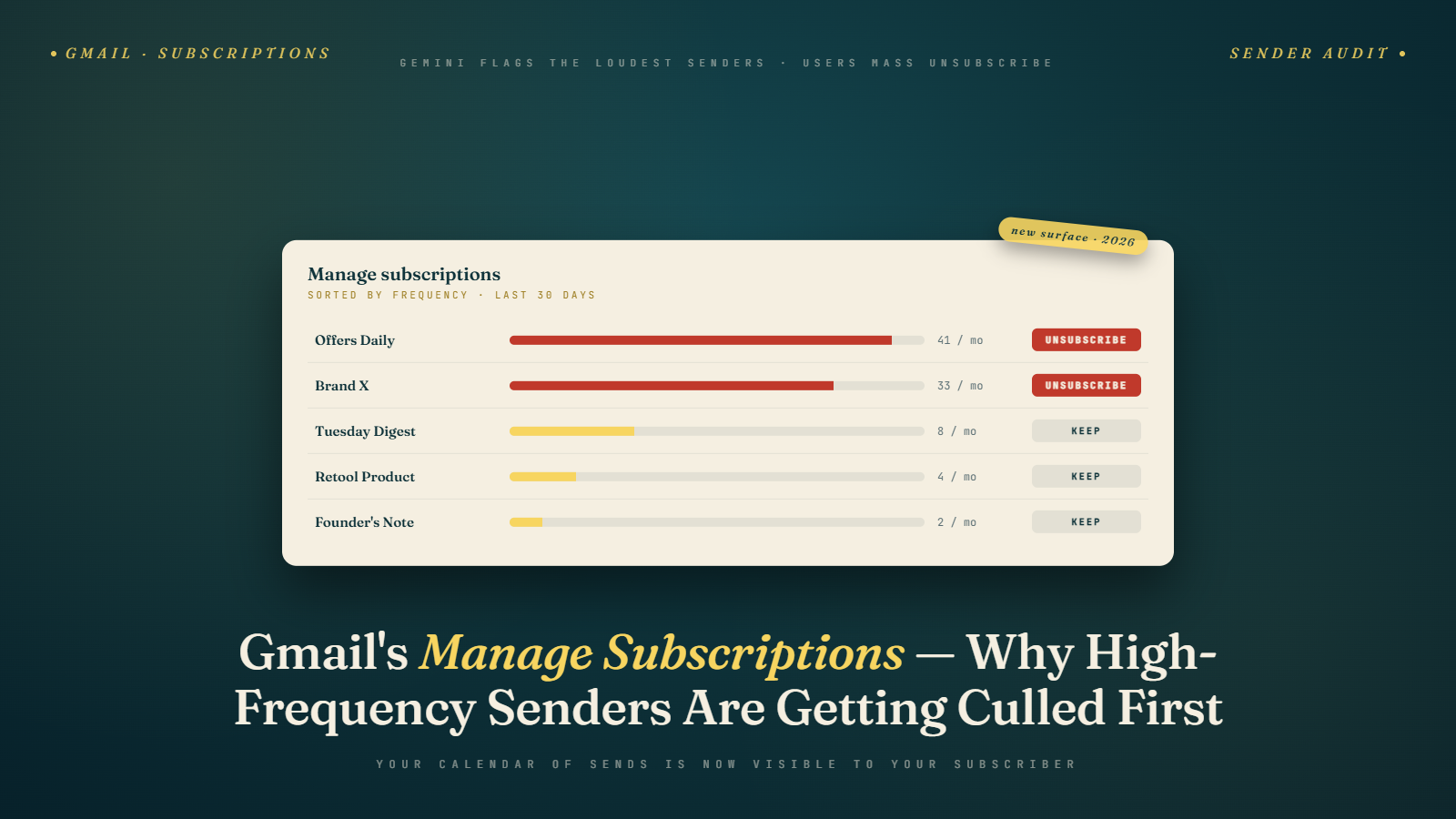
Manage Subscriptions in Gmail: How High-Frequency Senders Get Exposed
Gmail Manage Subscriptions makes bulk unsubscribe trivial and exposes high-frequency senders. What it shows, who gets cut, and how to audit your cadence.
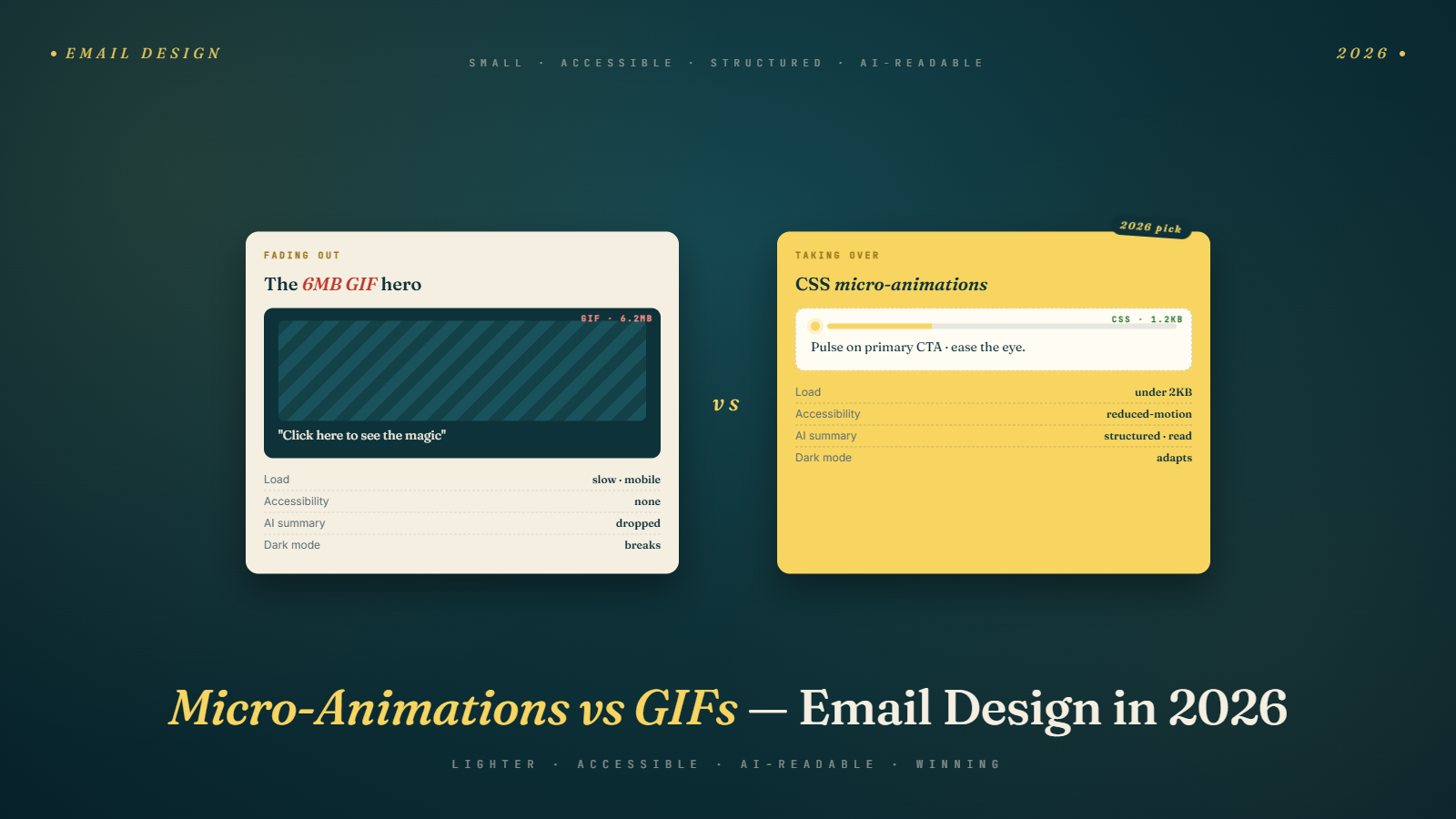
Micro-Animations vs GIFs: Email Design Direction for 2026
GIFs hit mainstream email in 2015 and never left. In 2026, subtle CSS animations and scroll-triggered motion are pushing them out, but only in the places where the upgrade is actually worth it.
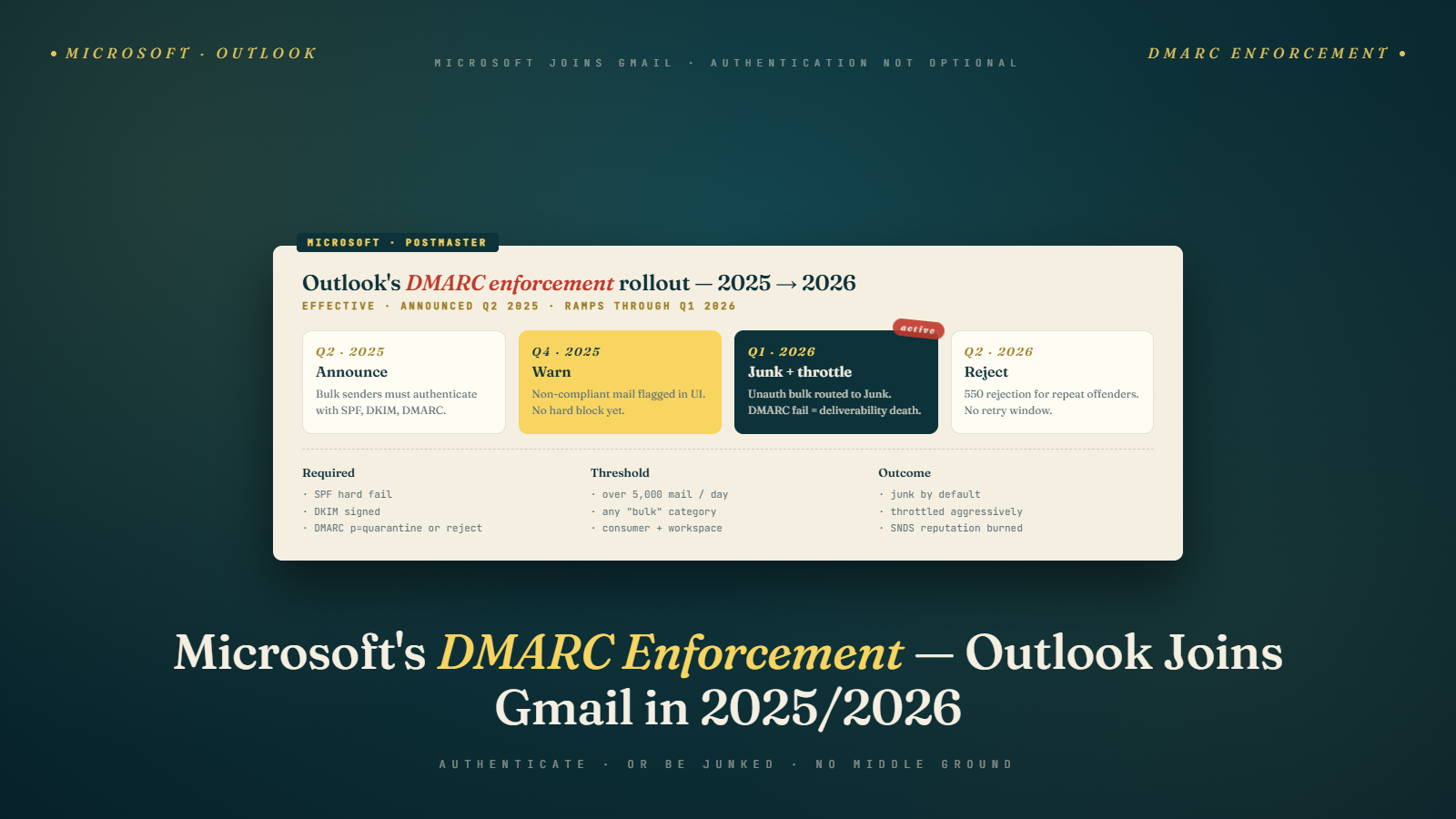
Microsoft DMARC Enforcement for Outlook: One Year In, What Senders Actually See
Microsoft DMARC enforcement for Outlook, Hotmail, and Live is active. Learn what changed, how it differs from Gmail, and what to check with SNDS and JMRP.
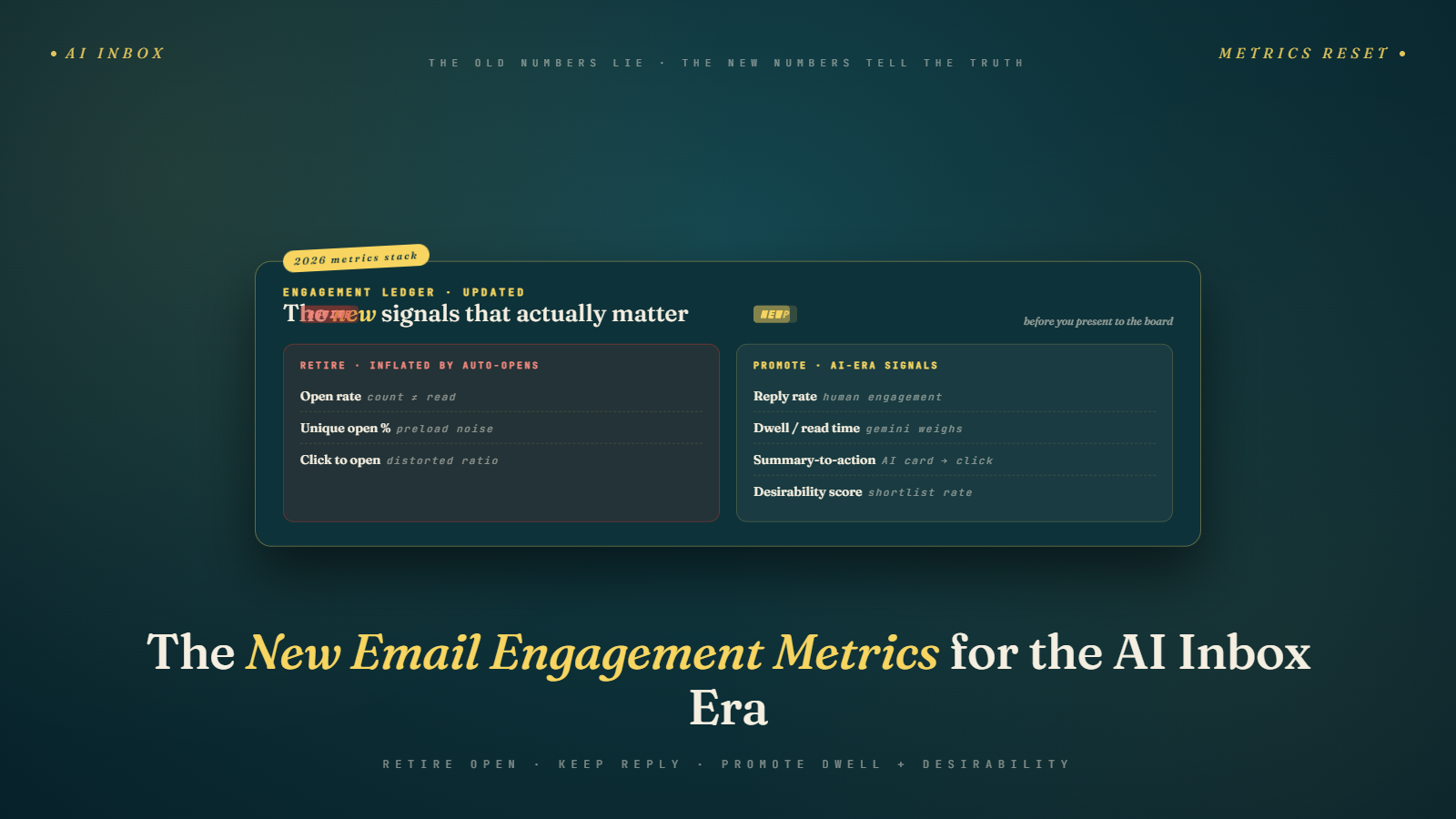
New Engagement Metrics for an AI-Mediated Inbox: Scroll, Dwell, Reply Rate
Opens are compromised. Reply rate, scroll depth, dwell time, and hover are the new signals Gmail AI weighs. Build a proxy measurement framework now.
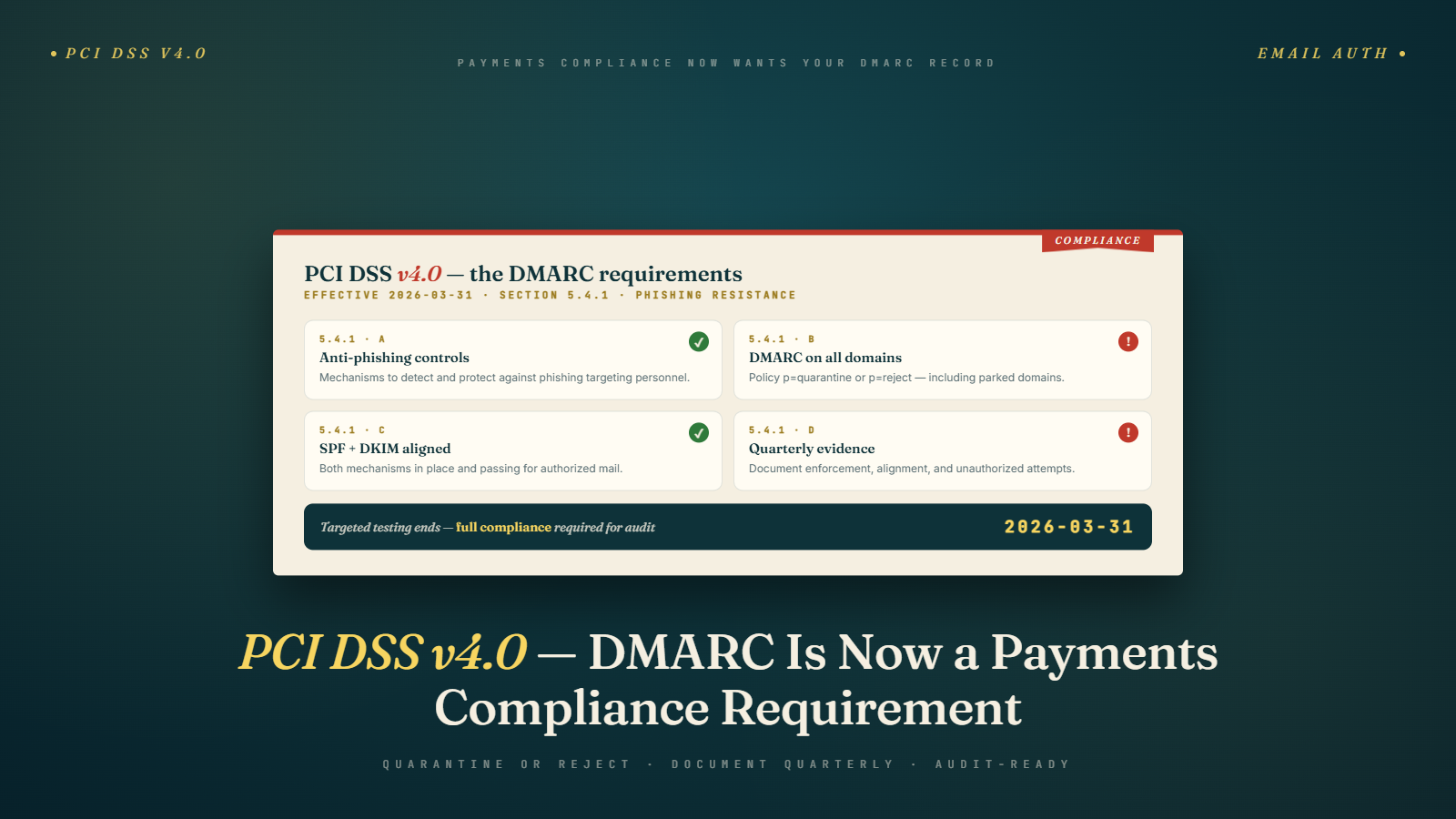
PCI DSS v4.0 DMARC Requirements: What Payment-Handling Businesses Must Have in 2026
PCI DSS v4.0 requires DMARC for payment-handling businesses. The March 2025 deadline has passed. Learn what auditors check and what p=none means for compliance.
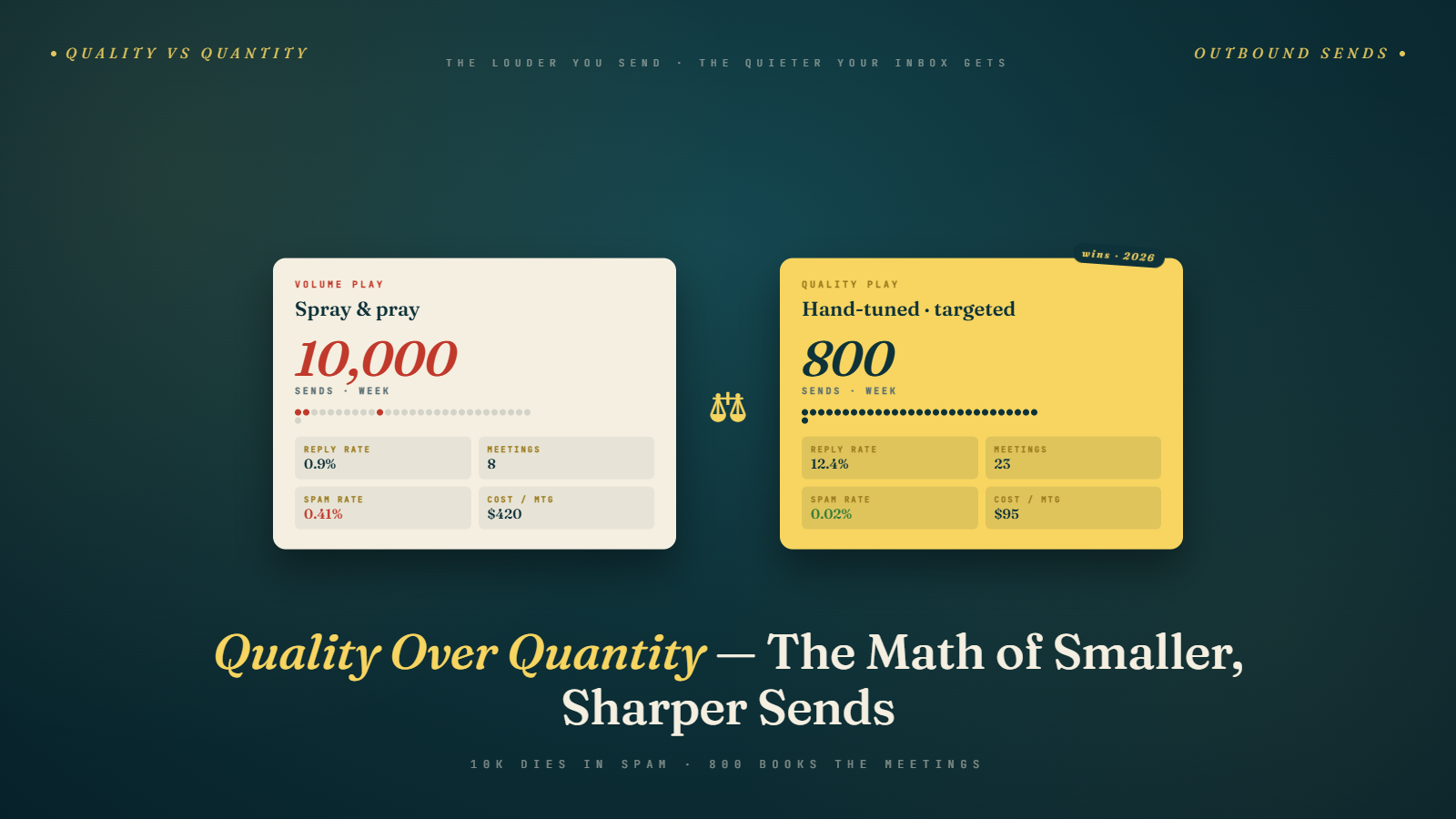
Quality Over Quantity: Why Fewer Sends Now Outperform High-Volume Programs
Fewer, better-targeted emails now outperform high-volume programs. The 2025-2026 data, why it changed, and how to decide if a planned send is worth running.
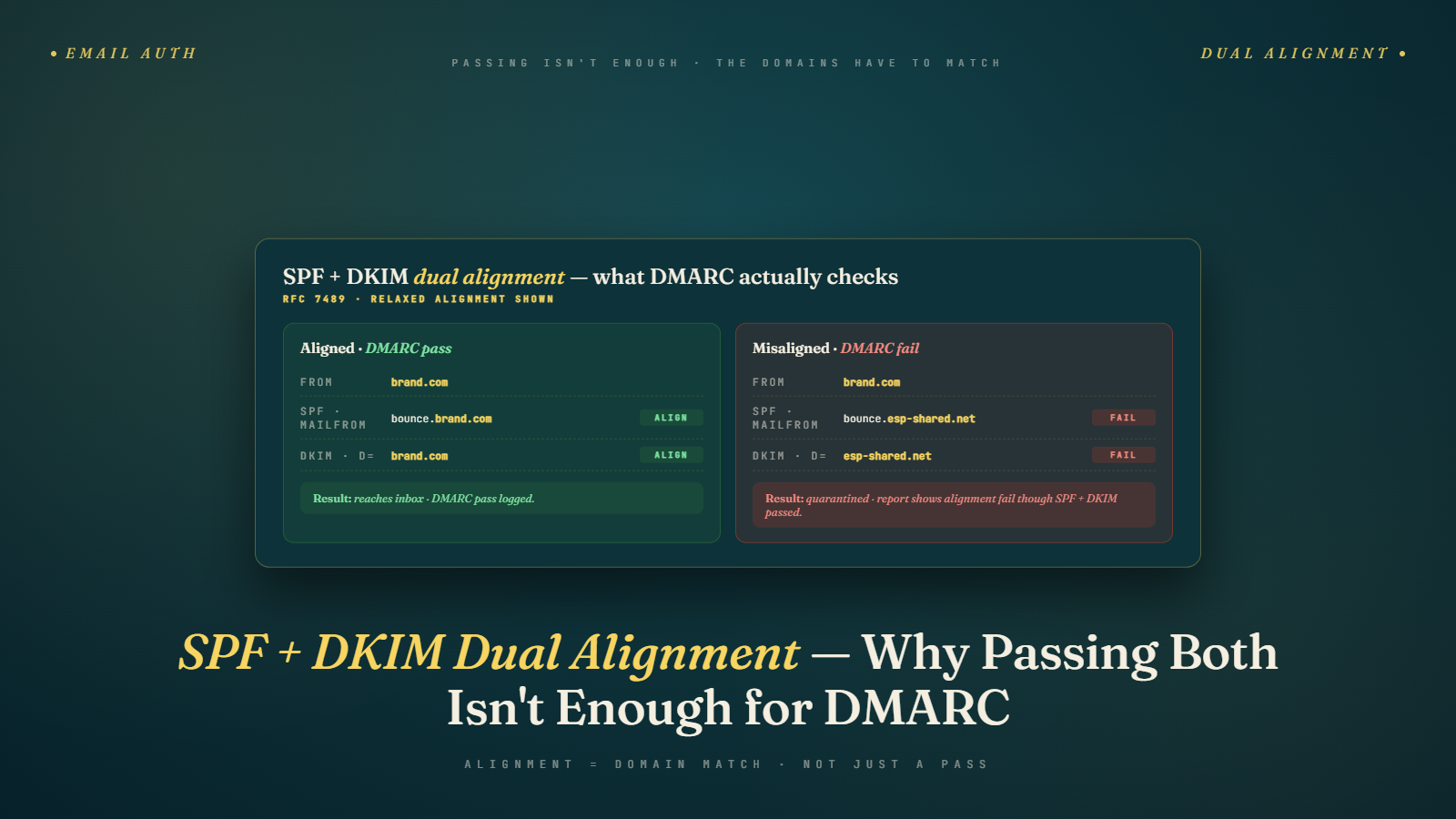
SPF and DKIM Dual Alignment: The Next DMARC Requirement Nobody Is Ready For
DMARC currently passes if SPF or DKIM aligns. The industry is quietly moving toward requiring both. Here is what to audit in your authentication setup now.
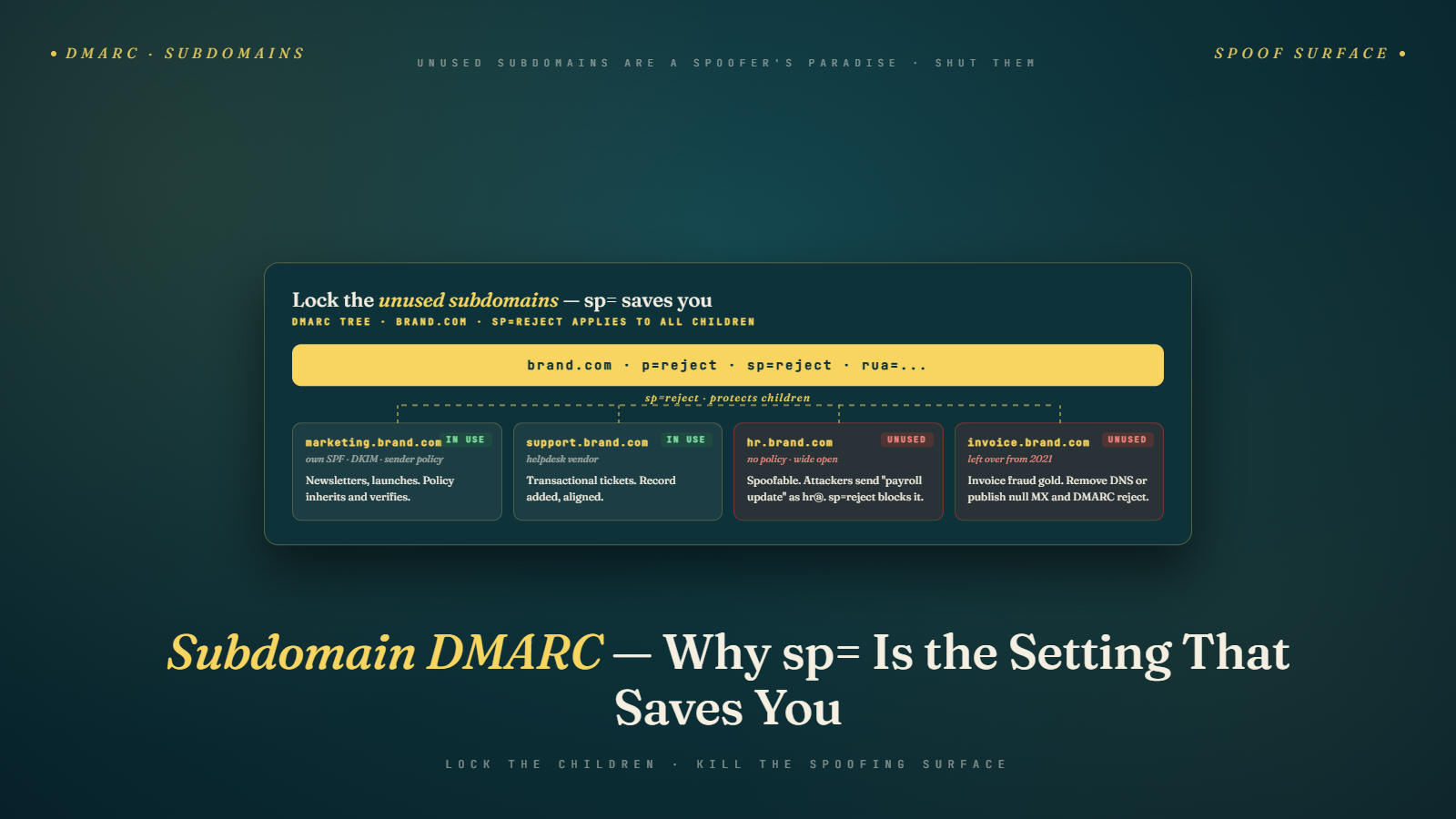
Subdomain DMARC: Why Your Unused Subdomains Are Killing Deliverability
Your DMARC record on the root domain does not protect subdomains the way most senders assume. Unused subdomains are an open door for spoofing that tanks deliverability.
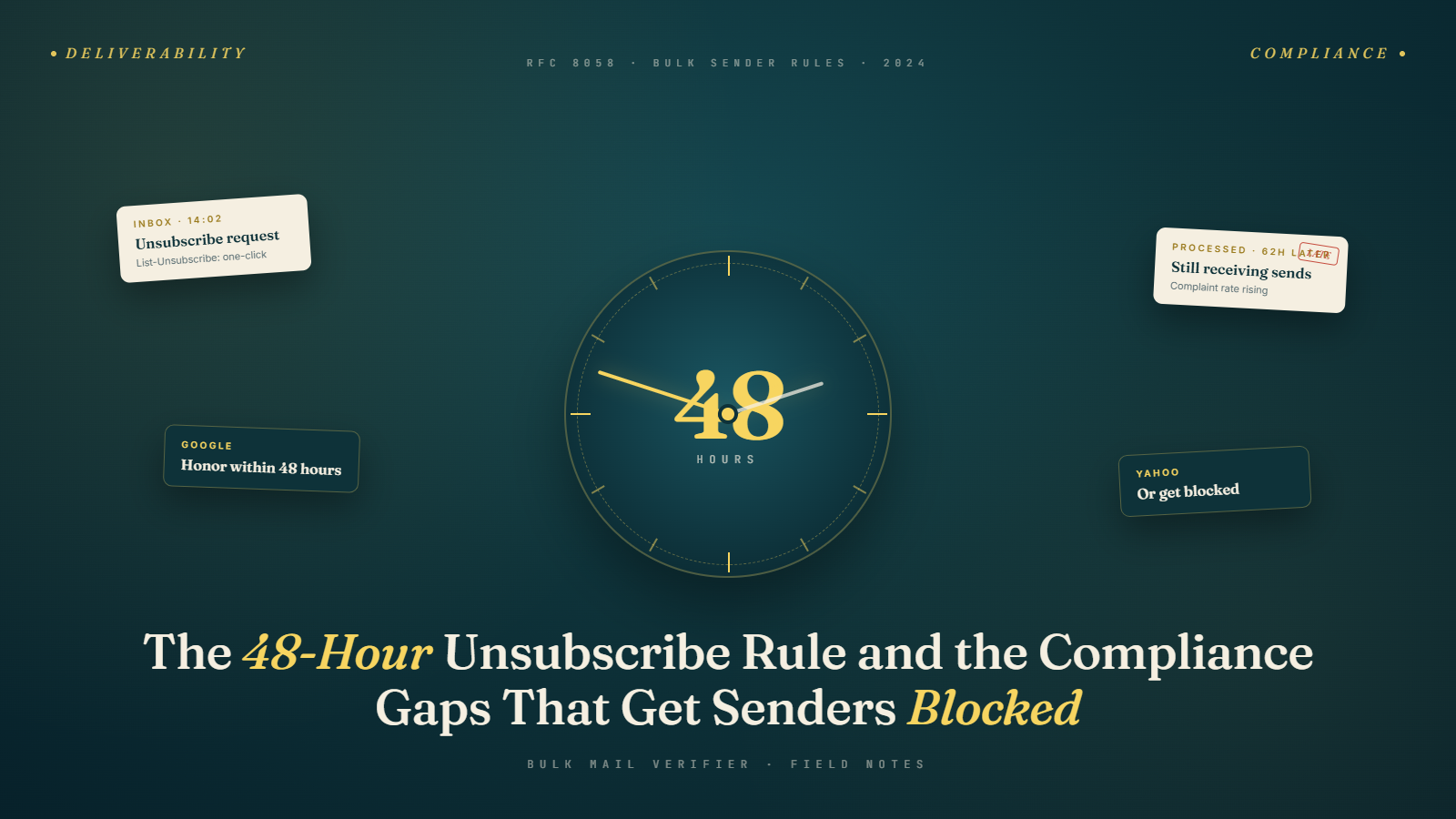
The 48-Hour Unsubscribe Rule: Compliance Gaps That Get Senders Blocked
The 48-hour unsubscribe rule catches most senders off guard. Learn the real processing requirements from Google and Yahoo plus common compliance gaps that get you blocked.
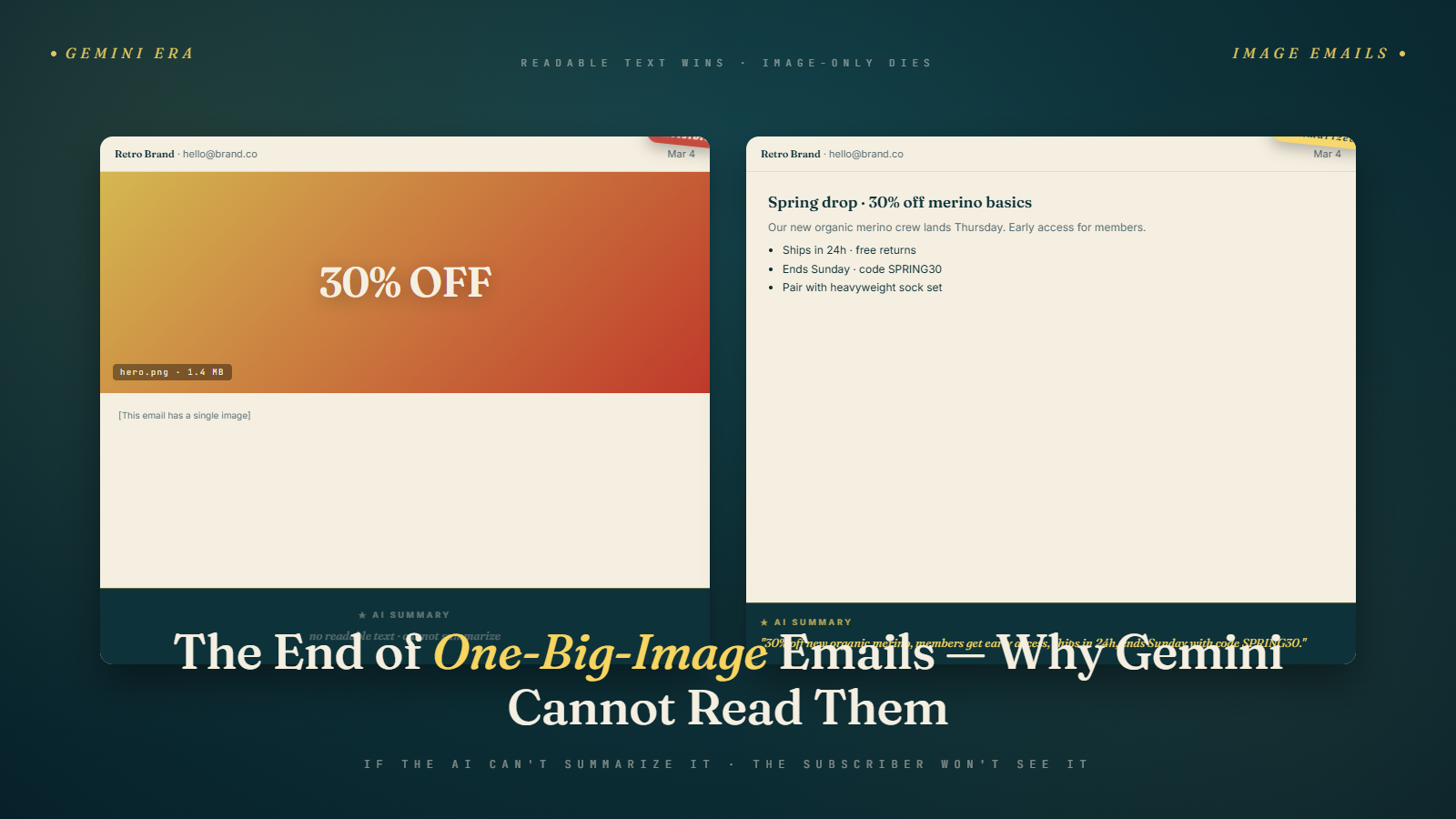
The End of One-Big-Image Emails: Why Gemini Cannot Read Them
Image-only emails produce no Gemini AI summary, invisible to subscribers before they open. The era of one-big-image emails is ending faster than most brands realize.
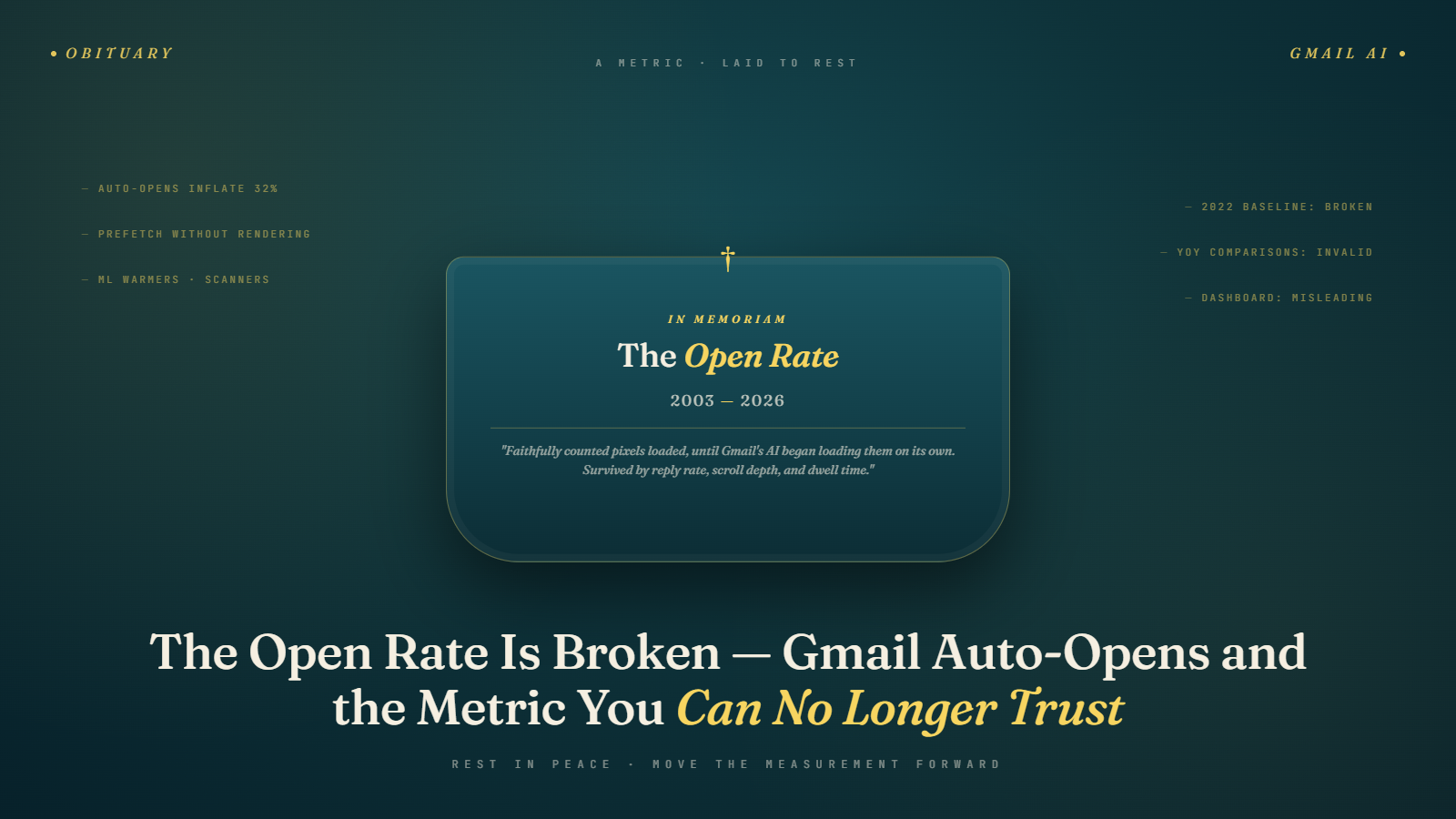
The Open Rate Is Broken: Gmail Auto-Opens and the Metric You Can No Longer Trust
Gmail's AI prefetching inflates open rates with machine-generated events. Your 2026 open rate is not comparable to 2022. Here's what to measure instead.
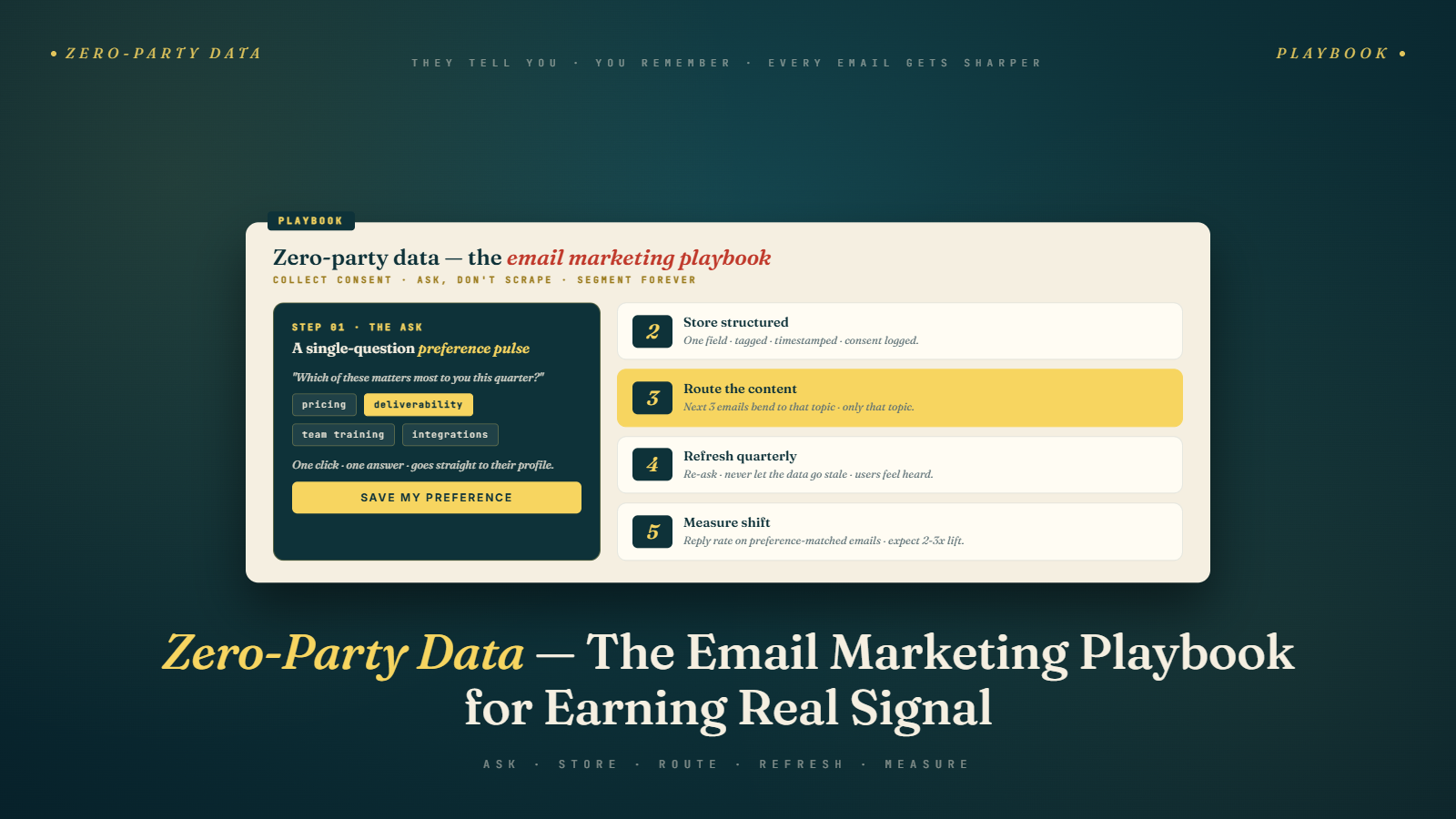
The Zero-Party Data Playbook for Email Marketing in 2026
Third-party cookies are gone, inferred data is noisy, and subscribers are more suspicious of surveillance personalization. Zero-party data is the durable answer, and most programs collect it poorly.
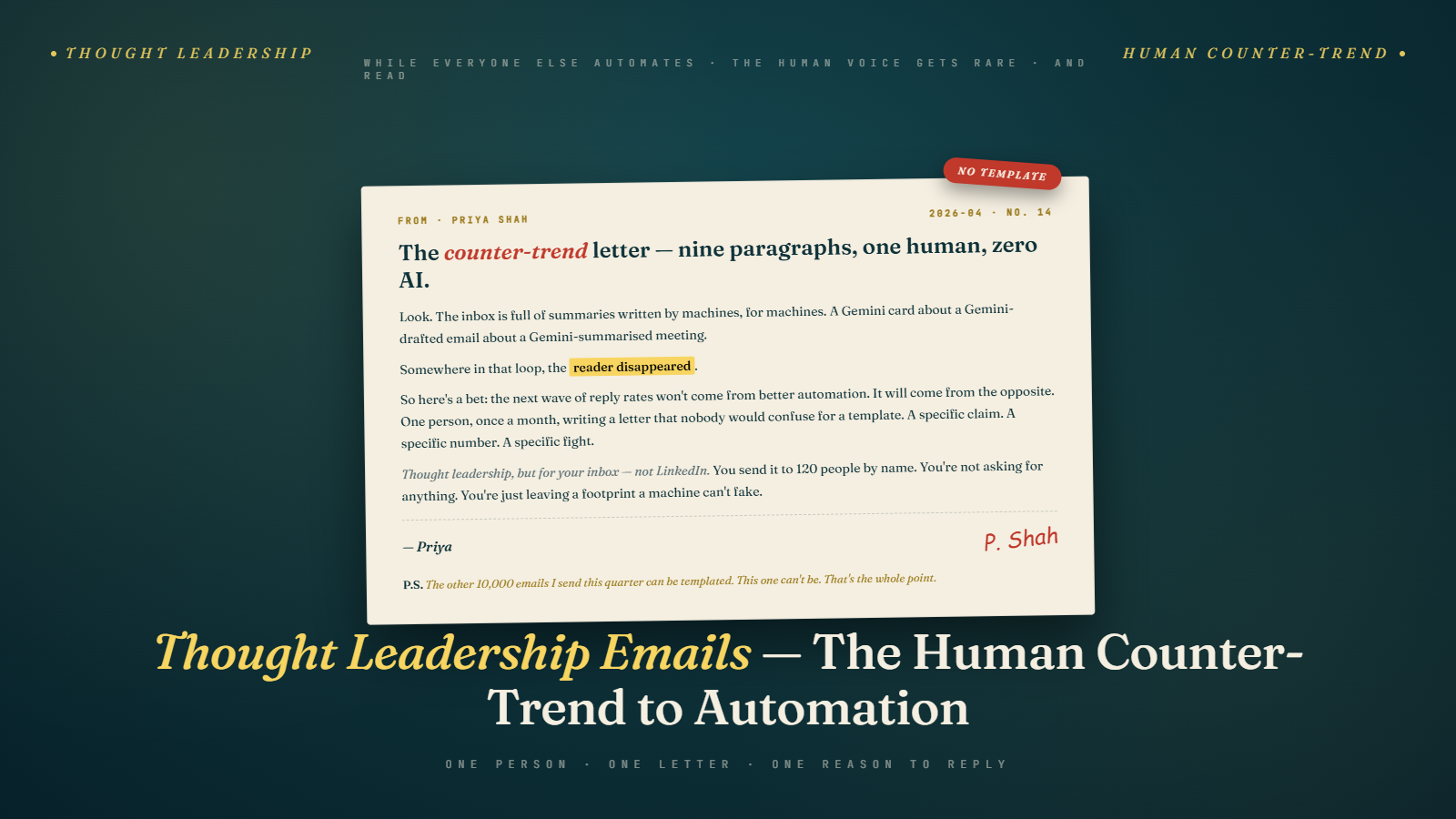
Thought Leadership Emails: The Human Counter-Trend Winning in 2026
As inboxes fill with AI-generated promotional content, human-voiced thought leadership emails are pulling engagement rates that promotional sends cannot match. The counter-trend is real and most brands are missing it.
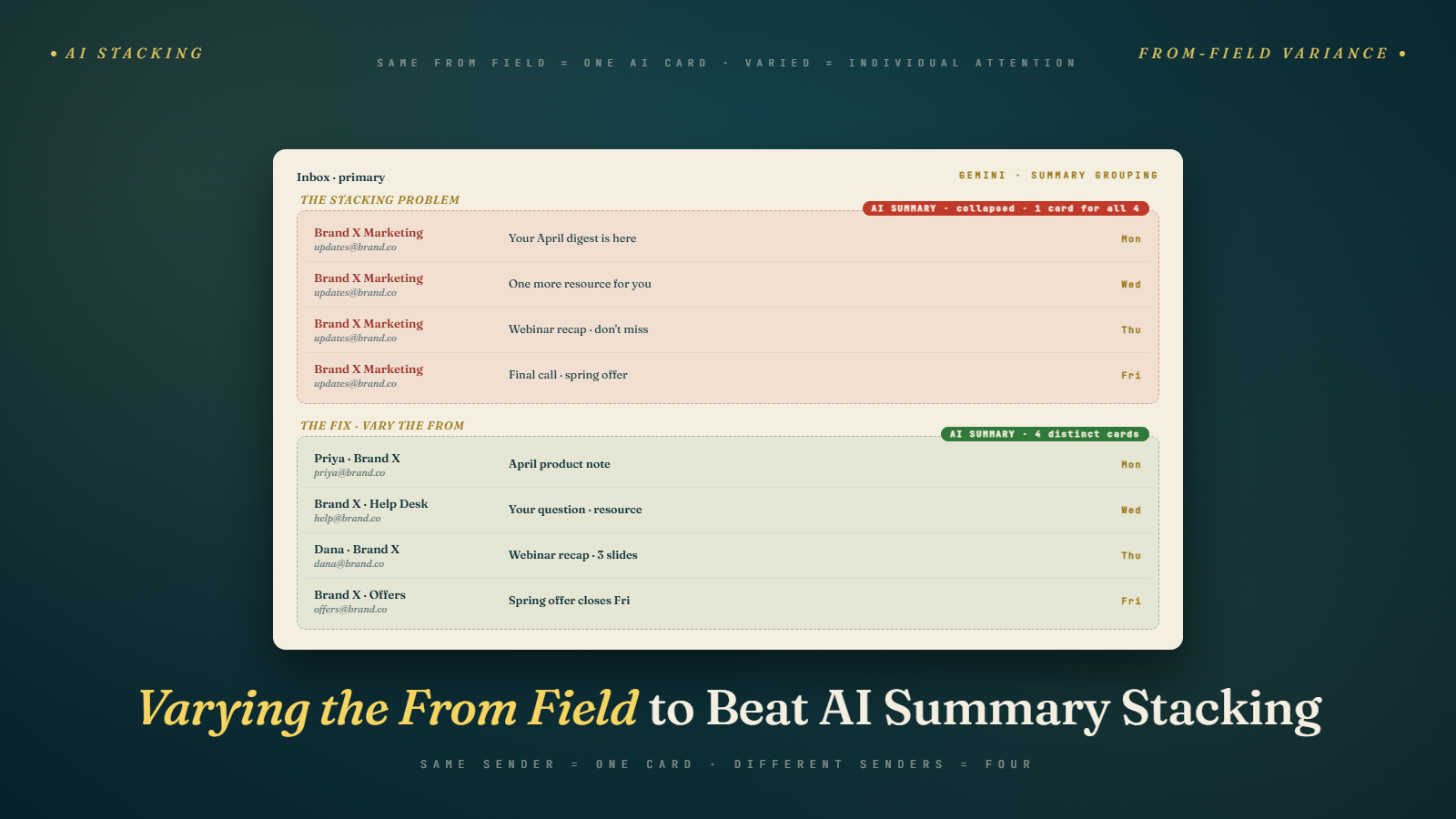
Varying the From Field: A New Tactic Against AI Summary Stacking in Gmail
Sending every email from the same From name used to be best practice. In the Gemini era, it can cause AI summary stacking that compresses your brand into a single line subscribers ignore.
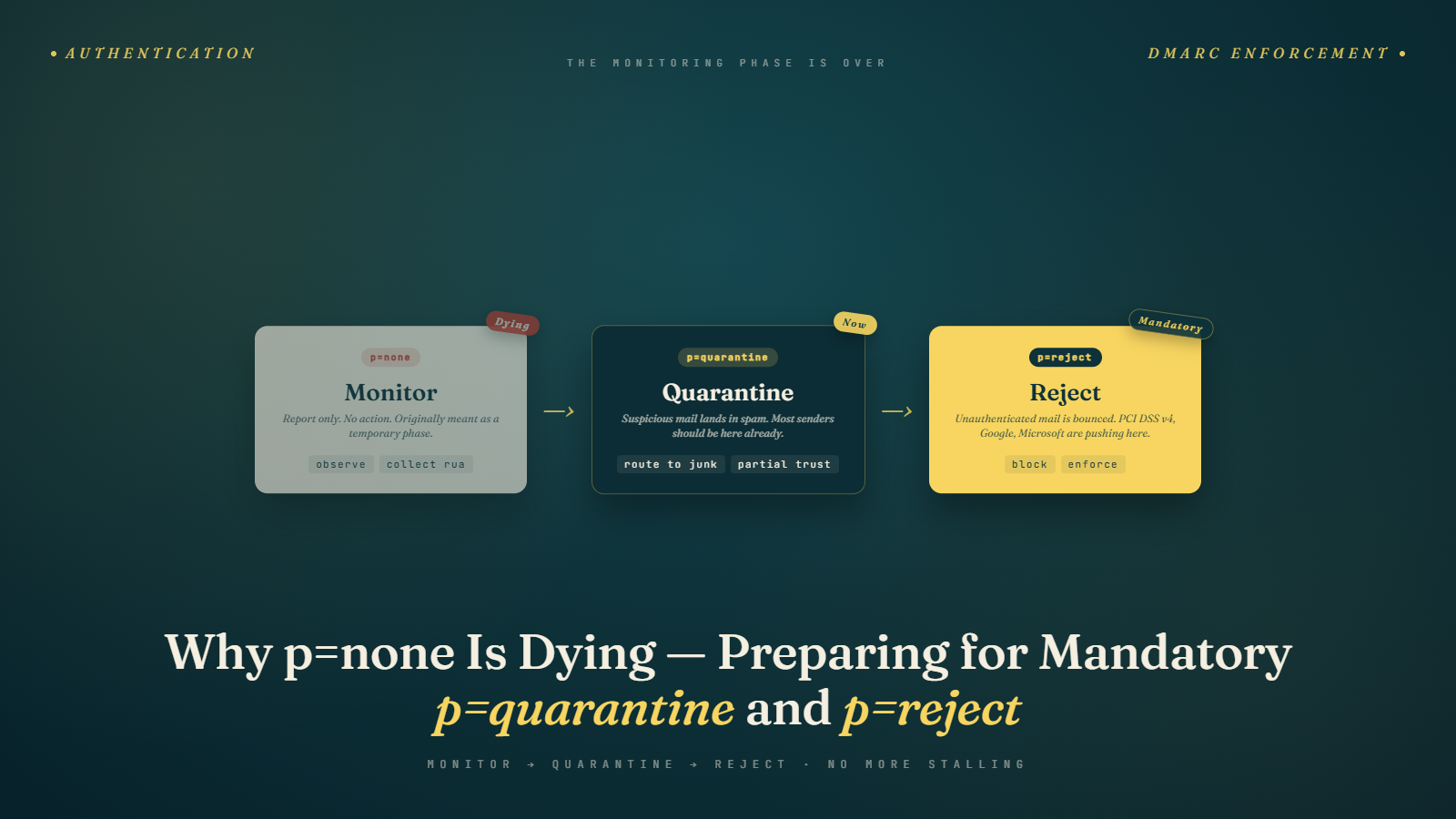
Why p=none Is Dying: Preparing for Mandatory p=quarantine and p=reject
DMARC p=none was always meant as a temporary monitoring phase. Google, Microsoft, and PCI DSS v4.0 are forcing the move to enforcement. Here is how.
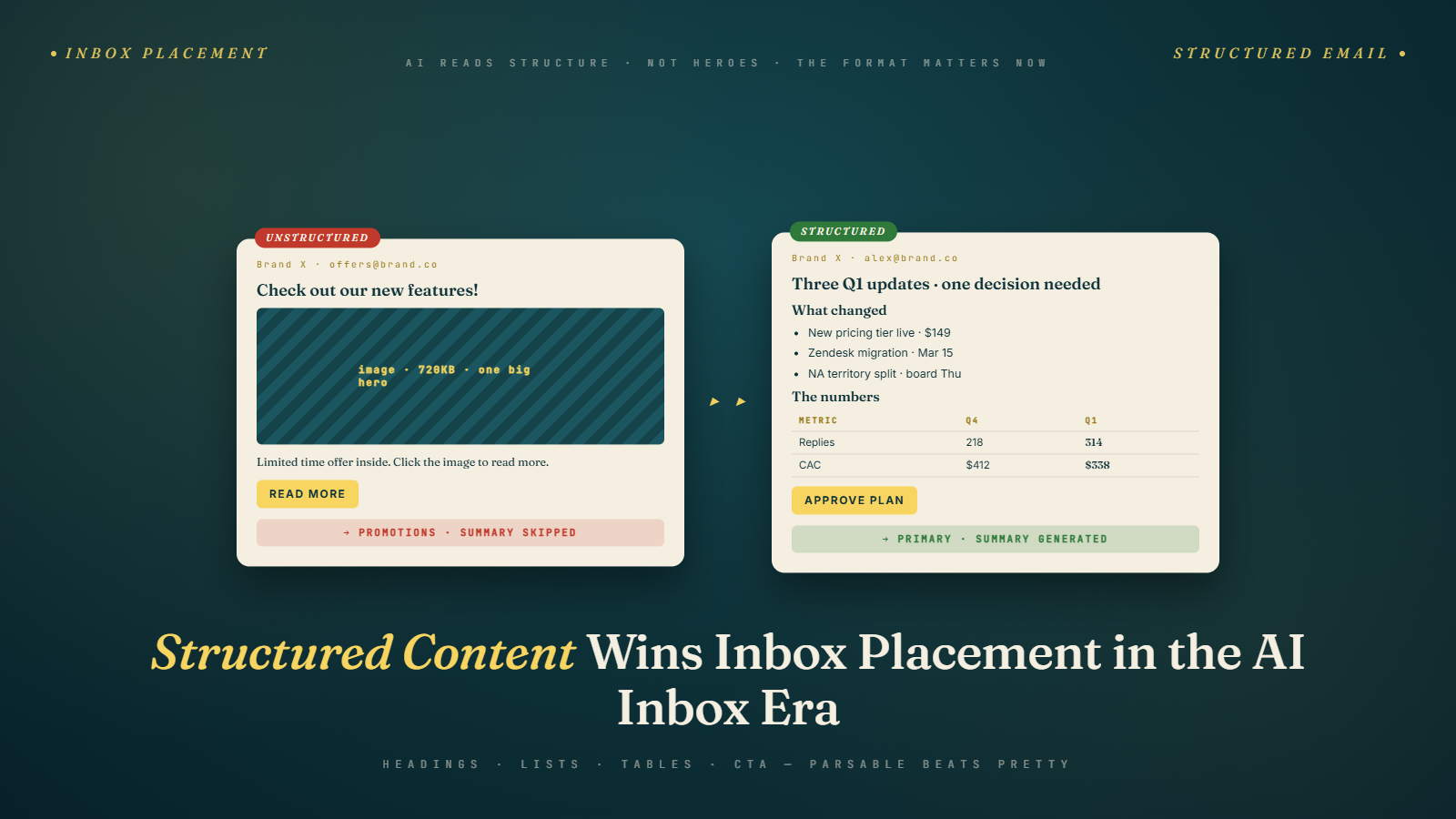
Why Structured Content (Tables, Bullets, Headings) Now Wins Inbox Placement
Structured email content (headings, tables, bullets) now improves both AI summaries and human engagement. The old advice to avoid structure is outdated.
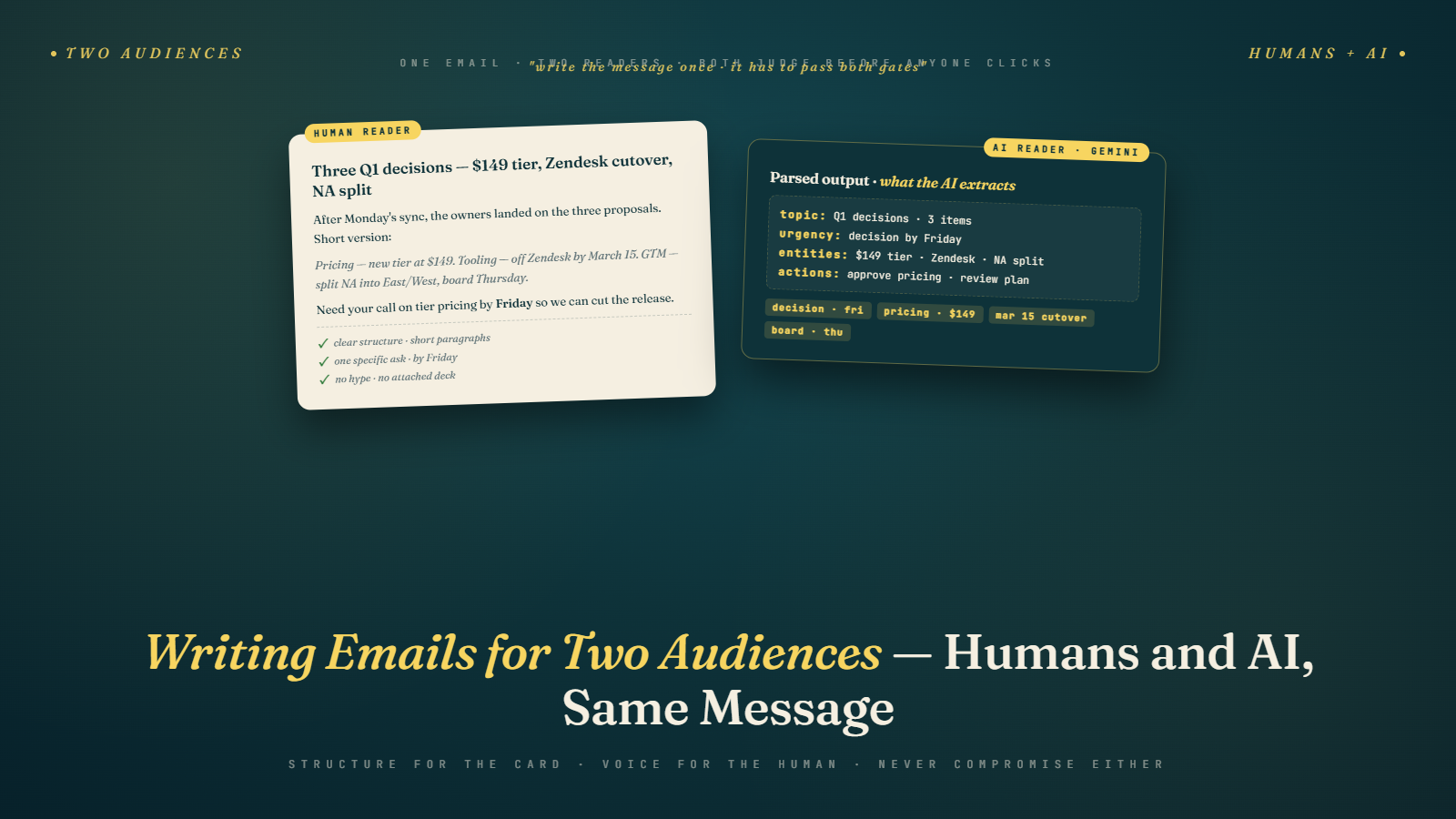
Writing Emails for Two Audiences: Humans and the AI Summarizing Them
Every email you send has two readers now: your subscriber and the AI summarizing it. Here is how to write for both without sacrificing brand voice or conversion.
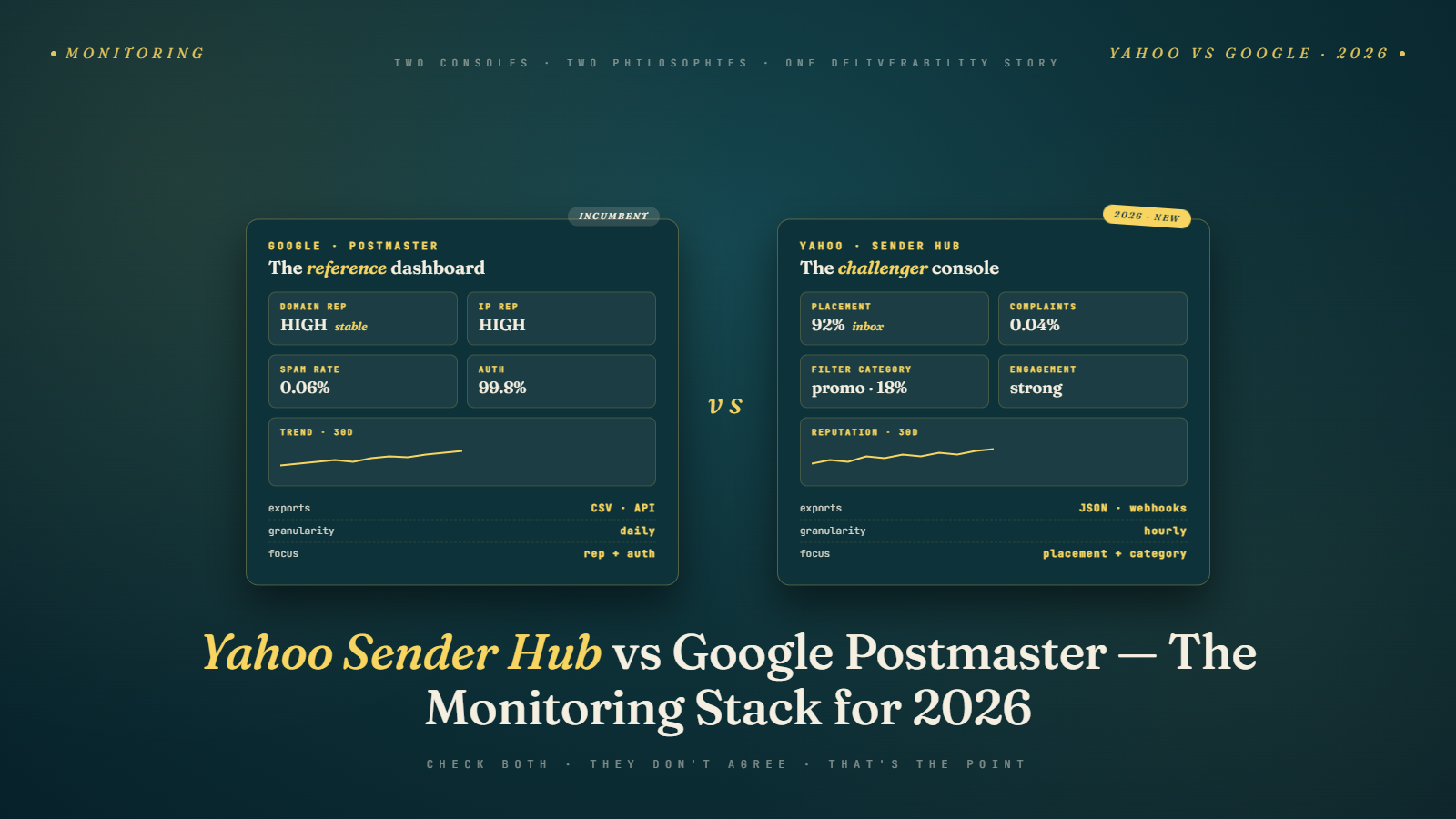
Yahoo Sender Hub vs Google Postmaster Tools: A Side-by-Side for 2026
Yahoo Sender Hub and Google Postmaster Tools measure different things. Here is a practical comparison for 2026 so you know which signals to trust and how to use both.
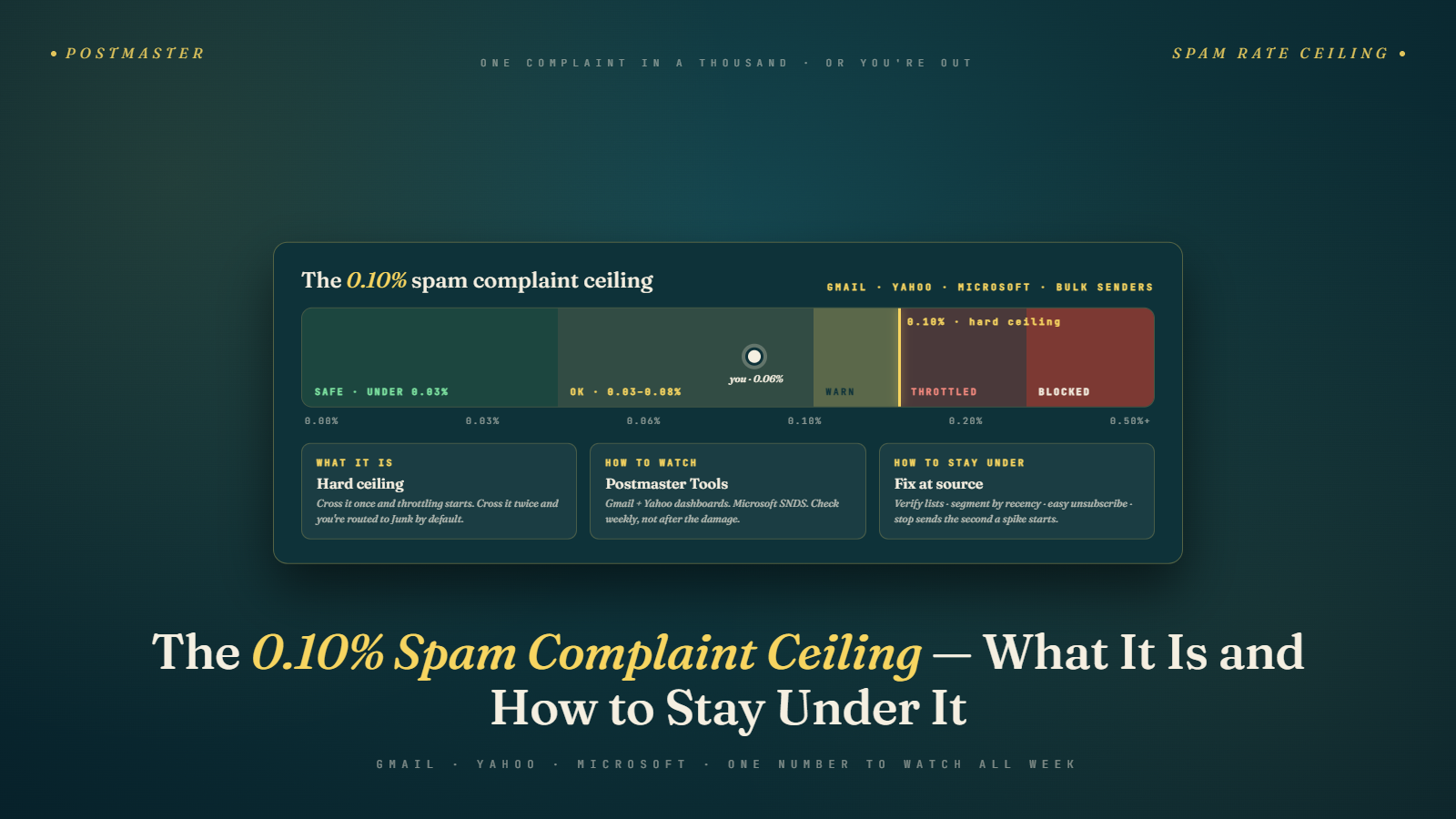
Your Spam Complaint Rate Ceiling Is 0.10%, Not 0.30%
Google's spam complaint ceiling is 0.10%, not 0.30%. Learn how to measure your real rate, what triggers enforcement, and how to recover if you breach it.
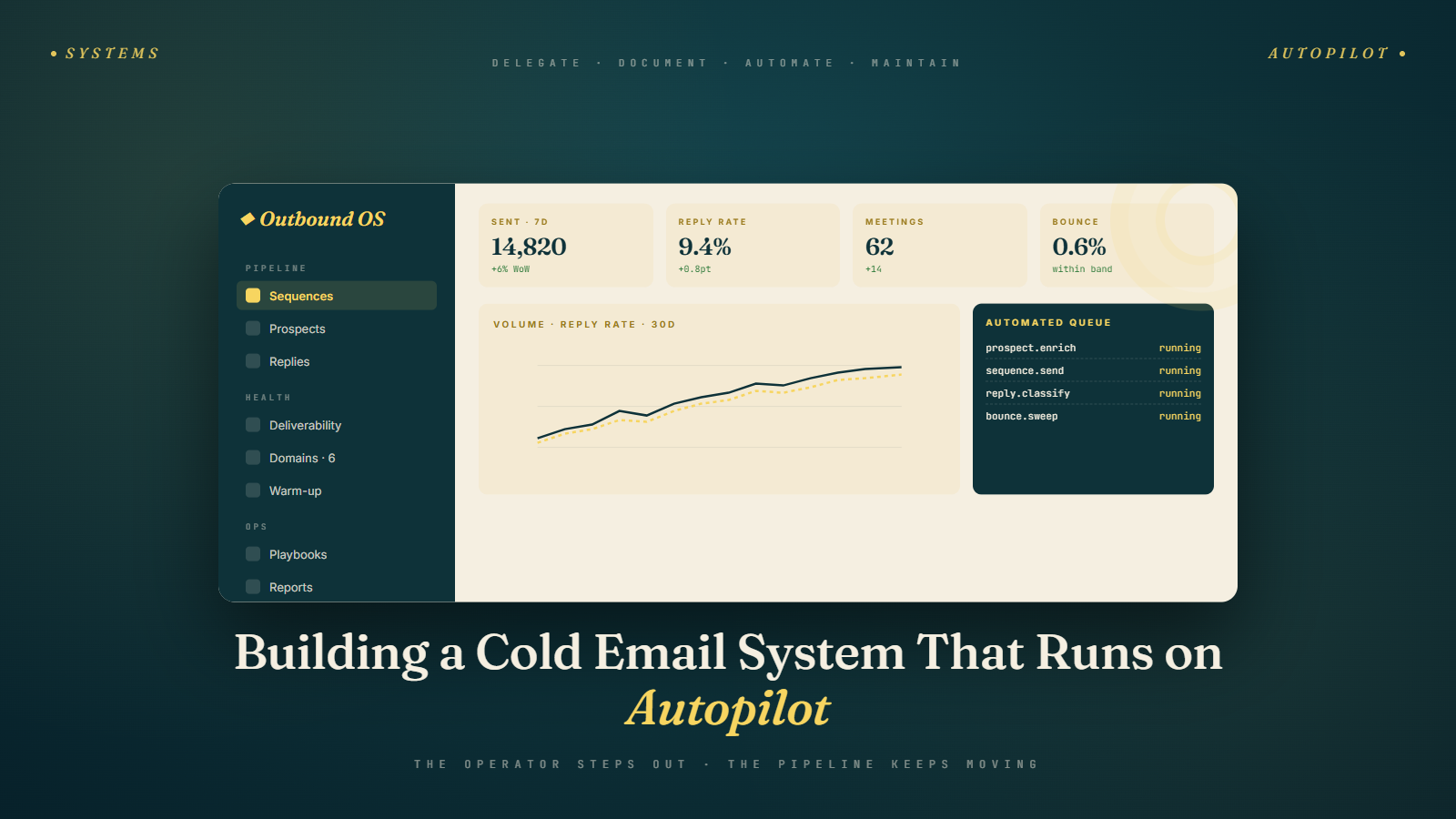
Building a Cold Email System That Runs on Autopilot
A cold email program that requires constant founder or manager attention isn't a system — it's a dependency. This guide covers how to document, delegate, automate, and maintain a cold email operation that runs reliably without you in the loop for every decision.
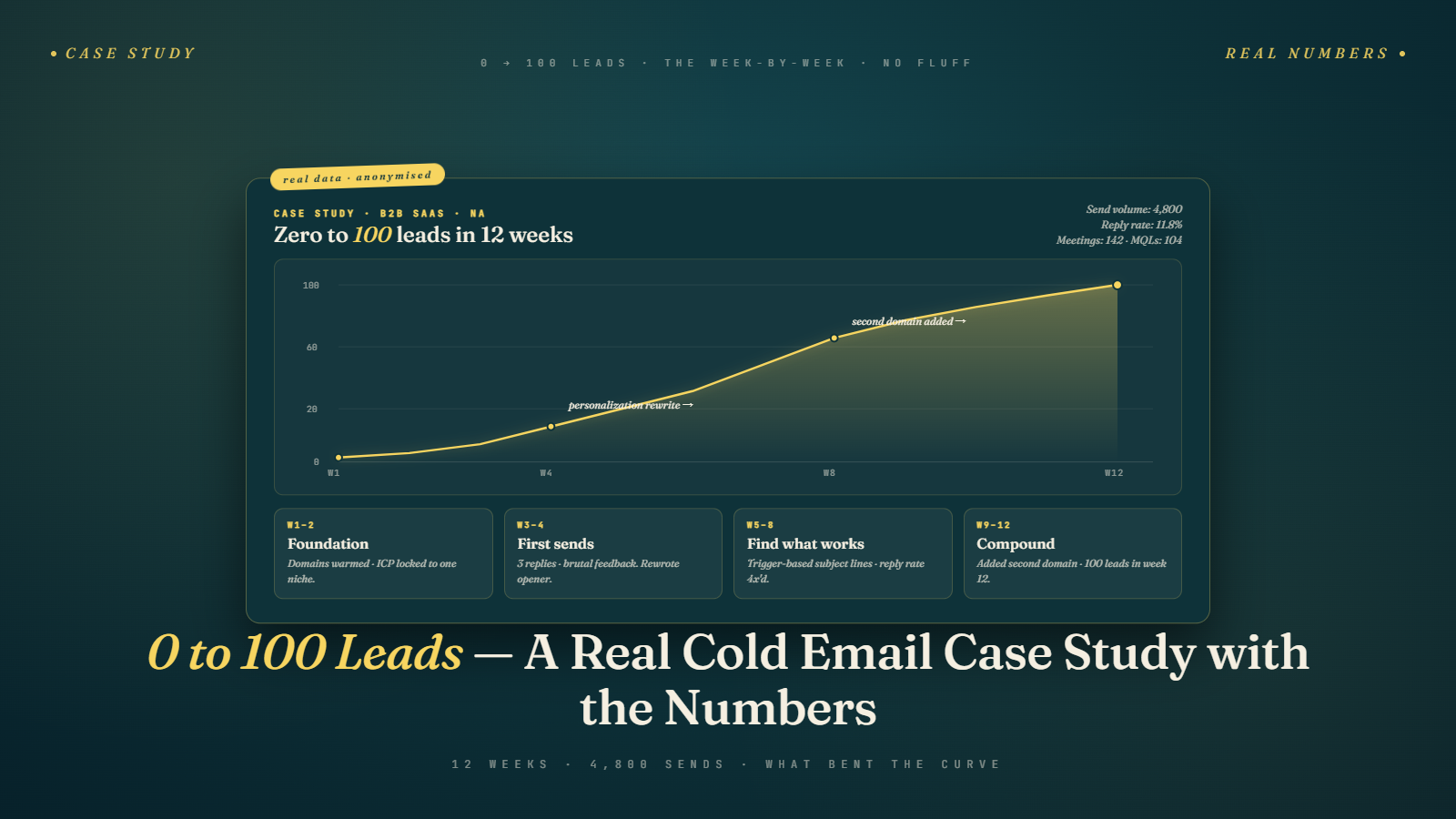
Real Case Study: From 0 to 100 Leads with Cold Email
A detailed walkthrough of a real cold email program built from scratch — the decisions made, the mistakes hit, the iterations that moved the needle, and the specific actions that took a new program from zero replies to 100 qualified leads.
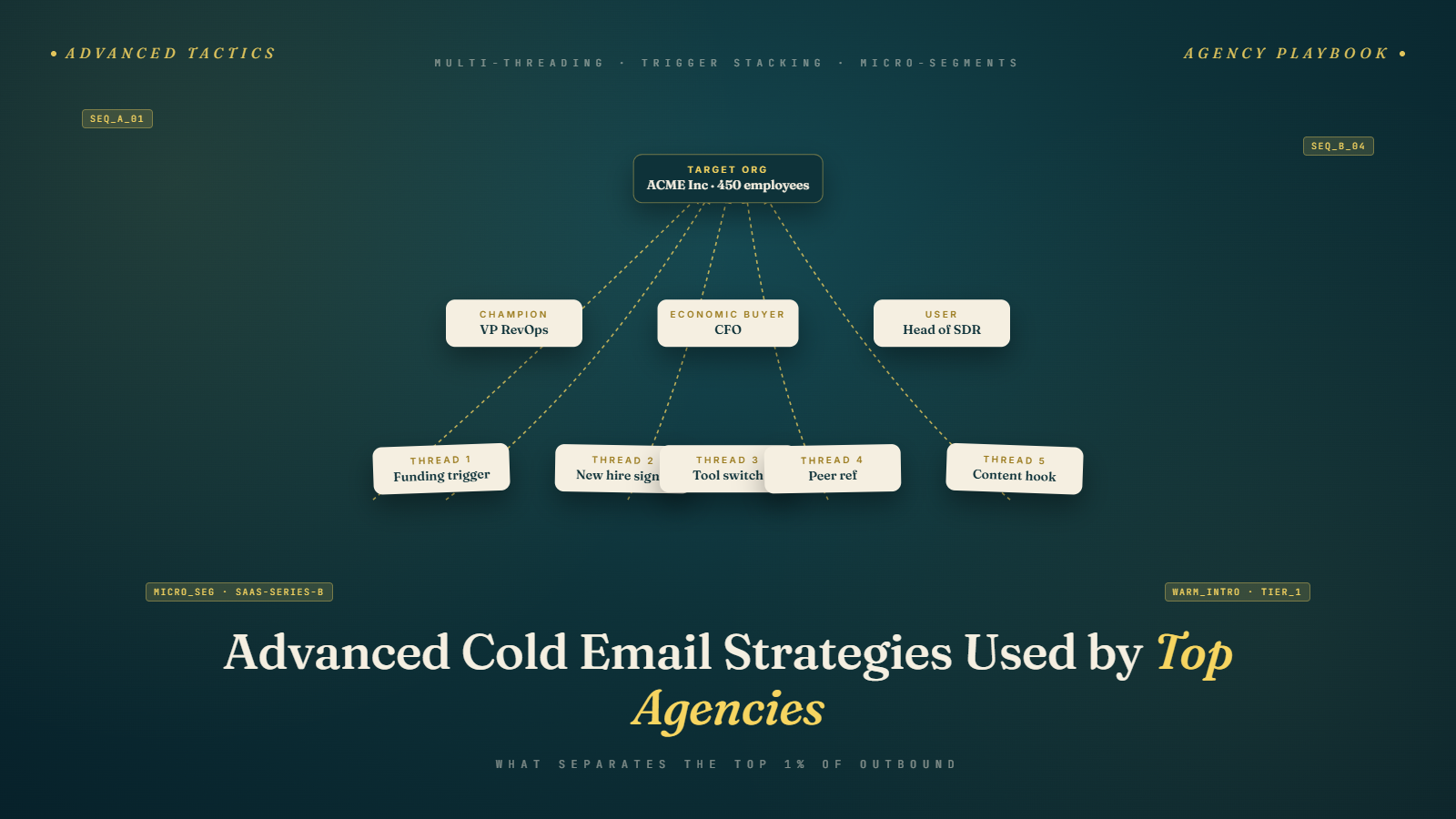
Advanced Cold Email Strategies Used by Top Agencies
The basics of cold email are widely known. The strategies that separate top-performing agencies from everyone else are not. This is a breakdown of the advanced approaches — trigger stacking, micro-segmentation, multi-threading, and others — that experienced practitioners use to outperform at scale.
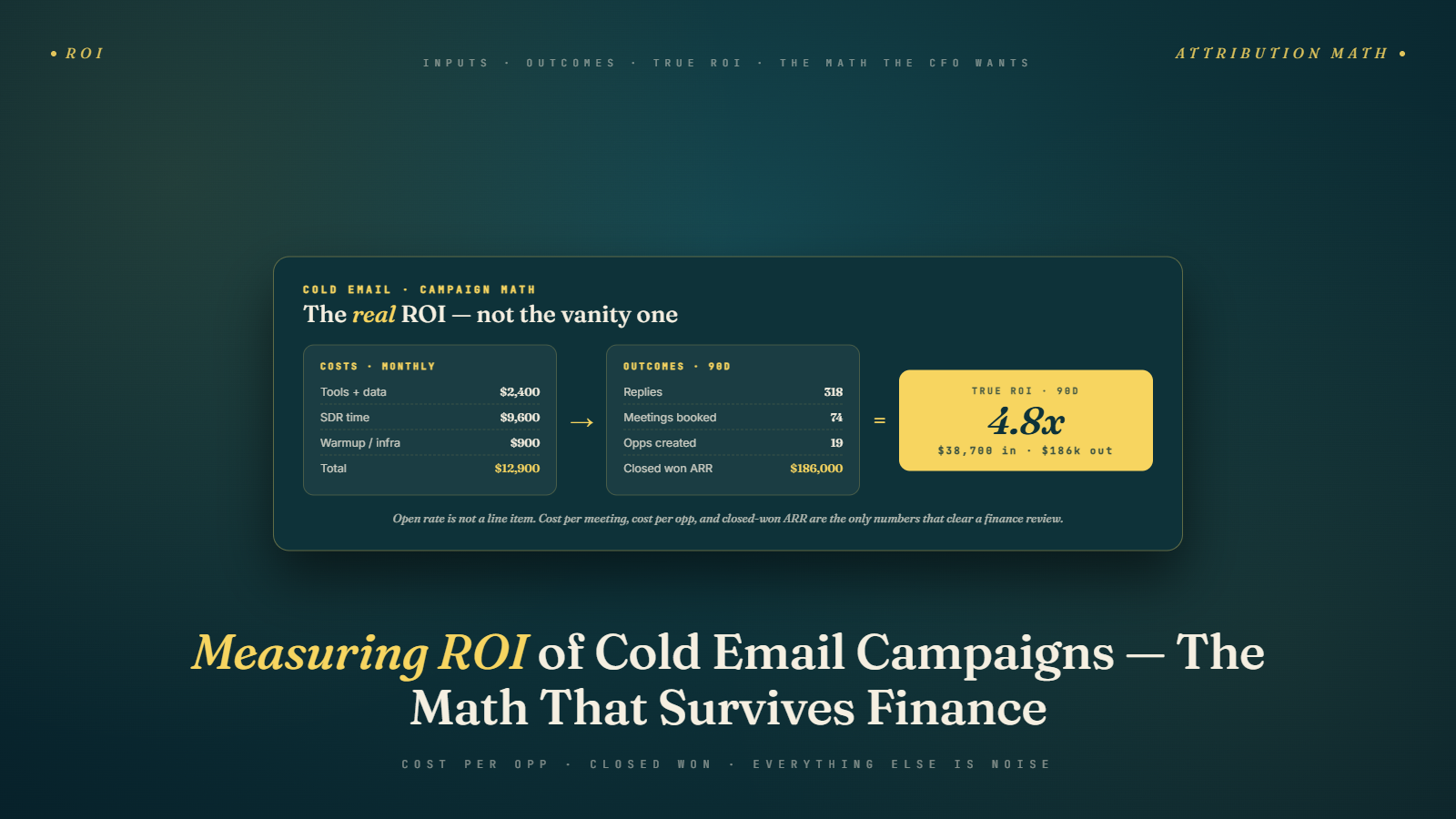
Measuring ROI of Cold Email Campaigns: The Metrics That Actually Matter
Most cold email programs are measured by the wrong metrics. Open rates and reply rates are activity indicators, not business outcomes. Here's how to build a measurement framework that connects cold email effort to revenue — and tells you whether the whole system is actually working.
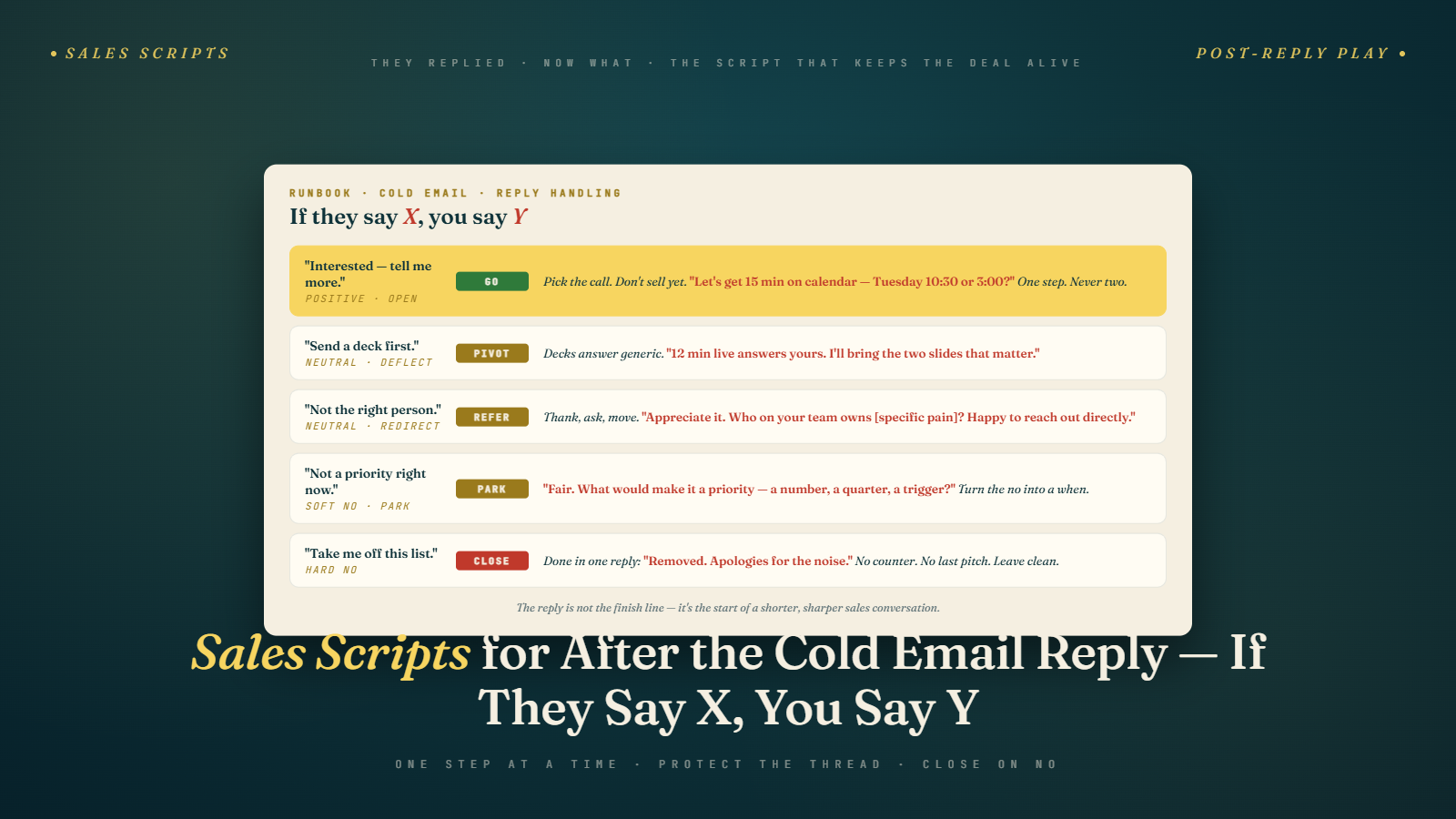
Sales Scripts After Cold Email Response: How to Run the First Call
The first call after a cold email reply has a specific context that changes how you should run it. The prospect knows you reached out cold — and how you handle that shapes the entire conversation. Here's the framework for running discovery calls that convert.
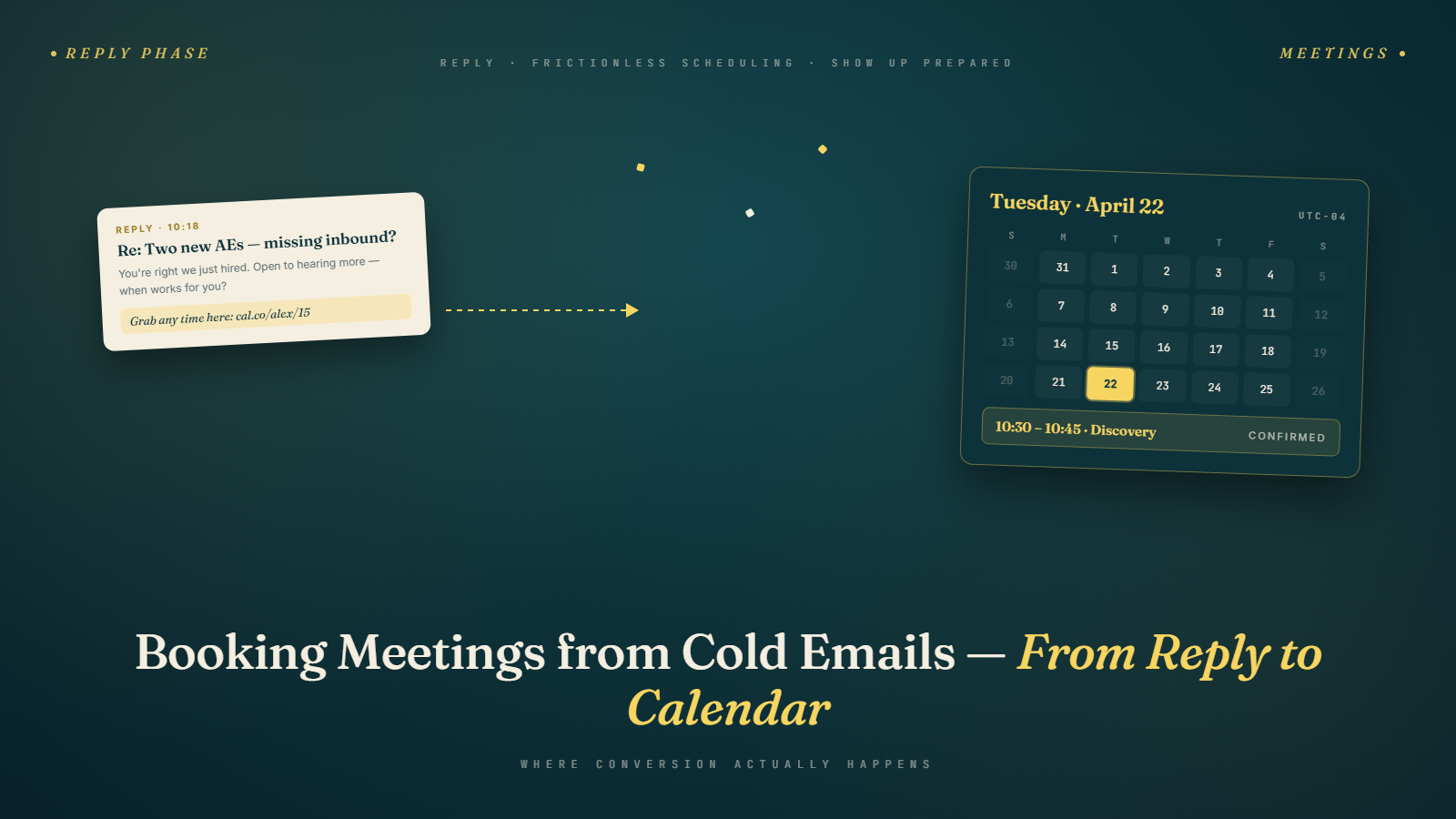
Booking Meetings from Cold Emails: From Reply to Calendar
Getting from a cold email reply to a confirmed meeting on the calendar is where most conversion happens — or doesn't. Here's how to book meetings efficiently, reduce friction, avoid common scheduling mistakes, and show up prepared.
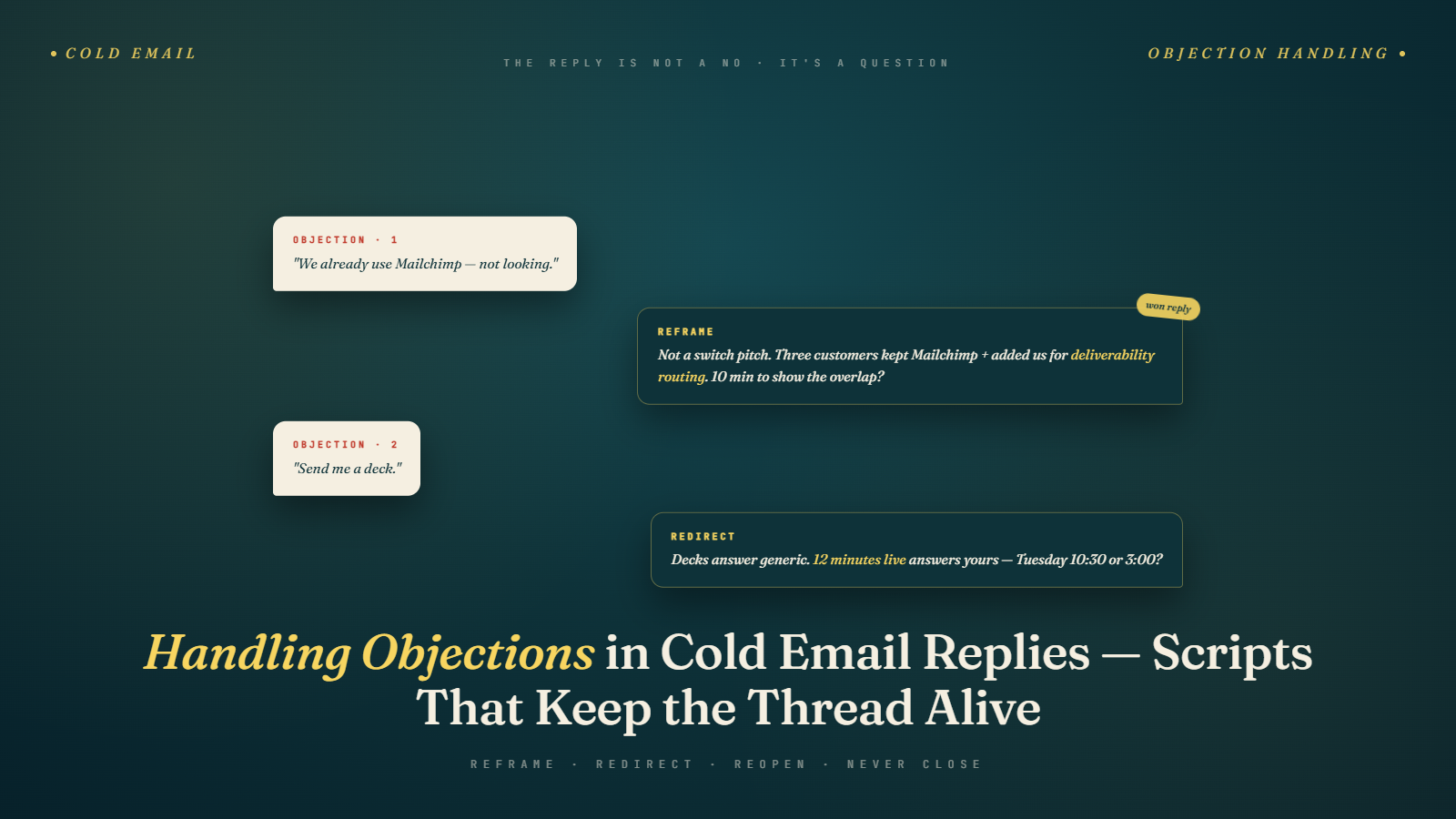
Handling Objections in Cold Email Replies: A Practical Framework
Most cold email objections aren't real rejections — they're friction points that skilled responses can move through. Here's the framework for handling the most common objections without sounding defensive, desperate, or scripted.
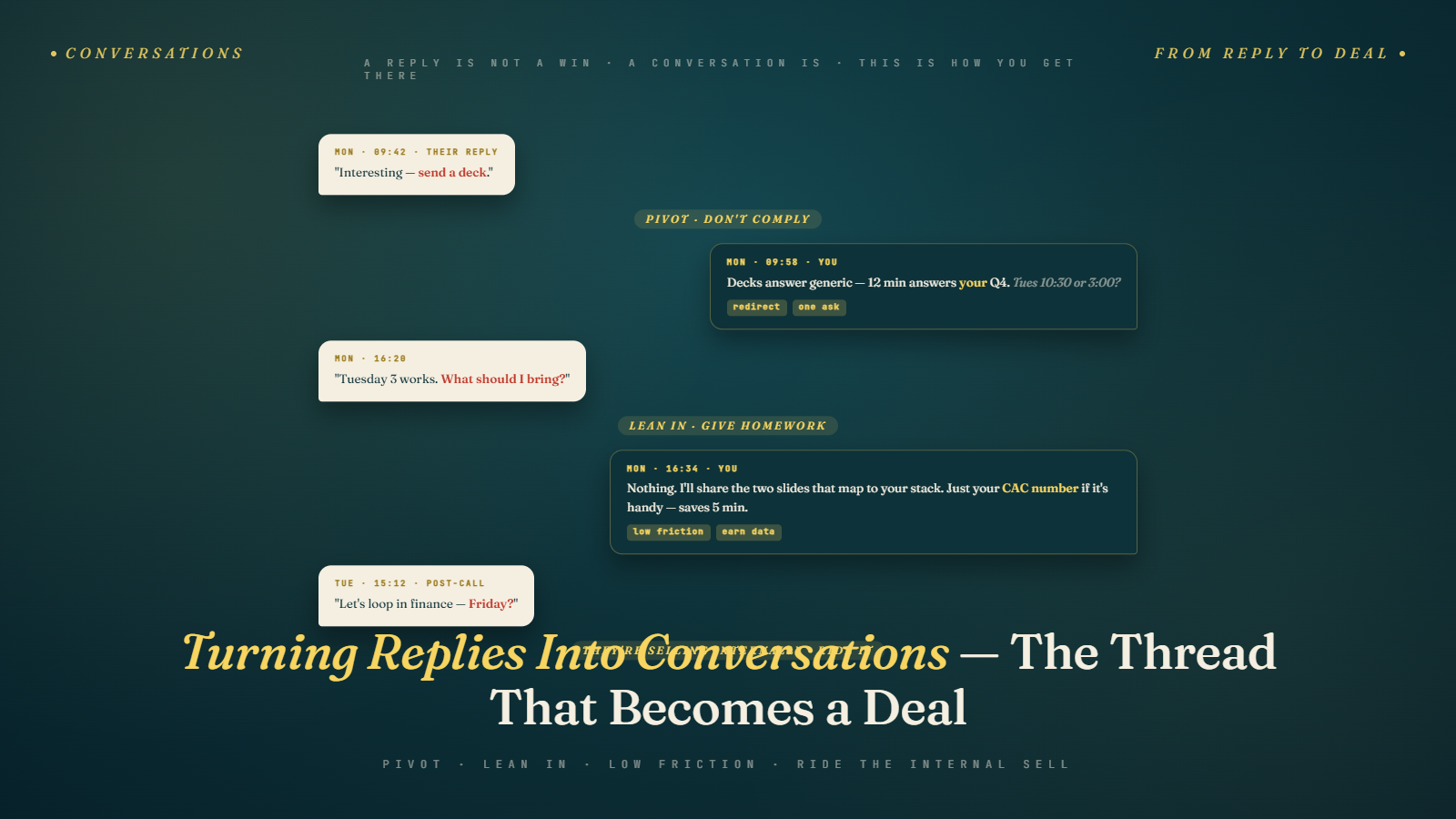
Turning Replies into Conversations: The Phase 6 Guide
Getting a reply to a cold email is the goal of everything that comes before it — but the reply is where most teams fumble. This guide covers how to classify replies, respond within the right window, and convert a cold prospect into an active conversation.
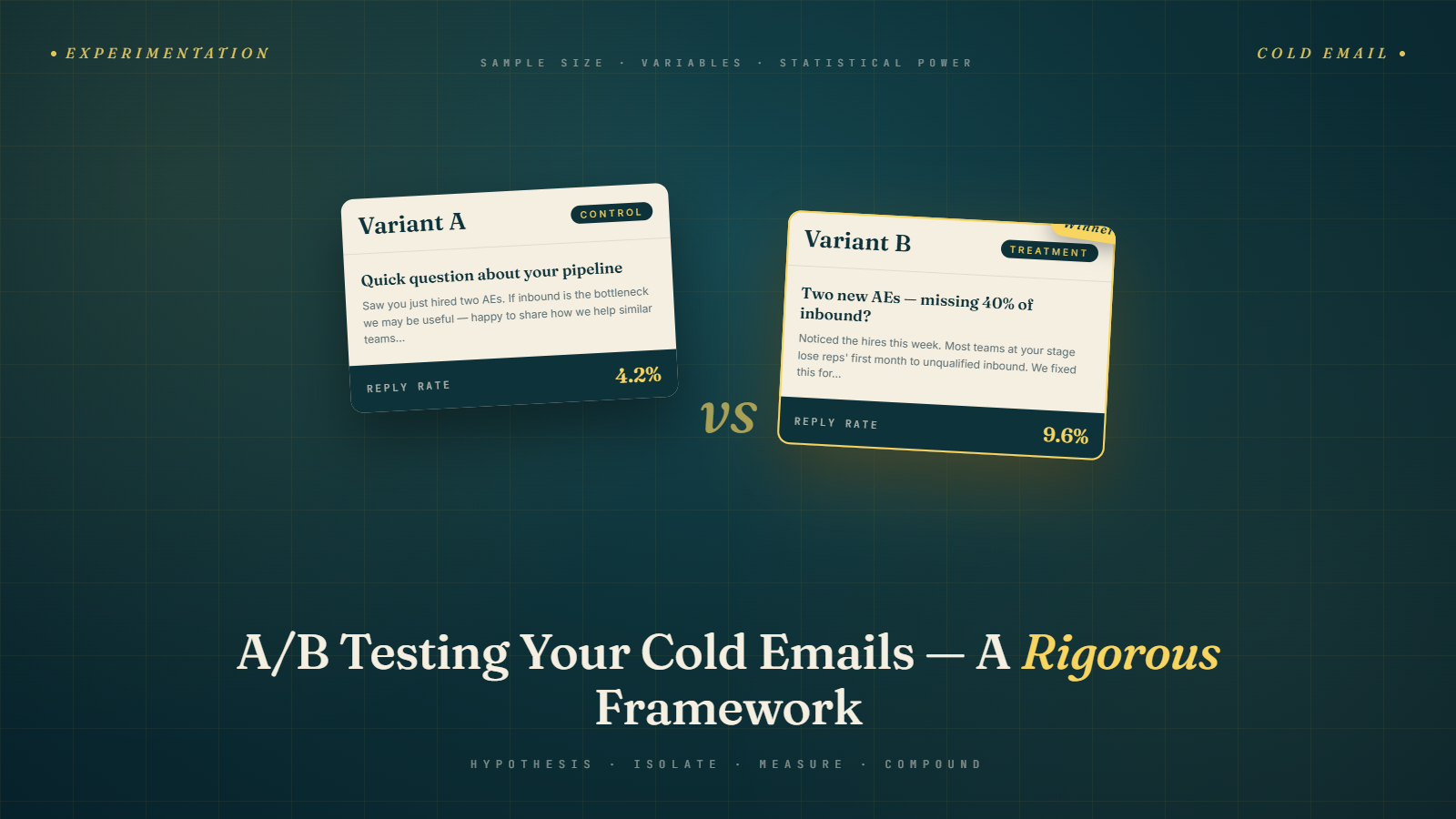
A/B Testing Your Cold Emails: A Rigorous Framework
Most cold email A/B tests are run wrong — wrong sample sizes, wrong variables, wrong metrics. This guide covers how to design tests that produce actionable insights, what to prioritize testing, and how to build a testing culture that compounds results over time.
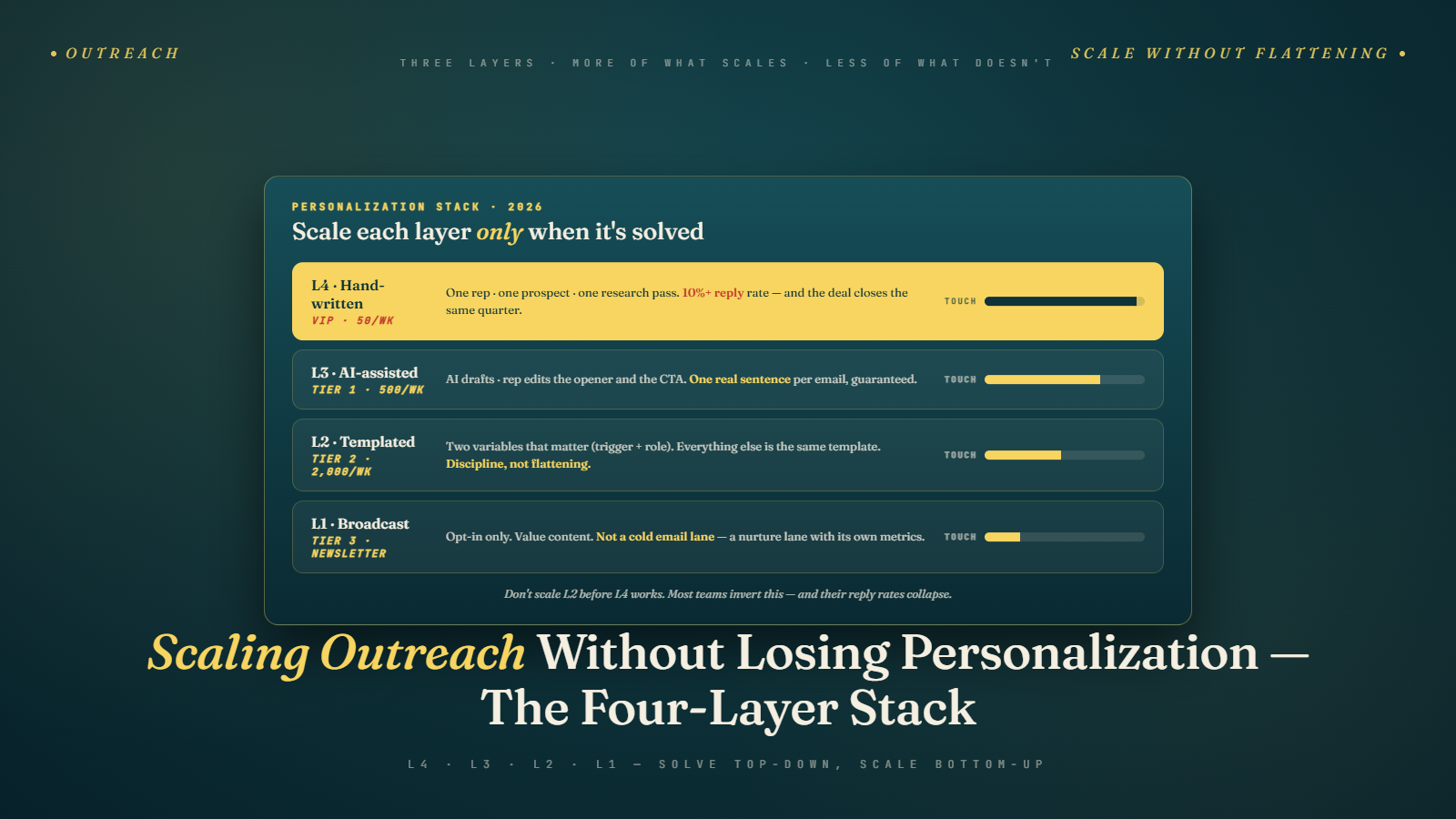
Scaling Outreach Without Losing Personalization
Scaling cold email volume and maintaining personalization quality are not opposites — but they require a deliberate system. Here are the processes, tools, and architectural decisions that let you send more without sending worse.
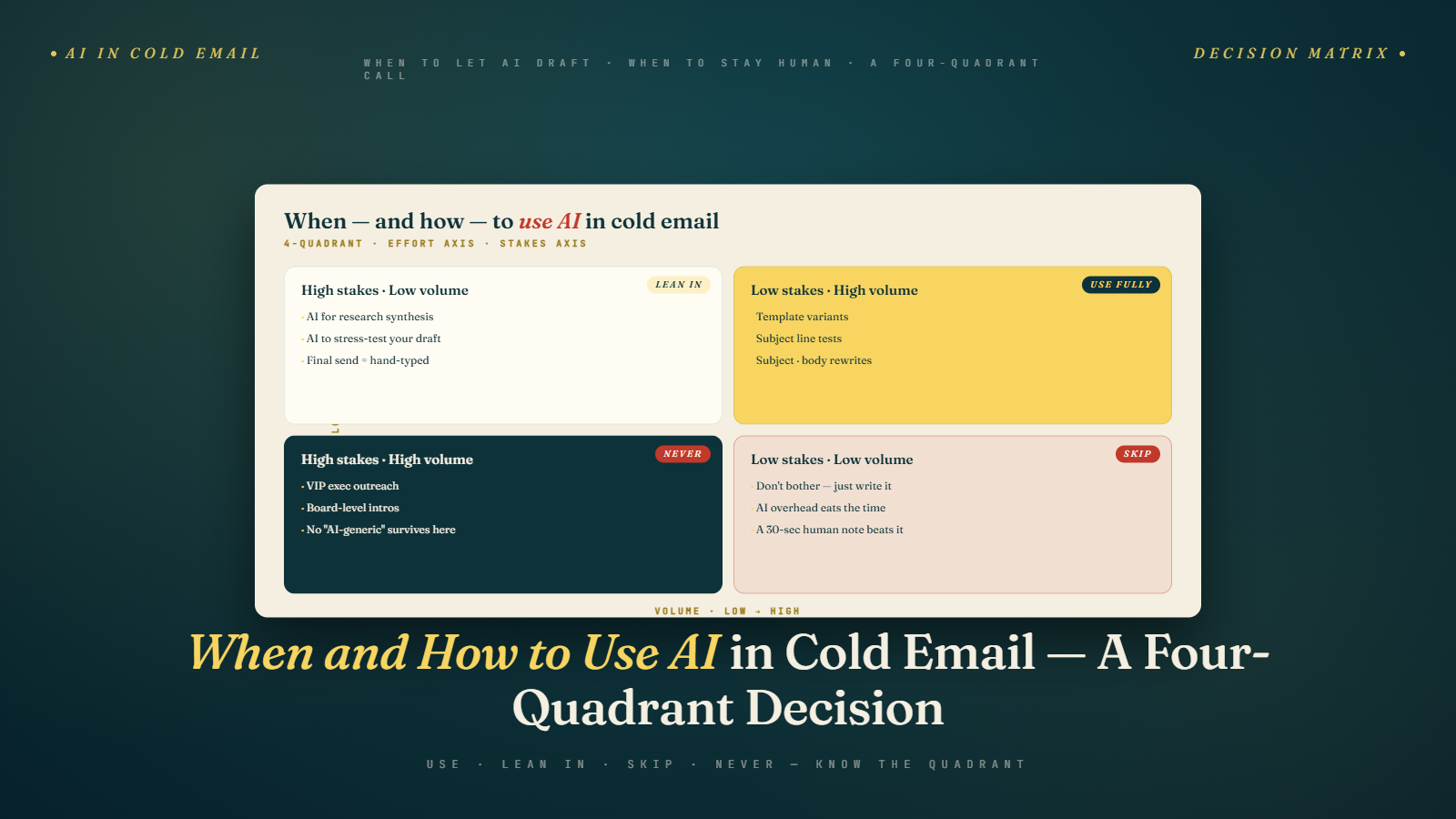
When and How to Use AI in Cold Email (The Honest Guide)
AI can make cold email faster and smarter — or it can make it generic and detectable. The difference is knowing exactly where AI adds value and where it takes it away. Here's the honest, practical guide to using AI in cold email.
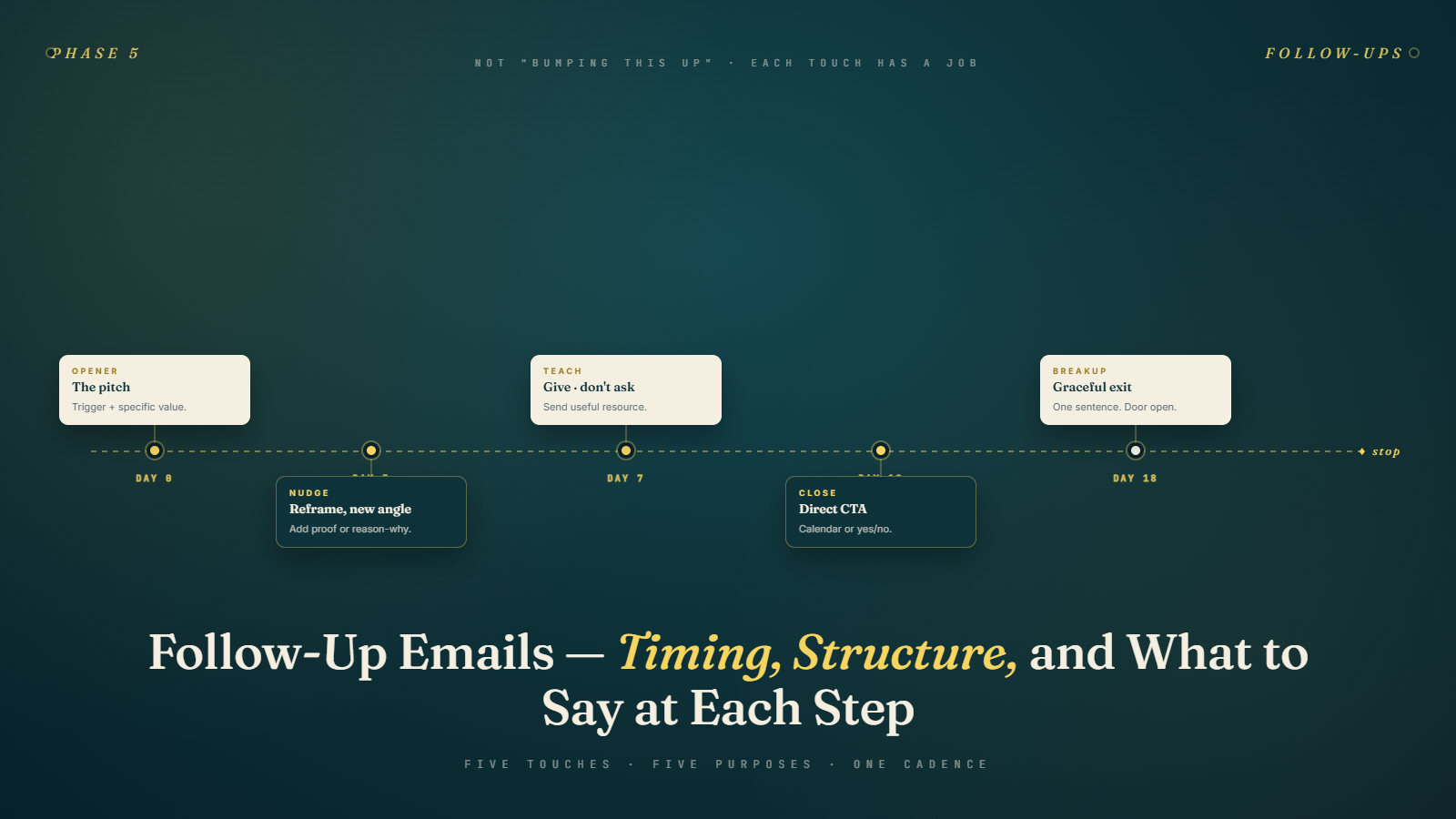
Follow-Up Emails: Timing, Structure, and What to Say at Each Step
Most cold email follow-ups are just "checking in" noise. The ones that get replies have a different purpose at each step, respect the prospect's time, and know exactly when to stop. Here's how to write follow-ups that actually work.
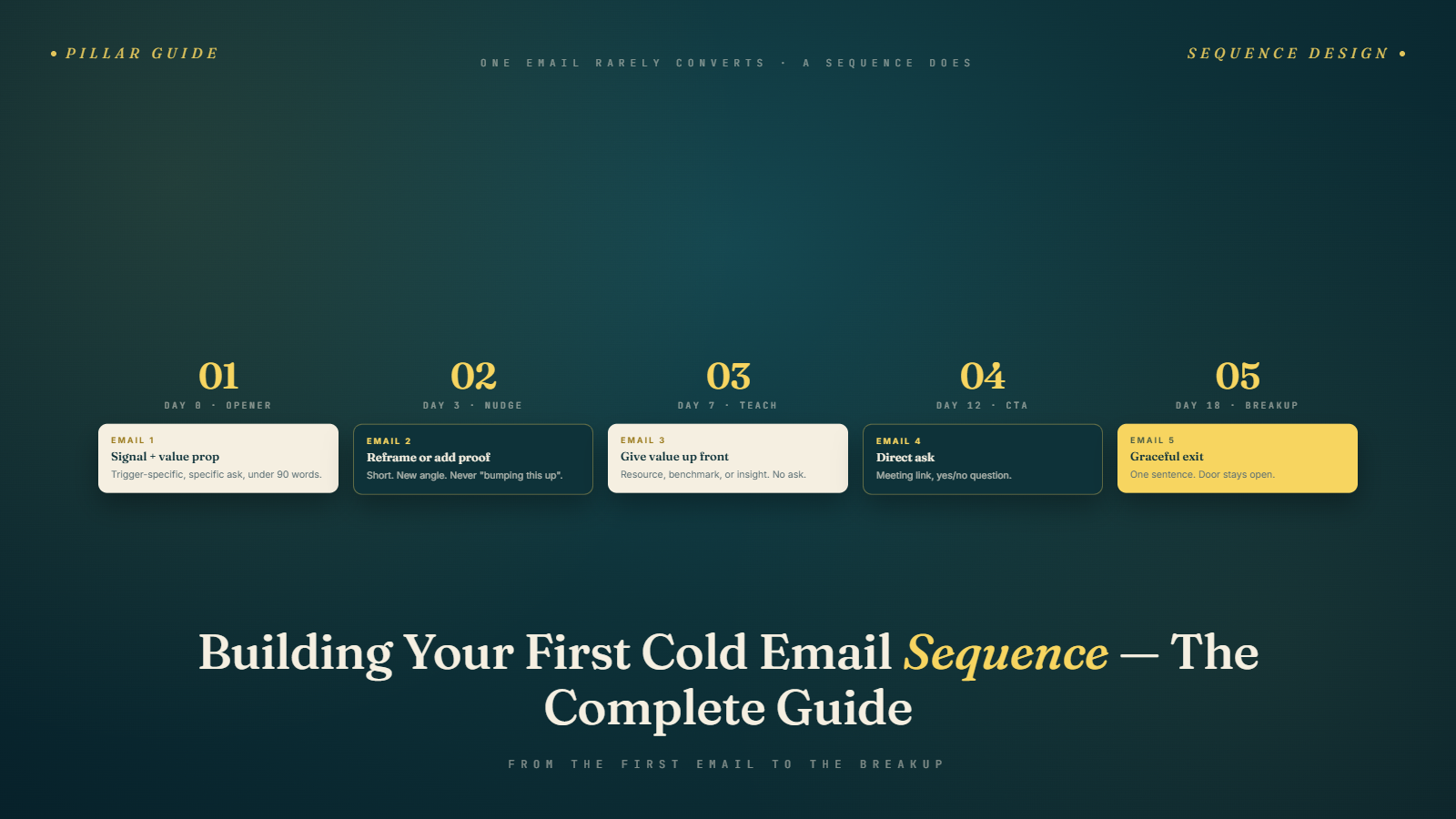
Building Your First Cold Email Sequence: The Complete Guide
A single cold email rarely converts. A well-built sequence does. This pillar guide covers the complete architecture of a high-converting multi-touch cold email sequence — from the first email to the breakup, with timing, structure, and purpose at every step.
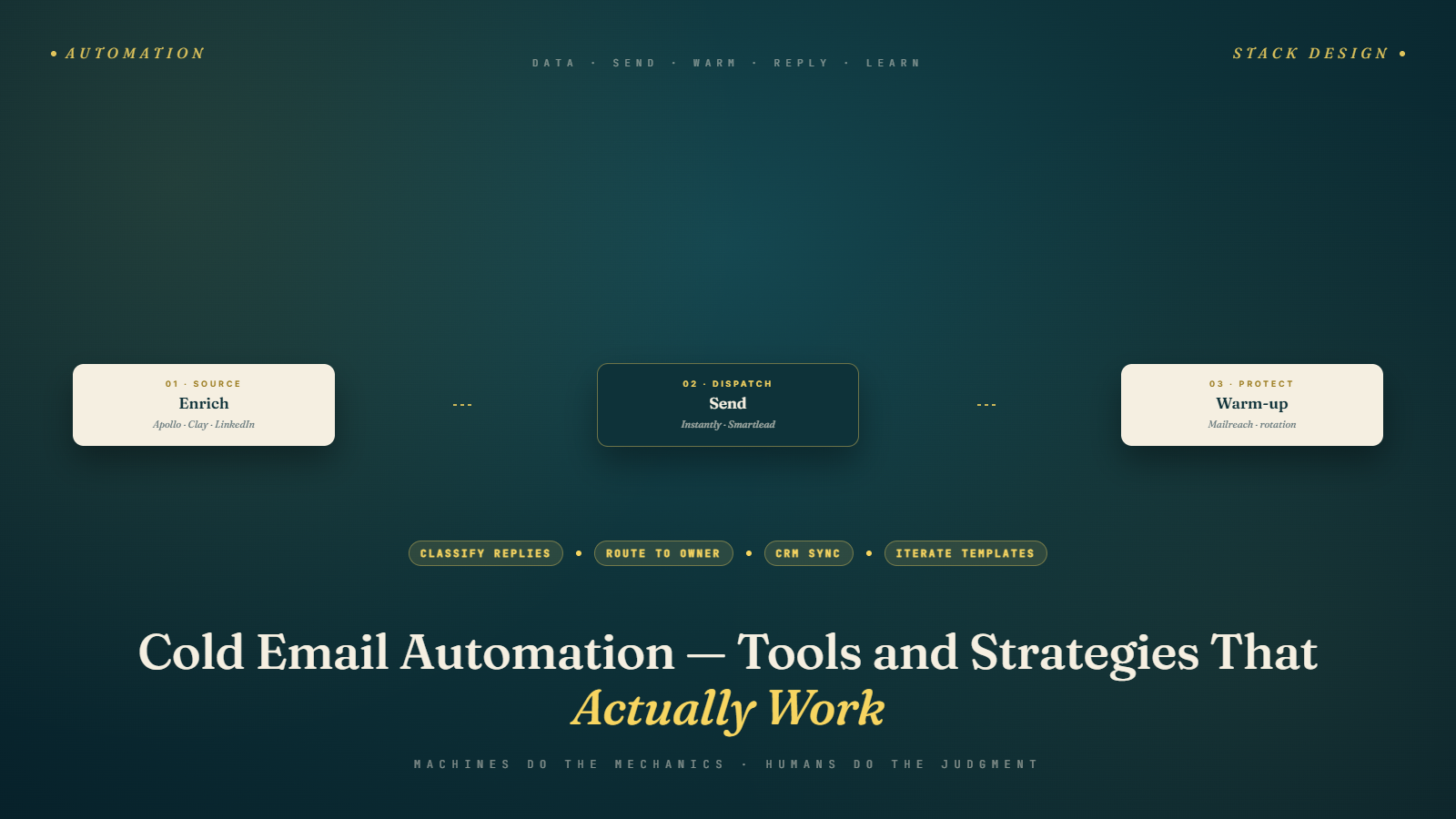
Cold Email Automation: Tools & Strategies That Actually Work
Cold email automation done wrong turns your outreach into a spam machine. Done right, it frees your team to focus on personalization and relationships while the systems handle the mechanics. Here's how to build an automation stack that scales without sacrificing quality.
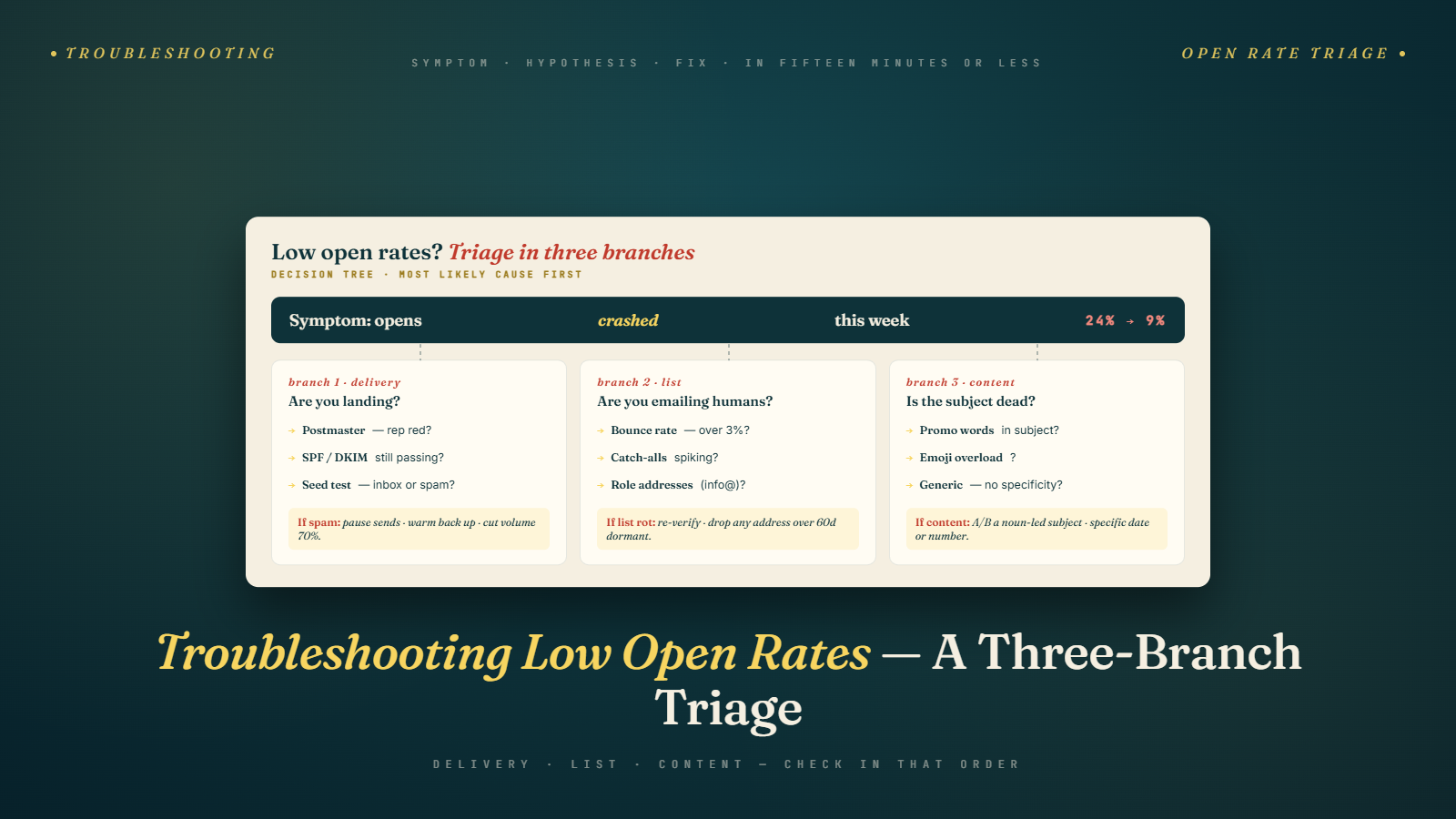
Troubleshooting Low Open Rates in Cold Email
Low open rates could mean a deliverability problem, a targeting problem, or a subject line problem — and each requires a completely different fix. This diagnostic framework helps you find the real cause fast.
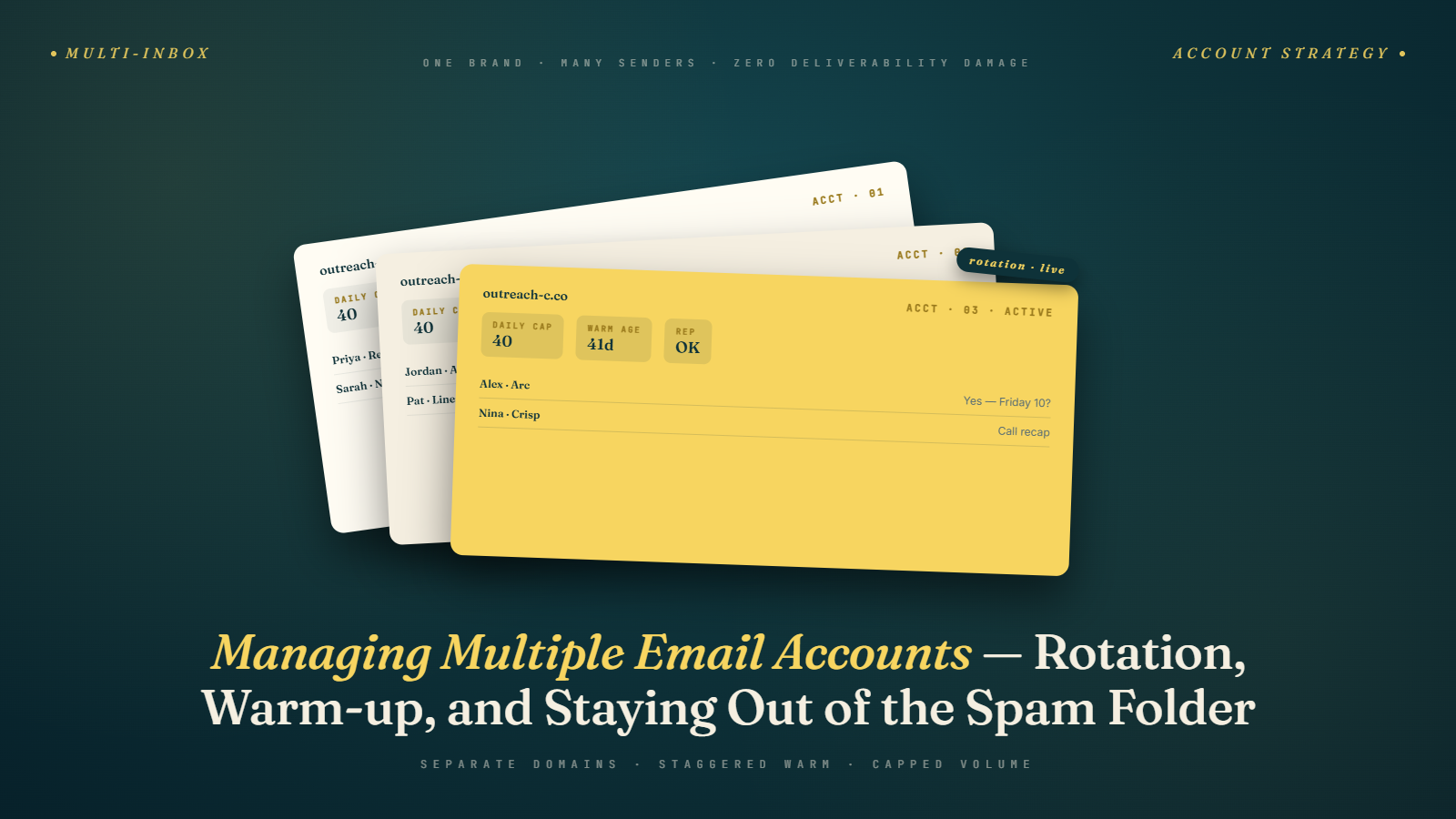
Managing Multiple Email Accounts for Cold Email
Running cold email across multiple domains and inboxes is operationally complex. This guide covers the tools, systems, and workflows that keep everything organized, monitored, and healthy at scale.
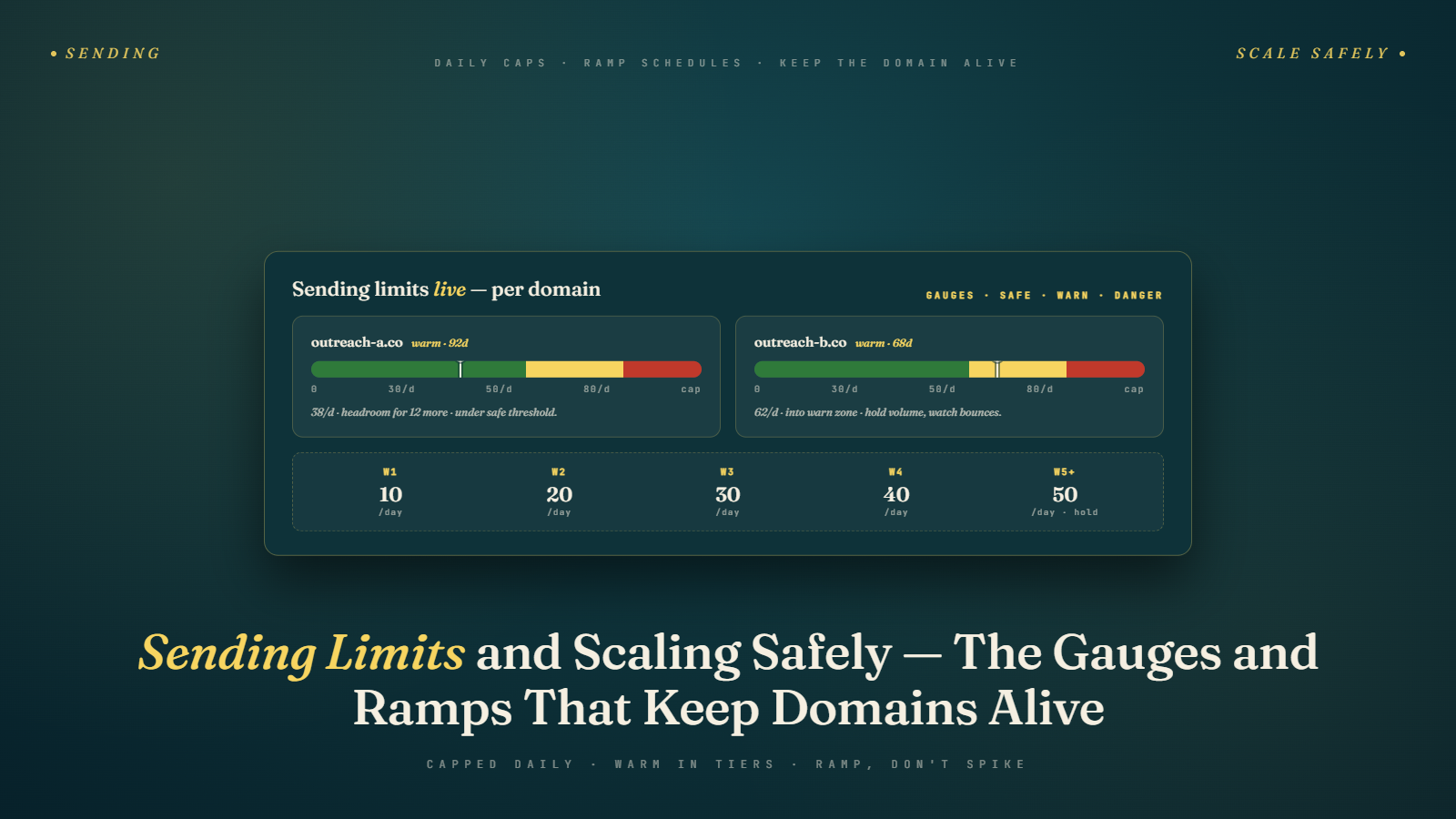
Sending Limits & Scaling Cold Email Safely
Scaling cold email too fast is one of the most common ways to destroy a domain's reputation. Learn the exact numbers for safe daily limits, how to grow volume correctly, and the multi-account architecture that lets you scale without risk.
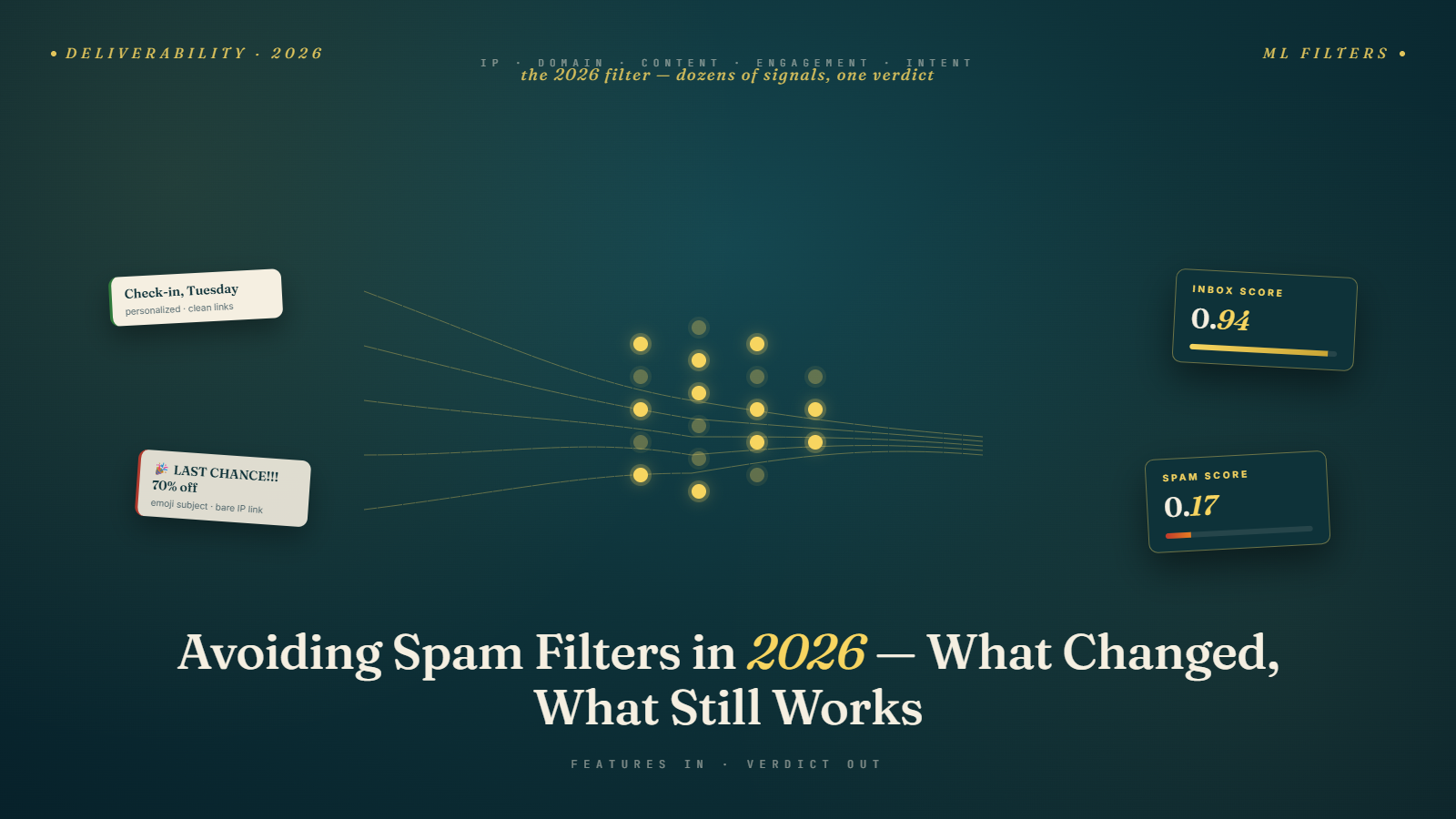
Avoiding Spam Filters in 2026: What Has Changed and What Still Works
Spam filters in 2026 are machine-learning systems that evaluate dozens of signals simultaneously. This guide covers what's changed, what signals matter most today, and the practical steps that keep your cold email in the inbox.
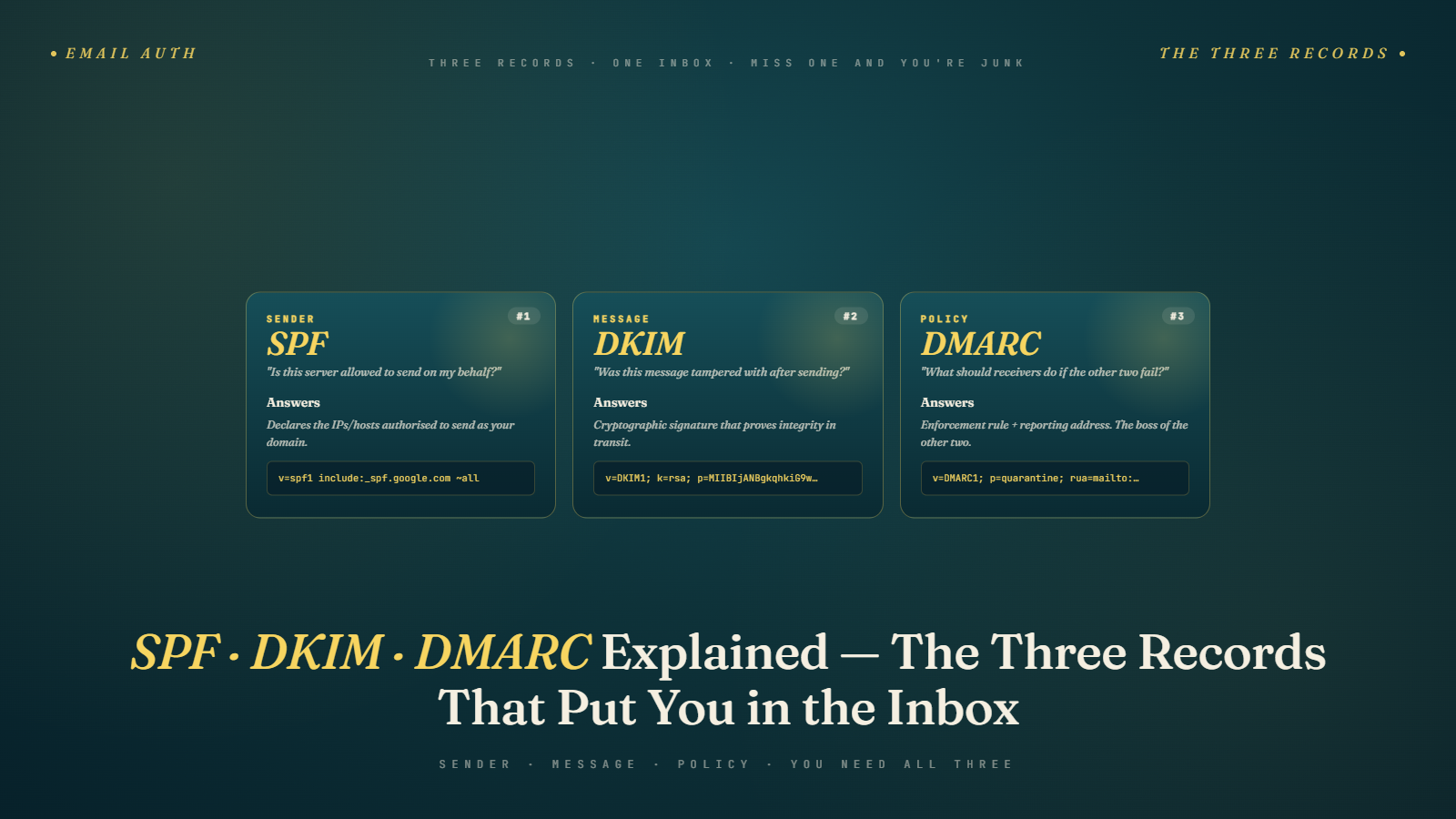
SPF, DKIM, and DMARC Explained Simply (+ Setup Guide)
SPF, DKIM, and DMARC are the three DNS records that prove your emails are legitimate. This guide explains what each one does, how to set them up, and how to verify they're working — without needing a technical background.
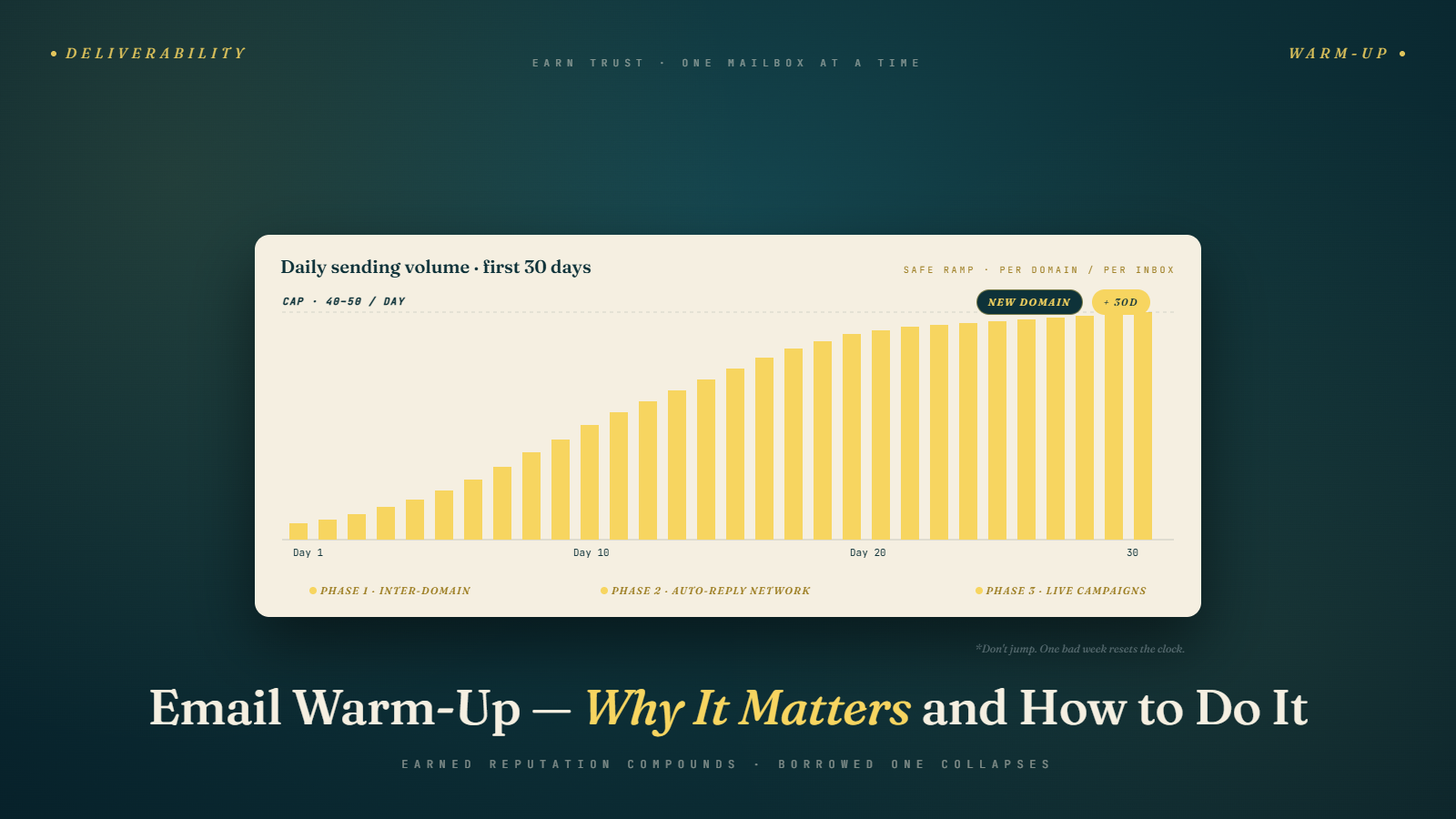
Email Warm-Up: Why It Matters and How to Do It
A brand-new sending domain that jumps straight into cold email will get filtered or blacklisted fast. Learn exactly why email warm-up works, how to do it manually and with tools, and what a proper warm-up schedule looks like.
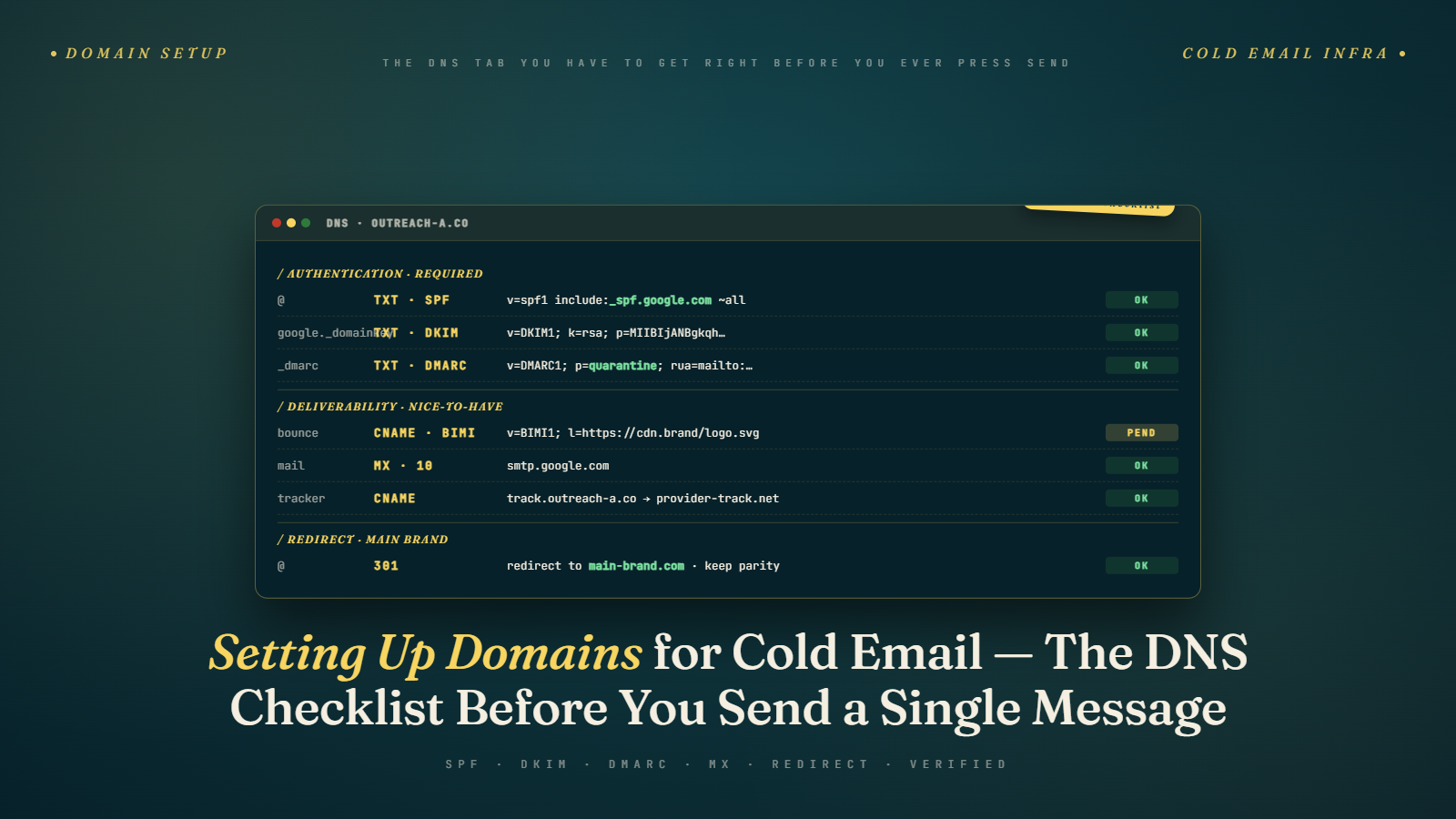
Setting Up Domains for Cold Email: Main vs. Secondary
Using your primary business domain for cold email is one of the riskiest things you can do. Learn how to set up secondary sending domains correctly — naming conventions, DNS configuration, inbox setup, and everything in between.
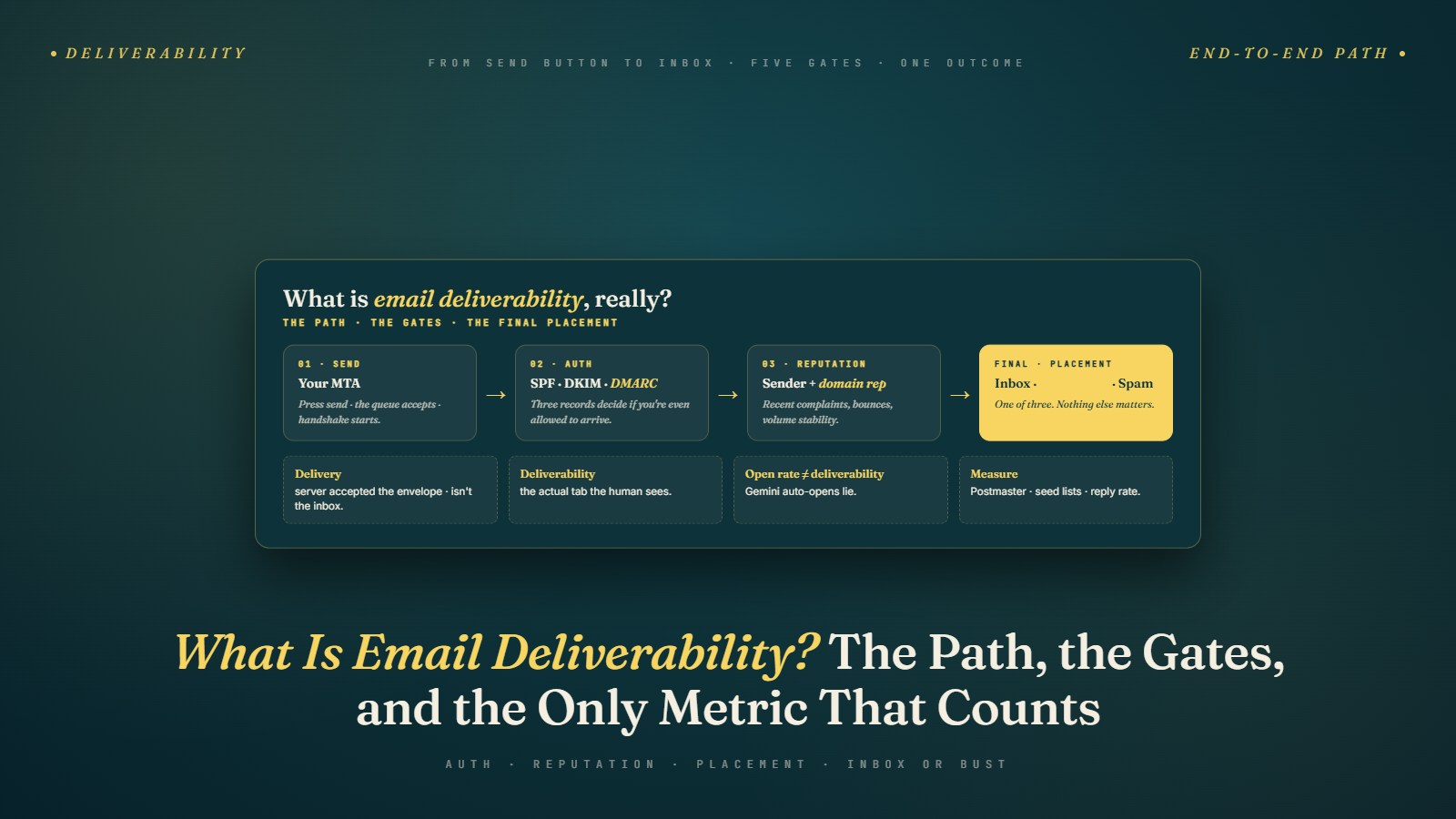
What Is Email Deliverability? The Complete Guide
Email deliverability is the difference between landing in the inbox and landing nowhere. This technical pillar breaks down every layer of the deliverability stack — from authentication to reputation to content — and maps out everything Phase 4 covers.
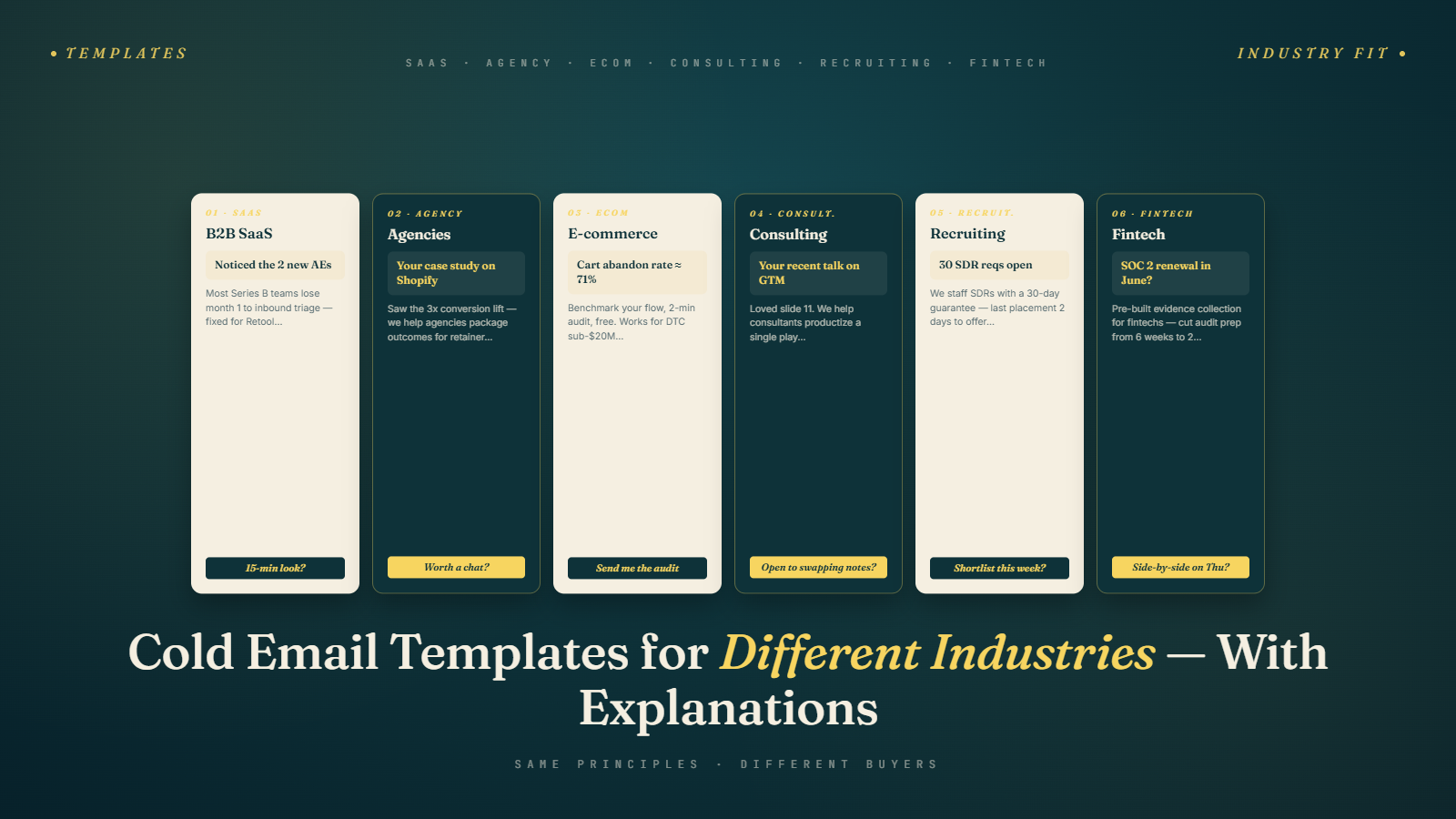
Cold Email Templates for Different Industries (With Explanations)
Ready-to-adapt cold email templates for B2B SaaS, agencies, e-commerce, consulting, recruiting, and fintech — each one built on the principles from Phase 3 with explanations of why every element works.
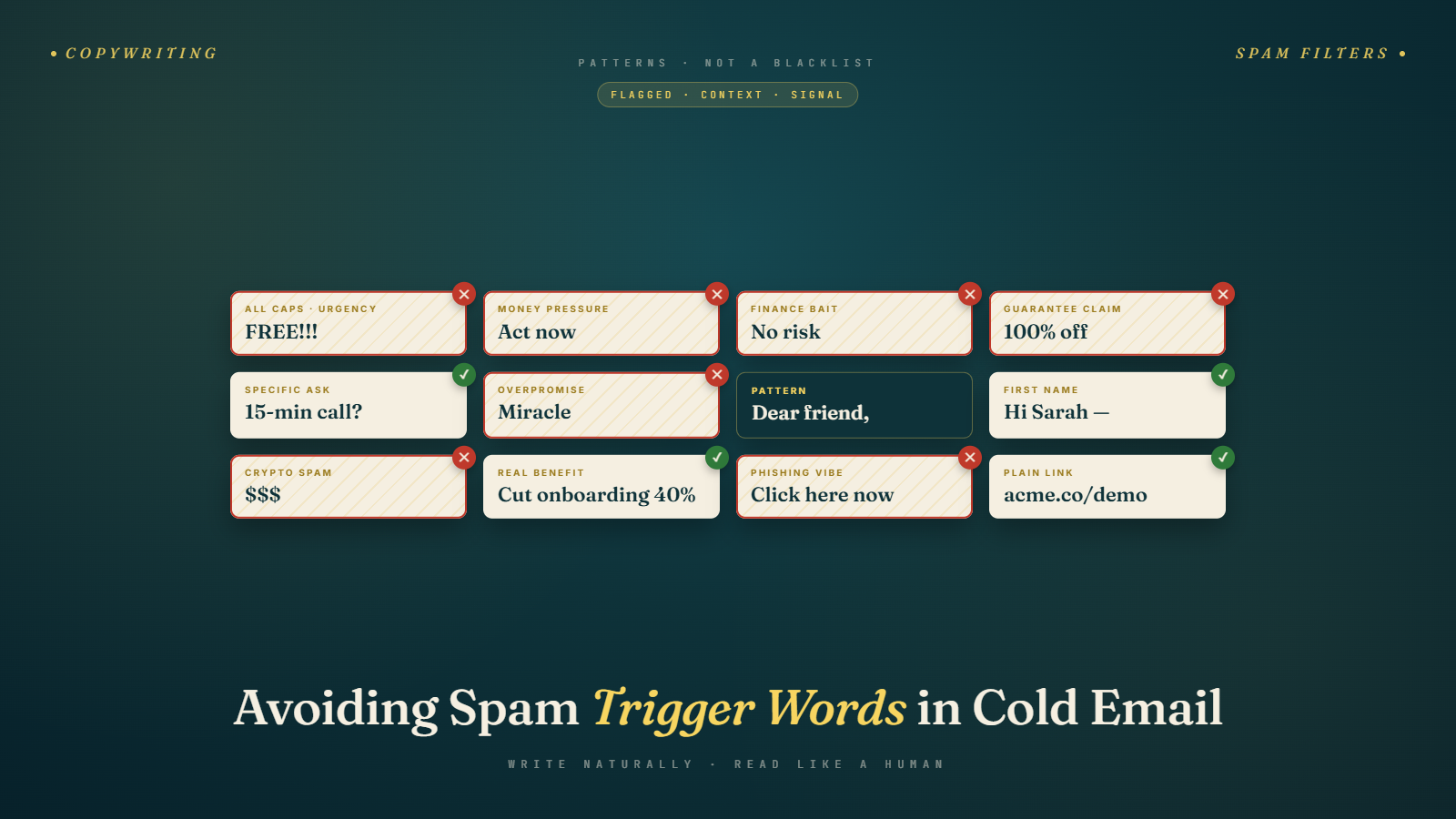
Avoiding Spam Trigger Words in Cold Email
Spam filters are smarter than a word blacklist — but certain language patterns still get you filtered before a human ever reads your email. Learn what to avoid, how spam filters actually work, and how to write naturally without triggering them.
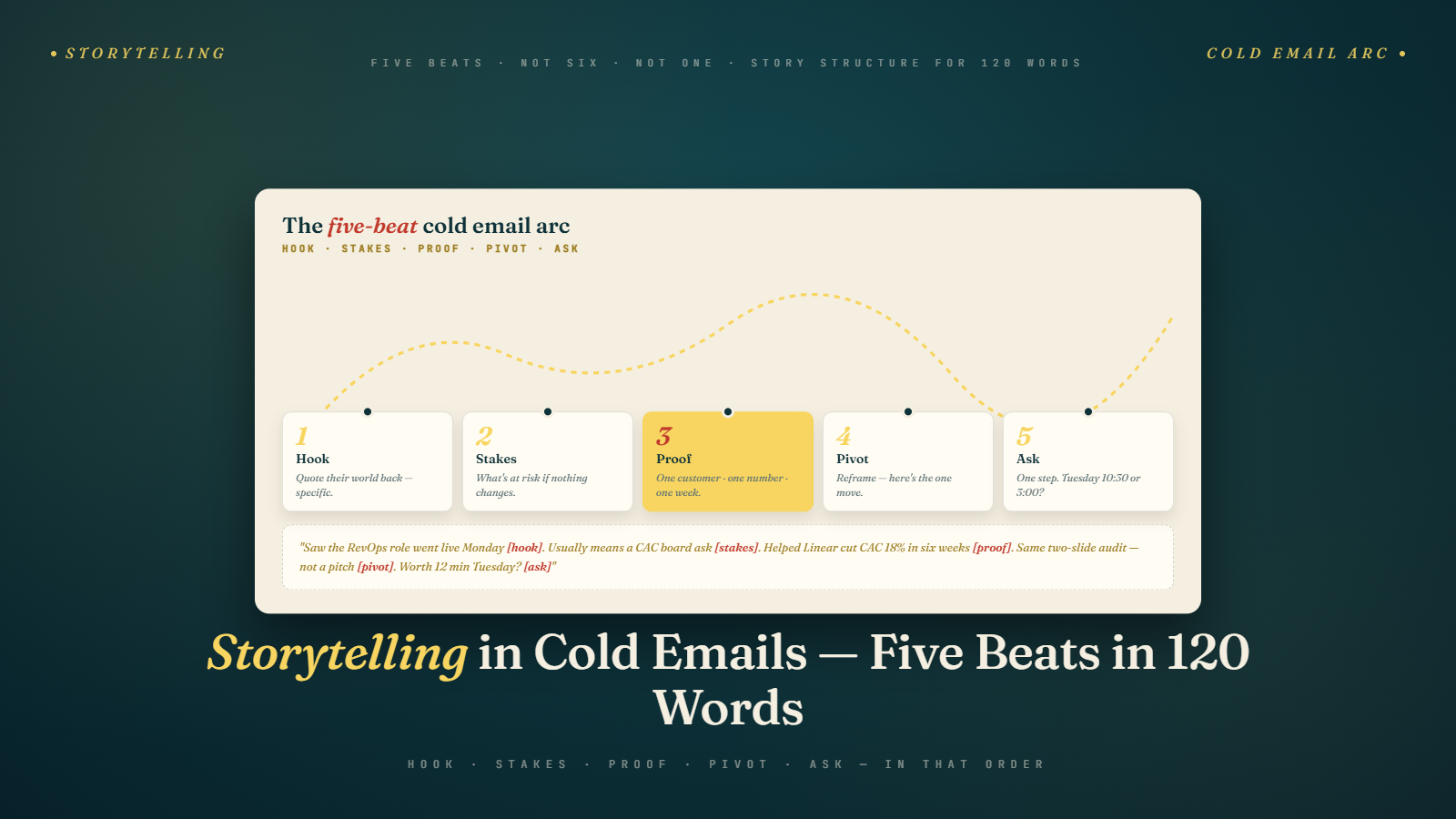
Storytelling in Cold Emails: How to Use Narrative to Get Replies
Stories convert in cold email — but only when used correctly. Learn the neuroscience behind why narrative works, the story formats that fit cold email, and how to tell a mini story that creates connection without going long.
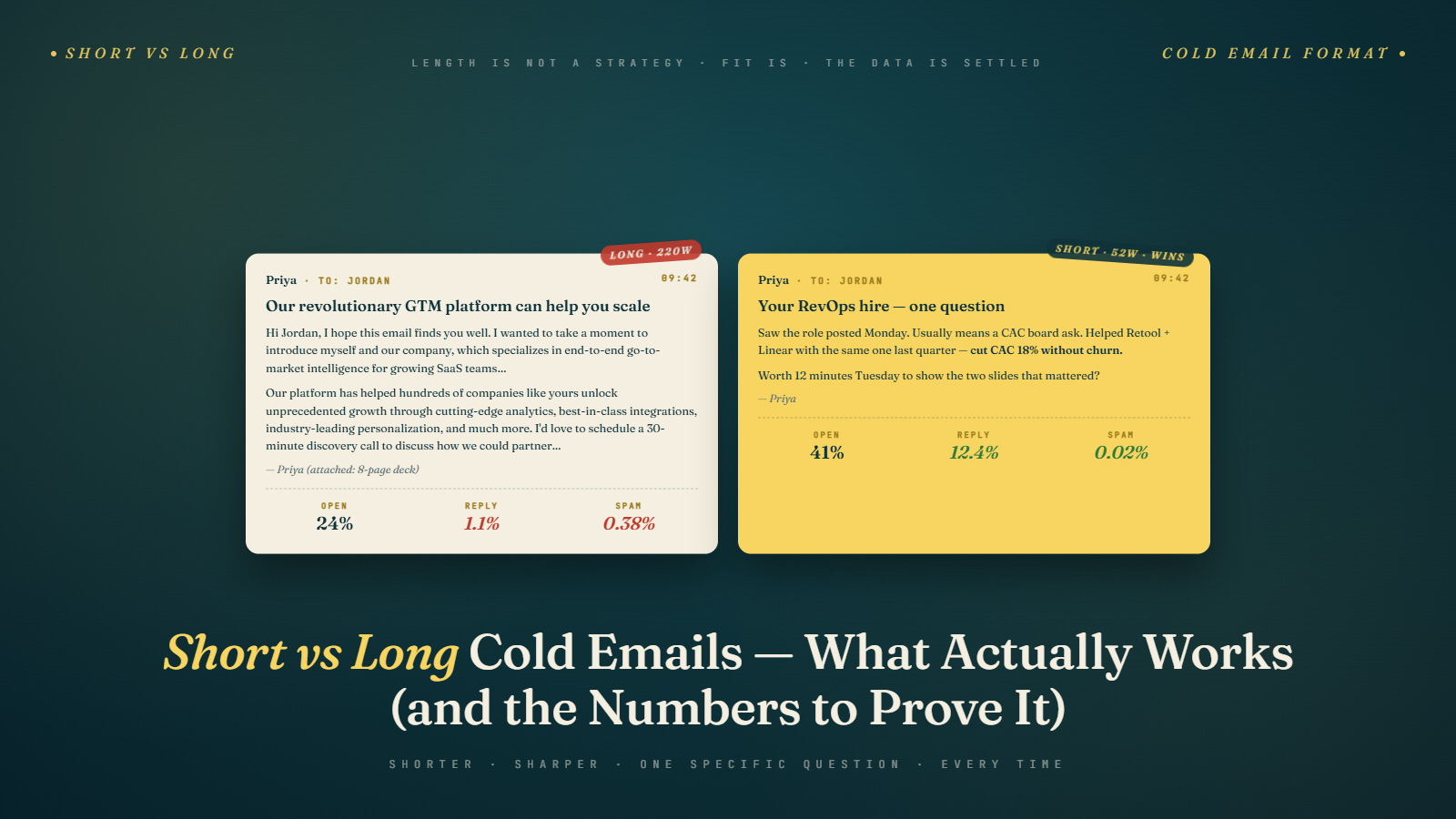
Short vs. Long Cold Emails: What Actually Works Better?
The short vs. long email debate has a real answer — but it depends on context. This guide explains exactly when brevity wins, when more length is justified, and how to calibrate your email length for maximum replies.
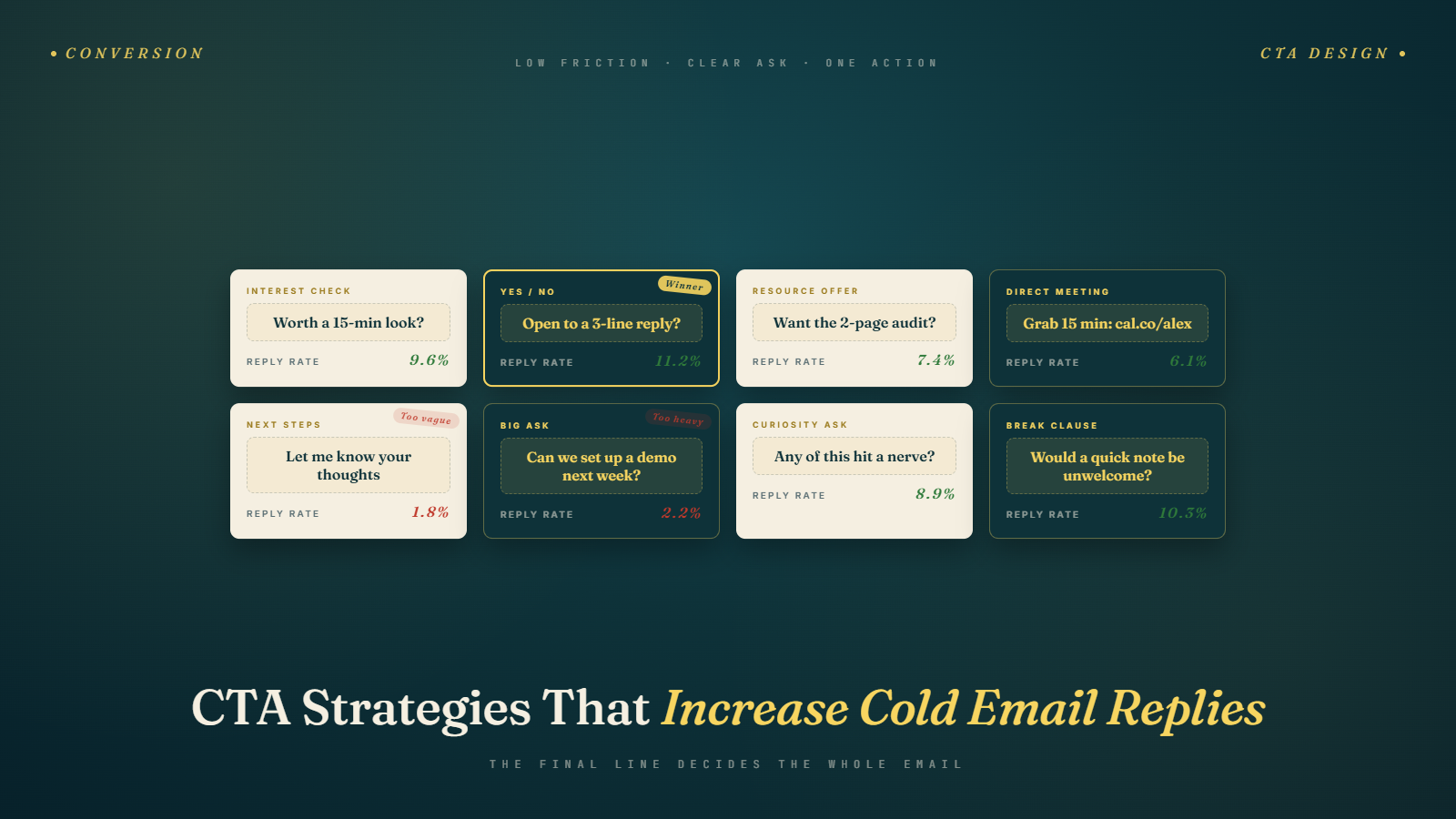
CTA Strategies That Increase Cold Email Replies
The CTA is where most cold emails fail at the final hurdle. Learn the psychology of low-friction asks, the different CTA types that actually get replies, and how to test your way to a consistently higher response rate.
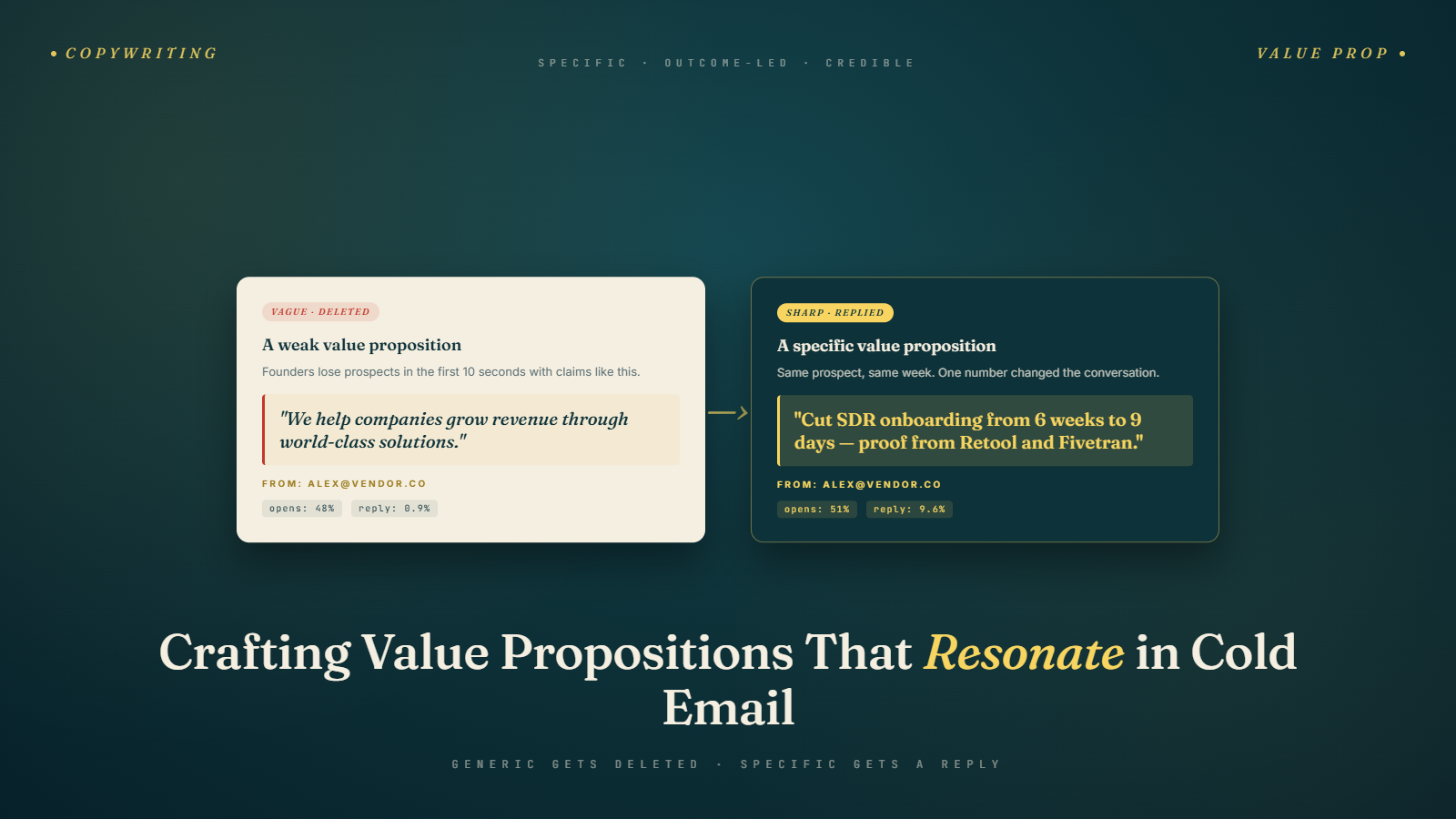
Crafting Value Propositions That Resonate in Cold Email
A vague value proposition is the fastest way to lose a prospect who was already reading. Learn how to craft cold email value propositions that are specific, outcome-focused, and credible — and actually make people want to reply.
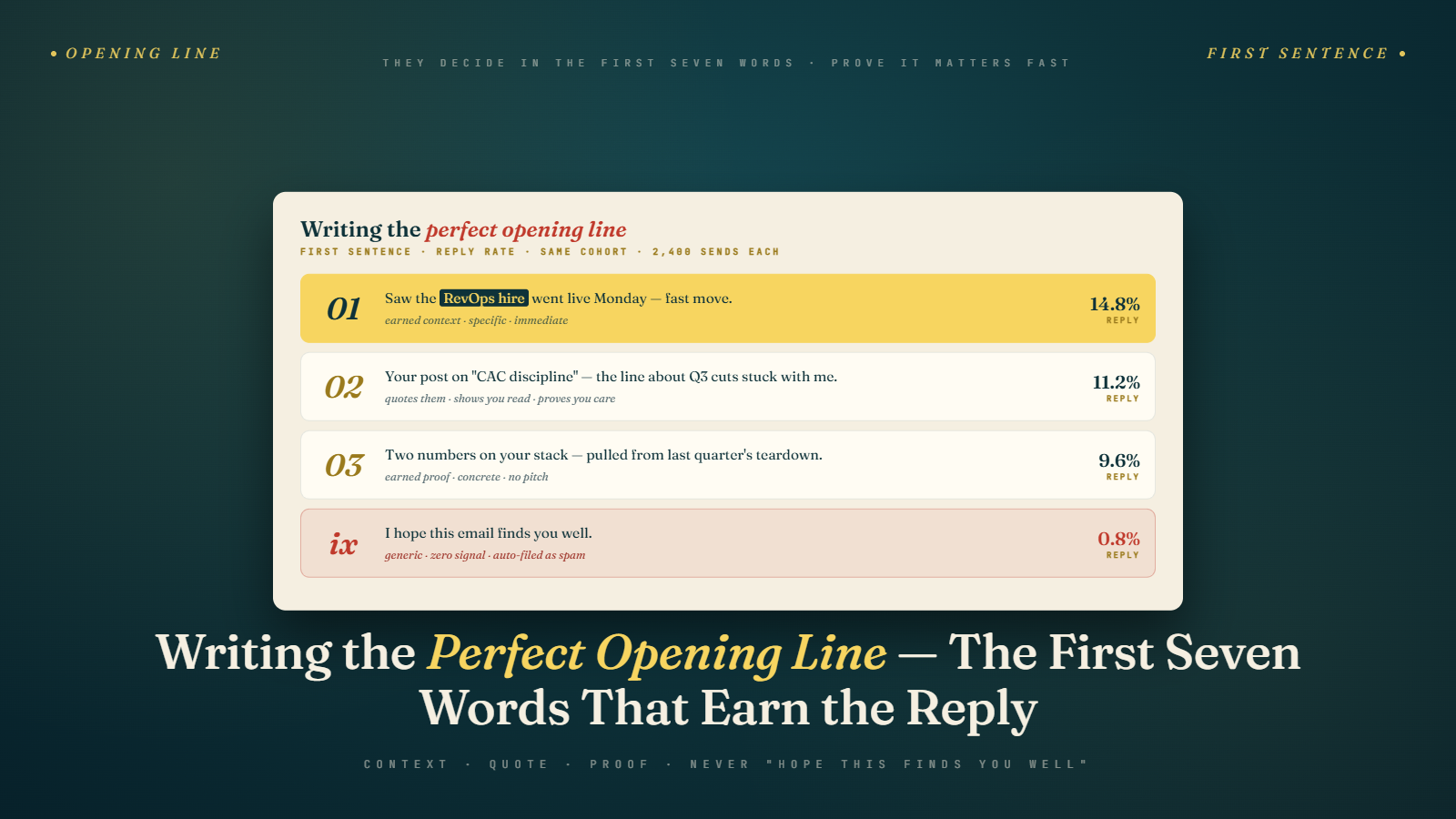
Writing the Perfect Cold Email Opening Line
The opening line of your cold email decides whether anyone reads the rest. This guide breaks down every type of opening line that works, the psychology behind them, and how to research and write them at different levels of personalization.
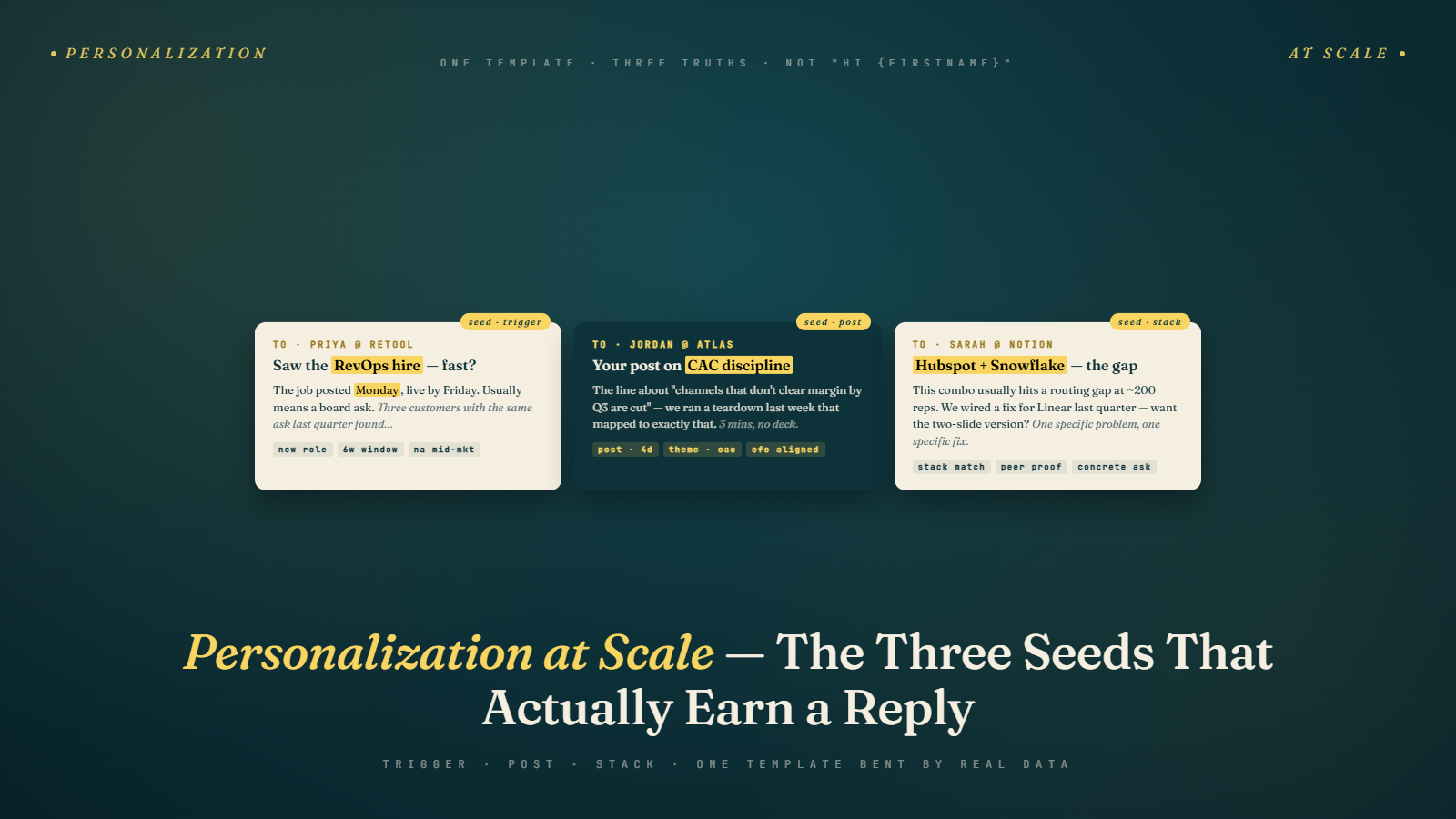
Personalization at Scale: Cold Email Best Practices
Sending 500 emails that all feel personal is not a contradiction — it's a system. Learn how to build a tiered personalization approach that scales without losing the quality that gets replies.
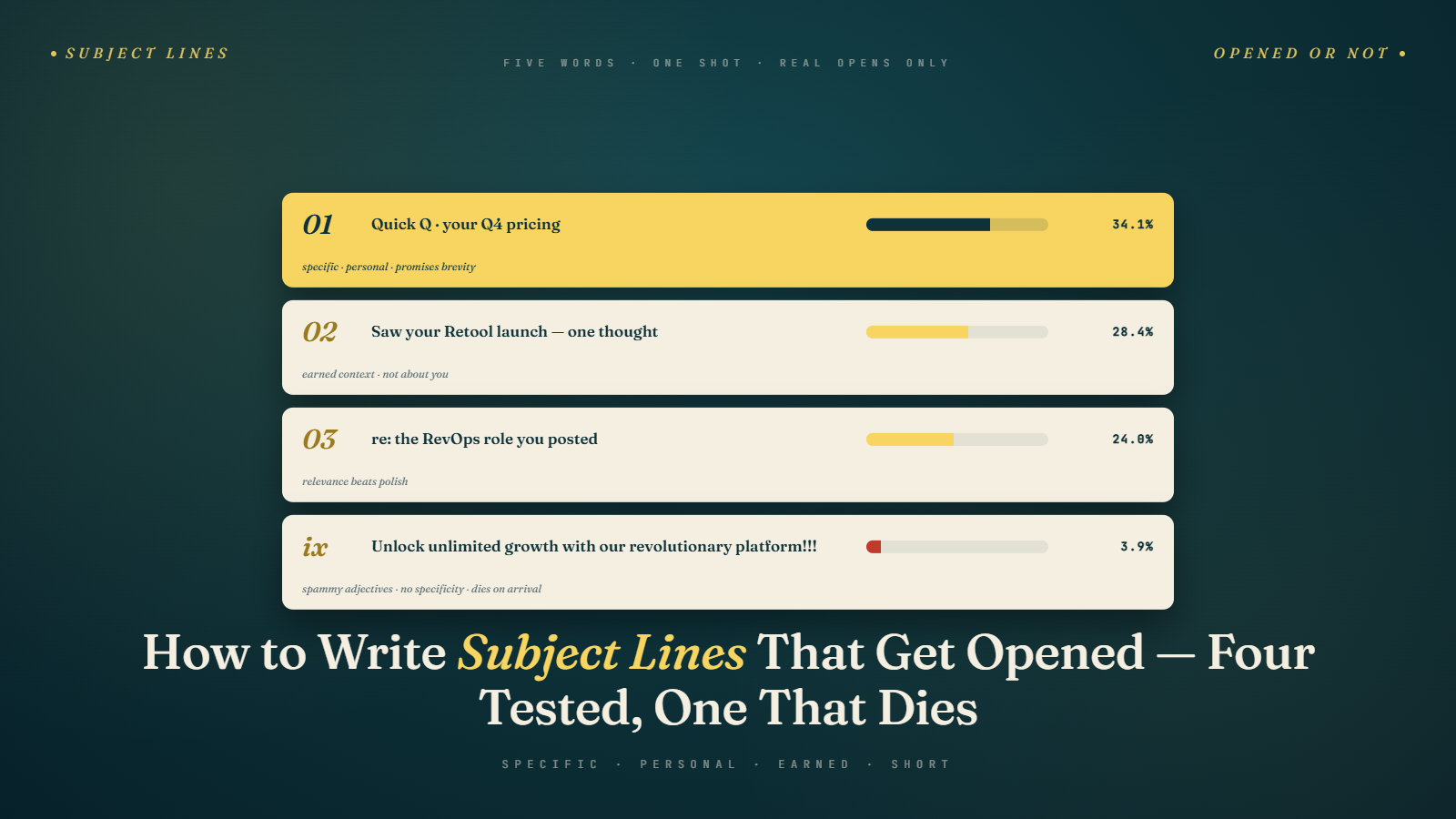
How to Write Cold Email Subject Lines That Get Opened
Your subject line determines whether anyone reads your cold email. This guide covers every subject line framework that actually works, what to avoid, how to pair it with preview text, and how to A/B test your way to higher open rates.
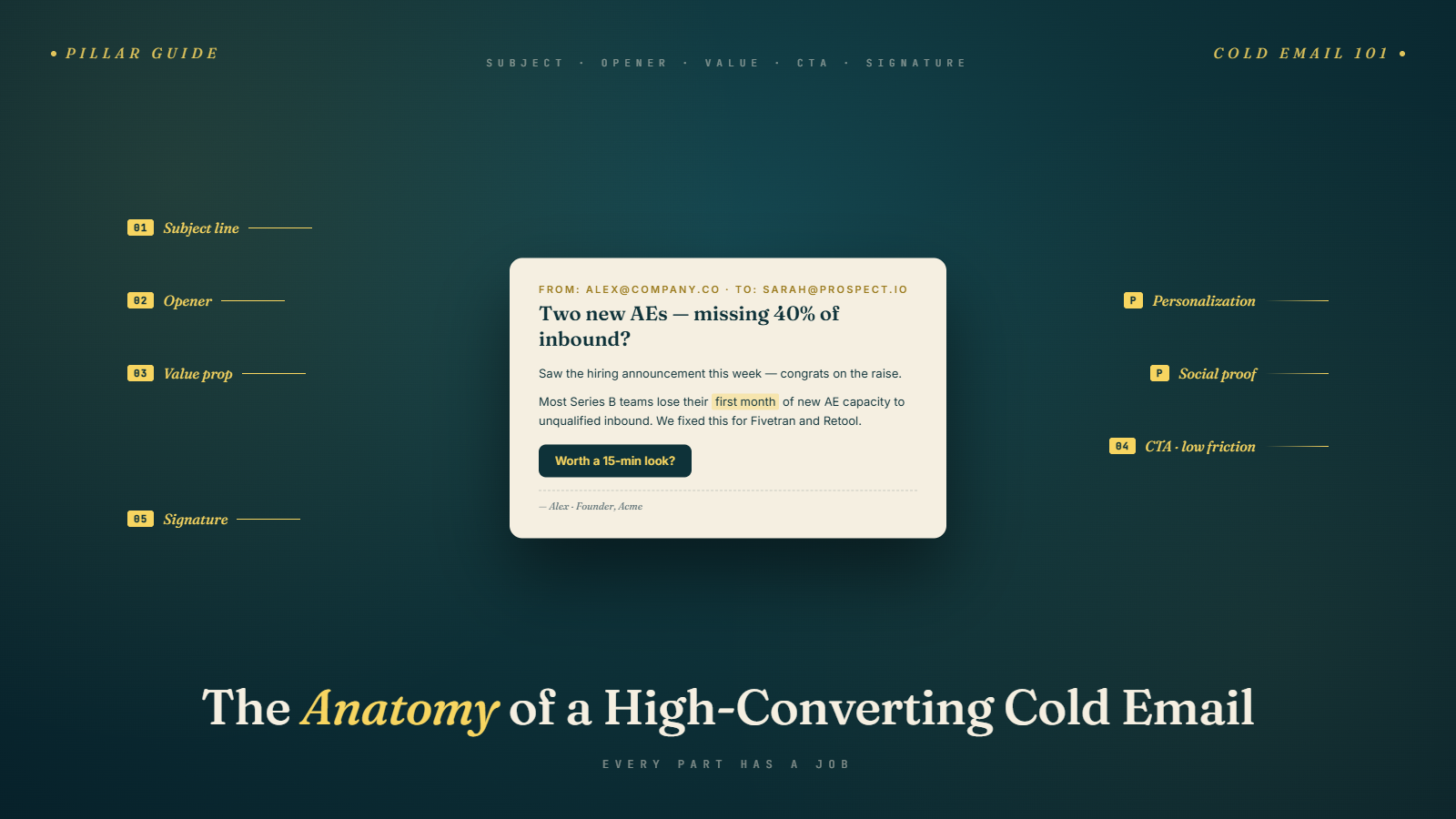
Anatomy of a High-Converting Cold Email (Complete Guide)
Every high-converting cold email shares the same underlying structure. This pillar guide breaks down each component — from subject line to signature — and explains exactly what makes each one work or fail.
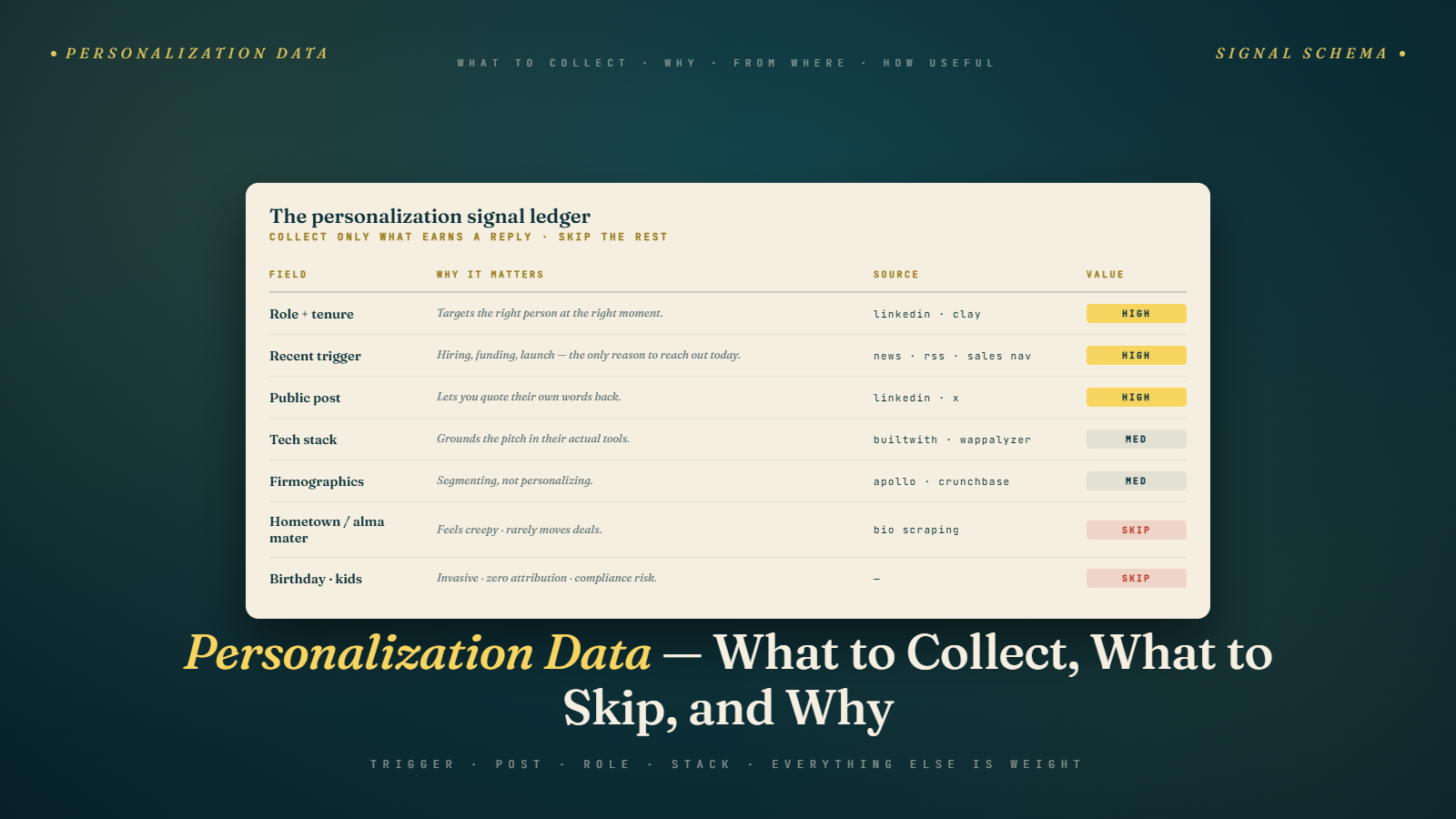
Personalization Data for Cold Email: What to Collect and Why
Real personalization in cold email goes far beyond first names. Learn what data to collect on each prospect, where to find it, and exactly how to use it to write opening lines and messages that feel personal — and get replies.
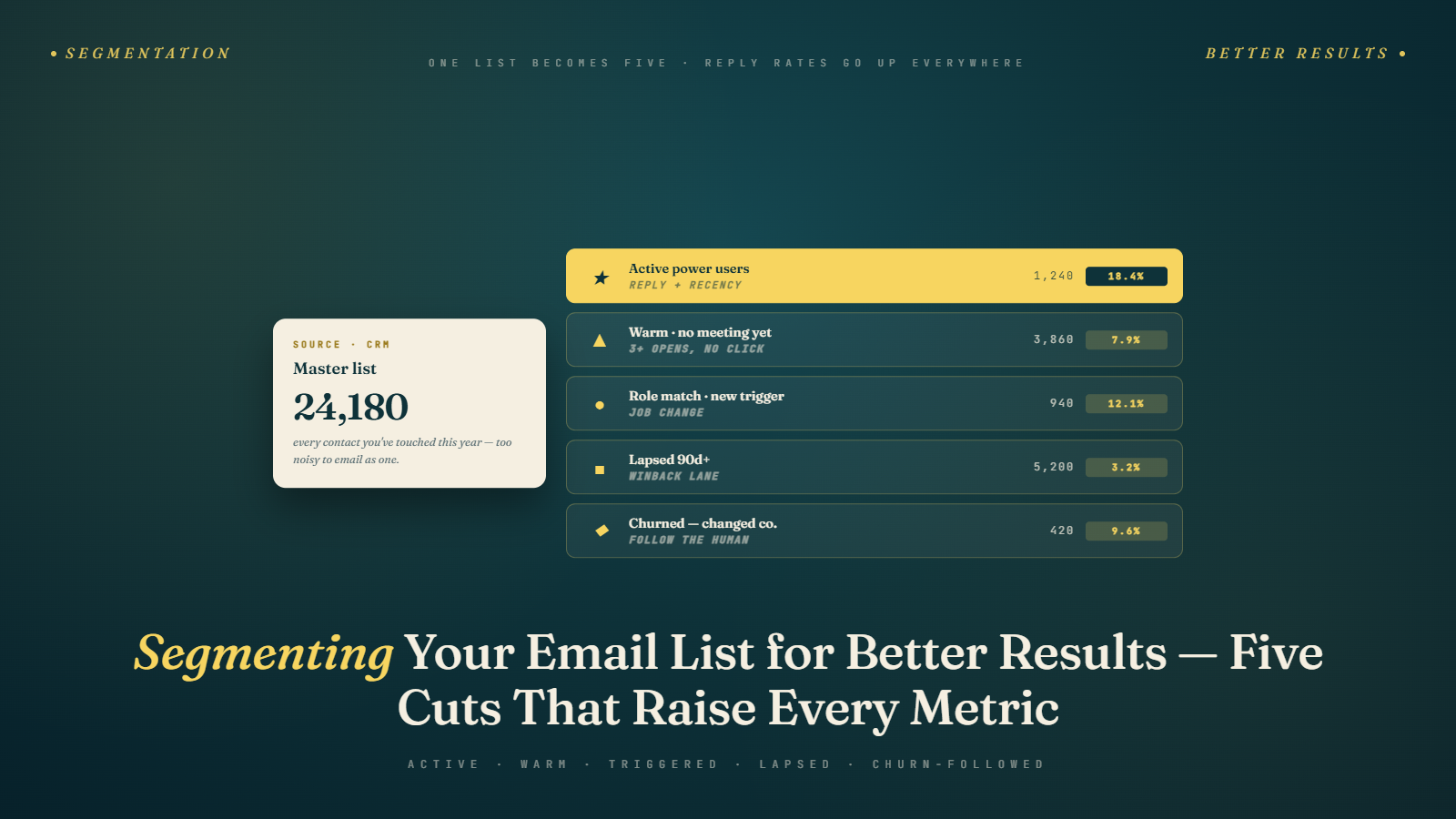
Segmenting Your Email List for Better Cold Email Results
Sending the same email to everyone on your list is a mistake even the best copy can't fix. Learn how to segment your cold email list effectively — by industry, company size, role, and buying stage — to dramatically improve reply rates.
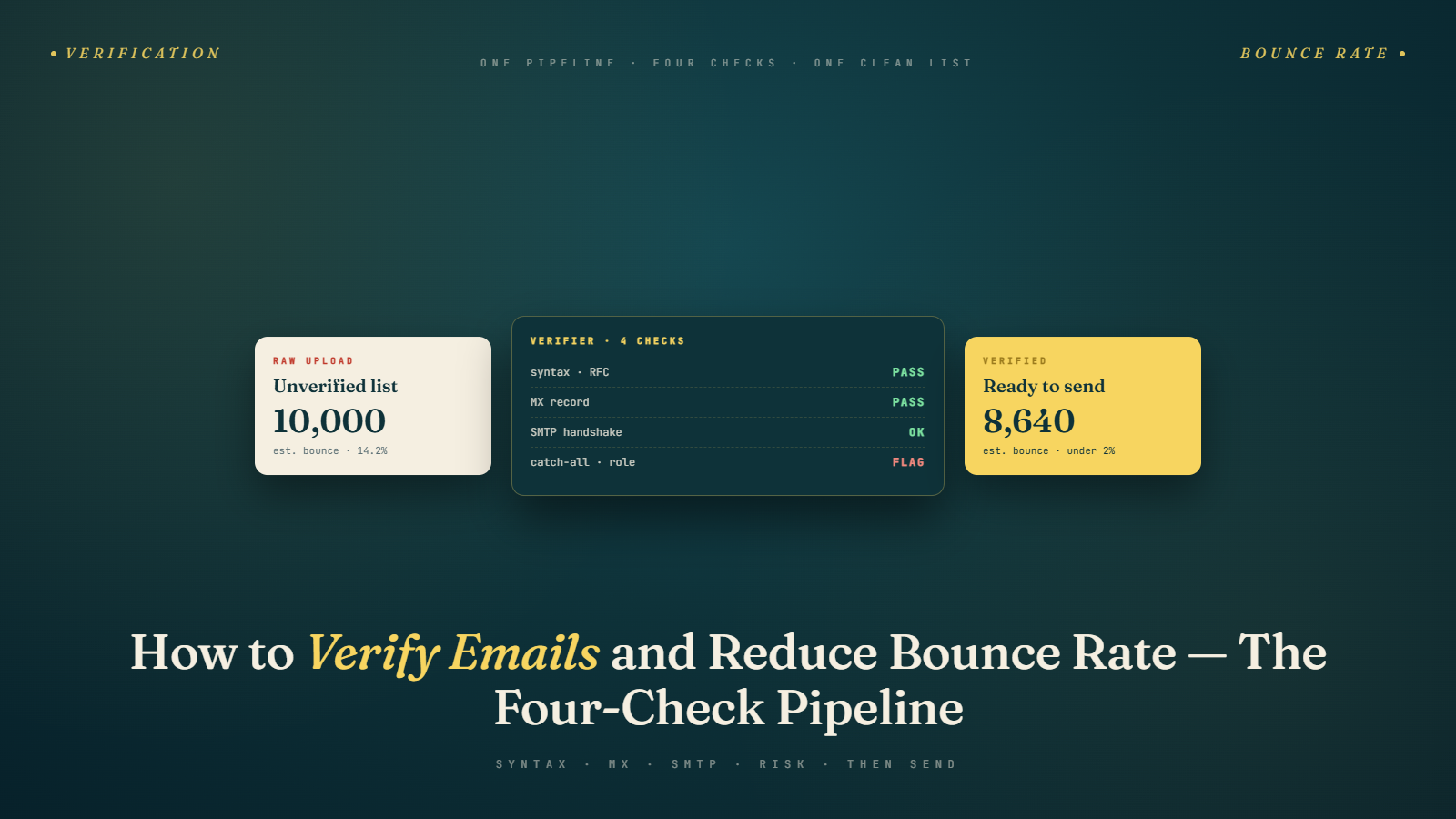
How to Verify Emails and Reduce Bounce Rate for Cold Email
High bounce rates kill cold email campaigns and destroy sender reputation. Learn how email verification works, what bounce types actually mean, and how to protect your domain with the right tools and processes.
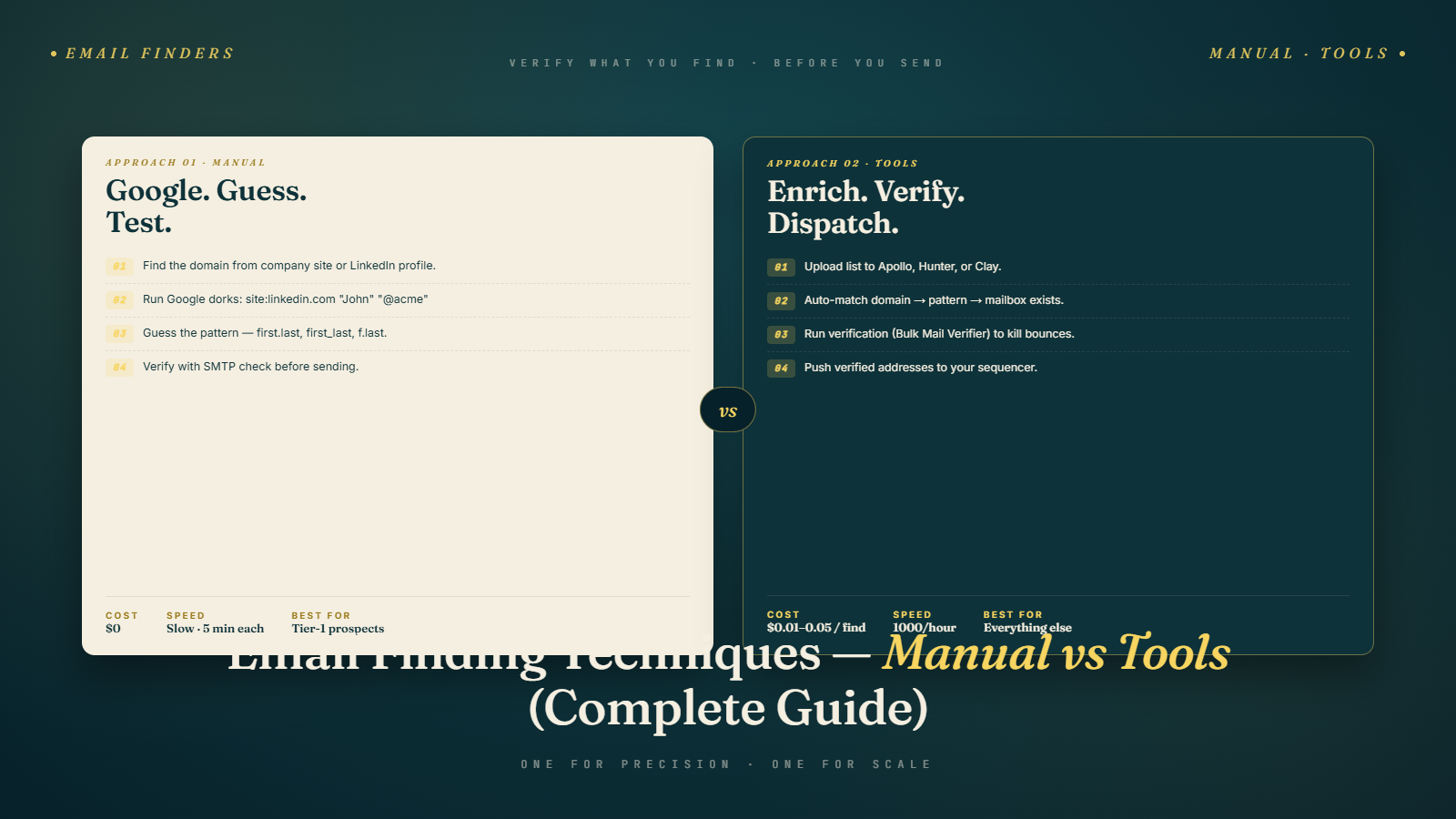
Email Finding Techniques: Manual vs Tools (Complete Guide)
Finding the right email address for a prospect is half the battle. This guide covers every method — from manual Google tricks to the best email finding tools — and how to validate what you find before it hurts your deliverability.
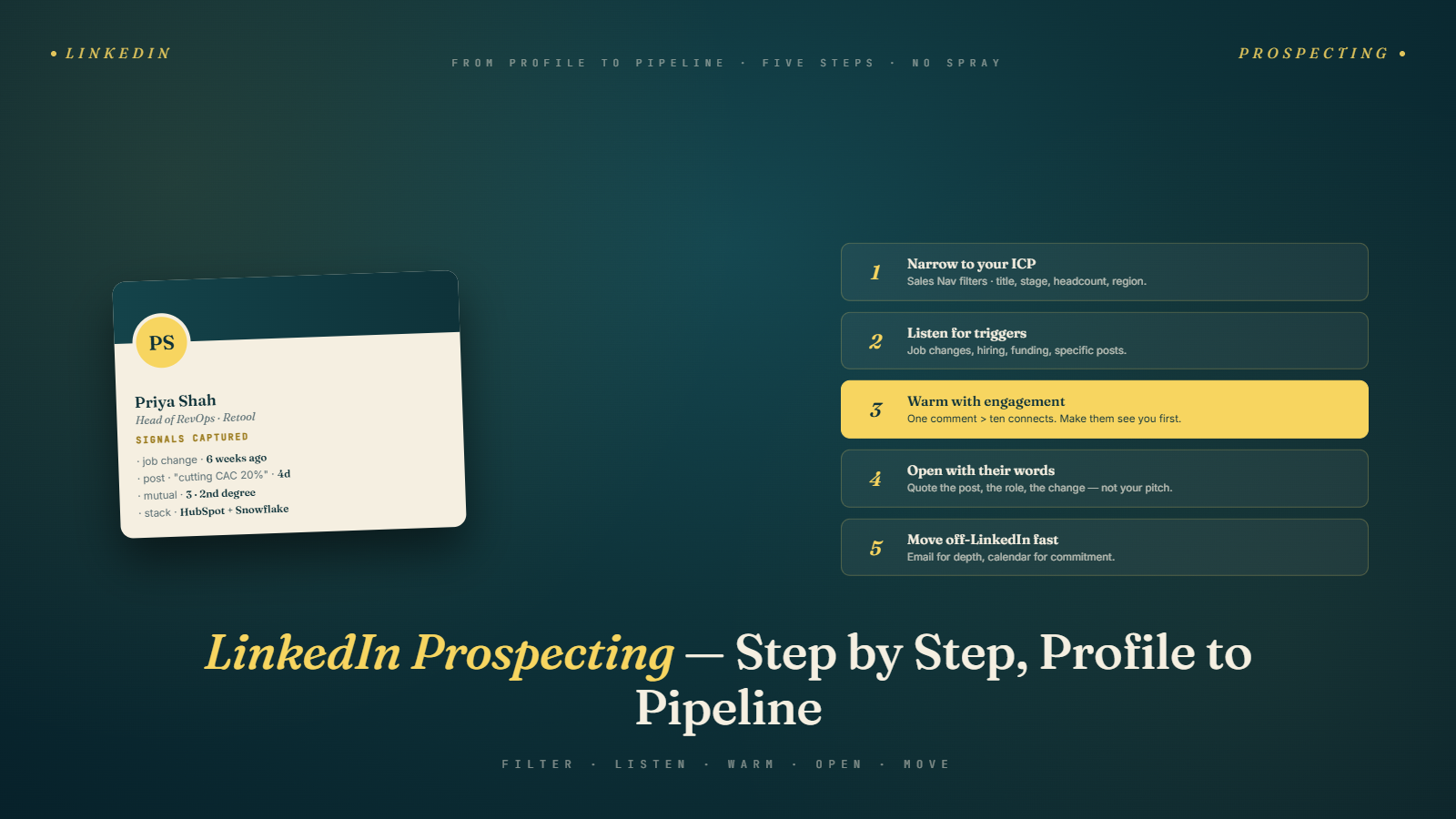
LinkedIn Prospecting: Step-by-Step Guide for Cold Email
LinkedIn is the most powerful B2B prospecting tool in existence — but most people use it wrong. This step-by-step guide covers Sales Navigator, Boolean search, list building, and how to turn LinkedIn data into cold email prospects.
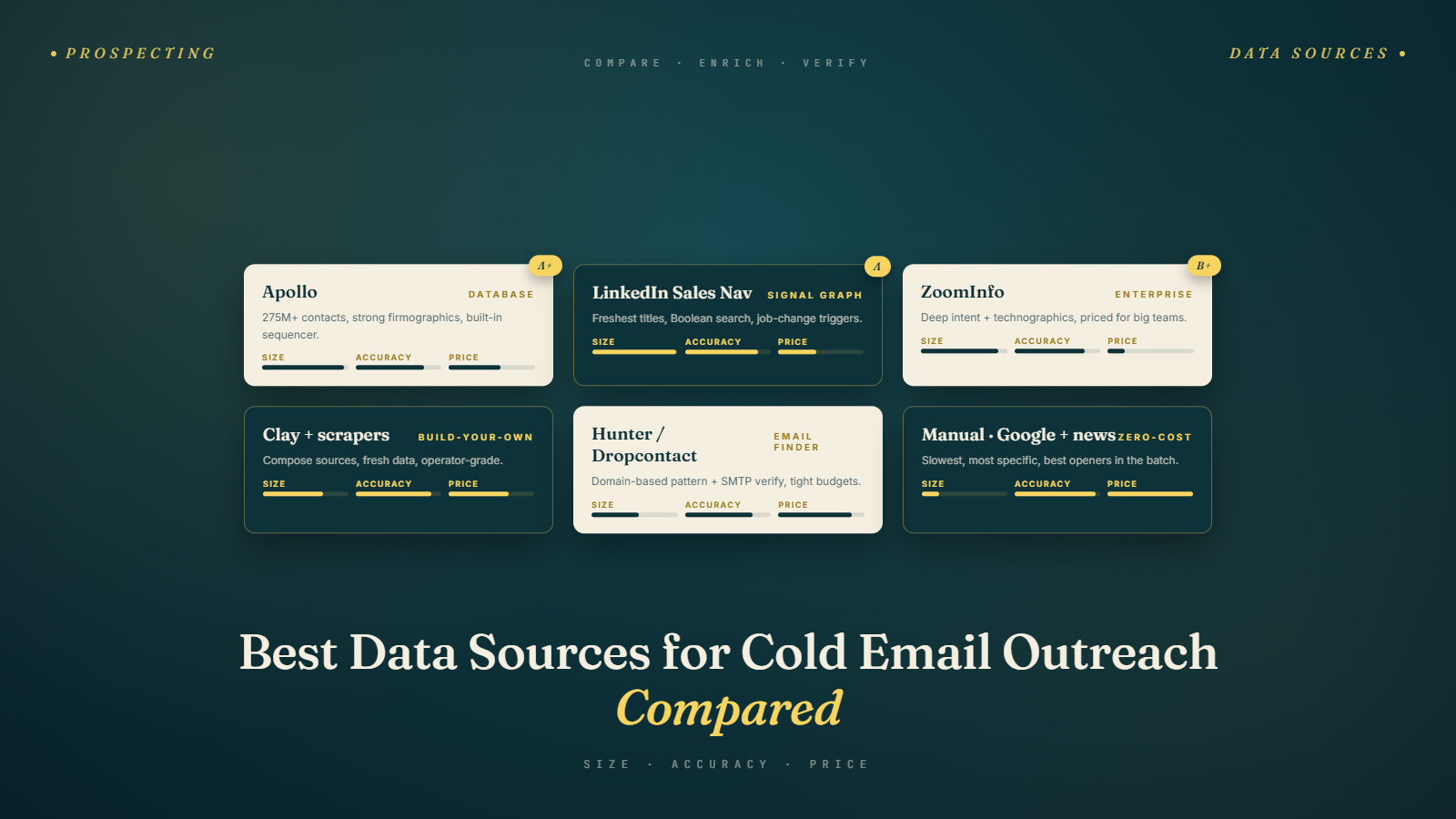
Best Data Sources for Cold Email Outreach (Compared)
Not all data sources are created equal. This guide breaks down the best databases, tools, and manual methods for building cold email prospect lists — including what each one is actually good for and where they fall short.
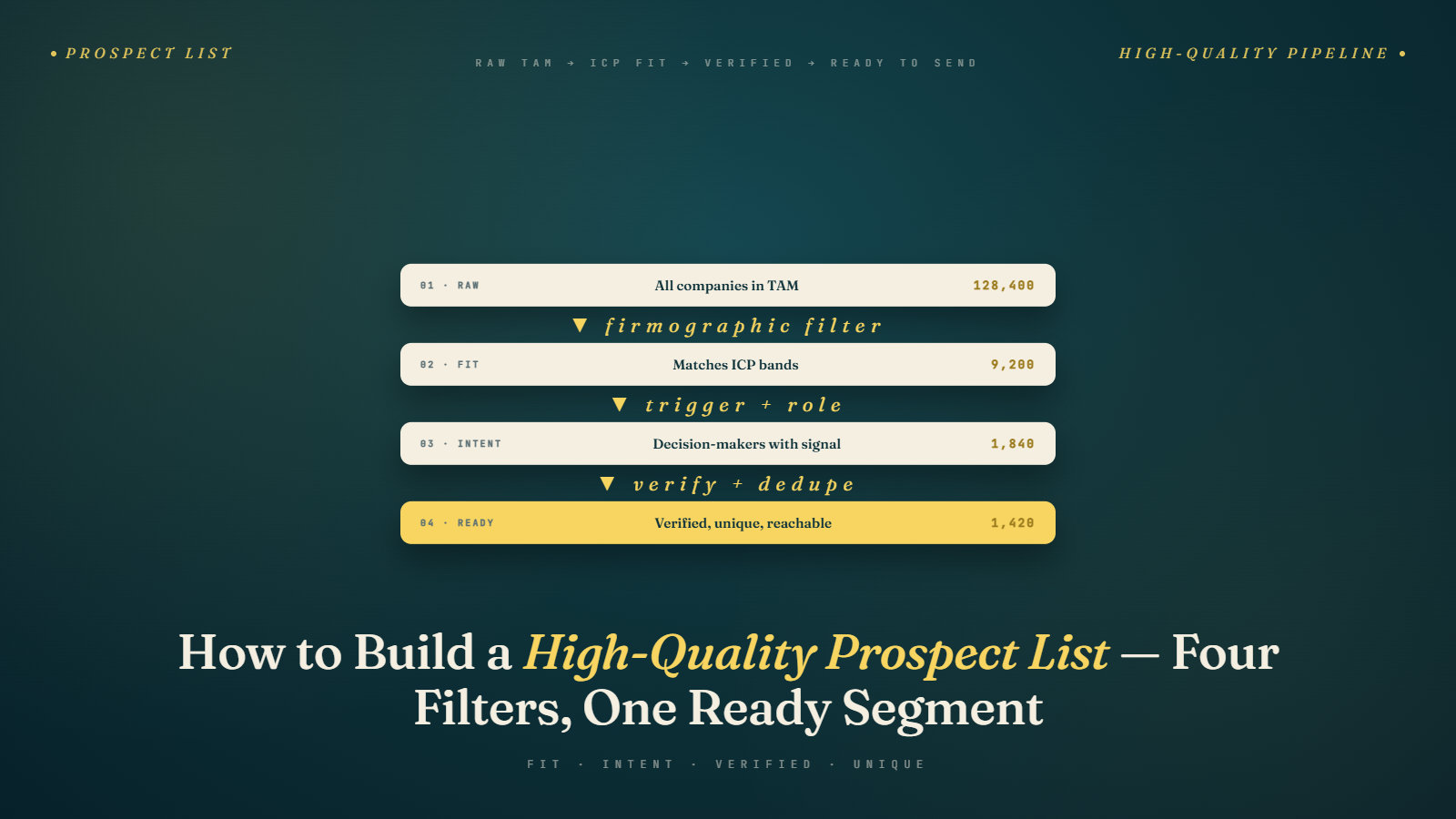
How to Build a High-Quality Prospect List for Cold Email
A bad prospect list kills campaigns before they start. Learn how to build a high-quality cold email prospect list from scratch — the sources, the process, the enrichment steps, and the filters that separate a good list from a great one.
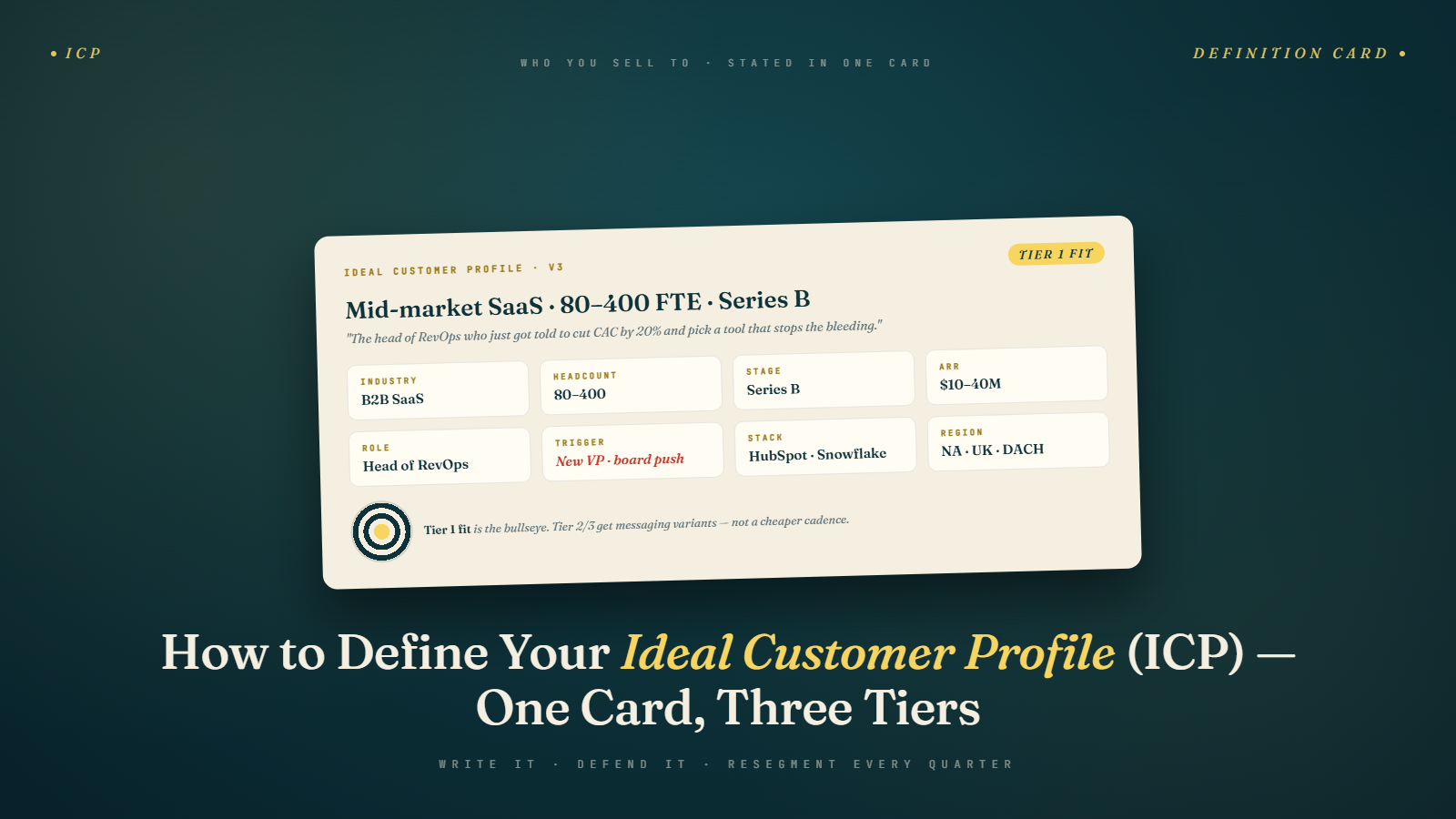
How to Define Your Ideal Customer Profile (ICP) for Cold Email
Before you write a single cold email, you need to know exactly who you're targeting. Learn how to define your Ideal Customer Profile (ICP) the right way — with real frameworks, examples, and the mistakes that make most campaigns fail before they start.
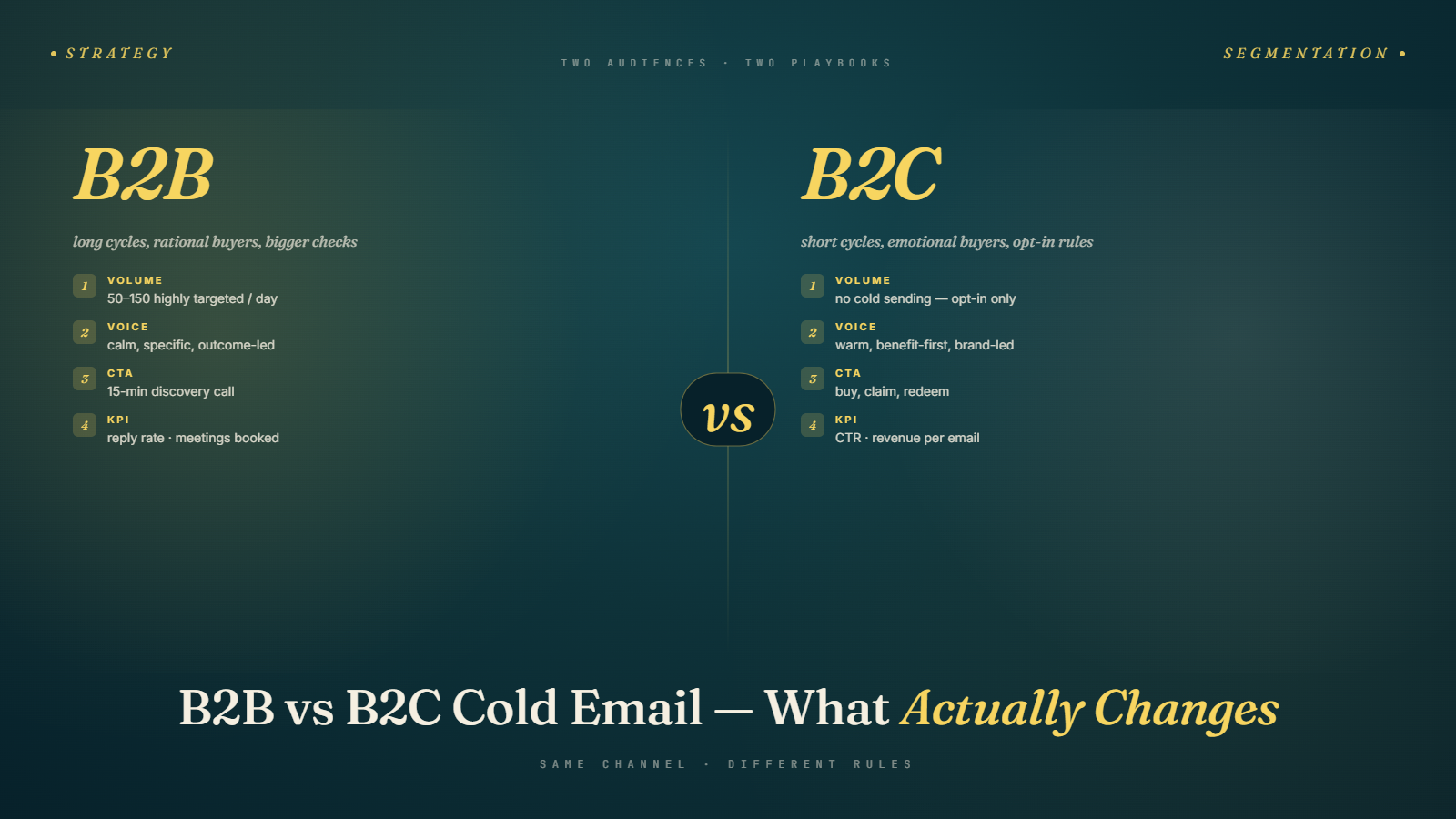
B2B vs B2C Cold Email: What Changes?
B2B and B2C cold email look similar on the surface but operate by completely different rules — here's exactly what changes and why it matters.
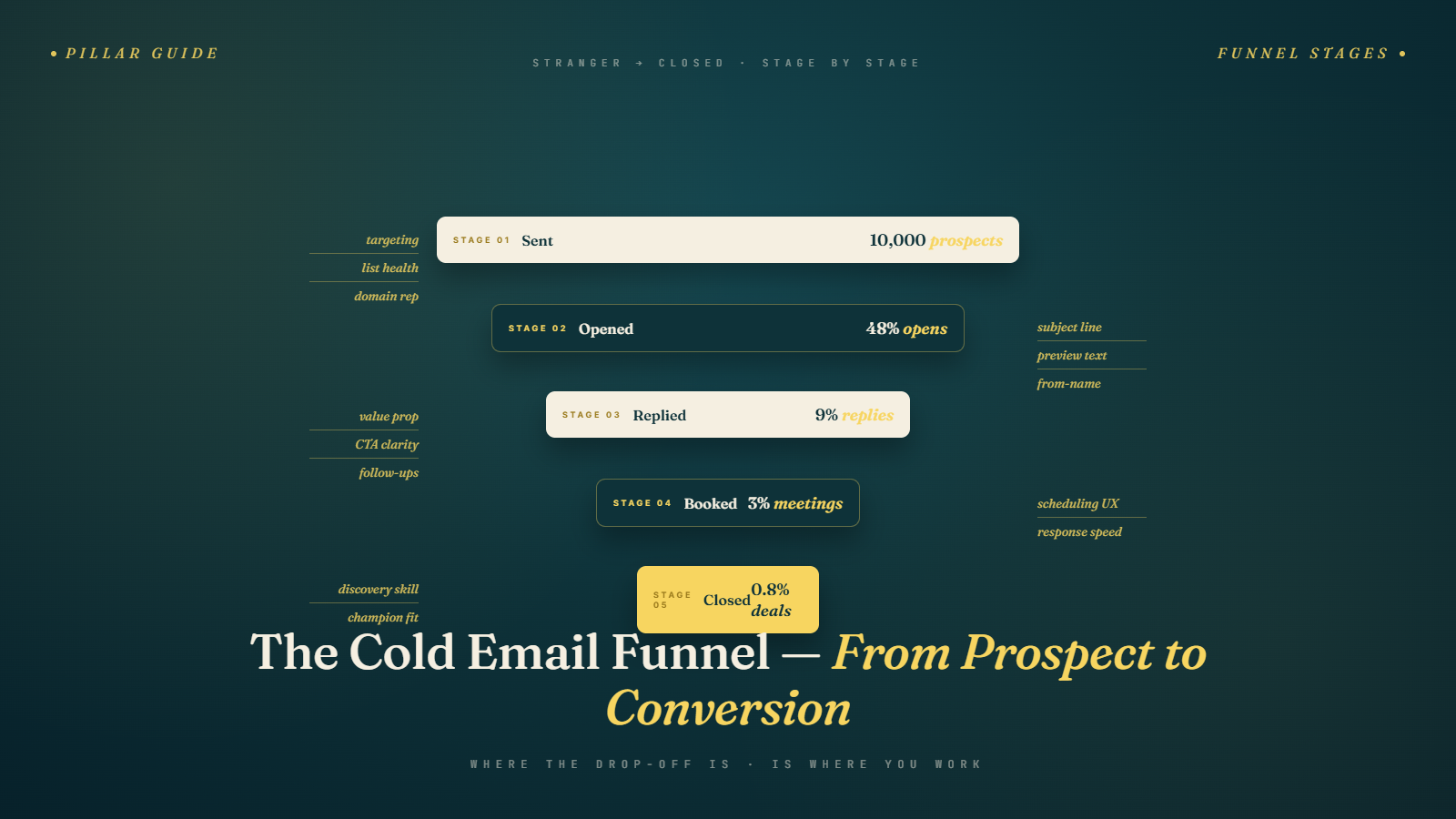
Cold Email Funnel Explained (From Prospect to Conversion)
A cold email funnel is the structured, stage-by-stage process that moves a complete stranger from first contact to closed deal — and understanding each stage is what separates campaigns that convert from ones that just fill inboxes.
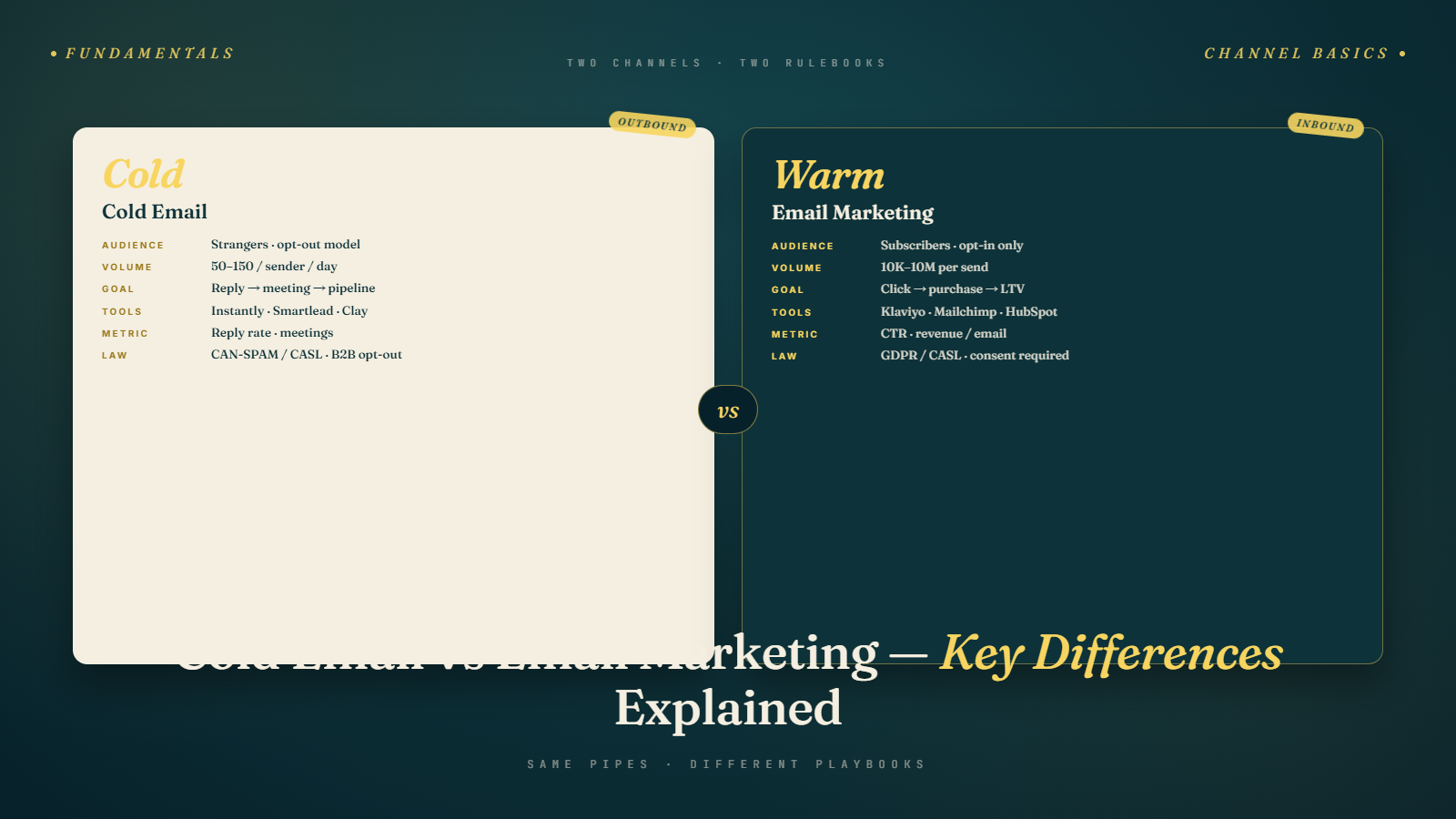
Cold Email vs Email Marketing: Key Differences Explained
Cold email and email marketing are both email-based strategies, but they operate under completely different rules, tools, goals, and metrics — and confusing them is one of the most common and costly mistakes in B2B outreach.
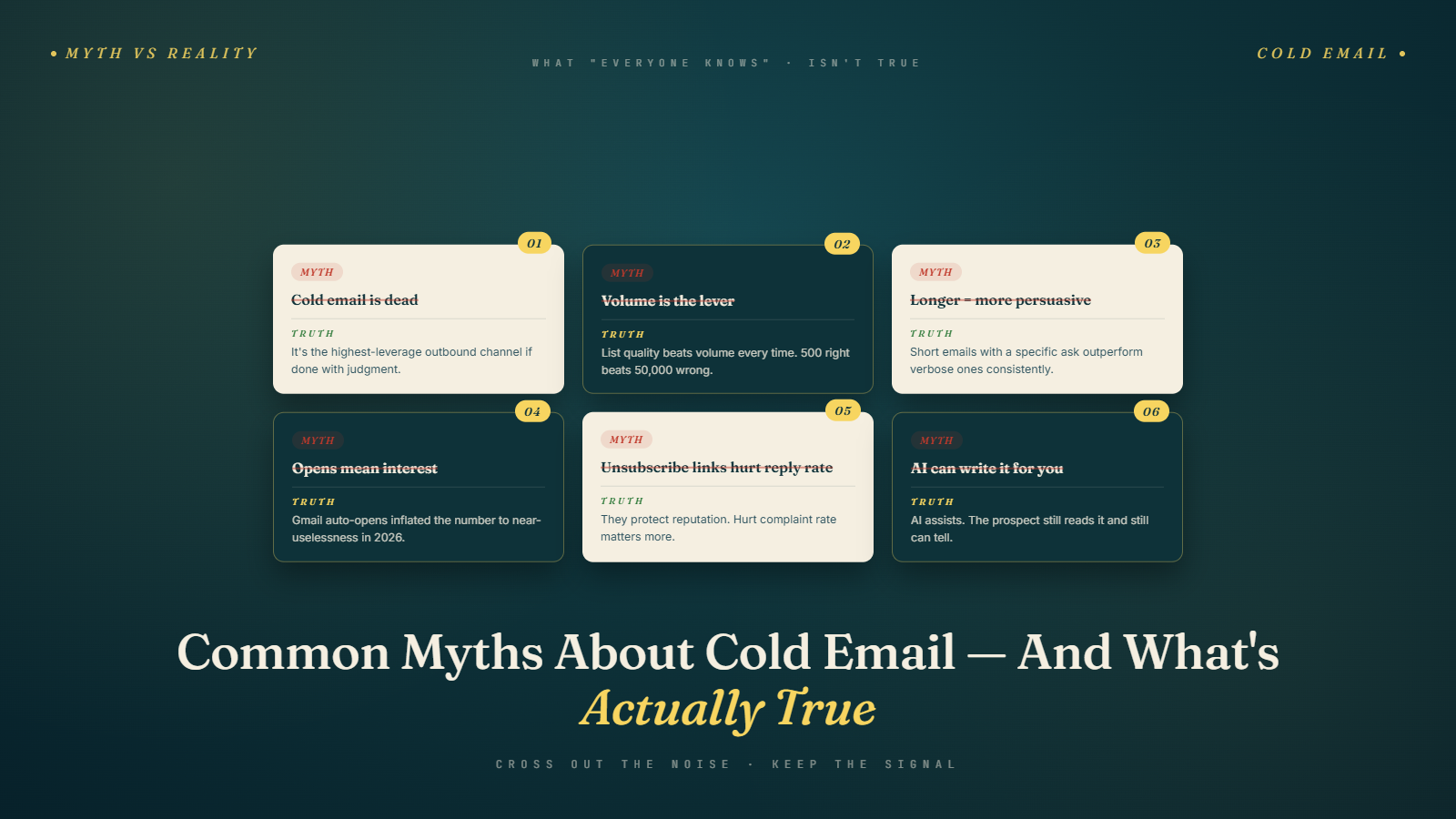
Common Myths About Cold Email Outreach (And What's Actually True)
Ten of the most persistent cold email myths are holding back founders, freelancers, and sales teams from results they could already be getting.
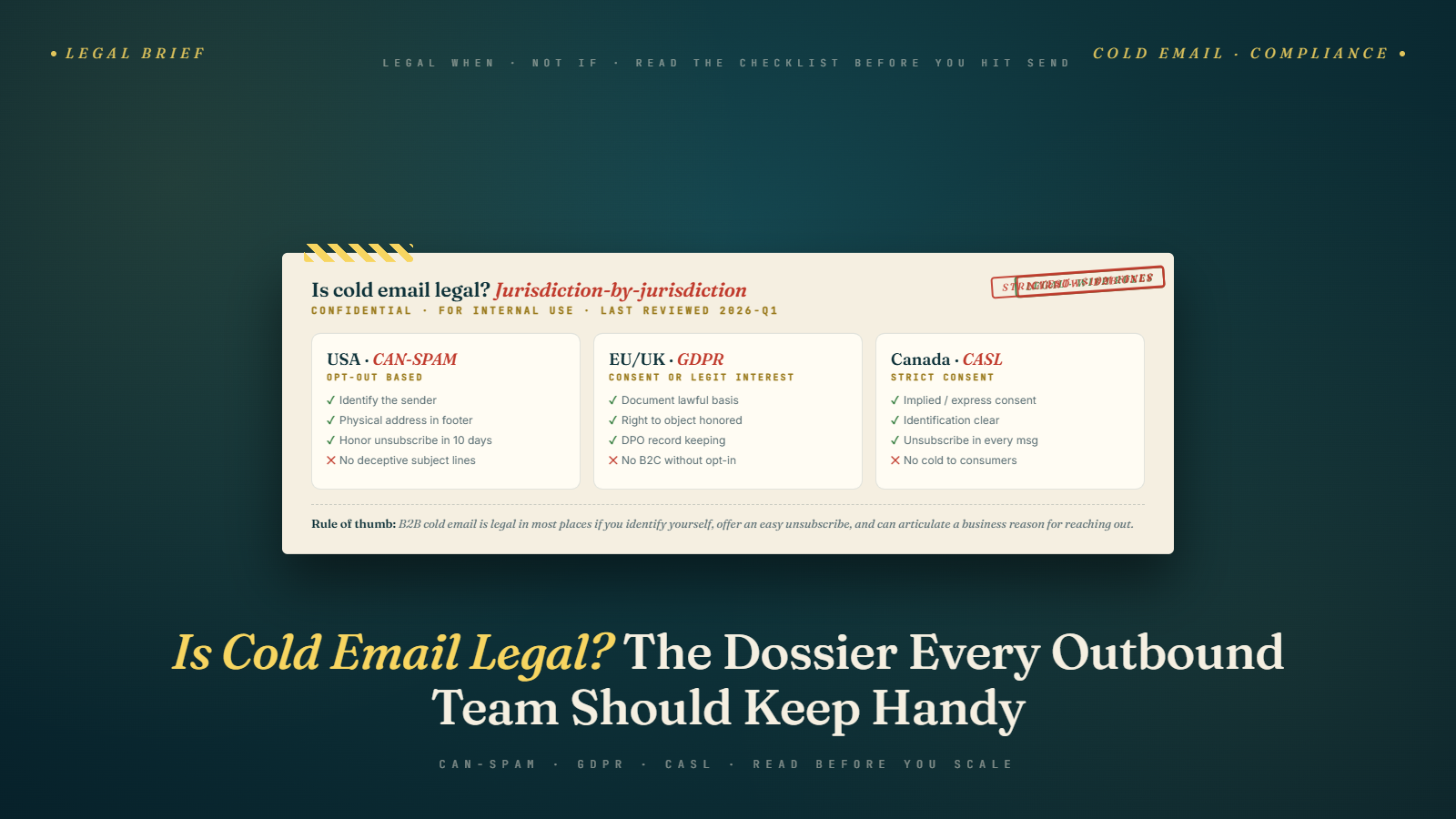
Is Cold Email Legal? Understanding Compliance (GDPR, CAN-SPAM)
Cold email is legal in most jurisdictions — but only if you understand what CAN-SPAM, GDPR, and CASL actually require and follow the rules that apply to your specific situation.
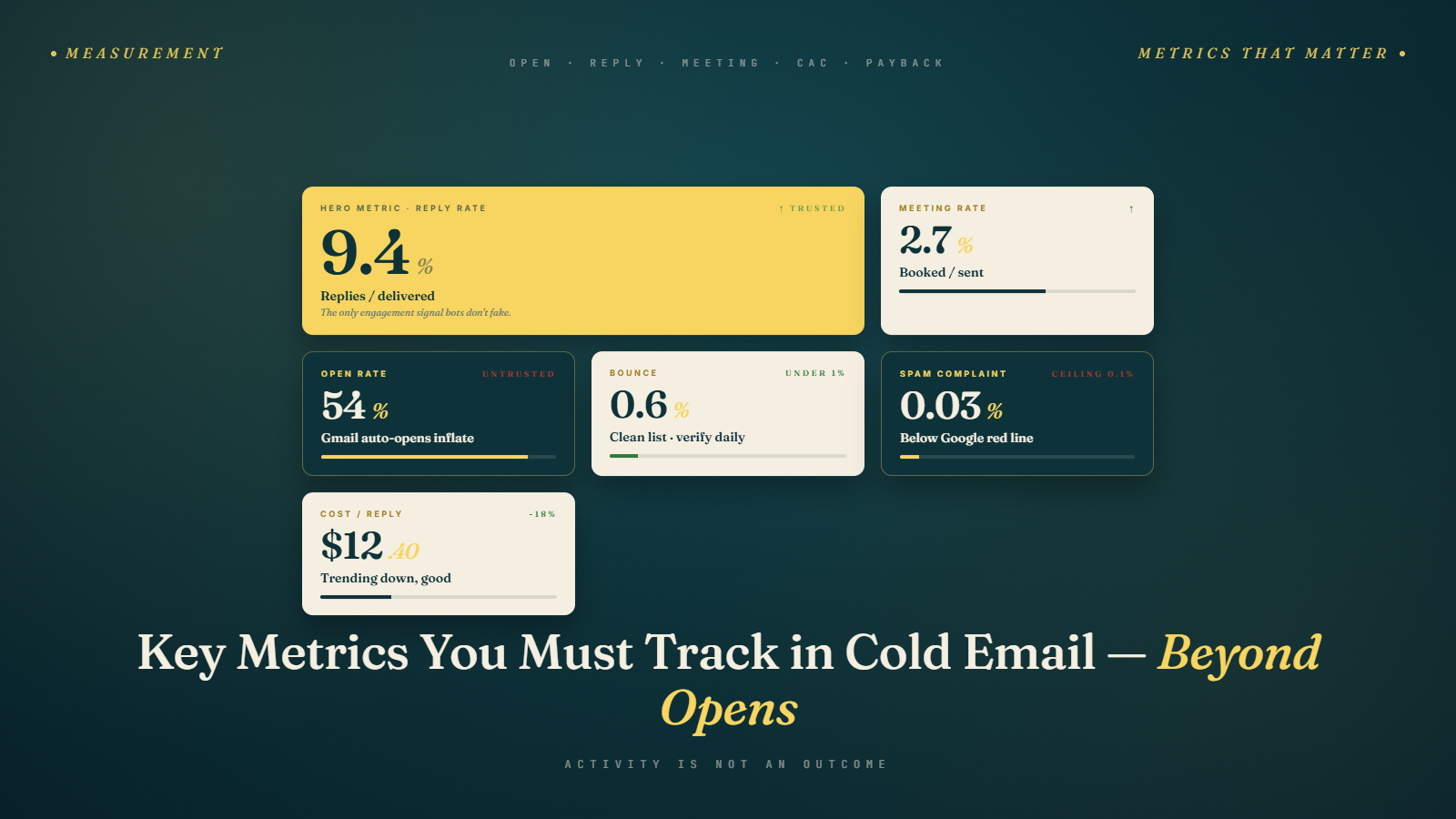
Key Metrics You Must Track in Cold Email (Open, Reply, Conversion)
Tracking the right cold email metrics — not just open rates, but reply rates, bounce rates, meeting rates, and cost per acquisition — is what separates campaigns that compound over time from ones that repeat the same mistakes at scale.
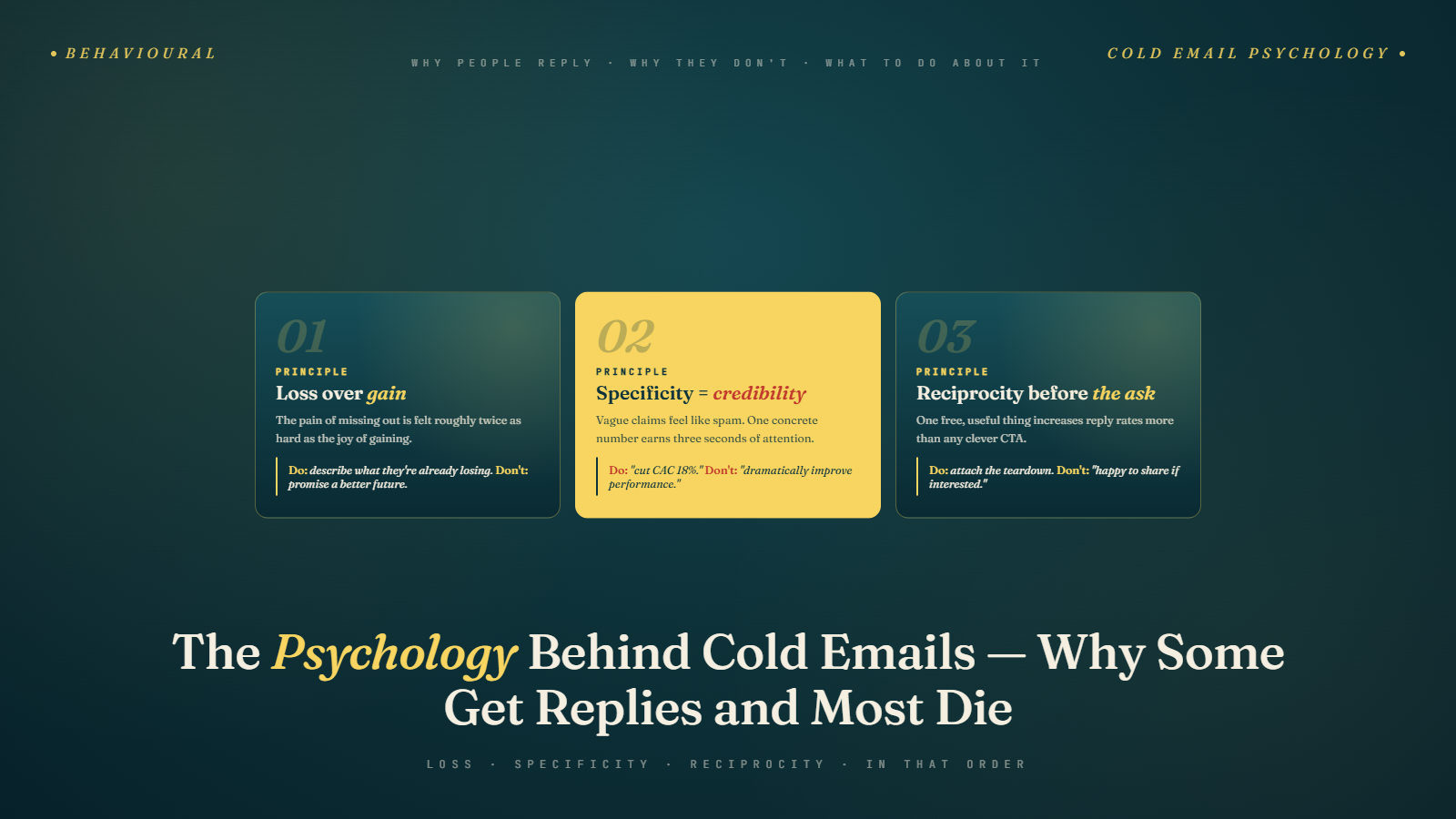
The Psychology Behind Cold Emails That Get Replies
The difference between a cold email that gets a reply and one that gets deleted isn't luck — it's a set of psychological principles that the best senders understand and apply deliberately.
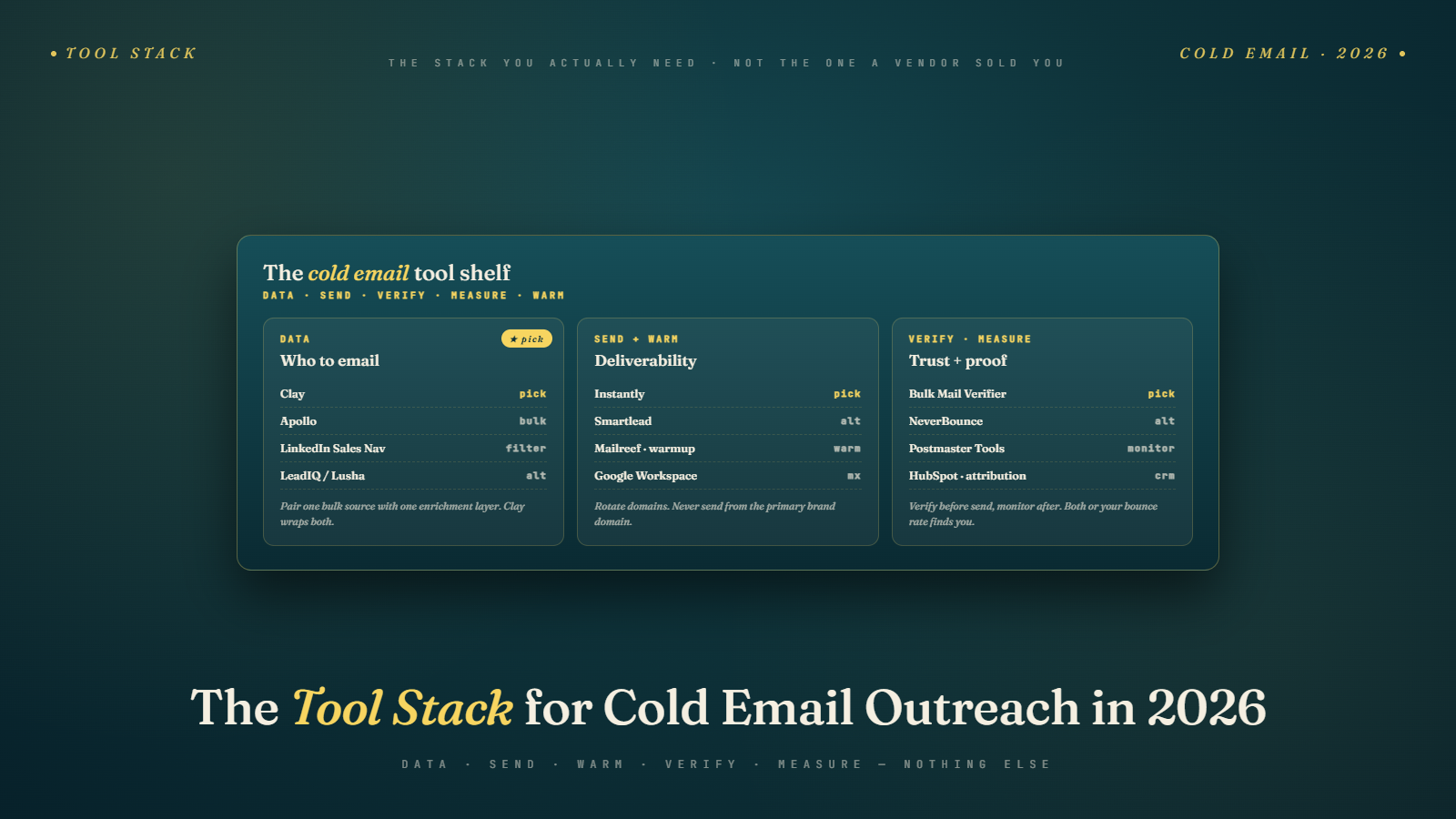
Tools You Need to Start Cold Email Outreach
A complete, opinionated breakdown of every tool category you need to run cold email outreach — from prospecting and verification to sending, warm-up, and deliverability monitoring.
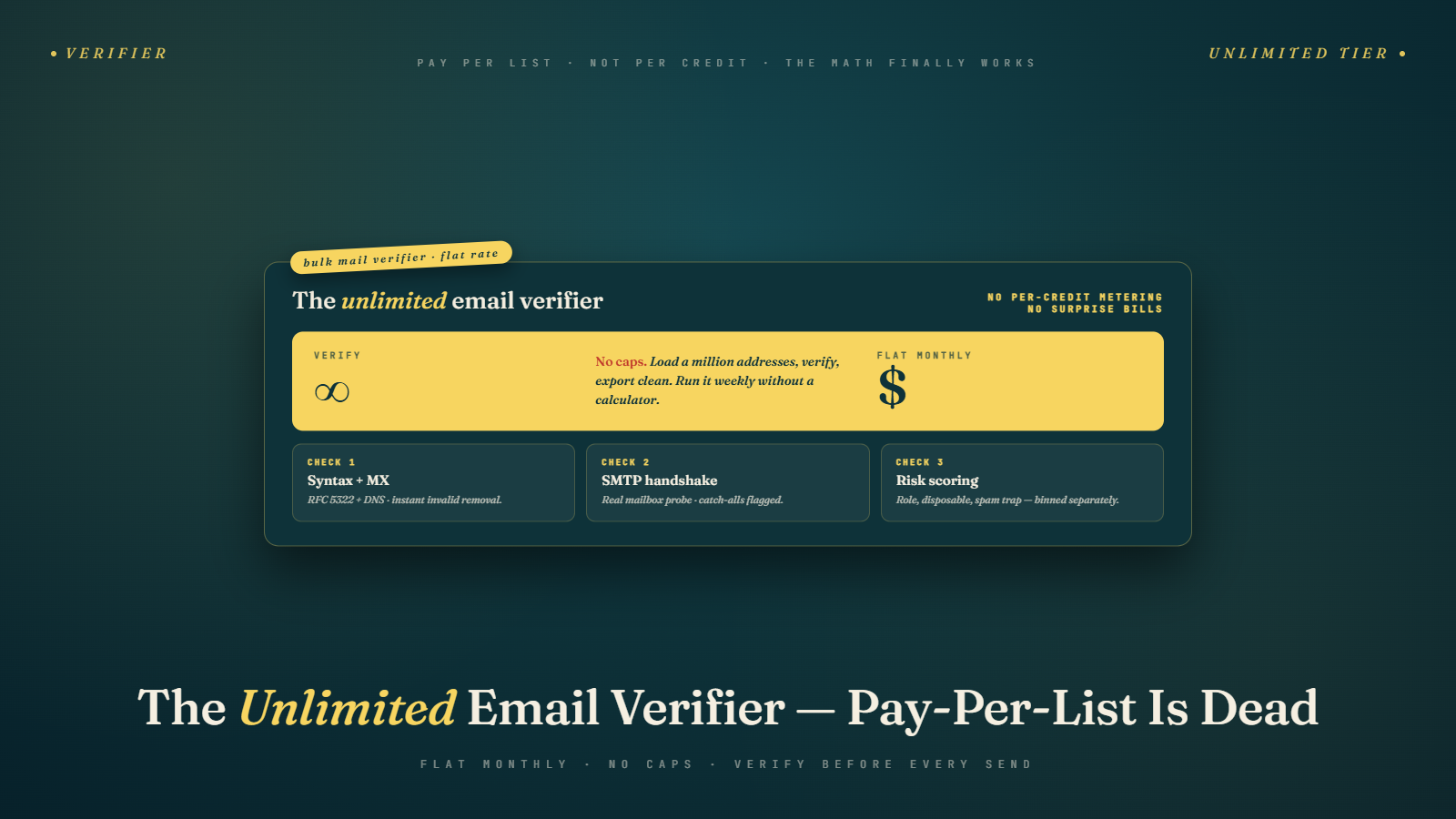
Unlimited Email Verifier — Verify as Many Emails as Your Business Needs
Discover everything you need to know about unlimited email verifiers — how they work, why they matter, and how BulkMailVerifier.com gives you the power to verify as many emails as your business demands without limits.
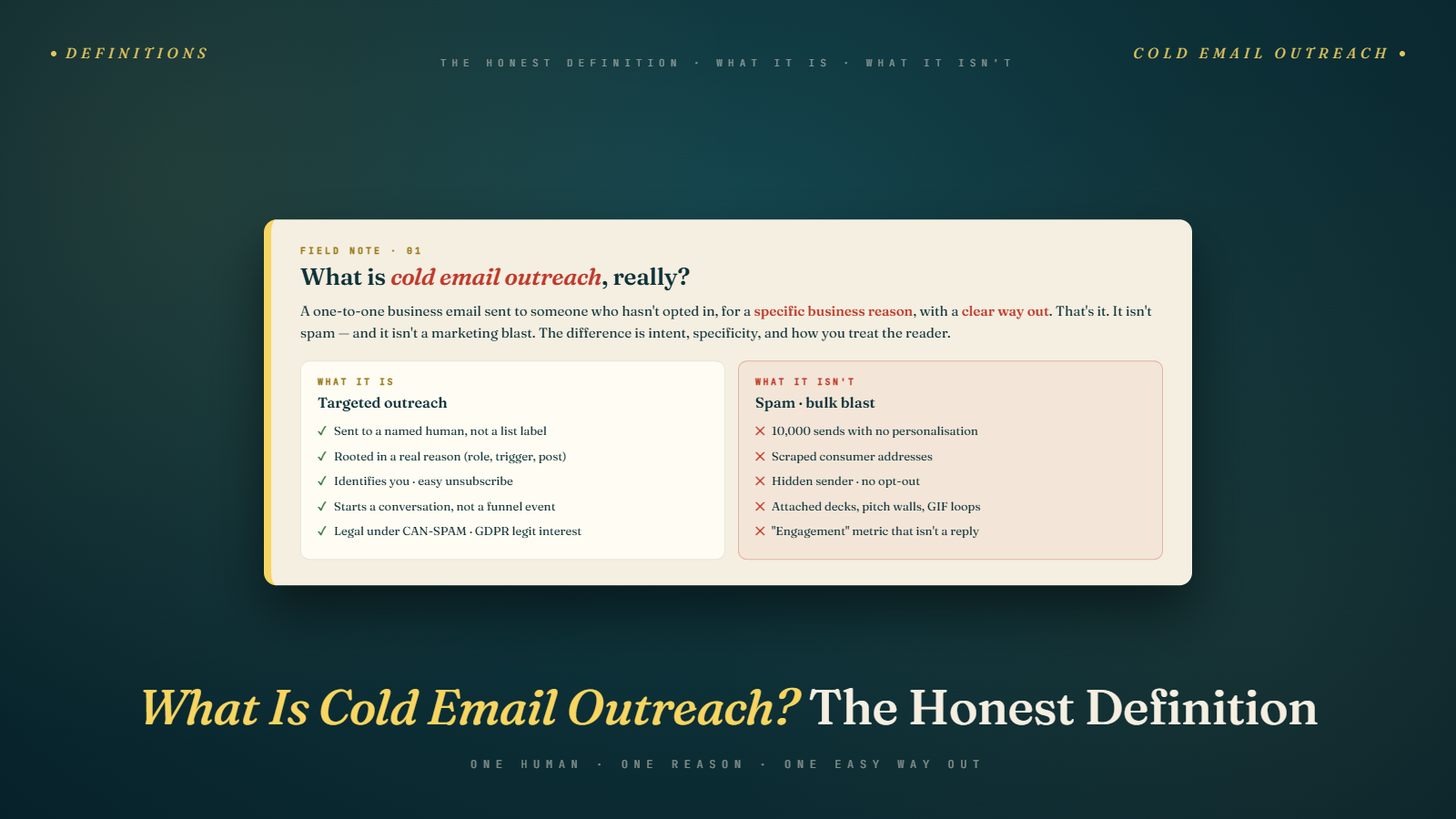
What is Cold Email Outreach? A Complete Beginner's Guide
Cold email outreach is one of the most direct and scalable ways to generate leads — this beginner's guide explains exactly what it is, how it works, and how to do it right from the start.
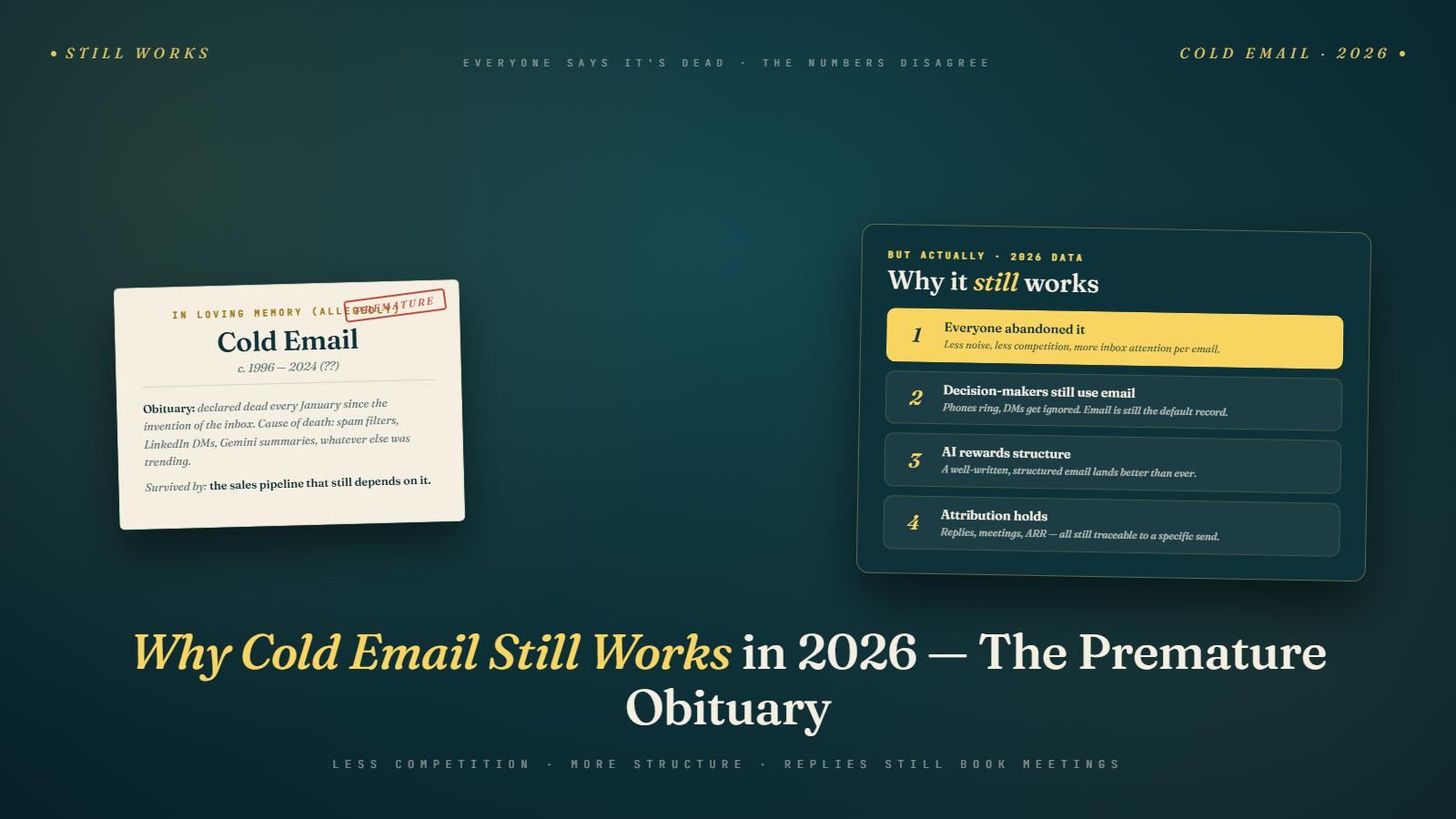
Why Cold Email Still Works in 2026
Cold email isn't dead — it's just that most people doing it badly have convinced themselves it doesn't work, while the people doing it right keep quietly closing deals.
The Essential Role of Bulk Email Verification in Email Marketing Success
Bulk email address verification is the foundation of email marketing success. Learn how it improves deliverability, reduces bounce rates, and protects sender reputation at scale.
Efficient Email Marketing: A Complete Guide to Bulk Email Verification Tools
Bulk email verification tools are a core part of efficient email marketing. Learn how to integrate them into your workflow, interpret results, and maintain a list that consistently delivers results.
Comparing Bulk Email Verifiers: How to Choose the Best One for Your Campaigns
Comparing bulk email verifiers? Learn what features, accuracy levels, and pricing to look for — and how to evaluate services against your actual sending needs.
Email Deliverability and Domain Verification: A Complete Guide
Domain verification and email authentication are essential for email deliverability. Learn how they work, why they matter, and the best practices for setting them up.
7 Common Email Marketing Problems (and How to Fix Each One)
Most email marketing problems trace back to a small number of root causes. Here are the 7 most common email marketing challenges — and the specific fixes that actually work.